
TL;DR:
- Proper packing, labeling, and securing valuables greatly reduce damage during a move.
- Using high-quality materials, early organization, and personal transport for valuables ensure safe arrival.
Protecting your belongings during a move requires precise packing, smart organization, and proactive security measures from the first box you tape to the last item unloaded. The biggest risk to your belongings is improper packing, not the moving process itself. That single fact changes how you should approach every step. Whether you are planning a cross-country relocation or an interstate move, the materials you choose, the way you label boxes, and how you handle valuables personally will determine whether everything arrives intact. This guide covers the professional standards that nationwide movers use every day.
How to protect belongings during a move: packing materials and techniques
The right materials are not optional. Double-walled corrugated boxes, bubble wrap, clean packing paper, and reinforced 2-inch packing tape are the baseline for any move involving fragile or valuable items.
Choosing the right boxes and tape
New corrugated boxes outperform used ones every time. Used boxes have weakened walls that compress under weight, especially during long-distance transport. Reinforce every box bottom with at least 3 strips of heavy-duty packing tape in an H-pattern. That pattern distributes weight across the full base rather than concentrating stress at the center seam.
Never use duct tape, masking tape, or electrical tape to seal moving boxes. These adhesives fail under the friction and temperature changes of truck transport. Reinforced packing tape is the only acceptable option for boxes carrying anything you care about.
Wrapping and cushioning fragile items
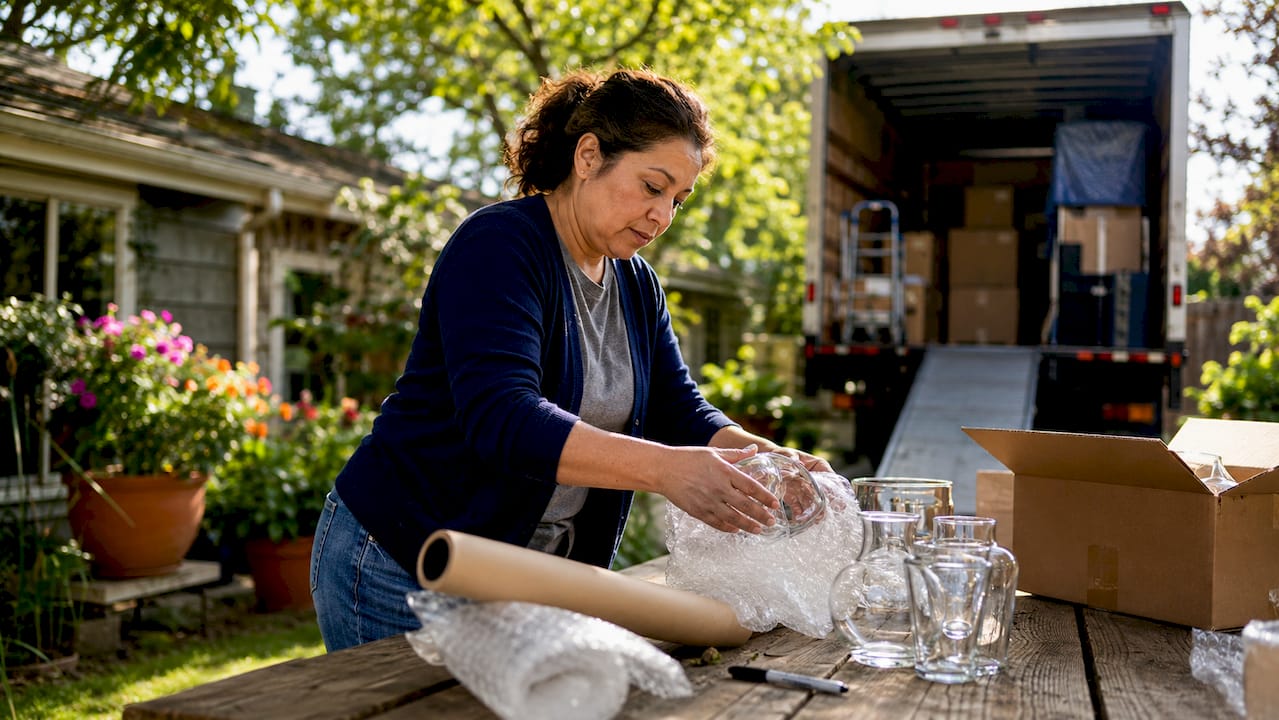
- Wrap every fragile item individually with bubble wrap or clean packing paper. Never let two unwrapped items touch inside a box.
- Pack plates vertically on their edges, not flat. Plates packed vertically absorb impact far better than stacked horizontal plates, which crack under compression.
- Create shock zones with at least 2–3 inches of cushioning at the top and bottom of every box. This protects items from impact during transit.
- Fill every void inside the box with crumpled paper, socks, towels, or soft padding. Void-free boxes prevent the internal shifting that causes most breakage.
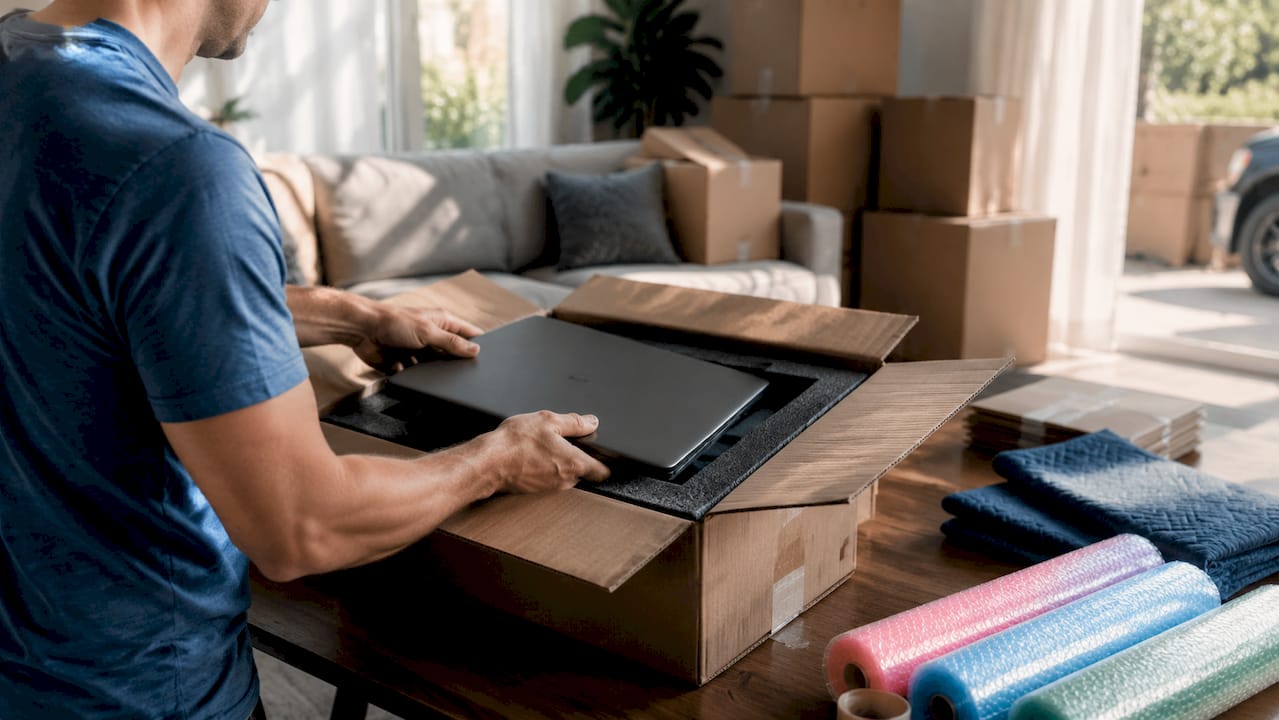
- Use anti-static bubble wrap or foam for electronics. Standard packing peanuts generate static electricity that can damage circuit boards and hard drives.
Pro Tip: Double-box any item with a declared value over $100. Place the item in a snug inner box, then surround that box with at least 2 inches of cushioning inside a larger outer box. Single-boxing high-value items often leads to denied insurance claims because it does not meet industry standards.
Packing electronics safely
Electronics deserve a separate strategy. Original manufacturer boxes are the gold standard because they are engineered for each device’s exact dimensions. If you no longer have the original packaging, use a box that allows for 2–3 inches of anti-static foam on all sides. Remove batteries from devices before packing. Coil cables loosely and secure them with velcro ties, not rubber bands, which degrade and snap.
| Item Type | Recommended Material | Key Technique |
|---|---|---|
| Dishes and glassware | Bubble wrap, packing paper | Pack vertically; fill all voids |
| Electronics | Anti-static foam, original box | Double-box; remove batteries |
| Artwork and mirrors | Mirror boxes, corner protectors | Mark “Fragile” on all sides |
| Books and files | Small double-walled boxes | Keep under 50 lbs per box |
| Clothing and linens | Large boxes or wardrobe boxes | Use as padding around fragile items |
How to organize and label packed boxes to reduce damage
Organization is not just about convenience at the destination. It directly reduces the number of times boxes get handled incorrectly, which reduces damage.
The weight rule every mover should know
Pack heavy items in small boxes and light items in large boxes. This is the single most violated packing rule among first-time movers. A large box packed with books will exceed 50 pounds, which is the maximum recommended weight for box integrity and safe handling. Overloaded boxes fail at the bottom seam and injure the people carrying them.
Labeling that actually works
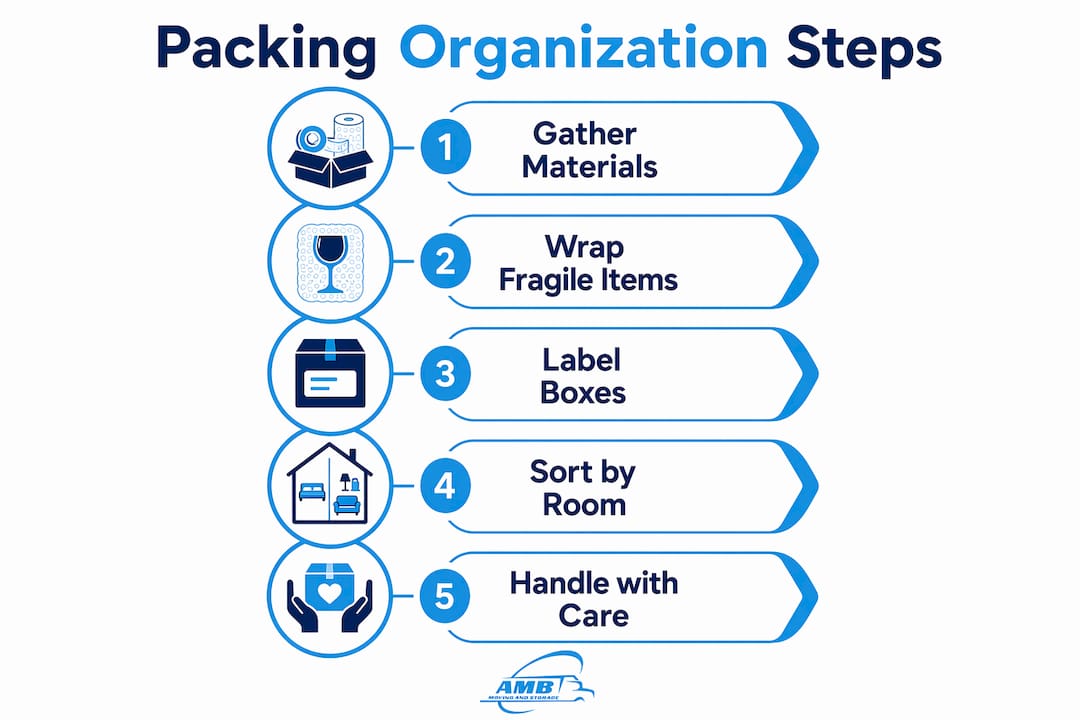
- Write the room destination and a brief contents description on all four sides of every box, not just the top.
- Add a fragility note in red marker on any box containing breakables. Side labels remain visible once boxes are stacked in a truck or storage unit; top labels disappear.
- Use color-coded tape or stickers by room. Assign blue to the kitchen, green to the living room, and so on. This cuts handling errors during unloading.
- Number every box and keep a matching inventory list. If a box goes missing, you know exactly what was in it.
- Pack a separate “Day 1 Essentials” box with toiletries, phone chargers, medications, a change of clothes, and snacks. Label it clearly and load it last so it comes off the truck first.
Pro Tip: Professional movers mark box sides to indicate fragility and destination room. Copy this practice exactly. A box labeled only on top becomes anonymous the moment another box sits on it.
What are the best ways to secure valuables during a move?
Jewelry, passports, financial documents, hard drives, and family heirlooms should never travel on the moving truck. Transport them personally in your vehicle or carry-on bag.
Creating a secure zone at home
Designate a room or closet in your home as a no-go zone before movers arrive. Place all high-value and irreplaceable items there and communicate clearly to the moving crew that this area is off-limits. This simple step eliminates the most common source of loss during loading.
- Keep passports, birth certificates, Social Security cards, and financial records in a locked bag that stays with you at all times.
- Transport jewelry in a small, hard-sided case in your personal vehicle. Never pack it in a box that goes on the truck.
- Back up all digital files from computers and external drives before the move. Hardware can be replaced; data often cannot.
- Use padlocks on storage containers or portable storage units when items are staged overnight.
- Vet your moving company before signing anything. Confirm they are licensed with the Federal Motor Carrier Safety Administration (FMCSA) and carry adequate liability coverage. You can learn more about moving insurance options before committing to a carrier.
“Items like jewelry, passports, and essential documents must be transported personally and kept out of the moving truck. Designate a secure no-go area in your home that movers are instructed not to access.” — GEICO Moving Safety Guide
Stay present during loading and unloading. Your physical presence discourages careless handling and gives you the chance to answer questions about fragile or special items in real time.
How to avoid common packing mistakes that cause damage
Rushed packing causes more damage than any other single factor. Starting weeks early and setting daily packing targets of 5–10 boxes per night prevents the last-minute cramming that leads to broken items and disorganized loads.
The five mistakes that break the most items
- Packing too late. Start with rooms you use least, such as guest bedrooms and storage areas, at least three weeks before moving day. Work toward the kitchen and daily-use rooms last.
- Overloading boxes. Keep every box under 50 pounds. If you cannot lift it comfortably with both hands, it is too heavy.
- Skipping the H-pattern tape. A single strip of tape across the bottom seam is not enough. Use three strips in an H-pattern on every box bottom.
- Using the wrong tape. Duct tape and masking tape peel away under load and temperature changes. Use only reinforced packing tape rated for moving.
- Leaving voids unfilled. An item that shifts even one inch inside a box during a long-distance haul will arrive damaged. Fill every gap completely.
Pro Tip: Before sealing any box, shake it gently. If you hear or feel movement inside, add more padding. A properly packed box makes no sound when shaken.
| Common Mistake | Consequence | Correct Practice |
|---|---|---|
| Overloaded large boxes | Box failure, injury, broken items | Keep boxes under 50 lbs |
| Wrong tape type | Box opens in transit | Use reinforced 2-inch packing tape |
| No void fill | Items shift and break | Fill all gaps with paper or soft padding |
| Labels only on top | Contents invisible when stacked | Label all four sides |
| Last-minute packing | Improper wrapping, missed items | Start 3 weeks early |
For a complete preparation timeline, the residential moving checklist from Ambmovingservices walks you through every stage from six weeks out to moving day.
Key takeaways
Protecting your belongings during a long-distance or interstate move comes down to three non-negotiable practices: proper cushioning, consistent labeling, and keeping valuables with you personally.
| Point | Details |
|---|---|
| Use correct packing materials | Double-walled boxes, bubble wrap, and reinforced 2-inch tape are the minimum standard for any move. |
| Label all four box sides | Side labels stay visible when boxes are stacked, reducing handling errors and damage. |
| Never truck your valuables | Passports, jewelry, and irreplaceable documents must travel with you, not on the moving truck. |
| Fill every void | Internal shifting is the primary cause of breakage; eliminate it completely with padding. |
| Start packing early | Beginning three weeks out with daily targets prevents rushed, improper packing on moving day. |
What i’ve learned after thousands of long-distance moves
The advice that saves the most belongings is also the advice people skip most often: labeling box sides and starting early. After working with families on long-distance moves across the country, the pattern is consistent. The moves that go smoothly are the ones where the customer packed methodically over several weeks, labeled every surface of every box, and kept their valuables in their own hands.
The counterintuitive truth is that professional movers are not the weak link in most damage claims. The packing that happened before we arrived is. A fragile item wrapped in a single layer of paper and placed in a half-empty box will not survive 1,500 miles regardless of how carefully the truck is driven.
For extremely fragile items, antiques, or high-value artwork, I recommend using professional packing services rather than attempting to pack them yourself. The cost is modest compared to the replacement value of a broken piece. Trained packers know the exact cushioning ratios and box configurations that meet insurance standards.
One more thing: communicate with your moving company before the move, not during it. Tell them about oversized items, fragile collections, and anything that requires special handling. That conversation, held a week before moving day, prevents more damage than any amount of bubble wrap.
— AMB
Plan your move with Ambmovingservices
When you are ready to move across state lines, the quality of your moving partner matters as much as your packing. Ambmovingservices specializes in long-distance and interstate relocations across the United States, with trained crews who follow professional packing and handling protocols on every job. From fragile item wrapping to secure loading and transport, every step is handled with care.
Get a personalized moving cost estimate and find out how Ambmovingservices can protect your belongings from your front door to your new home. Visit ambmovingservices.com to request your free quote and start planning your move with confidence.
FAQ
What packing materials are best for fragile items?
Bubble wrap, clean packing paper, and double-walled corrugated boxes are the most effective materials for fragile items. Always fill voids with crumpled paper or soft padding to prevent shifting during transport.
Should i label boxes on the top or the sides?
Label all four sides of every box, not just the top. Side labels stay visible once boxes are stacked in a truck or storage unit, which reduces mishandling.
How do i protect electronics during a long-distance move?
Use anti-static foam or the original manufacturer packaging, and double-box any device valued over $100. Remove batteries before packing and back up all data before the move begins.
What items should never go on the moving truck?
Passports, jewelry, financial documents, medications, and irreplaceable family items should always travel with you personally. Keeping these items off the truck eliminates the most common source of loss during a move.
How early should i start packing for a long-distance move?
Start packing at least three weeks before moving day. Professionals recommend packing 5–10 boxes per night to avoid rushed, improper packing that leads to damage.