


TL;DR:
- Interstate moves require federal regulations, proper licensing, and detailed paperwork to prevent scams.
- Planning and budgeting should include early booking, cost estimates, decluttering, and strategic packing.
- Understanding moving insurance options and avoiding common red flags ensure belongings are protected during transit.
Moving your family across state lines is one of the most logistically demanding things you will ever do. Unlike a local move, an interstate relocation involves federal regulations, licensed carriers, binding contracts, and costs that can swing by thousands of dollars depending on timing and home size. One missed deadline, one unlicensed mover, or one vague estimate can turn your fresh start into a financial nightmare. This guide walks you through every stage of the process, from paperwork and budgeting to moving day and post-move updates, so your family arrives safely and without surprises.
Table of Contents
- What you need before your interstate move
- Planning and budgeting your move
- Step-by-step interstate moving timeline
- Protecting your belongings and rights
- A mover’s perspective: What families really miss (and how to get it right)
- Get expert help for your interstate move
- Frequently asked questions
Key Takeaways
| Point | Details |
|---|---|
| Plan 8–12 weeks ahead | Start early to book reputable movers and manage each moving task on time. |
| Get binding estimates | Compare written quotes from licensed movers and avoid price surprises. |
| Know your paperwork | Have the right documents and read the ‘Rights and Responsibilities’ booklet for legal protection. |
| Budget for all costs | Account for moving fees, packing, travel, and insurance in your total budget. |
| Protect valuables and records | Pack essentials with you, document your items, and understand your insurance options. |
What you need before your interstate move
Before you call a single mover, you need to understand the legal framework that governs interstate relocations. Federal law requires any company moving your household goods across state lines to operate under the authority of the Federal Motor Carrier Safety Administration. FMCSA regulations require movers to carry a USDOT number, provide written estimates, a Bill of Lading, an inventory list, and the booklet titled “Your Rights and Responsibilities When You Move.” If a company cannot produce these, walk away.
Understanding interstate moving regulations before you sign anything protects you from rogue operators who disappear with deposits or hold your belongings hostage for inflated fees.
Documents and paperwork vs. supplies and tools
| Must-have documents | Must-have supplies |
|---|---|
| Written binding estimate | Moving binder or folder |
| Bill of Lading | Printed inventory template |
| USDOT verification printout | Digital photo backups of valuables |
| “Your Rights” booklet | Packing tape, markers, color-coded labels |
| Insurance certificate | Essentials bag (day-one items) |
Here is a quick checklist of pre-move essentials to gather before booking:
- A dedicated moving binder for every contract, receipt, and contact number
- A room-by-room inventory template (printed and digital)
- Digital backups of all documents stored in cloud storage
- A shortlist of at least three verifying licensed movers from the FMCSA database
- Contact information for utility companies at both origin and destination
Pro Tip: Before you sign any contract, look up the mover’s USDOT number at safer.fmcsa.dot.gov. This free tool shows complaints, safety ratings, and whether their operating authority is active.
Book your movers as early as possible, ideally 8 to 12 weeks out. Summer months (May through September) are peak season, and interstate moving requirements are no different from any other regulated industry: demand drives availability, and availability drives price.
Planning and budgeting your move
With your documents and mover shortlist ready, it is time to get into the numbers. Cost is where most families get blindsided, so treat your budget like a project plan, not a rough guess.
Interstate move costs in 2026 range from $1,500 to $12,000 or more depending on distance and home size, with peak season surcharges running 30 to 40 percent above off-season rates. Use the table below as a starting benchmark.
Average 2026 interstate moving costs by home size and distance
| Home size | Under 500 miles | 500 to 1,500 miles | Over 1,500 miles |
|---|---|---|---|
| Studio / 1-bedroom | $1,500 to $2,500 | $2,500 to $4,500 | $4,000 to $6,500 |
| 2 to 3 bedrooms | $3,000 to $5,500 | $5,000 to $8,500 | $7,500 to $11,000 |
| 4+ bedrooms | $5,500 to $8,000 | $8,000 to $11,000 | $10,000 to $14,000+ |
These figures are weight-based and distance-based. Most carriers charge per hundred pounds, so a 7,500-pound shipment moving 1,200 miles will cost significantly more than a 3,000-pound studio apartment moving 400 miles.
Here is how to build a realistic moving budget step by step:
- Get written estimates from at least three licensed carriers
- Add packing supplies (boxes, tape, bubble wrap): budget $150 to $400
- Factor in travel costs for your family (gas, hotels, meals)
- Reserve a deposit buffer, typically 10 to 25 percent of the total quote
- Set aside a contingency fund of at least $500 for unexpected fees
For a detailed breakdown of what drives costs, review our moving cost guide and relocation expense examples for real-world scenarios.
Pro Tip: Declutter before you request quotes. Removing items you no longer need can reduce your shipment weight by 20 to 30 percent, which directly lowers your final bill. Sell, donate, or discard before the estimator arrives.
For a broader pre-move planning checklist, the cross-country moving checklist from Angi covers additional logistics worth reviewing.
Step-by-step interstate moving timeline
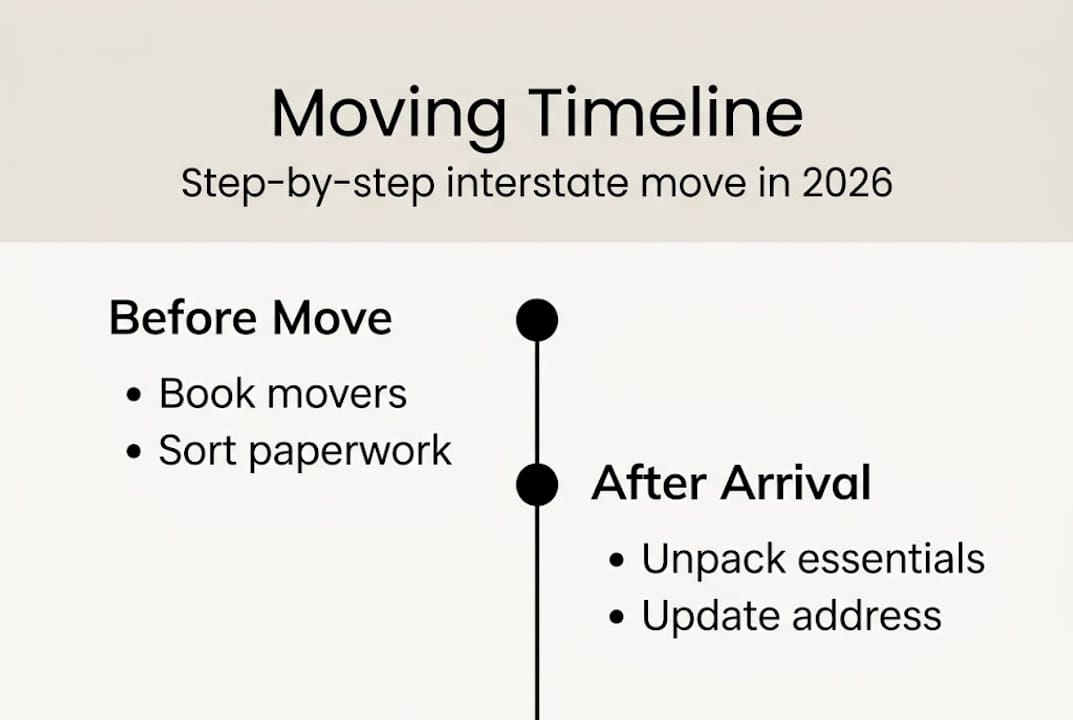
Once your budget is set, use this timeline to track every move-related task and avoid rushing in the final days. Families who follow a structured schedule consistently report less stress and fewer last-minute surprises.
A solid long-distance moving checklist follows this general sequence:
- 8 to 12 weeks out: Research and book a licensed mover. Begin decluttering room by room. Notify your employer and children’s schools.
- 6 to 8 weeks out: Start collecting free boxes. Request school and medical records. Research your new neighborhood, schools, and utilities.
- 4 to 6 weeks out: Begin packing non-essentials. Confirm your moving date in writing. Arrange pet travel or boarding if needed.
- 2 to 4 weeks out: Notify the post office of your address change. Transfer or cancel local memberships. Confirm utility shutoffs and startups.
- 1 week out: Pack almost everything. Prepare an essentials bag. Do a final walkthrough of every room and closet.
- Moving day: Sign the Bill of Lading before anything is loaded. Document the condition of large items with photos. Keep your essentials bag with you.
- Post-move (first two weeks): Update your driver’s license and vehicle registration. Register to vote in your new state. Confirm delivery inventory against your list.
Families commonly forget these tasks until it is too late:
- Transferring school records and immunization documents for children
- Arranging a safe travel plan for pets (carriers, vet certificates for air travel)
- Properly disposing of hazardous materials (paint, propane, cleaning chemicals) that movers cannot legally transport
- Packing an essentials bag with toiletries, a change of clothes, chargers, and snacks for moving day
“Always keep important documents, valuables, and medications with you, not on the moving truck.”
For a full breakdown of what changes between states, our guide on state-to-state move rules covers licensing, registration, and residency requirements you will need to address after arrival.
Protecting your belongings and rights
Beyond logistics, you need to secure your belongings and understand your rights for a safe, loss-free move. Federal law gives you two insurance options, and the difference between them is significant.
Released Value Protection vs. Full Value Protection:
- Released Value Protection: Free and automatically included. However, liability is only $0.60 per pound per item. A 50-pound flat-screen TV damaged in transit would yield just $30 in compensation.
- Full Value Protection: Paid coverage that requires the mover to repair, replace, or reimburse the item at current market value. This is the option worth paying for on high-value moves.
For a clear breakdown of what each option covers, read our guide on moving insurance explained and learn how to evaluate coverage for your specific shipment.
Pro Tip: Always ask your mover for the “Your Rights and Responsibilities When You Move” booklet before signing anything. Legitimate movers are legally required to provide it. If they hesitate, that is a red flag.
Red flags that signal a rogue mover:
- Demanding a large cash deposit upfront (more than 20 percent)
- Providing only a verbal or vague non-binding estimate
- No physical address or USDOT number on their website
- Showing up with an unmarked rental truck on moving day
For a full overview of interstate moving laws and your legal rights as a shipper, Wheaton Worldwide’s resource is a solid reference. You can also explore our page on protecting your belongings for practical steps to document and safeguard your items before loading.
Items that should never go on the moving truck include passports, financial documents, prescription medications, jewelry, irreplaceable photos, and any hazardous materials such as propane tanks, paint, or pool chemicals.

A mover’s perspective: What families really miss (and how to get it right)
Here is the truth most families learn the hard way: the checklist is not the problem. Execution is.
We have seen families do everything right on paper and still get burned. The single biggest mistake? Choosing a mover based on the lowest quote without verifying whether it is a binding or not-to-exceed estimate. A non-binding estimate can legally increase by up to 10 percent on delivery day. That “savings” of $400 can become a $900 surprise when the truck pulls up.
Full-service movers reduce stress for families, and binding or not-to-exceed estimates protect against cost overruns. Watch for red flags like large upfront deposits or vague paperwork.
Decluttering is not just about saving money. Families who purge before the move report feeling more organized and less overwhelmed on arrival. It is a mental reset as much as a financial one.
Peak season is brutal. Booking 8 or more weeks out in summer is not a luxury, it is the only way to guarantee your preferred date with a reputable carrier. Waiting until six weeks out in July means you are choosing from whoever is still available, not whoever is best.
For guidance on choosing your interstate mover, including what questions to ask and what answers to trust, we have laid out the full process so you can make a confident, informed decision.
Get expert help for your interstate move
Planning a long-distance move is a lot to manage on your own, and the stakes are high. AMB Moving & Storage Inc. specializes in licensed, regulated interstate and long-distance relocations across the United States.
Our expert interstate movers handle everything from written estimates and packing to delivery and post-move coordination. If you want someone walking you through every step, our moving coordinator services pair you with a dedicated professional who manages your move from start to finish. Ready to see what your move will cost? Get your quote today and take the first step toward a stress-free relocation.
Frequently asked questions
How far in advance should I book my interstate movers?
Book your interstate movers at least 8 to 12 weeks before your move date, especially during peak summer season when availability fills up fast.
What documents are required for interstate moving?
You need a written estimate, Bill of Lading, inventory list, and the “Your Rights” booklet that all licensed interstate movers are federally required to provide.
What is the average cost to move across state lines?
Costs range from $1,500 for a one-bedroom to $12,000 or more for large homes, depending on distance, weight, and service level chosen.
What items should never go on the moving truck?
Keep valuables, important documents, medications, and hazardous materials with you at all times since movers are prohibited from transporting many of these items by law.
What insurance coverage do interstate movers offer?
All licensed interstate movers must provide Released Value at $0.60/lb for free, and they must also offer Full Value Protection as a paid upgrade for comprehensive coverage.