
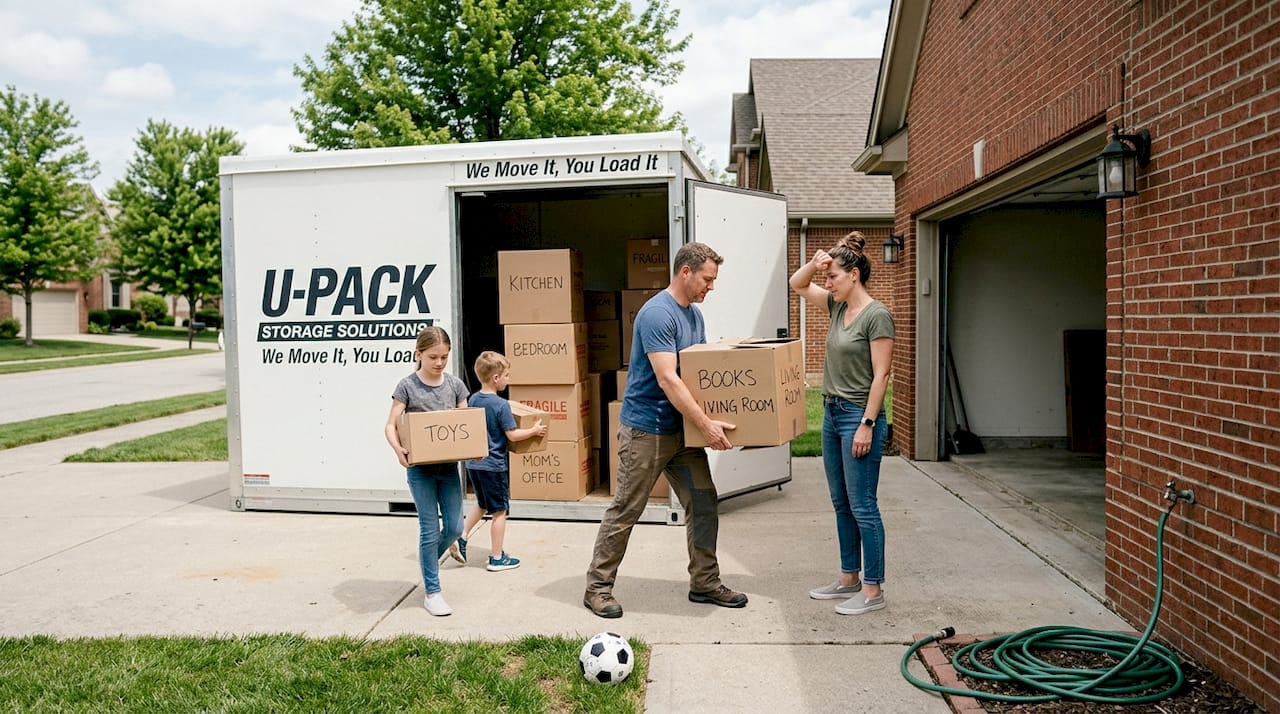

Many families planning a long-distance move face a confusing choice between portable containers and self-storage facilities. The decision impacts your budget, convenience, and peace of mind during an already stressful transition. Understanding how these storage options work helps you protect belongings while controlling costs. This guide explains each storage method, compares their benefits, and shows you how to optimize your 2026 move with practical strategies that reduce expenses and disruption.
Table of Contents
- Understanding Your Storage Options For A Long-Distance Move
- Comparing Cost, Convenience, And Security: Which Storage Works Best For Your Move?
- Maximizing Efficiency: Decluttering And Routine Maintenance During Storage
- Choosing The Right Storage Provider: What To Prioritize And Why It Matters
- Planning Your Move With AMB Moving Services
- FAQ
Key takeaways
| Point | Details |
|---|---|
| Portable containers offer convenience | They deliver to your door, you load once, and they ship directly to your destination for seamless transitional storage. |
| Self-storage provides long-term value | Monthly rentals at secure facilities cost less over time and include better security features than portable options. |
| Hybrid approaches save money | Combining both methods lets families balance convenience during transition with cost efficiency for extended storage needs. |
| Decluttering cuts moving costs | Removing unnecessary items reduces weight-based charges by $0.50 to $0.80 per pound. |
| Maintaining routines minimizes stress | Using portable containers lets families keep daily schedules intact while gradually packing and preparing for the move. |
Understanding your storage options for a long-distance move
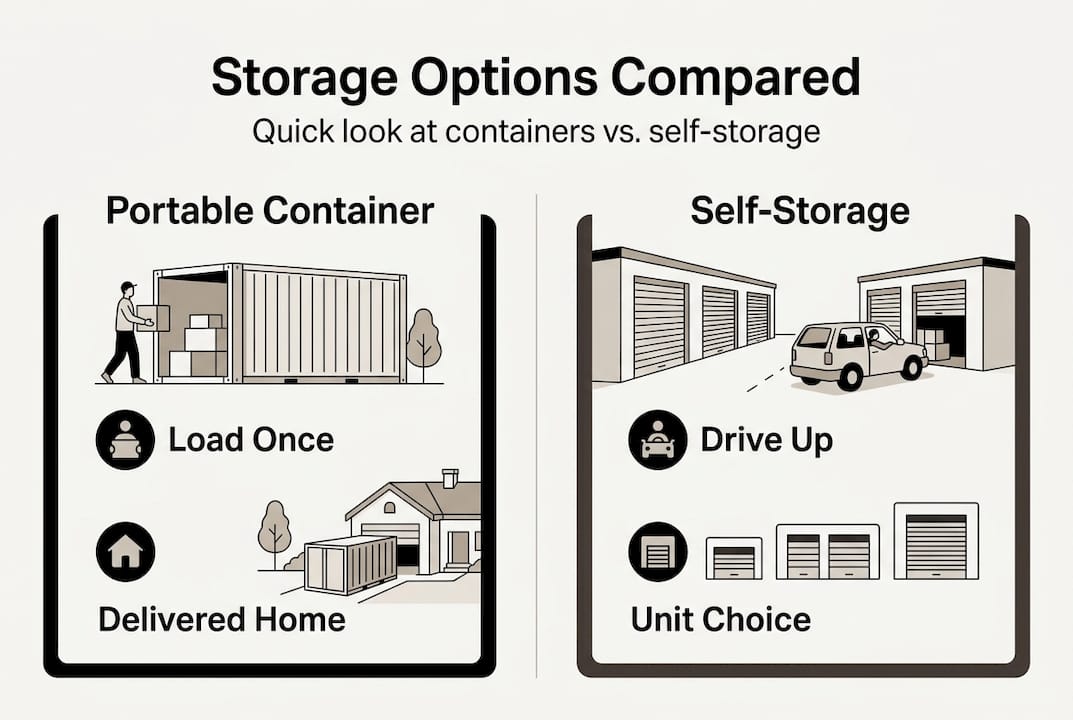
Choosing between portable containers and self-storage starts with understanding what each option delivers. Portable containers arrive at your home, giving you time to load belongings at your own pace. Once packed, the company transports the container directly to your new address or holds it at their facility until you need delivery. This approach works well for families who want to avoid handling items multiple times.
Self-storage facilities rent secure units by the month. You transport items to the facility yourself or hire movers to do it. These units typically include climate control, surveillance, and insurance options. The flexibility to access your belongings anytime makes self-storage ideal when you need extended storage between selling one home and moving into another.
Portable containers excel in transitional storage because you load once and avoid the hassle of moving items in and out of storage. However, self-storage becomes more economical for periods longer than a few months. Many families discover that using both methods strategically delivers the best results. Start with a portable container for immediate moving needs, then transfer seasonal or rarely used items to a self-storage unit to optimize costs.
Here are the main advantages and limitations of each option:
- Portable containers eliminate double handling and reduce physical strain on your family
- Self-storage offers superior security features including 24/7 monitoring and controlled access
- Portable solutions work best for moves under three months
- Self-storage costs less per month but requires you to arrange transportation
- Combining both methods gives you flexibility to match storage type to item priority
Understanding these differences helps you evaluate which approach fits your timeline, budget, and specific moving storage solutions needs. The right choice depends on how long you need storage, whether you can handle multiple trips, and what level of security your belongings require. Taking time to assess these factors now prevents costly mistakes during your long-distance move preparation.
Comparing cost, convenience, and security: which storage works best for your move?
A detailed comparison reveals how portable containers and self-storage perform across the factors that matter most to families. Cost structures differ significantly between the two options. Portable containers typically charge a flat rate covering delivery, storage, and final transportation. Self-storage facilities bill monthly rent plus any additional fees for insurance, locks, or climate control.
The convenience factor favors portable containers for short transitions. You pack once at your current home, and the container travels with your belongings. No driving back and forth to a storage facility. No coordinating multiple moving days. Self-storage requires more effort upfront but provides unlimited access to retrieve or add items throughout your storage period.
Security features vary widely. Self-storage facilities invest heavily in surveillance cameras, gated access, individual unit alarms, and on-site staff. Portable containers sit in company yards with basic security, though your items remain sealed in your personal container. For valuable or irreplaceable belongings, the enhanced security of self-storage often justifies the extra transportation effort.

| Factor | Portable Containers | Self-Storage |
|---|---|---|
| Typical Cost | $3,000 to $5,000 for 3 months | $100 to $300 per month |
| Convenience | Load once, minimal handling | Requires transport to facility |
| Security | Basic yard security | 24/7 monitoring, gated access |
| Best Timeframe | Under 3 months | 3 months or longer |
| Ideal For | Seamless transitions | Extended storage needs |
The moving cost analysis becomes clearer when you calculate total expenses. A portable container costing $4,000 for three months equals $1,333 monthly. A self-storage unit at $200 per month saves you $1,133 monthly but adds transportation costs. If you need storage for six months, self-storage total cost including moving expenses often runs $2,000 to $2,500 compared to $6,000 or more for portable containers.
Pro Tip: Start your move with a portable container to handle the transition smoothly, then transfer items you will not need immediately into a self-storage unit. This hybrid approach gives you the convenience of one-load packing while capturing the cost savings of long-term self-storage for seasonal items, furniture, or belongings that will not fit in your new home right away.
Your decision should align with your specific timeline and priorities. Families moving directly from one home to another with minimal gap benefit most from portable containers. Those facing a longer transition period, temporary housing, or uncertainty about move-in dates should explore storage comparison options that emphasize flexibility and cost control. Review your move preparation tips to determine which storage method integrates best with your overall moving plan.
Maximizing efficiency: decluttering and routine maintenance during storage
Reducing what you move and store delivers immediate financial benefits. Long-distance movers charge based on weight and volume. Every item you eliminate cuts costs by $0.50 to $0.80 per pound. A family removing 500 pounds of unnecessary belongings saves $250 to $400 on moving expenses alone. Storage costs drop proportionally when you need less space.
Effective decluttering requires a systematic approach. Start sorting items at least eight weeks before your move. This timeline prevents rushed decisions and last-minute stress. Create four categories: keep, donate, sell, and recycle. Be honest about what you actually use versus what you keep out of habit or guilt.
Follow these decluttering steps to maximize savings:
- Sort one room at a time to avoid feeling overwhelmed by the entire house
- Photograph items you want to remember but do not need to keep physically
- Sell valuable items through online marketplaces to offset moving costs
- Donate usable goods to charities for potential tax deductions
- Recycle electronics, batteries, and hazardous materials properly at designated centers
- Discard broken or expired items that serve no purpose
Maintaining normal family routines during a move reduces stress and keeps everyone functioning well. Portable containers support this goal by sitting at your home for weeks. You pack gradually without disrupting daily schedules. Children continue their activities. Adults manage work responsibilities. The container becomes part of your temporary landscape rather than forcing a frantic packing weekend.
Pro Tip: Schedule decluttering sessions for 30 to 45 minutes daily rather than attempting marathon weekend purges. This pace prevents decision fatigue and helps you make better choices about what truly deserves space in your new home. Involve family members in age-appropriate ways to build buy-in and teach valuable life skills.
Organizing items properly before storage saves time and frustration later. Label every box with contents and destination room. Use a color-coding system or numbering scheme. Create a master inventory spreadsheet listing box numbers and contents. Take photos of electronics and how cables connect before disconnecting them. These simple steps transform unpacking from a nightmare into a manageable process.
Pack a separate essentials box for items you need immediately upon arrival. Include toiletries, medications, important documents, basic tools, phone chargers, and a few days of clothing. Keep this box with you during the move rather than loading it into storage. Access to essentials eliminates the desperate search through dozens of boxes when you arrive exhausted at your new home.
Your moving checklist should incorporate these efficiency strategies from the start. Early decluttering and organized packing compound their benefits throughout your move. The money saved on transportation and storage often covers other moving expenses like professional packing services or temporary lodging. Smart preparation using moving cost savings strategies transforms what could be a financial burden into a manageable investment in your family’s future.
Choosing the right storage provider: what to prioritize and why it matters
Selecting a storage provider requires careful evaluation of several critical factors. Security features should top your priority list. Look for facilities with 24/7 video surveillance, individual unit alarms, controlled gate access, and well-lit premises. Ask about their security incident history and how they respond to breaches. Your belongings deserve protection that goes beyond a simple padlock.
Accessibility determines how easily you can retrieve items during storage. Some facilities offer 24/7 access while others restrict hours to business days. Consider your schedule and whether you might need items outside standard hours. Facilities located near major highways save time on each visit. Climate-controlled units cost more but protect sensitive items from temperature and humidity damage.
Insurance coverage protects against loss or damage. Most homeowners insurance policies include limited coverage for items in storage, but verify your policy details. Storage facilities typically offer additional insurance at reasonable rates. Compare coverage limits, deductibles, and exclusions before deciding. The peace of mind often justifies the modest monthly premium.
Customer reviews reveal real experiences other families encountered. Read reviews on multiple platforms to get balanced perspectives. Pay attention to comments about billing transparency, facility cleanliness, customer service responsiveness, and how the company handles problems. A pattern of complaints about hidden fees or poor communication should raise red flags.
Follow these steps to vet potential storage providers:
- Research at least three providers in your target area using online reviews and recommendations
- Request detailed quotes including all fees, insurance costs, and any promotional rates with expiration dates
- Visit facilities in person to inspect cleanliness, security features, and overall condition
- Ask specific questions about access hours, payment policies, late fees, and contract terms
- Verify licensing and insurance credentials through state regulatory agencies
- Check for hidden costs like administrative fees, lock requirements, or mandatory insurance purchases
Provider flexibility matters especially for families needing hybrid storage solutions. Some companies offer both portable containers and traditional storage units. Others partner with complementary services. This flexibility lets you adjust your storage strategy as circumstances change without switching providers and losing negotiated rates or familiarity with their systems.
Special considerations apply when storing fragile or valuable items. Ask about temperature and humidity control for electronics, artwork, musical instruments, or important documents. Inquire whether the facility allows you to purchase additional insurance for high-value items. Some providers offer specialized storage solutions for vehicles, wine collections, or business inventory that require specific environmental conditions.
The right provider reduces moving stress by delivering reliable service when you need it most. Professional moving and storage services understand the complexities families face during long-distance relocations. They offer guidance on optimal storage duration, packing techniques that prevent damage, and coordination between moving and storage timelines. Experienced providers become partners in your relocation rather than just vendors renting space.
Quality packing services complement good storage by ensuring items arrive at the facility properly protected. Professional packers know which materials work best for different item types. They understand weight distribution in boxes and how to stack efficiently. Their expertise prevents damage that could occur from amateur packing mistakes. When you combine professional packing with secure storage, you create a comprehensive protection system for your belongings.
Taking time to choose the right provider pays dividends throughout your storage period. You avoid problems, enjoy responsive customer service, and gain confidence that your belongings remain safe. This foundation of trust lets you focus on other aspects of your move rather than worrying about what might be happening to items in storage. The research investment upfront saves money and stress over the months ahead.
Planning your move with AMB Moving Services
Navigating storage decisions becomes simpler when you work with experienced professionals who understand long-distance moving challenges. AMB Moving Services brings decades of expertise helping families coordinate interstate moving services with optimal storage solutions. Our team evaluates your specific timeline, budget, and belongings to recommend whether portable containers, self-storage, or a hybrid approach serves you best.
We offer comprehensive professional storage solutions that integrate seamlessly with your moving plan. Our federally licensed carriers transport your belongings safely across state lines while our storage partnerships provide secure facilities nationwide. You gain the convenience of coordinating everything through one trusted provider rather than juggling multiple vendors. Our transparent pricing eliminates surprises, and our packing services ensure items arrive at storage or your new home in perfect condition. Contact AMB Moving Services today to discuss how we can make your 2026 long-distance move smooth and stress-free.
FAQ
What factors determine if I should use portable containers or self-storage?
Your storage duration and budget drive this decision. Portable containers work best for moves under three months when you value convenience and want to avoid handling items multiple times. Self-storage becomes more economical for longer periods and offers superior security features including 24/7 monitoring and controlled access. Many families find that combining both methods delivers optimal results by using portable containers for transition and self-storage for extended needs.
How can I reduce my moving and storage costs effectively?
Decluttering before you move delivers immediate savings by reducing weight-based charges by $0.50 to $0.80 per pound. Sort belongings early and eliminate items you no longer need or use. Combining portable containers for your initial move with self-storage for items you will not need immediately optimizes both convenience and cost. This hybrid approach lets you capture the benefits of each storage type while minimizing total expenses.
What should I look for when choosing a storage provider?
Prioritize security features including video surveillance, individual unit alarms, gated access, and well-lit facilities. Verify insurance options and compare coverage limits against your needs. Read customer reviews on multiple platforms to assess billing transparency, cleanliness, and service responsiveness. Consider providers offering flexible solutions that accommodate changing storage needs, especially if you might need both portable and traditional storage during your move.
How long can I typically keep items in portable containers versus self-storage?
Portable container companies usually allow storage for several months with options to extend as needed, though costs increase with duration. Self-storage facilities offer month-to-month leases with no maximum term, making them ideal for indefinite storage needs. Your contract terms vary by provider, so clarify duration limits, extension policies, and any fees for early termination or storage beyond agreed periods before committing to either option.
Should I get additional insurance for items in storage?
Yes, additional insurance provides valuable protection beyond basic coverage. Check your homeowners policy for storage coverage limits, which often fall short of actual value. Storage facilities offer affordable supplemental insurance with higher limits and fewer exclusions. For valuable items like electronics, artwork, or family heirlooms, the modest monthly premium delivers peace of mind and financial protection against loss or damage during storage.