


TL;DR:
- Proper planning, inventory, and labeling are crucial to organized long-distance storage.
- Choosing the right storage type depends on security, accessibility, climate control, and budget.
- Using digital inventories and professional storage services reduces stress, damage, and loss during moves.
Moving long-distance is stressful enough without the added chaos of disorganized storage. When you’re juggling hundreds of household items, deciding what to store, what to keep accessible, and what needs special protection can feel overwhelming fast. Poor planning leads to damaged furniture, lost boxes, and costly last-minute decisions. This guide walks you through every stage of storage organization for your long-distance move, from assessing your needs and choosing the right solution to packing smart and avoiding common mistakes that trip up even experienced movers.
Table of Contents
- Assess your storage needs before moving
- Select the right storage solution for your move
- Pack and label for maximum organization
- Avoid common mistakes and troubleshoot storage challenges
- Why most families underestimate storage prep for long-distance moves
- Simplify your move with professional storage solutions
- Frequently asked questions
Key Takeaways
| Point | Details |
|---|---|
| Assess storage needs | Carefully inventory and plan storage space before your move to prevent last-minute stress. |
| Choose the right solution | Compare features, security, and cost for managed, self-storage, and portable options. |
| Pack with organization | Use clear labels, robust packing materials, and digital inventories for easy access and safety. |
| Avoid common mistakes | Prevent losses and damage by troubleshooting issues early, using photos and clear contracts. |
| Professional help available | Managed storage and expert movers simplify long-distance relocations and reduce stress. |
Assess your storage needs before moving
Before you book a single storage unit or order packing supplies, you need a clear picture of what you’re working with. Start by walking through every room and creating a written inventory of your belongings. Record item types, rough dimensions, and any special handling requirements. Furniture, electronics, seasonal clothing, and fragile collectibles all have different storage demands, and lumping them together without a plan is where things go wrong.
Assessing volume and types of items ahead of moving saves time and reduces stress. This step alone can cut your packing time significantly because you stop second-guessing what goes where.
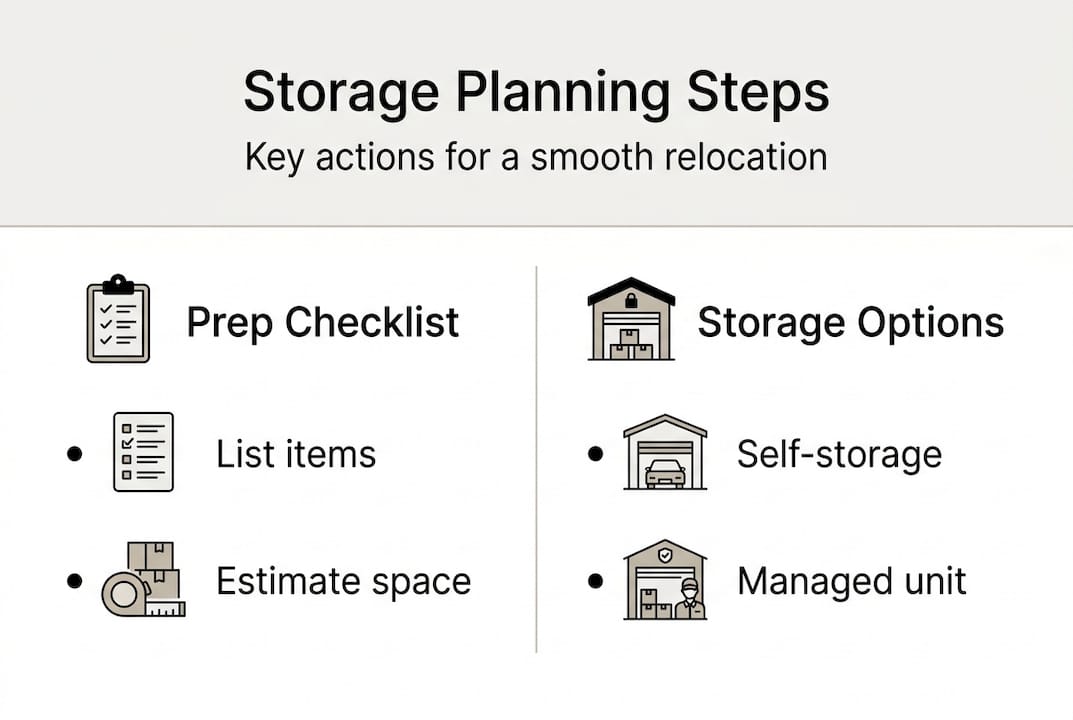
Once you have your inventory, you can begin estimating how much space you actually need. Use a simple reference table like this:
| Item type | Quantity | Estimated space needed |
|---|---|---|
| Large furniture (sofas, beds) | 3-5 pieces | 100-150 sq ft |
| Medium furniture (dressers, tables) | 4-6 pieces | 60-80 sq ft |
| Boxes (standard) | 20-40 boxes | 40-60 sq ft |
| Electronics and appliances | 5-10 items | 20-30 sq ft |
| Fragile or specialty items | Varies | 10-20 sq ft |
With this estimate in hand, you can explore your storage options more confidently and avoid renting more space than you need.
Not all storage needs are equal. Think about accessibility before you commit. Seasonal items you won’t need for months can go deep into a unit. But medications, important documents, and daily-use items need to stay within reach. Sorting by priority before you pack saves enormous frustration later.
Here are the main storage types to consider at this stage:
- Self-storage units: Rented spaces you manage yourself, available in multiple sizes
- Portable containers: Delivered to your home, loaded on your schedule, then transported
- Managed storage services: Full-service options where professionals handle transport and storage
Pro Tip: Build your inventory using a free spreadsheet or app like Google Sheets. Assign each item a priority level (daily, seasonal, or archive) so you know exactly how to organize your unit before you arrive.
Using a solid checklist for long-distance move planning keeps this process from becoming overwhelming. Preparation at this stage pays off at every step that follows.
Select the right storage solution for your move
Once you know what needs to be stored, the next step is deciding which storage solution fits your needs and budget. This is where many families make costly errors by defaulting to the cheapest option without considering security, climate control, or how often they’ll need access.
Choosing the right storage type improves security, accessibility, and cost efficiency. Here’s a side-by-side comparison to help you evaluate your options:
| Feature | Managed storage | Self-storage unit | Portable container |
|---|---|---|---|
| Security | High (monitored) | Varies by facility | Moderate |
| Climate control | Usually included | Optional add-on | Limited |
| Accessibility | Scheduled access | 24/7 at most facilities | On your property |
| Average monthly cost | $150-$300+ | $75-$200 | $100-$250 |
| Best for | Valuables, long-term | Flexible access needs | Short-term, DIY moves |
Use this four-step process to make your final decision:
- Review item needs. Identify which items require climate control, extra security, or frequent access.
- Compare security and amenities. Check for surveillance cameras, access controls, and pest management at any facility you consider.
- Assess accessibility. Decide how often you’ll need to retrieve items during your move and choose accordingly.
- Calculate monthly cost. Factor in not just rent but also insurance, access fees, and transportation to and from the facility.
Important: Always verify insurance coverage and read facility reviews before booking any storage unit. A facility without verifiable reviews or clear insurance terms is a red flag you should not ignore.
For families doing long-distance moving, managed storage often makes the most sense because it reduces the number of logistics you have to personally coordinate. You hand off your items to professionals, and they handle the rest. That peace of mind has real value when you’re already managing a cross-country move.
If budget is your primary concern, self-storage units with climate control are a strong middle-ground choice. Just make sure the facility is close enough to your route to avoid extra travel. And always read the contract carefully before signing, paying close attention to late fees and access restrictions.
Pack and label for maximum organization
After choosing a storage solution, the focus shifts to packing and labeling your belongings for efficient access and safety. This is the step most people rush, and it’s where the majority of damage and lost items occur.
Clear labeling and systematic packing minimize loss and damage during moves. Use this step-by-step packing process:
- Group fragile items separately. Never mix fragile and heavy items in the same box, even if space allows.
- Cushion and wrap everything. Use bubble wrap, packing paper, or foam padding for dishes, glassware, and electronics. Moisture-resistant materials protect items in storage from humidity.
- Label all sides of every box. A box labeled only on top becomes unreadable once it’s stacked.
- Mark contents and intended room. Write both the item list and destination room on each box so unpacking is faster and more organized.
For labeling, go beyond basic marker-on-cardboard. Here are smarter approaches:
- Color coding: Assign each room a color and use matching tape or stickers on every box from that room
- QR codes: Print QR code labels that link to a digital list of box contents, making it easy to search for specific items
- Digital inventory: Photograph the contents of each box before sealing it and store those photos in a shared cloud folder
- Numbered system: Number every box and keep a master list that matches numbers to contents and rooms
The 2026 moving storage guide recommends combining physical labels with a digital backup for maximum reliability.
Pro Tip: Pack an essentials box and keep it with you, not in storage. Fill it with medications, chargers, important documents, a change of clothes, toiletries, and any items you’ll need within the first 24 hours of arrival. This single box prevents the frantic unpacking that ruins move-in day.
Use sturdy double-walled boxes for anything heavy or fragile. Avoid overpacking boxes to the point where they bow at the bottom. A box that fails mid-move can cause a chain reaction of damage that’s far more expensive than buying better supplies upfront.
Avoid common mistakes and troubleshoot storage challenges
Even with careful planning and packing, mistakes and unexpected challenges can arise. Knowing what to watch for and how to fix problems quickly keeps your move on track.
Proper troubleshooting and awareness of common mistakes can prevent loss, save money, and reduce moving stress. Here are the most frequent errors and their fixes:
- Overfilling storage units: Leave a clear path to the back and stack items no higher than 6 feet. Overfilling makes retrieval dangerous and damages items at the bottom.
- Poor labeling: If a box just says “misc,” you’ll open ten boxes looking for one item. Fix this before move day by relabeling anything vague.
- Ignoring climate control: Wood furniture warps, electronics corrode, and fabric molds in uncontrolled environments. Always opt for climate control if you’re storing anything valuable for more than a few weeks.
- Unclear contracts: Read every line before signing. Understand what happens if you miss a payment or need early access outside normal hours.
- Skipping insurance: Your homeowner’s policy may not cover items in a storage unit. Ask your provider directly and consider supplemental coverage.
Essential reminder: Photograph all packed boxes and your storage unit before and after loading. Keep a digital copy of your inventory in cloud storage. This documentation is critical if you need to file an insurance claim or track a missing item.
If you discover a problem after move day, act quickly. Contact the storage facility immediately if items are damaged or missing. Having photos and a digital inventory makes the claims process far faster. Review your storage troubleshooting guide for step-by-step help resolving access issues, contract disputes, or damaged goods.
Double-check your unit’s accessibility hours before move day. Some facilities restrict after-hours access, which can create serious problems if your moving truck arrives late.
Why most families underestimate storage prep for long-distance moves
Here’s what most moving guides won’t tell you: the biggest source of moving stress isn’t the physical labor. It’s the mental load of not knowing where anything is. Families consistently assume that storage will sort itself out once they start packing. It never does.
We’ve seen countless moves where the physical logistics went smoothly but the family arrived at their new home unable to find essential items for days. That’s not a packing problem. It’s a preparation problem.
Digital inventories are more reliable than handwritten lists and minimize insurance disputes. Yet most families still rely on memory or scribbled notes. The ten minutes it takes to photograph a box and log it in a spreadsheet pays back hours of searching later.
Our strong recommendation is to treat your digital inventory checklist as a non-negotiable part of your move, not an optional extra. Verify your insurance before move day, not after. And confirm facility access hours in writing. These three habits alone separate a smooth move from a chaotic one.
Simplify your move with professional storage solutions
You now have a clear, actionable framework for organizing storage during your long-distance move. But knowing the steps and executing them under real moving pressure are two different things.
At AMB Moving & Storage Inc., we offer professional storage solutions designed specifically for long-distance and interstate relocations. From managed storage with climate control to digital organization tools and detailed moving checklists, we handle the complexity so you can focus on settling into your new home. Use our moving organization checklist to get started today, and when you’re ready to move forward, get a storage quote tailored to your family’s specific needs.
Frequently asked questions
What type of storage is best for valuable items during a long-distance move?
Climate-controlled managed storage facilities are usually safest for valuables because they offer better security and environmental protection than standard self-storage units.
How do I avoid losing items during storage and moving?
Create digital inventories, use clear labels on all sides of boxes, and photograph contents before sealing. These steps, supported by digital labeling practices, make it far easier to track and recover any item.
How much storage space do I need for a typical family relocation?
Inventory your items and estimate cubic footage by category, then use your storage provider’s unit sizing guidelines. Inventory and unit size guidelines help you avoid paying for space you don’t need.
What should I pack in an essentials box for immediate access after a move?
Include important documents, toiletries, chargers, a change of clothes, and any medications. Packing an essentials box ensures you have everything you need without digging through storage on move-in day.