

TL;DR:
- Hiring professional packers significantly reduces damage risk during long-distance moves by using custom-sized containers and protective materials. Their expertise improves efficiency, creates detailed inventories, and strengthens insurance claims by ensuring proper packaging. Partial packing options lower costs while safeguarding high-value and fragile items, making professional packing a smart risk management choice.
Hiring professional packers is the single most effective way to protect your belongings and reduce damage risk during a long-distance move. Professional packing services, the industry term used by interstate carriers and federal regulators alike, go far beyond wrapping dishes in newspaper. Trained crews use custom-sized boxes, foam inserts, and double-wall corrugated cartons to guard against the vibration, compression, and impact that accumulate across hundreds of miles of highway. For families relocating across state lines, the decision to hire packing experts directly affects both the safety of their possessions and the validity of any insurance claim filed after transit.
Why hire professional packers: the core case
Professional packers prevent damage caused by improper packaging through correct materials and sizing, mitigating impacts from loading, stacking, and transportation vibrations. That finding matters because most household damage during long-distance moves traces back to one source: boxes that shift, collapse, or fail to cushion contents against road stress. A professional crew eliminates that variable before the truck leaves your driveway.
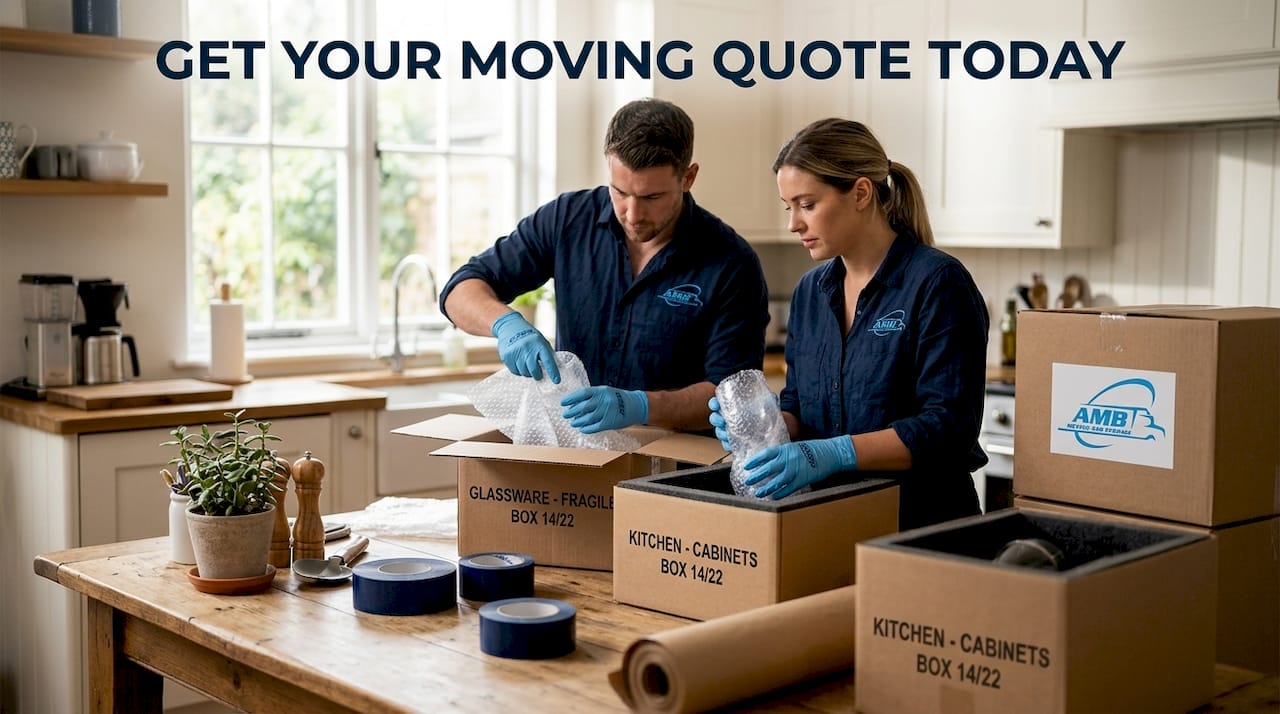
The advantages of professional movers extend well beyond physical protection. Packing teams work room by room with no loose items left unpacked, improving efficiency and reducing errors compared to self-packing. They also generate an accurate item inventory, which becomes your paper trail if anything goes wrong during transit. For interstate moves governed by federal Department of Transportation rules, that documentation is not optional. It is the foundation of any damage claim.
How professional packers prevent damage: techniques and materials
The gap between professional and DIY packing is widest when it comes to fragile, bulky, and high-value items. Professional packers are especially valuable for antiques, artwork, electronics, and collectibles, offering specialized care beyond typical homeowner capabilities. A standard homeowner packs a flat-screen television in its original box if they still have it. A professional crew builds a custom foam-lined crate sized to that specific model.
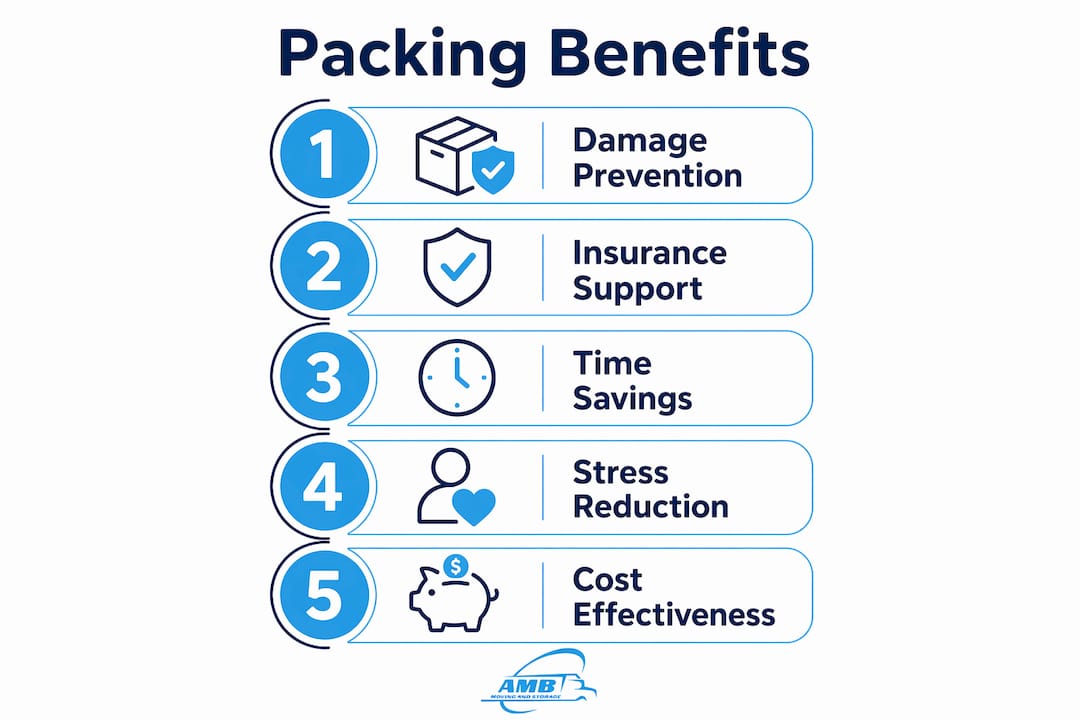
The materials professionals use are not available at most retail stores. Double-wall boxes handle stacking weight that single-wall cartons cannot. Foam inserts immobilize items inside the box so they cannot shift during braking or cornering. Bubble wrap rated for heavy items differs from the lightweight variety sold at office supply stores. These distinctions matter across a 1,500-mile haul in a way they simply do not for a local move.
Here is what professional packing protects against that DIY methods routinely miss:
- Impact damage from loading ramps, truck beds, and warehouse transfers
- Vibration fatigue that cracks ceramics and loosens electronic components over long distances
- Moisture infiltration in climate-variable regions, addressed with moisture-barrier wrapping
- Compression failure when boxes are stacked incorrectly, which crushes contents at the bottom of a load
- Concealed damage to items packed loosely, which is harder to document and claim after delivery
Pro Tip: Ask your packing crew specifically about their process for electronics. Professionals should use anti-static bags for circuit boards and hard drives, a step most DIY packers skip entirely.
How professional packing affects your moving insurance claim
Federal interstate moving liability defaults to Released Value Protection at $0.60 per pound per item, which severely underprotects higher-value goods. A 10-pound laptop worth $1,500 receives a maximum reimbursement of $6.00 under Released Value. That gap is why understanding the relationship between packing quality and insurance coverage is not optional for long-distance movers.
Full Value Protection legally requires carriers to offer repair, replacement, or cash settlement for lost or damaged items at replacement cost. It typically costs 1 to 2 percent of declared value and may require a separate high-value inventory for items exceeding $100 per pound. Professional packing strengthens your position under Full Value Protection because it demonstrates that items were prepared to industry standards before they were loaded. Carriers can dispute claims when self-packed boxes show signs of inadequate cushioning.
Here is how professional packing directly supports a successful claim:
- Accurate bill of lading. Packing crews generate a detailed inventory that matches what the carrier signs for at pickup. Discrepancies between the inventory and delivery condition are the clearest evidence of transit damage.
- Condition documentation. Professionals note pre-existing damage on the bill of lading, preventing carriers from attributing old scratches or cracks to transit.
- Timely damage notation. Damage notation within 5 days of delivery is critical to claim validity. A professional packing inventory makes it easier to identify what is missing or damaged quickly.
- Carrier-packed versus owner-packed distinction. Items packed by the carrier’s crew carry a different claims burden than owner-packed boxes. When a professional crew packs your goods, the carrier assumes greater responsibility for damage.
“Claims often hinge on documentation and how items were packed. Professional packing improves claims outcomes through appropriate inventory and condition notes.” — BOL Damage Notation Guide, O Trucking
For a deeper look at how coverage options interact with packing choices, the Ambmovingservices guide on moving insurance options covers Released Value and Full Value Protection in detail.
What are the time and stress savings of hiring professional packers?
Hiring professional packers saves 10 to 15 hours of personal time compared to self-packing, and that figure does not account for the mental load of deciding what goes where, sourcing materials, or repacking boxes that do not close properly. For a family with children, jobs, and a closing date bearing down, those hours are not abstract. They are the difference between arriving at your new home exhausted or ready to settle in.
The physical dimension is equally real. Packing a three-bedroom home means lifting, bending, and carrying for days. Professional crews are trained for this physically demanding work and rotate tasks to maintain accuracy throughout the job. You avoid the back strain, the bruised knuckles, and the fatigue-driven mistakes that lead to broken items.
The reasons to hire movers and packers together are strongest in these situations:
- Last-minute moves where there is no time to source materials and pack methodically
- Long-distance relocations where packing errors compound across hundreds of miles
- Households with antiques, art, or specialty equipment that require custom crating
- Families with young children where packing time competes directly with caregiving
- Seniors or individuals with physical limitations for whom extended packing is not safe
Cost considerations: is professional packing worth the price?
Professional packers average $80 per hour per packer, with a full three-bedroom home running approximately $1,000 to $1,920 depending on volume and timing. Off-peak moves, generally fall and winter outside of summer weekends, cost less. That range sounds significant until you weigh it against the cost of replacing a damaged antique, filing a disputed insurance claim, or losing two weeks of billable work hours to self-packing.
| Cost factor | What it means for your budget |
|---|---|
| Home size and volume | Larger homes with more items increase packing time and material costs directly. |
| Peak vs. off-peak timing | Booking in fall or winter can reduce packing costs compared to summer moves. |
| Partial vs. full packing | Packing only fragile or high-value items cuts cost while protecting what matters most. |
| Combined service packages | Bundling packing with moving services often produces a lower total price than booking separately. |
| Damage avoidance savings | Replacing a single damaged piece of art or electronics can exceed the entire packing fee. |
Partial packing is the most underused option in the industry. You pack clothing, books, and linens yourself. The professionals handle your kitchen, electronics, artwork, and anything fragile. This approach cuts the packing fee by 40 to 60 percent while concentrating expert attention where it matters most.
Pro Tip: When comparing quotes, ask each company to break out materials costs separately from labor. Some companies inflate materials charges significantly. Knowing the split helps you negotiate or supply your own boxes for non-fragile items.
For families weighing the full picture of long-distance moving services, combining packing with a full-service move under one contract simplifies billing, liability, and scheduling.
Key takeaways
Professional packing is the most direct way to protect belongings, support insurance claims, and reduce stress during a long-distance interstate move.
| Point | Details |
|---|---|
| Damage prevention | Professionals use foam inserts, double-wall boxes, and anti-static materials that DIY packing cannot replicate. |
| Insurance claim strength | Carrier-packed items shift claims responsibility and improve documentation for Full Value Protection disputes. |
| Time savings | Professional packing saves 10 to 15 hours of personal time, with compounding value for families on tight timelines. |
| Cost management | Partial packing targets high-risk items and reduces total cost by 40 to 60 percent compared to full-service packing. |
| Documentation accuracy | Professional crews generate bill of lading inventories that are critical for damage notation within the 5-day claim window. |
What experience with long-distance moves has taught us about packing
The clients who regret skipping professional packing almost never regret it because of the cost. They regret it because of what broke. A grandmother’s china set. A custom guitar. A monitor that arrived with a cracked panel and a self-packed box that showed no external damage, making the claim nearly impossible to win.
What we have seen repeatedly at Ambmovingservices is that families underestimate two things: how much their belongings shift during a 1,000-mile haul, and how much the bill of lading matters when something goes wrong. Self-packed boxes are a legitimate option for books, clothing, and non-fragile household goods. They are a liability for anything with sentimental or monetary value above a few hundred dollars.
The conventional wisdom that professional packing is a luxury for wealthy movers is wrong. It is a risk management decision. A family moving from Chicago to Phoenix with $30,000 in furniture and electronics is taking a measurable financial risk by self-packing under Released Value Protection. Full Value Protection combined with professional packing is the only combination that gives you a realistic path to full reimbursement if something goes wrong.
One more thing most articles skip: the stress of unpacking a poorly packed truck is its own ordeal. When items are packed by room, labeled clearly, and cushioned correctly, unpacking at the destination takes hours instead of days. That efficiency has real value for families trying to get children settled and return to normal routines quickly.
— AMB
Pack smarter with Ambmovingservices for your next long-distance move
Ambmovingservices provides professional packing services designed specifically for long-distance and interstate relocations across the United States. Trained crews use industry-grade materials including double-wall boxes, foam inserts, and custom crating for specialty items, and every packed load is inventoried for accurate bill of lading documentation.
Whether you need full-service packing or targeted protection for fragile and high-value items, Ambmovingservices builds packing into a complete moving plan that covers loading, transport, and delivery under one licensed and insured contract. Explore the full range of professional packing options or request a personalized quote at ambmovingservices.com/quote/ to get a cost estimate tailored to your home size, timeline, and destination.
FAQ
What does a professional packer actually do?
Professional packers supply all materials, wrap and box every item using industry-grade cushioning, and generate a detailed inventory for your bill of lading. They work room by room to eliminate loose items and reduce the risk of damage during loading and transit.
Is professional packing worth it for a long-distance move?
Professional packing saves 10 to 15 hours of personal time and significantly reduces damage risk across long-distance hauls where vibration and compression accumulate over hundreds of miles. For households with fragile or high-value items, the cost of packing is typically lower than the cost of replacing one damaged piece.
How does professional packing affect my moving insurance claim?
Items packed by a professional crew shift greater claims responsibility to the carrier, strengthening your position under Full Value Protection. Accurate inventory documentation also makes it easier to identify and report damage within the critical 5-day notation window.
What is the difference between Released Value and Full Value Protection?
Released Value Protection caps carrier liability at $0.60 per pound per item and is the federal default for interstate moves. Full Value Protection requires the carrier to repair, replace, or provide cash settlement at replacement cost, typically at 1 to 2 percent of declared value.
Can I save money by only having professionals pack fragile items?
Partial packing, where professionals handle fragile and high-value items while you pack clothing and books, reduces the total packing fee by roughly 40 to 60 percent. This approach concentrates expert attention where damage risk is highest without paying for full-service packing across every room.