


TL;DR:
- Moving from North Carolina to Florida involves a long-distance relocation that requires careful planning of costs, timelines, and legal residency steps. Costs range from approximately $578 for DIY truck rentals to over $9,120 for full-service moves depending on home size, with early booking and understanding of delivery windows being essential. Legal compliance, including obtaining a Florida driver’s license, registering vehicles, and filing for homestead exemption, must be done within specific deadlines to ensure a smooth transition and financial benefits.
Interstate relocation from North Carolina to Florida is a long-distance move spanning roughly 680 miles, requiring careful planning across costs, timelines, and legal residency steps. Whether you are leaving Charlotte, Raleigh, Greensboro, or Wilmington, your destination matters too. Orlando, Tampa, Jacksonville, Miami, and Fort Lauderdale each carry distinct housing markets, insurance profiles, and commute realities. Getting the details right before moving day separates a smooth transition from an expensive one. This guide covers everything from moving cost estimates and booking windows to Florida residency deadlines, so you arrive prepared.
What are the moving costs from North Carolina to Florida?
A full-service interstate move from North Carolina to Florida costs $1,333 to $9,299 depending on home size. That range is wide because the variables are significant. A studio apartment move starts around $1,333 to $1,815, while a 4-plus bedroom home can exceed $9,120. Most families relocating from a 2 to 3 bedroom home should budget between $2,556 and $6,221 for full-service movers. That figure means professional loading, transport, and unloading are included.
DIY truck rentals cost $578 to $1,672 for the same corridor. That lower price comes with real trade-offs: you handle all loading, driving, and unloading yourself across a multi-day trip. For families with young children, large furniture, or specialty items like pianos or artwork, the cost difference rarely justifies the physical and logistical burden.
Several factors push costs up or down. Distance is fixed at roughly 680 miles, but home size, the number of large items, packing services, declared insurance value, and the time of year all shift the final number. Summer moves between June and August carry premium pricing because demand peaks. Specialty item handling, such as vehicle shipping, adds a separate cost layer. Reviewing vehicle shipping cost factors early helps you budget accurately if you plan to transport a second car.
| Service Type | Home Size | Estimated Cost Range |
|---|---|---|
| Full-service movers | Studio | $1,333 to $1,815 |
| Full-service movers | 2 to 3 bedrooms | $2,556 to $6,221 |
| Full-service movers | 4+ bedrooms | $9,120 and above |
| DIY truck rental | Any size | $578 to $1,672 |
Pro Tip: Book your movers 6 to 8 weeks before your target move date. Peak season slots fill fast, and early booking often locks in lower rates before summer surcharges apply.
How long does a move from North Carolina to Florida take?
Delivery windows run 1 to 6 days for a direct North Carolina to Florida move. Container moves and full-service carriers with consolidated loads can stretch that window to 1 to 2 weeks. Understanding this before you commit to a lease start date or closing date protects you from being caught without your belongings on move-in day.
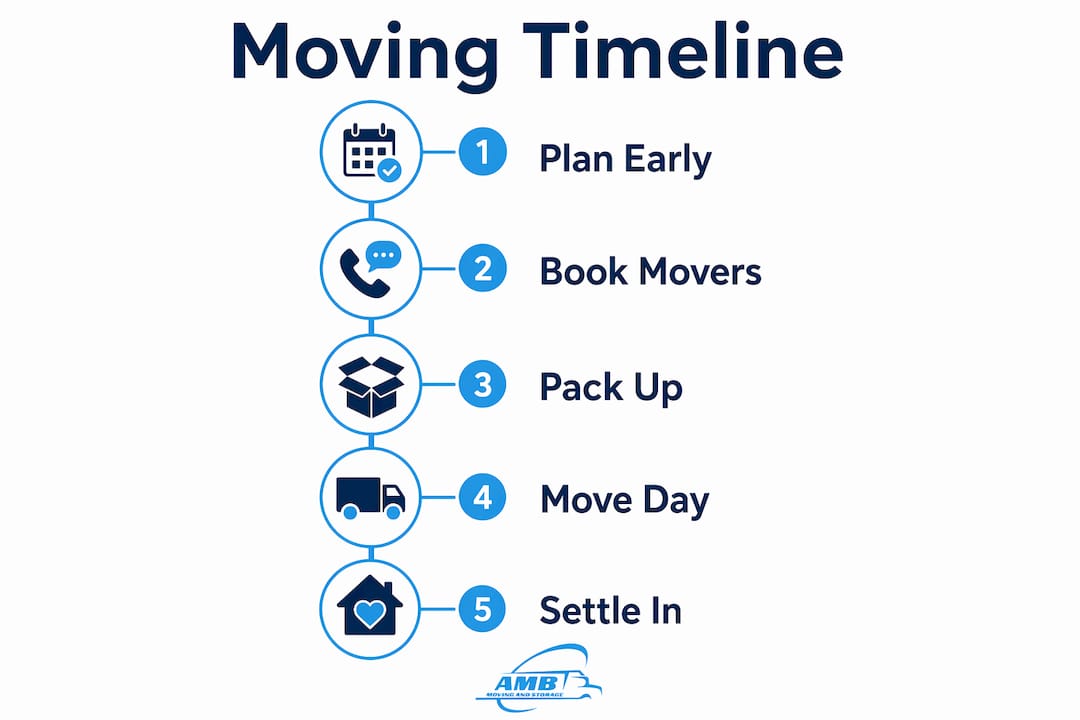
Planning your timeline backward from your target arrival date is the most reliable approach. Here is a practical sequence:
- 8 weeks out: Research and request quotes from licensed interstate movers. Confirm your move date and reserve your slot.
- 6 weeks out: Begin sorting and decluttering. Donate, sell, or discard items you will not bring to Florida.
- 4 weeks out: Order packing supplies or schedule professional packing services. Notify your employer, bank, and subscriptions of your upcoming address change.
- 2 weeks out: Confirm utility disconnection in North Carolina and setup dates in Florida. Arrange AC service for your Florida home before arrival since summer heat is immediate.
- 1 week out: Pack non-essential items. Confirm delivery window with your movers and prepare an essentials box for the first night.
- Moving day: Conduct a final walkthrough of your North Carolina home. Document the condition with photos before handing over keys.
Peak season for Florida moves runs from late spring through August. Booking during this window means higher prices and tighter availability. September through November offers better rates, cooler temperatures in Florida, and more scheduling flexibility.
Pro Tip: Avoid scheduling your move in July or August if possible. You will save money, avoid hurricane season complications, and arrive when Florida’s heat is beginning to ease.
What packing and storage services should you consider?
Choosing the right service level for a long-distance move is one of the most consequential decisions you will make. Full-service moves include professional packing, loading, transport, unloading, and often unpacking. Partial-service moves let you handle packing while movers handle transport. Self-pack moves give you full control but place all packing responsibility on you.

Professional packing services reduce damage risk and stress on long-distance interstate moves. Movers use industry-grade materials and proven techniques for fragile items, electronics, and oversized furniture. For a 680-mile haul, the cost of replacing a broken item almost always exceeds the cost of professional packing.
Storage is worth considering if your Florida move-in date does not align perfectly with your North Carolina move-out date. Short-term storage bridges that gap without forcing you to rush either transaction. Long-term storage works for families downsizing or staging a home for sale. Reviewing storage solutions for interstate moves before you commit to a service package helps you avoid paying for space you do not need.
Key packing and service considerations for your North Carolina to Florida move:
- Inventory everything before packing begins. A written or photographic inventory protects you if a damage claim becomes necessary.
- Label boxes by room and priority. Boxes you need on day one should be loaded last so they come off the truck first.
- Protect valuables separately. Jewelry, important documents, and irreplaceable items should travel with you, not on the truck.
- Coordinate condo access in advance. Florida condo communities often require elevator reservations and loading dock scheduling. Missing this step can result in fines or a failed delivery.
- Set up pest control before arrival. Florida’s climate means pests move fast into new spaces. Scheduling service before your first week saves you from an unpleasant welcome.
What legal steps must you take after moving to Florida?
Florida residency compliance is time-sensitive. New residents must obtain a Florida driver’s license within 30 days of establishing residency and register vehicles within 10 days. Missing these deadlines carries financial penalties and can complicate your legal domicile status.
The homestead exemption is one of the most valuable financial benefits available to Florida homeowners. Filing by March 1 of the year following your purchase can reduce your assessed property value by up to $50,000, lowering your annual tax bill meaningfully. Missing that deadline means waiting a full year to claim it.
Establishing legal domicile requires spending at least 183 days annually in Florida and securing a Florida driver’s license, voter registration, and bank accounts. This documentation protects you against audits from your prior state, particularly important for North Carolina residents who previously paid state income tax. Florida has no state income tax, which makes the residency claim financially significant.
Insurance is where many new Florida residents get surprised. Florida property insurance premiums range from $3,000 to $8,000 annually, with coastal and flood zone properties at the higher end. That figure often exceeds what North Carolina homeowners paid, and it offsets a portion of the income tax savings. Florida homeowners insurance is uniquely complex, requiring separate windstorm, flood, and in some areas sinkhole policies.
| Requirement | Deadline | Documents Needed |
|---|---|---|
| Florida driver’s license | Within 30 days | Proof of residency, Social Security card, current license |
| Vehicle registration | Within 10 days | Proof of Florida insurance, title, ID |
| Homestead exemption | March 1 of following year | Deed, Florida ID, Social Security number |
| Legal domicile | Ongoing (183+ days/year) | License, voter registration, bank accounts |
| Flood and windstorm insurance | Before closing or move-in | Property survey, insurer quote |
Pro Tip: Keep a dedicated folder with all residency documents: utility bills, lease or deed, Florida license, and voter registration card. If your prior state questions your domicile change, this documentation is your defense.
Key takeaways
A successful move from North Carolina to Florida depends on accurate cost planning, early booking, legal compliance within the first 30 days, and choosing a licensed interstate mover who handles the full scope of the job.
| Point | Details |
|---|---|
| Budget by home size | Full-service moves for 2 to 3 bedroom homes cost $2,556 to $6,221 on average. |
| Book 6 to 8 weeks early | Peak season demand drives up prices and limits availability for summer moves. |
| Meet Florida deadlines | Driver’s license within 30 days and vehicle registration within 10 days are legally required. |
| File homestead exemption | Submit by March 1 after purchase to reduce your property tax assessment. |
| Plan for insurance costs | Florida property insurance runs $3,000 to $8,000 annually, often higher than North Carolina rates. |
What I have learned from helping families relocate to Florida
After coordinating hundreds of state-to-state moves between North Carolina and Florida, the most consistent mistake I see is treating this relocation like a local move with a longer drive. It is not. The legal, financial, and logistical complexity of crossing state lines requires a fundamentally different level of preparation.
The advice to rent for 6 to 12 months before buying is not just cautious. It is genuinely strategic. Florida’s housing market varies dramatically between neighborhoods, not just cities. A short visit to Tampa or Orlando does not reveal flood zone boundaries, HOA restrictions, or how a commute feels in August humidity. Renting first gives you that knowledge before you commit six figures to a purchase.
The income tax savings are real, but they are not the full picture. Florida’s absence of state income tax is often offset by higher insurance and HOA fees, which together can add $5,000 to $10,000 annually to your cost of living depending on location. Families moving from Charlotte or Raleigh who run the numbers only on tax savings frequently underestimate total housing costs in their first year.
My strongest recommendation is to choose a licensed, insured interstate mover with documented experience on the North Carolina to Florida corridor. The cheapest quote rarely reflects the actual service you will receive. A missed delivery window, damaged furniture, or an unlicensed carrier dispute will cost you far more than the savings you thought you were getting.
— AMB
Move with confidence: AMB Moving & Storage has you covered
Planning a long-distance relocation from North Carolina to Florida involves more moving parts than most families anticipate. Ambmovingservices specializes in exactly this type of interstate move, with licensed crews, full-service packing, secure storage, and dedicated moving coordinators who manage the details so you do not have to.
Whether you are leaving Charlotte for Tampa or Wilmington for Fort Lauderdale, Ambmovingservices handles the entire process from pickup to delivery. Our long-distance moving services are built for families who need reliability, not surprises. Get an accurate, no-obligation estimate today and know exactly what your move will cost before you commit.
Request your free moving quote and let a licensed interstate moving specialist build a plan around your timeline, budget, and destination.
FAQ
How much does it cost to move from North Carolina to Florida?
A full-service move for a 2 to 3 bedroom home costs between $2,556 and $6,221 on average. DIY truck rentals run $578 to $1,672 for the same route.
How far in advance should I book movers for this route?
Book 6 to 8 weeks before your move date, especially for summer relocations. Peak season demand between June and August fills carrier schedules quickly and raises prices.
How long does delivery take on a North Carolina to Florida move?
Delivery typically takes 1 to 6 days. Container moves or consolidated loads can extend that window to 1 to 2 weeks, so confirm the delivery estimate before signing a contract.
What are the first legal steps after moving to Florida?
Obtain a Florida driver’s license within 30 days and register your vehicle within 10 days. File for homestead exemption by March 1 of the year following your home purchase to secure property tax savings.
Is Florida actually cheaper to live in than North Carolina?
Florida has no state income tax, which creates real savings. However, property insurance premiums of $3,000 to $8,000 annually and higher HOA fees often offset a significant portion of that advantage, particularly in coastal areas.