
TL;DR:
- The cost of out-of-state moves varies from $2,300 to $9,000 depending on distance, home size, and service level. Accurate estimates require in-home surveys, understanding different billing types, and accounting for additional costs like access fees and destination expenses. Planning a flexible budget using the high-end estimate plus contingencies helps prevent unexpected charges and ensures a smoother relocation process.
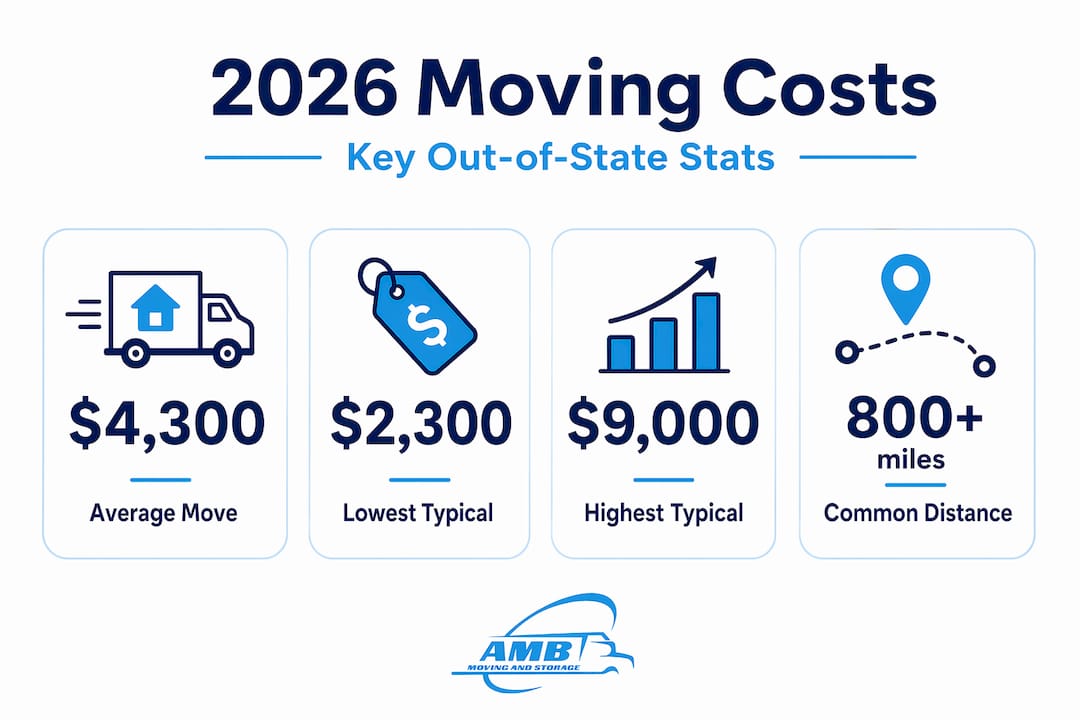
Planning a move across state lines raises one question faster than any other: how much does it cost to move out of state? The honest answer is that costs vary widely, but the typical range for a full-service interstate relocation runs from $2,300 to $9,000, with the national average sitting around $4,300. DIY options can bring that down to $600 to $5,300 depending on distance and volume. Understanding what drives those numbers, and how to estimate them accurately for your specific situation, is what separates a smooth relocation from a budget disaster.
Table of Contents
- Key Takeaways
- What drives out-of-state moving costs
- Realistic cost ranges by move size and distance
- How to estimate moving costs accurately
- Budgeting tips for your out-of-state move
- My honest take on planning your moving budget
- Plan your move with Ambmovingservices
- FAQ
Key Takeaways
| Point | Details |
|---|---|
| Average full-service cost | Expect to pay between $2,300 and $9,000 for most out-of-state full-service moves. |
| Distance and size drive price | The farther you move and the more bedrooms you have, the higher your total cost. |
| Estimate types matter | Binding not-to-exceed estimates offer the most price certainty for interstate moves. |
| Decluttering saves real money | Reducing shipment weight before the move directly lowers your final bill. |
| Budget beyond the moving truck | Factor in deposits, utility hookups, and temporary housing when setting your total budget. |
What drives out-of-state moving costs
The industry term for what most people call an “out-of-state move” is an interstate relocation, and it is governed by federal regulations that differ significantly from local moves. That distinction matters because it affects how you are quoted, what consumer protections apply, and how your final price is calculated.
Distance is only part of the equation
Distance gets most of the attention, but it is one of several major cost drivers. A move under 250 miles to a neighboring state will cost far less than a cross-country relocation from New York to California. Long-distance moves are typically priced by weight and distance combined, which means two households moving the same number of miles can receive very different bills based on how much they own.
Here are the primary factors that determine your total:
- Home size and shipment weight. A studio apartment generates far less weight than a four-bedroom house. Movers weigh your shipment at pickup, and that number directly controls your final cost on interstate moves.
- Distance traveled. Longer hauls mean higher fuel costs, more driver hours, and greater logistical complexity.
- Service level. Full-service moves where the company packs, loads, transports, and unpacks cost significantly more than a rental truck you drive yourself.
- Additional services. Specialty item handling for pianos or antiques, full packing service, crating, and valuation coverage all add to the base price.
- Access conditions. Stairs, long carries from the truck to your door, and elevator requirements can trigger surcharges that catch many families off guard.
Pro Tip: Get an in-home or virtual survey before accepting any quote. A mover who quotes you over the phone without seeing your inventory is giving you a rough guess, not a real estimate.
Realistic cost ranges by move size and distance
Numbers make this concrete. The table below reflects 2026 pricing data for full-service interstate moves across common home sizes and distance brackets.
| Home size | Under 500 miles | 500 to 1,000 miles | 1,000 to 2,500+ miles |
|---|---|---|---|
| Studio / 1 bedroom | $1,200 to $2,800 | $1,800 to $3,500 | $2,500 to $5,000 |
| 2 to 3 bedrooms | $2,300 to $4,200 | $3,060 to $5,280 | $4,500 to $9,000 |
| 4 to 5 bedrooms | $4,500 to $7,500 | $6,000 to $10,500 | $9,000 to $20,000+ |
For a specific benchmark: a 3-bedroom move over 800 miles averages around $9,340 with full service. A 2 to 3 bedroom move in the 500 to 1,000 mile range typically costs $3,060 to $5,280 based on current data.
How service type changes the math
Your choice of moving method has a bigger impact on total expenses than most people realize:
- Full-service movers handle everything from packing to unpacking. You pay for convenience, and costs can reach $29,000 for large homes moving cross-country.
- Rental truck (DIY). You drive, you load, you unload. Total costs typically run $600 to $5,300 depending on truck size and distance, but factor in fuel, lodging en route, and your own physical labor.
- Hybrid moves. You pack and load a portable container, and a carrier handles transport. This middle-ground option often lands 20 to 40 percent below full-service pricing.
For families with young children or time constraints, the cost difference between full-service and DIY often narrows when you account for the value of your time and the physical demands of a long-distance move.
How to estimate moving costs accurately
Getting an accurate number requires more than plugging figures into an online calculator. Online calculators are accurate within 15 to 25%, and that margin gets wider when your move involves stairs, long carries, or specialty items. They are useful for ballpark planning, not for setting a firm budget.
The three estimate types you will encounter from interstate movers are:
- Non-binding estimate. The mover projects a cost based on estimated weight, but the final price adjusts after your shipment is weighed. You are protected by the federal 110% rule, which means movers cannot charge more than 110% of the original estimate at delivery. Anything above that is billed later.
- Binding estimate. The price is locked regardless of actual weight. If your shipment weighs more than projected, you pay nothing extra. If it weighs less, you still pay the full quoted amount.
- Binding not-to-exceed estimate. This is the most consumer-friendly option. The price is capped at the quoted amount, but if your shipment weighs less than estimated, you pay the lower amount. It provides a ceiling without penalizing you for overestimating.
Accurate in-home or virtual surveys are the foundation of a trustworthy binding estimate. A mover who skips the survey and offers a binding quote is either guessing or planning to add charges later.
Pro Tip: Always request a binding not-to-exceed estimate when possible. It gives you a hard ceiling on cost while allowing you to benefit if your actual shipment weight comes in lower than projected.
Common hidden costs that inflate final bills include long-carry fees when the truck cannot park close to your door, stair fees charged per flight, fuel surcharges, and fees for disassembling or reassembling furniture. Ask about each of these explicitly before signing.
Budgeting tips for your out-of-state move
Knowing the range is one thing. Building a budget that actually holds up is another. These strategies help families and individuals control the expenses for an out-of-state move without cutting corners that matter.
- Declutter before the survey. Since shipment weight directly controls cost on interstate moves, every item you sell, donate, or discard reduces your final bill. A serious declutter session before your inventory survey can lower your quote by hundreds of dollars.
- Move during off-peak periods. Summer months and the end of each month are the most expensive times to book an interstate mover. Moving mid-month or between October and April typically unlocks lower rates and better availability.
- Get at least three quotes. Pricing varies more than most people expect between companies. Comparing reliable moving company quotes from multiple licensed interstate movers gives you negotiating leverage and a realistic sense of the market.
- Use the high end of your range for budgeting. Build your cash-flow budget using the upper estimate plus a 10 to 15 percent contingency. This approach, recommended by moving cost analysts, prevents the shock of unexpected charges at delivery.
- Account for destination costs. Your moving budget should include first and last month’s rent or a new mortgage down payment, utility deposits, and any immediate purchases for your new home. These expenses arrive simultaneously with your moving bill.
Pro Tip: Pack non-fragile items yourself before the movers arrive. Many full-service companies charge by the hour for packing labor, and handling your own boxes can trim $300 to $800 from the final invoice.
For a deeper look at how costs break down by specific routes, the 2026 interstate moving cost report from Ambmovingservices provides real route data that goes well beyond generic estimates.
My honest take on planning your moving budget
I have worked with families at every budget level on interstate relocations, and the single most common mistake I see is treating the moving quote as the total cost of the move. It is not. It is the cost of transporting your belongings. The full cost to relocate includes deposits, travel, temporary storage, replacing items that do not survive the move, and the dozens of small purchases that come with setting up a new home.
The second mistake is choosing a mover based on the lowest quote without understanding what type of estimate it is. A low non-binding estimate can balloon by 25 percent or more if the mover underestimated your shipment weight. I have seen families arrive at their new home and face a delivery hold because the final bill exceeded what they had available. That situation is entirely avoidable if you know to ask for a binding not-to-exceed estimate and insist on a proper inventory survey.
What actually works: treat your moving budget as a range, not a fixed number. Use the high end. Add a contingency. And choose your mover based on licensing, reviews, and estimate transparency, not just price. The long distance moving expenses that catch people off guard are almost always the ones they did not ask about upfront.
Balancing cost versus convenience is a real decision, not a simple one. A rental truck saves money on paper, but a 1,500-mile drive with a loaded 26-foot truck is not a neutral experience. Full-service movers cost more, but they carry the liability and the labor. Know what you are actually buying before you commit.
— AMB
Plan your move with Ambmovingservices
Ambmovingservices specializes in long-distance and interstate relocations across all 50 states, with a focus on transparent pricing, licensed professionals, and moves that arrive on time and on budget. Whether you are moving a one-bedroom apartment or a five-bedroom family home, the team provides binding not-to-exceed estimates backed by accurate in-home or virtual surveys, so you know your number before moving day.
Beyond transportation, Ambmovingservices offers full packing services, specialty item handling, and secure storage solutions for moves that require flexible timing or staged delivery. Every move is handled by federally licensed interstate movers who comply with FMCSA regulations, giving you the consumer protections that matter on a long-distance relocation.
Ready to get a real number for your move? Request a personalized quote and get a detailed estimate based on your actual inventory, distance, and service needs. No guesswork, no surprise charges at delivery.
FAQ
What is the average cost to move out of state?
The average cost for a full-service interstate move is approximately $4,300, with most moves ranging from $2,300 to $9,000 depending on distance and home size.
How are long-distance moving costs calculated?
Interstate movers price moves based on shipment weight and distance traveled. Additional services like packing, specialty handling, and access conditions such as stairs or long carries add to the base rate.
What is the 110% rule for moving estimates?
Under federal regulations, movers cannot require payment exceeding 110% of a non-binding estimate at delivery. Any amount above that threshold must be billed separately within 30 days.
How can I lower my out-of-state moving costs?
Decluttering before your inventory survey reduces shipment weight and lowers your quote directly. Moving during off-peak months and packing non-fragile items yourself also produce meaningful savings.
Are online moving cost calculators accurate?
Online calculators provide a useful planning range but are accurate within 15 to 25% at best. They become less reliable when your move involves stairs, long carries, or specialty items that require custom handling.