
October 17, 2026
Moving From New York to Texas: Register Your Car Within 30 Days
Compare Texas metros and moving costs, get written estimates, and learn the deadlines: register a vehicle within 30 days and get a Texas license within 90…
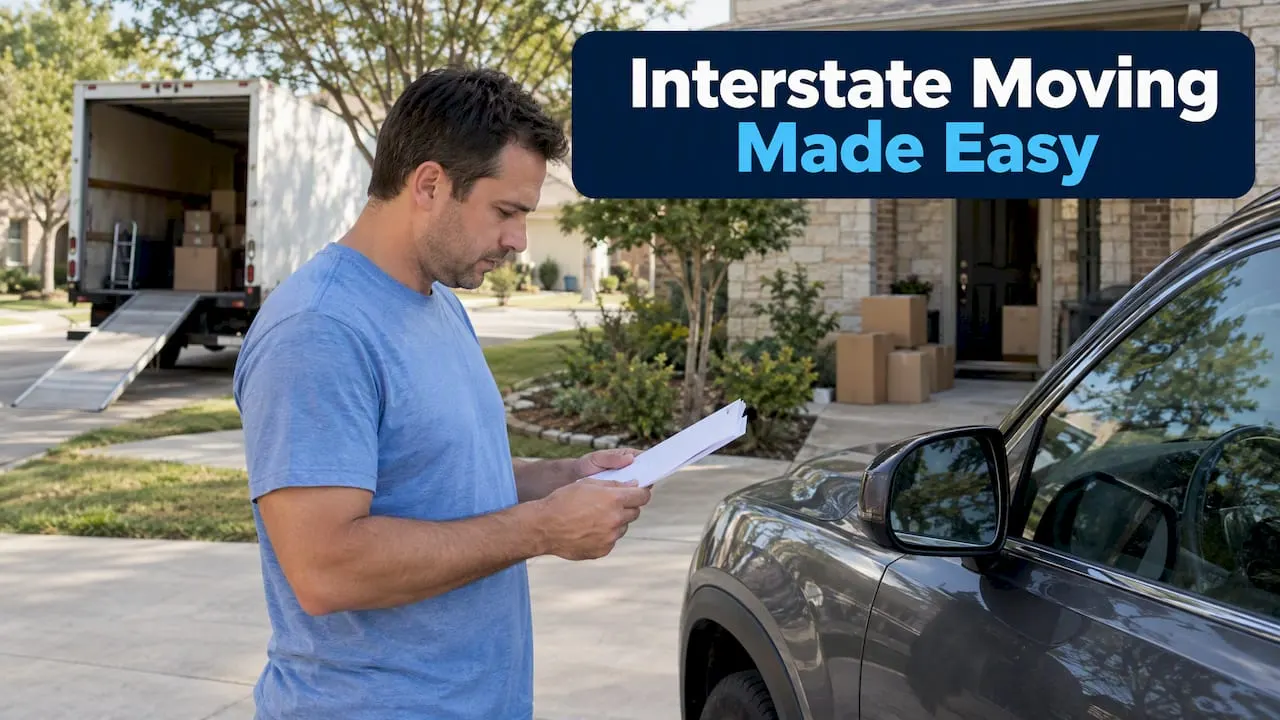
Moving from New York to Texas usually lowers your everyday costs, but an interstate move brings federal paperwork and fast state deadlines. Texas prices sit closer to the national average than New York’s, and you must register your vehicle within 30 days and get a Texas license within 90 days. Your first step: request written, itemized estimates from FMCSA-registered interstate movers.
TL;DR:
- Dallas Fort Worth offers jobs but long drives; Houston is relatively affordable with storm risk, Austin costs more, and San Antonio is slower paced.
- Federal rules allow payment at delivery up to 110% of a nonbinding estimate, with the balance billed later; request the mover’s tariff.
- Check the mover’s U.S. DOT and MC numbers with FMCSA, because brokers do not transport goods; obtain the registered carrier’s MC number before booking.
- Texas registration requires liability insurance and a passing inspection; check whether your county also requires emissions testing before booking a certified inspection.
- Check flood exposure before choosing a Gulf Coast address; standard homeowners coverage often excludes floods, and hurricane season runs June 1 to November 30.
Table of Contents
- Where New Yorkers settle in Texas and how to choose a metro
- What a long-distance move from New York to Texas costs
- Texas registration and license deadlines after you arrive
- How federal rules protect you and how to vet an interstate mover
- A timeline and moving-day checklist for New York to Texas
- Preparing for hurricanes, floods, tornadoes and heat
- Our advice on moving across the country
- Packing for a 1,600-mile move
- Moving pianos, safes and other specialty items
- Storage during the transition
- Utilities: disconnects and setup in both states
- Our take: plan the paperwork first, then the neighborhood
- Move from New York to Texas with AMB
- FAQ
- Sources
Where New Yorkers settle in Texas and how to choose a metro
Many New Yorkers narrow their search to Texas metros, and each trades something different for what you leave behind.
Dallas–Fort Worth has a deep job market and sprawling suburbs. Expect longer commutes and almost no reliance on transit outside a few corridors. Houston is the affordability play, with large energy and medical sectors, though the Gulf Coast brings hurricane and flood exposure. Austin pulls tech workers and offers the culture closest to what you know, but housing there costs more than in the other three. San Antonio is family-friendly with a lower cost of living and a slower pace.
Density is the biggest shock. In New York you can live car-free. In Texas, a car is the default almost everywhere, and walkable pockets exist mainly in a handful of inner-city neighborhoods. Many former renters also trade a one-bedroom apartment for a single-family home, which changes your commute, school options and maintenance burden.
Use these criteria to compare:
- Transit access: decide whether you can live with a car-dependent routine.
- Culture fit: check nightlife, food scenes and arts before you commit to a lease.
- Housing affordability: compare rent and purchase prices for the neighborhood, not just the metro.
- Hazard exposure: look up flood zones and storm history for each address.
- Schools and commute: map the real drive time at rush hour, not the listing’s estimate.
Pro Tip: Consider renting in your top choice before buying, so you learn the commute and the weather before you commit.
Why does this matter for your budget? Texas generally has a lower overall price level. The Bureau of Economic Analysis uses Regional Price Parities to compare buying power across states and metros, and it places New York among the higher-priced states with Texas closer to the national average. Housing is where most of that gap shows up.
What a long-distance move from New York to Texas costs
Three things drive the price of long distance moving: how much you ship, how far it travels, and which services you add. Weight or volume sets the base. Packing, specialty items, storage and accessorial charges such as stairs or long carries sit on top. New York to Texas is a cross country run, so distance carries real weight in the total.
How your mover estimates matters as much as the number itself. FMCSA’s estimating rules require a written estimate and an explanation of binding versus non-binding estimates. A binding estimate fixes the price for the listed goods and services. A non-binding estimate is the mover’s best guess, and the final charge depends on actual weight and services. For a deeper comparison, see our moving estimate types explained guide.
FMCSA’s rule on non-binding estimates: you generally need to pay only 110% of the estimate at delivery, with any remainder billed afterward. Ask for a copy of the mover’s tariff.
Qualitative ranges look like this:
- Self-move with a rental truck: lowest cash outlay, highest labor and risk, and a demanding option for a long interstate drive.
- Partial service: you pack, the crew loads and drives. A common middle ground for apartments and small homes.
- Full-service interstate move: packing, loading, transport and unloading. Costs most, saves the most time, and scales sharply with household size.
We publish some fee points so you can plan: professional packing runs $1-2 per cubic foot, storage starts from $0.50 per cubic foot, and elevator or stair fees and long carry charges start from $75 each, with details on our moving cost guide.
Budget tactics that hold up in real moves:
- Build an accurate inventory and sell or donate what you will not need in a larger Texas space.
- Ask for every accessorial fee in writing before you sign.
- Decide your payment method for delivery day in advance.
- Collect several written estimates and compare the services listed, not only the totals. Our online estimate guide walks through the process.
Texas registration and license deadlines after you arrive
Texas sets firm clocks for new residents. According to TxDMV, you must register your vehicle within 30 days of arriving and obtain a Texas driver license within 90 days. Missing the vehicle deadline can mean penalty fees.
Your vehicle also needs Texas liability insurance and a passing inspection. Some counties add emissions testing, so confirm requirements for your county before you book an appointment. TxDMV’s checklist for new Texans lays out how inspection and insurance feed into registration.
Bring these to your county tax office:
- Your out-of-state title or registration receipt
- Form 130-U (Application for Texas Title and/or Registration)
- A government-issued photo ID
- Proof of Texas insurance
- Payment for fees
Work through it in this order:
- Buy Texas auto insurance before you arrive or on day one.
- Complete the vehicle inspection at a certified station.
- Gather your documents and complete Form 130-U.
- Visit your county tax office to register and title the vehicle.
- Schedule your driver license appointment well inside the 90-day window.
How federal rules protect you and how to vet an interstate mover
Any move between states, or through another state, falls under federal rules, as FMCSA’s general requirements explain. That is your leverage as a customer.
FMCSA’s consumer tips say movers must give you the “Your Rights and Responsibilities When You Move” booklet, offer liability options such as Full Value Protection, and advise you on inventories. The agency also recommends supervising loading and unloading. At pickup, the bill of lading is your contract, and movers must weigh the shipment, by origin or destination method, and notify you of actual weight and charges at least one full 24-hour day before delivery when you ask.
Verify before you book. Check the mover’s U.S. DOT and MC numbers with FMCSA and review complaint records. Remember that brokers do not transport goods, a point FMCSA’s fraud FAQ makes clear, so always get the registered carrier’s MC number. Our step-by-step pages on how to verify a licensed interstate moving company and checking a mover’s license cover the lookup.
Your selection checklist:
- A written, signed estimate with a copy for you
- A clear list of included services
- A complete inventory and scheduled pickup and delivery dates
- Insurance and liability options explained plainly
- Payment terms stated before loading
Pro Tip: Keep every document, including the partially completed bill of lading you receive at loading, until delivery is finished and any claim is settled.
A timeline and moving-day checklist for New York to Texas
Interstate moves reward early planning. Start well ahead of your move: collect estimates, vet movers, declutter and book your date. As moving day approaches, confirm your booking in writing, start packing non-essentials and arrange storage if your dates may not line up. Before the move, finish packing, confirm pickup windows and keep valuables with you. Interstate transit times vary, so see our real interstate timelines.
On moving day:
- Review the inventory with the crew lead and note existing damage.
- Confirm the pickup and delivery windows in writing.
- Sign the bill of lading only after you have read it and received your copy.
- Supervise loading and watch the weighing if you chose origin weighing.
- Confirm the payment method and amount due at delivery.
After delivery, inspect every box and piece for damage before the crew leaves and note problems on the paperwork. Confirm final charges against your estimate, then register your vehicle and update your address with banks, voter registration and USPS. If delivery slips, ask about storage in advance, and flag specialty items so they are not left in a truck longer than needed.
Preparing for hurricanes, floods, tornadoes and heat
Weather is the adjustment New Yorkers underestimate. The Gulf Coast hurricane season runs June 1 to November 30, with the highest risk in August and September. Flooding, tornadoes and extreme heat vary by region, and Deep South Texas and the Rio Grande Valley face their own hazard mix.
Do these soon after arrival:
- Look up your county’s flood zone and evacuation routes
- Price flood insurance, which standard homeowners policies often exclude
- Build an emergency kit with water, medications and documents
- Sign up for local emergency alerts
- Bookmark Texas Ready and the National Weather Service page for your area
Our advice on moving across the country
We are a licensed, insured nationwide moving company. Our guidance is simple. Ask for a physical survey when your inventory is large or complicated. Get accessorial fees in writing before you sign. Keep every moving document until the job is fully closed out. A mover who resists any of these is telling you something.
Packing for a 1,600-mile move
Long-distance packing is different from a cross-town shuffle. Your boxes spend days in a truck, shift with every mile and may sit in storage, so pack for movement, not for a short ride.
Use new, sturdy cartons and fill every void with paper so nothing settles. Pack heavy items in small boxes and light items in large ones. Wrap dishes individually, stand plates on edge and label every box by room and contents. Dress wardrobe boxes for coats, since New Yorkers own more winter gear than Texas needs, and consider donating the heaviest pieces rather than paying to haul them south.

Think about climate in transit and on arrival. Candles, vinyl records and some electronics can suffer in a hot truck or an un-air-conditioned storage unit in a Texas summer. Pack documents, medications and a first-night bag in your own car. Photograph valuable items before wrapping them.
If you want help, our professional packing services run $1-2 per cubic foot, and crews bring materials and know how to cushion fragile pieces for the distance.
Moving pianos, safes and other specialty items
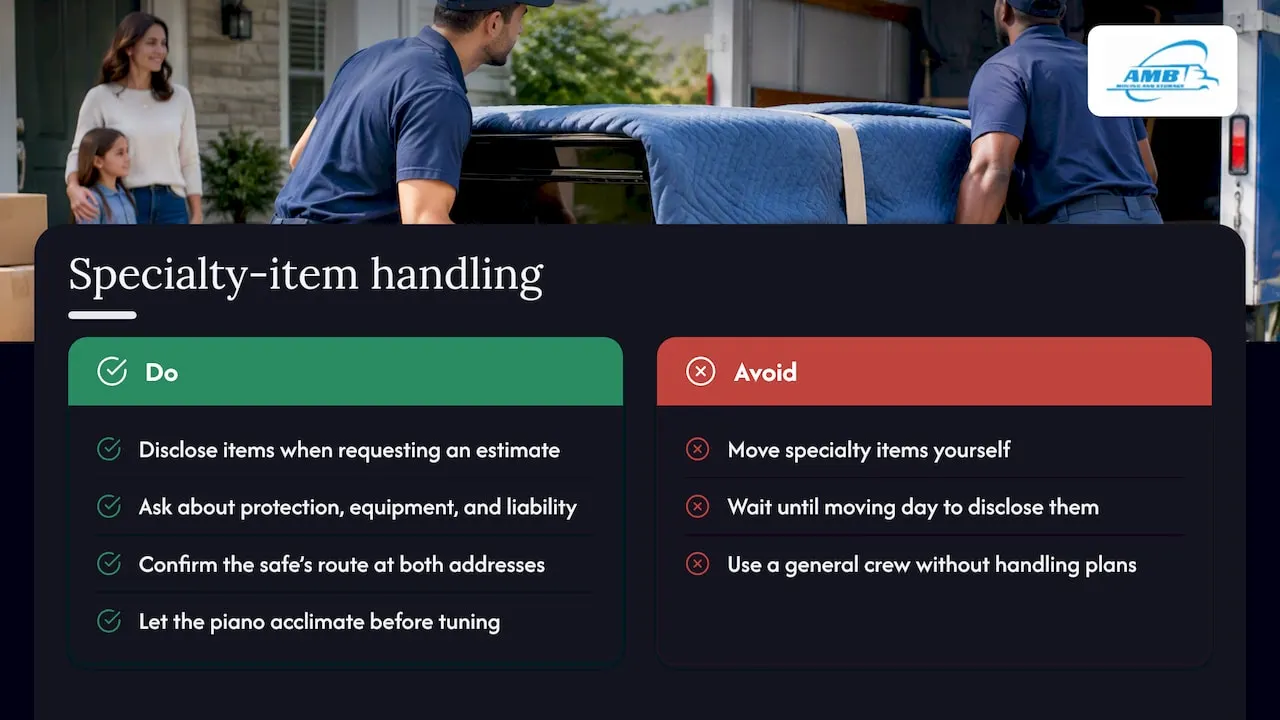
Heavy and delicate pieces are where interstate moves go wrong. A piano is heavy and carries tuning and finish risks. A safe can be far heavier than it looks and needs specialized equipment. Neither is a good DIY job, and neither belongs on a general crew without specific handling plans.
Tell your mover about every specialty item when you request the estimate, not on moving day. Surprises lead to surcharges or refusals. Ask how the crew will protect the item, whether they use skid boards and straps, and what the liability terms are. Review the FMCSA liability options so you understand what Full Value Protection would cover.
Expect to retune a piano after it settles in its new home, and give it time to acclimate to Texas humidity before tuning. For safes, confirm the path at both addresses, including stairs, elevators and door widths. Our specialty handling for pianos and safes starts from $200, and you can read more on our piano moving offering. For other awkward items, see our guide to pool table moving and our list of items movers won’t move.
If your Texas destination needs extra local labor or care for fragile antiques, WE DO CREW is a heavy-duty hauling and handling resource for fragile and time-sensitive freight.
Storage during the transition
Closing dates rarely line up. If your New York lease ends before your Texas home is ready, storage bridges the gap. Short-term storage covers a delayed closing, while longer stays suit people who are moving first and house-hunting after.
Choose storage that matches your timeline. Look for secure, access-controlled facilities, ask about climate protection for wood furniture and electronics, and confirm how and when you can reach your belongings. Clarify who handles the goods at each end, because having your mover transfer items directly cuts down on handling and damage risk.
Pack for storage with labels on every side and a written inventory you keep. Leave pathways so you can reach what you need. Check insurance coverage for goods in storage separately from transit coverage.
We offer secure storage as part of interstate moves, with storage services starting from $0.50 per cubic foot. Our storage solutions checklist and our storage page explain how to organize it.
Utilities: disconnects and setup in both states
Utilities cause more last-minute stress than they should. Start calls well before your move so nothing lapses early or fails to start on time.
In New York, schedule shutoffs for electricity, gas, internet and water for the day after your move-out, not before, so you can clean and do a final walk-through. Request final bills and confirm where they will be mailed. Return rented cable equipment and keep receipts.
In Texas, much of the state has retail electricity choice, so you will often pick a provider and plan rather than accept a default. Compare contract terms and any deposit requirements before you commit. Schedule electricity, water, gas and internet to start the day before you arrive, and confirm the service address twice. Internet installation can book out for days, so request it early.
Keep a simple list of every account, the contact number, the confirmation and the date. Update your address for each one, and keep the first-night essentials, such as chargers and a flashlight, in your personal bag.
Our take: plan the paperwork first, then the neighborhood
Most New Yorkers start with the fun question: which Texas city? We think that is the wrong first move. The costly mistakes happen in the paperwork, not the geography. A rushed booking with a vague estimate, a broker you cannot trace or a missed registration date will hurt you more than choosing Houston over Austin.
The usual advice also overrates the cost-of-living headline. Texas prices are closer to the national average than New York’s, according to Commerce Department price data, but moving costs, a car and weather prep can eat into the savings. Build a transition budget instead of banking the difference.
Our priority order: first verify your mover and get written estimates, second fix your timeline around the 30 and 90 day deadlines, third pick a metro after a rental trial run. Treat everything else as detail.
— AMB
Move from New York to Texas with AMB
We handle the full interstate run so you are not coordinating it alone:
- Long-distance moving and interstate moving from New York to Texas
- Professional packing and specialty-item handling for pianos and safes
- Secure storage for gaps in your timeline
We follow FMCSA-required documentation and schedule around your dates. As a nationwide moving company, we can provide a quote for cross country moves. Request your custom quote today.
FAQ
Is Texas cheaper than New York?
Generally yes. Commerce Department data shows Texas prices near the national average and New York’s well above it, and the biggest gap is housing. Your own savings depend on the metro and neighborhood you choose.
Why are so many people moving to Texas?
Reasons commonly include lower living costs, job growth and more housing space. Tax differences also play a part in many decisions. Check the numbers for your own situation before you commit.
What is Houston, Texas like to live in?
Houston is a large, car-oriented city with strong energy and medical sectors and relatively affordable housing. Expect hot summers and prepare for hurricane season, which runs June 1 to November 30.
How much is needed to move to Texas?
Plan for the move itself, deposits, vehicle registration and an emergency cushion. Moving cost depends on weight, distance and services, so get written estimates and ask about accessorial fees before you sign. See our moving cost guide for what we charge on add-ons.
What deadlines apply after I arrive in Texas?
You must register your vehicle within 30 days and get a Texas driver license within 90 days, per TxDMV. Late vehicle registration can bring penalty fees.
Sources
- Commerce
- Txdmv
- Estimating Charges (Subpart D) | FMCSA
- Regional Price Parities by State and Metro Area | U.S. Bureau of Economic Analysis (BEA)