

The non-negotiable storage security features for an interstate move are 24×7 monitored alarms, continuous CCTV with a documented retention policy, controlled access using unique tenant codes, sturdy unit-level locks and doors, working fire suppression and climate control, and written procedures for inspections, incidents, and claims. If a facility can’t confirm all six in writing, keep looking.
Physical barriers alone don’t protect your belongings during a cross-country move. Your goods change hands multiple times: loaded at your old home, driven across several states, unloaded into storage, then reloaded weeks or months later. Every handoff is a chain-of-custody moment, and the facilities that handle this well document each transfer with inspection logs and signed records, not just a gate code and a prayer.
AMB Moving & Storage Inc. builds its storage program around these exact controls, which is worth knowing before you start comparing quotes.
- Monitored alarms running around the clock, not just motion lights
- Continuous CCTV covering gates, loading docks, and unit rows
- Unique access codes issued per tenant, logged on entry
- Fire suppression and climate control appropriate to what you’re storing
- Written inspection and incident-reporting procedures
Quick fact: Consumer storage checklists consistently rank layered security, gated access plus cameras plus locks plus lighting, above any single control, because facilities relying on one feature (a fence, say, with no monitoring) show up disproportionately in theft and damage reports.
Key Takeaways
Storage security for an interstate move depends on layered controls, monitored alarms, retained CCTV, controlled access, solid locks, and written documentation, working together rather than any single feature standing alone.
| Point | Details |
|---|---|
| Layered security wins | No single control (a fence, a camera) substitutes for monitored alarms plus access logs plus documentation working together. |
| Documentation is proof | Inspection logs, incident reports, and monitoring contracts are what you should ask to see, not just hear about. |
| Homeowners: verify before booking | Drive by at night, confirm lock type, and get insurance limits in writing before your move date. |
| Businesses: add authorization controls | Request authorized-user lists and scheduled release procedures for commercial inventory. |
| AMB builds these controls in | AMB pairs nationwide long-distance moving with documented, monitored storage rather than outsourcing it to an unnetted third party. |
Table of Contents
- Storage Security Features That Actually Protect Your Belongings
- How to Verify a Storage Provider Before You Commit
- Questions to Ask Before You Book Storage
- What to Request From AMB When Booking Storage
- Why the Standard Advice on Storage Security Falls Short
- Get a Storage Quote Built Around These Security Standards
- Sources
Storage Security Features That Actually Protect Your Belongings
Most storage listings promise “secure storage” without saying what that means. Break it down into layers, and you’ll know exactly what to check before you sign anything.
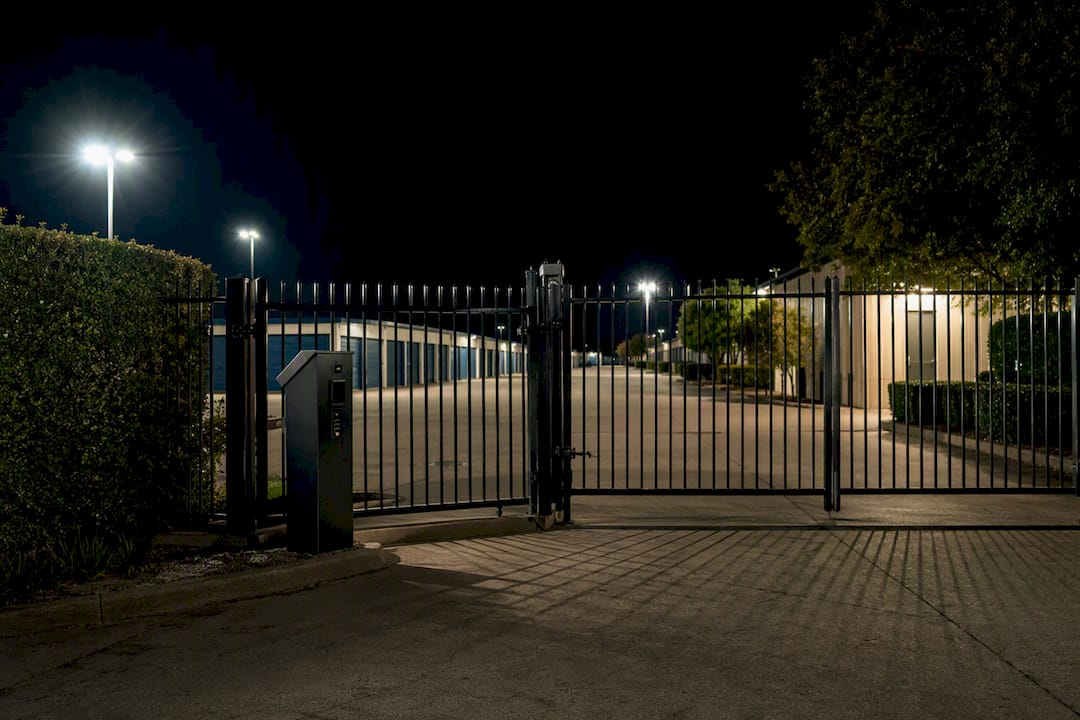
1. Perimeter and access control. A gated facility with unique tenant codes and a visitor log is the baseline. Fencing and lighting matter, but only if they’re paired with logged entry. Drive past at night before you commit. If the lot is dark or the gate sits open, that tells you more than any brochure.
2. Video surveillance and retention. Cameras belong at the gate, the loading area, and every unit row, recording continuously rather than on motion-trigger alone. Ask two questions: how long is footage retained, and who can pull it if something goes missing? Cameras should record continuously, and footage retention policies vary; verify that footage is kept long enough to support incident investigations after a move.
3. Intrusion detection and monitored alarms. TAPA’s Facility Security Requirements call for 24x7x366 monitoring, meaning every day of the year, with alarms tied to a third-party monitoring service, not just a siren that scares off nobody. Ask for the name of the monitoring vendor and whether the contract is active, not aspirational.
4. Unit-level security. Look for solid doors and disc or shrouded locks, which resist bolt cutters far better than standard padlocks. One privacy note worth flagging: a facility should never place cameras inside individual rented units. Interior surveillance covers common areas and hallways, not your personal space.
5. Fire and environmental protection. Sprinklers or another tested suppression system, working smoke detection, and climate control for anything sensitive to humidity or temperature swings. Facilities that store goods off the floor on pallets and run active pest control protect against slower, quieter damage that insurance often won’t cover.
6. Documentation and operational controls. Inspection logs, inventory checks at drop-off and pickup, and tamper-evident seals for containerized shipments all matter more than people expect. TAPA’s FSR standard requires risk assessments updated at least annually. That’s not paperwork for its own sake. It’s how a facility catches a security gap before it becomes your problem.
7. Insurance and claims clarity. Facility insurance usually covers the building and its systems, not the contents of your unit. Get written coverage limits and a claims timeline before move-in, so you’re not negotiating after something’s already gone missing.
Pro Tip: Ask for a sample incident report template during your site visit. If the facility can’t produce one, that’s a sign their “documented procedures” exist mostly on paper.
If you’re storing items between legs of a long-distance move, climate control deserves extra weight, since your belongings may sit for weeks in a facility you’ve never physically inspected.
How to Verify a Storage Provider Before You Commit
Anyone can put “secure storage” on a website. Verification means asking for evidence and watching how the provider responds.
Request written proof: recent inspection logs, a copy of the monitoring contract, and any certification or audit documentation. Facilities aligned with TAPA FSR standards don’t need the top certification tier to be credible. Evidence of documented risk assessments and active monitoring contracts is a meaningful middle-ground signal even without full certification.
Confirm the chain-of-custody process. Who signs when your goods arrive? How are tamper seals applied to containers, and how is the handover between your mover and the storage facility recorded? This step matters most for interstate moves, where your items may travel through more than one company before reaching final storage.
Ask directly about footage access: who reviews it, how long it’s kept, and what the facility commits to if you report an incident. Vague answers here are a warning sign.
Watch for these red flags:
- Evasive or scripted answers about who monitors the alarm system
- No staff on-site during stated business hours
- Insurance terms that shift depending on who you ask
- Refusal to allow a site visit or third-party inspection
Pro Tip: If a facility hesitates when you ask to see their inspection log, treat that hesitation as your answer. Legitimate operators keep this paperwork ready because auditors and insurers ask for it regularly.
Questions to Ask Before You Book Storage
Bring this list to a call, an email, or a walkthrough. Get answers in writing before signing anything.
- Do you have 24×7 monitored alarm service, and who is the monitoring provider?
- How long is CCTV footage retained, and how do I request it after an incident?
- Do you require a disc or shrouded lock, or do you supply unit locks?
- What are your insurance limits, and what’s the claims timeline?
- Can I review a recent inspection log or certification evidence?
- What are your access hours, and is there an inventory-check process at drop-off and pickup?
Get insurance terms, access hours, inventory procedures, and any prohibited-items list in writing. For commercial storage, add authorized-user controls and scheduled release procedures to that list, since business inventory often needs more than one approved person managing pickup and drop-off.
What to Request From AMB When Booking Storage
AMB Moving & Storage Inc. runs nationwide long-distance and interstate relocations, fully licensed and insured, with secure storage built into the same booking process rather than handled by a separate vendor you have to vet on your own.
- Facility-level access controls paired with documented monitoring
- Inspection and inventory procedures tracked at drop-off and release
- Storage options that scale from short-term bridging to long-term holds
- Dedicated storage service pages and planning guides for both families and businesses
When you request a quote, include your inventory list, your preferred retention period, and any special access needs (business hours only, authorized pickup contacts, climate-sensitive items). That gives AMB what it needs to confirm the right storage tier and to hand you documentation, monitoring provider details, storage policy links, upfront instead of after you’ve already signed.
| What to Confirm | Why It Matters |
|---|---|
| 24×7 monitored alarms | Confirms real-time response, not just a triggered siren nobody hears |
| CCTV retention window | Determines whether footage still exists if a problem surfaces late |
| Written insurance limits | Prevents disputes over what’s covered if something goes missing |
| AMB’s documented procedures | Gives you inspection logs and incident reports on request, not just a promise |
Why the Standard Advice on Storage Security Falls Short
Most articles on this topic list features like a shopping receipt: cameras, gates, locks, done. That misses the actual failure point in interstate moves, which isn’t the facility itself. It’s the handoff between mover and storage provider, the moment nobody’s watching the paperwork.
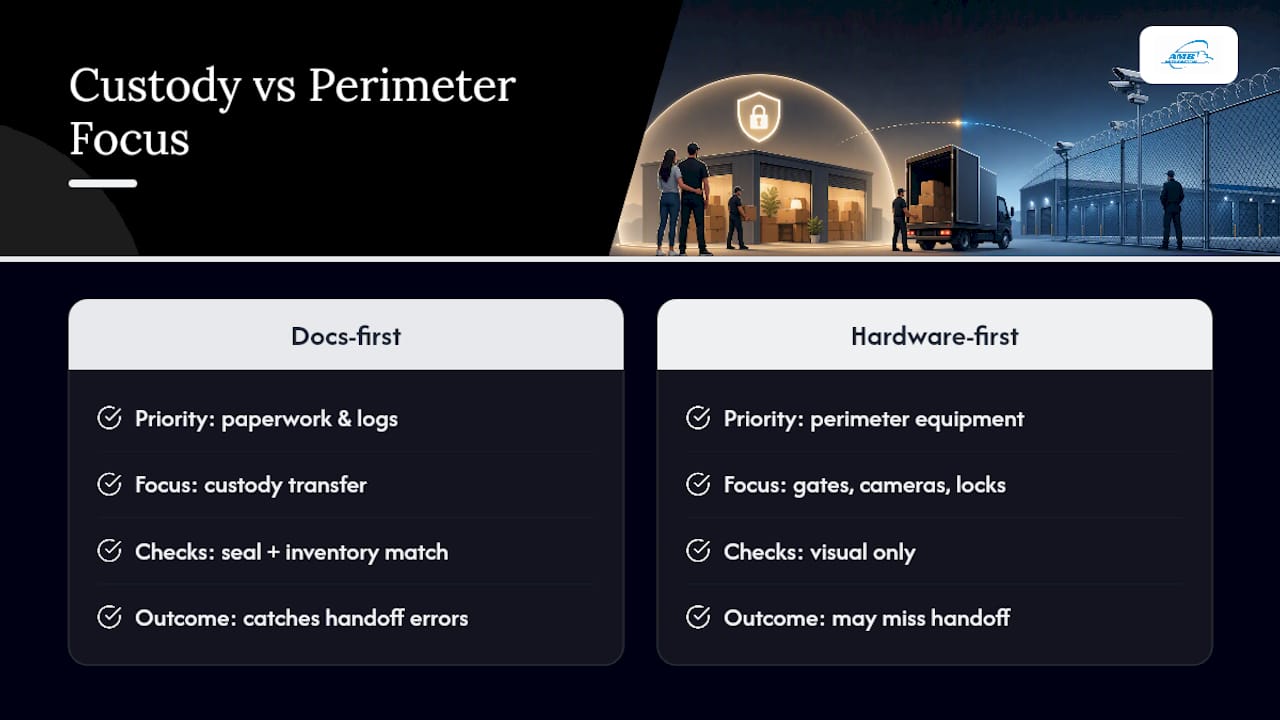
TAPA’s own framework treats custody transfer as a distinct vulnerability, separate from perimeter security, and that distinction gets lost in most consumer guides. A facility can have flawless cameras and still lose track of your belongings if nobody signs for the handover or checks a container seal against the original inventory.
Here’s what I’d prioritize differently than the typical checklist: documentation first, hardware second. A facility with modest fencing but a rigorous inspection and incident-reporting habit will protect your goods better than one with an impressive gate and no paper trail. Ask for the log before you ask about the lock. The equipment matters, but the habits behind it are what actually catch a problem before it reaches your belongings.
— AMB
Get a Storage Quote Built Around These Security Standards
AMB Moving & Storage Inc. is the option for readers who don’t want to separately vet a moving company and a storage facility. Instead of coordinating between two vendors and hoping their handoff records line up, you get one provider handling the move and the storage under the same documented process.
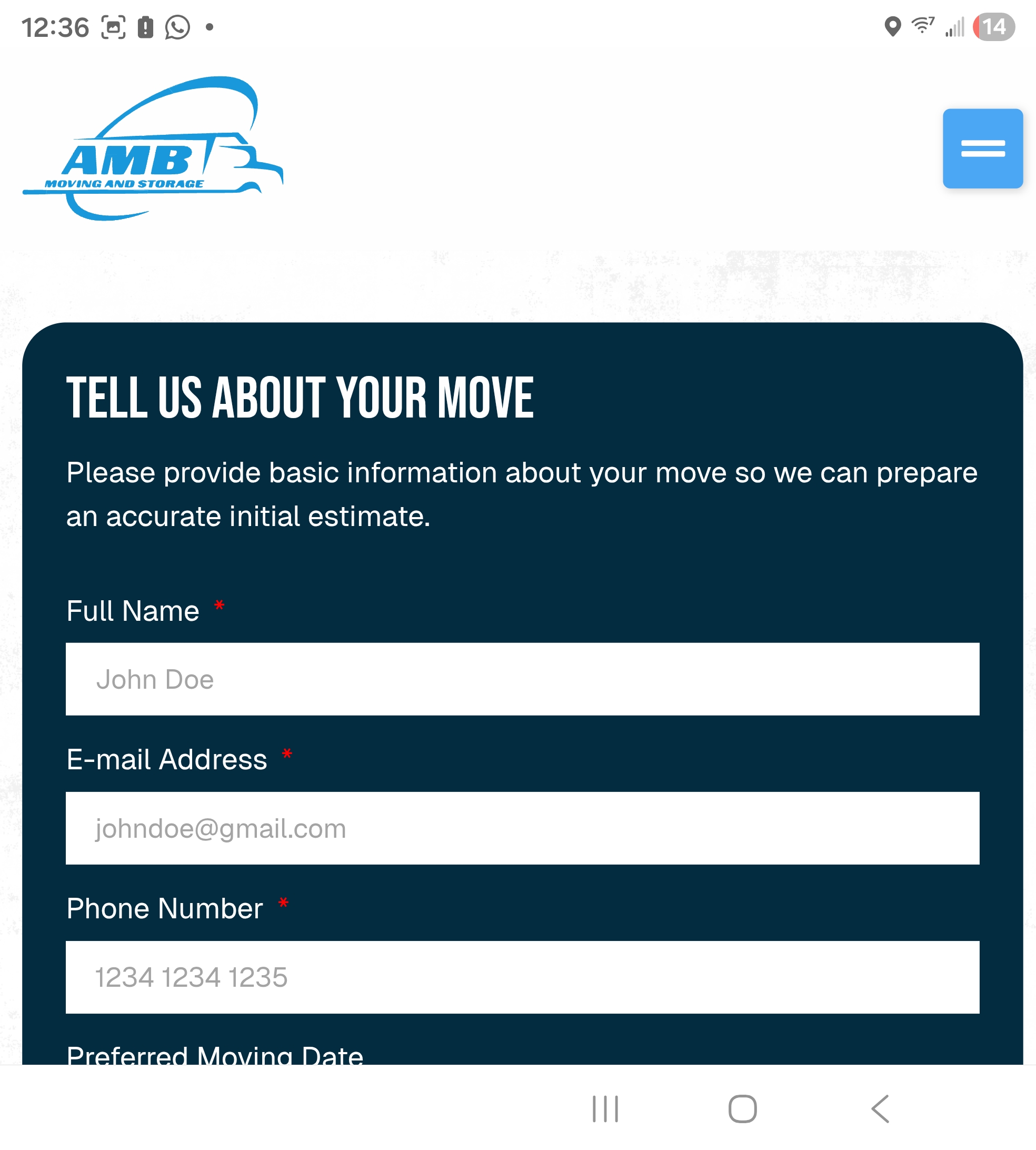
That matters most for interstate relocations, where your belongings might sit in storage for weeks between a lease ending and a new home closing. AMB’s storage services are built into the same booking flow as interstate moving, so the same inspection and access standards apply whether your items are on the truck or in the unit. Whether you’re a family bridging a gap between homes or a business managing inventory during a relocation, nationwide moving coverage means the same monitored, documented storage standards travel with you regardless of which state you’re moving to.
Start by requesting a moving cost estimate and mention your storage needs, inventory size, retention period, and access requirements, so AMB can confirm the right storage tier and send you the documentation covered in this article before you book.