

TL;DR:
- Online moving estimates provide a preliminary cost range based on factors like shipment weight, distance, and services. They require a follow-up survey to become binding, with binding estimates offering fixed costs and non-binding estimates capped by the 110% rule. Comparing multiple, clearly defined quotes and scheduling surveys early helps families plan their move effectively and avoid surprises.
A moving estimate online is a preliminary cost range or quote obtained through internet-based calculators or moving company platforms, giving homeowners a realistic picture of relocation expenses before committing to any carrier. For families planning a long-distance move, these tools are the fastest way to compare prices, understand what drives costs, and set a working budget. The industry term for the formal document a mover provides is a “moving quote” or “tariff estimate,” and understanding the difference between an informal online calculator result and a legally binding written estimate is the single most important thing you can do before signing anything. Moving cost calculators help with planning, but the final cost depends on shipment weight, services selected, and carrier availability.
How moving estimates online are calculated
Long-distance and interstate moving estimates use a fundamentally different pricing model than local moves. Local moves are priced by hourly labor and crew size. Long-distance moves, however, are priced by shipment weight, distance, and add-ons, which is why online calculators for cross-country relocations show ranges rather than fixed numbers.
The primary inputs that drive any long-distance online moving quote are:
- Origin and destination ZIP codes — distance is calculated in miles and directly affects the base rate
- Estimated shipment weight — derived from home size (number of bedrooms) and the volume of items you plan to move
- Service level — full-service packing, partial packing, or self-pack each carry different labor costs
- Move date and seasonality — peak season (May through September) consistently produces higher rates than off-peak months
Timing matters more than most families realize. A move booked for July can cost significantly more than the same move in February, simply because demand for nationwide moving company capacity spikes in summer. Online calculators that pull from real carrier data account for this variable, which is why the same ZIP-to-ZIP route can show a wide price range depending on your selected move date.
Pro Tip: When using any online moving cost calculator, enter your actual bedroom count rather than estimating square footage. Movers price by weight, and bedroom count is the most reliable proxy for shipment weight at the estimate stage.
For 2026, long-distance move costs for relocations over 1,000 miles range from approximately $1,500 to $8,500 or more depending on home size and distance. That spread reflects the real variability in weight, service scope, and timing. Use it as a planning range, not a promise.
What are binding vs. non-binding moving estimates?
The type of estimate a mover provides determines exactly how much you can be charged on delivery day. The Federal Motor Carrier Safety Administration (FMCSA) recognizes three written estimate types for interstate moves, and every online quote you receive will eventually convert into one of them.
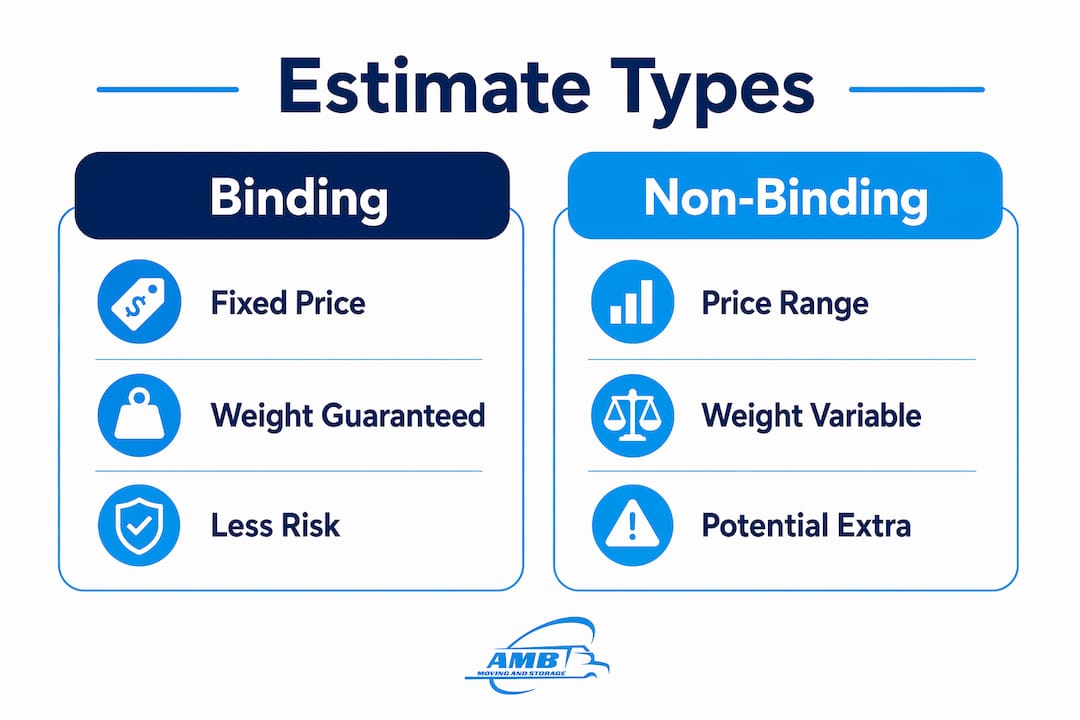
Binding estimate: The mover agrees to transport your shipment for a fixed price, regardless of actual weight. You pay exactly what the estimate states, provided your inventory does not change.
Non-binding estimate: The mover provides an approximate cost, and the final charge is based on actual shipment weight and services performed. Federal regulation 49 CFR 375.407 limits delivery-day charges to 110% of the original non-binding estimate for interstate moves. This is the 110% rule, and it is one of the strongest consumer protections in interstate moving law.
Binding not-to-exceed estimate: The final charge cannot exceed the estimate, but if actual weight comes in lower, you pay the lower amount. This is the most consumer-friendly option and is worth requesting specifically.
The 110% rule means that even with a non-binding estimate, a mover cannot demand more than 110% of the quoted amount at the time of delivery. Any amount above that threshold must be paid within 30 days of delivery. Knowing this rule before you sign prevents the most common delivery-day disputes.
The practical implication is straightforward. If you receive a non-binding online moving quote for $4,000 and your actual shipment weighs more than estimated, the mover can charge up to $4,400 at delivery. Anything beyond that is legally deferred. Written estimates and surveys form the legal foundation of moving contracts, which is why an instant online quote always requires a follow-up survey before it becomes a binding agreement.
When comparing quotes online, always confirm the estimate type in writing. Comparing a binding estimate from one carrier against a non-binding estimate from another is not a fair comparison. The binding quote may appear higher but carries zero financial risk on delivery day.
How to get and compare moving quotes online: step by step
Getting accurate online moving estimates requires more than entering a ZIP code and clicking submit. Follow this sequence to get quotes that are actually comparable and useful.
- Enter precise origin and destination ZIP codes. City-level entries produce less accurate distance calculations. ZIP codes give carriers the exact routing data they need.
- Select your move date accurately. Even a two-week shift in timing can change your estimate range by hundreds of dollars due to seasonal demand.
- Inventory your home by room. Most calculators ask for bedroom count, but the more detailed your inventory, the more accurate the weight estimate. Note large items like pianos, safes, or gym equipment separately.
- Request a virtual survey. Online form plus video walkthrough processes allow movers to provide more official quotes than a calculator alone can generate. Schedule this with at least two or three carriers.
- Get at least three estimates. Comparing multiple quotes and factoring in additional costs like packing supplies, tolls, and tips is the standard recommendation from moving industry experts. Three quotes give you a real market price, not just one carrier’s rate.
- Compare line by line, not just total price. Check whether packing materials, disassembly, long-carry fees, elevator fees, and storage are included or excluded in each quote.
- Confirm the estimate type in writing. Ask each carrier to specify whether the quote is binding, non-binding, or binding not-to-exceed before you proceed.
Pro Tip: Schedule your virtual surveys on the same day if possible. Your inventory and memory of what you plan to move will be consistent across all three carriers, which makes the resulting quotes genuinely comparable.
The best use of an online moving estimate is to establish a realistic budget range and then use that range to select two or three movers for detailed virtual or in-home surveys. The calculator gets you in the ballpark. The survey gets you the actual number.
Common mistakes when using online moving estimates
Most families who encounter surprise charges on delivery day made at least one of the following errors during the estimate phase. Recognizing these patterns in advance is the most practical form of consumer protection available.
- Relying on a single estimate. One quote tells you nothing about market pricing. It tells you only what one carrier wants to charge. Three quotes reveal the actual range.
- Comparing inconsistent estimate types. Placing a binding estimate next to a non-binding estimate and choosing the lower number is a common and costly mistake. Effective estimate comparison requires matching service scope and estimate type across all quotes.
- Ignoring line-item fees. Packing labor, packing materials, stair carries, long carries from truck to door, and fuel surcharges are frequently excluded from headline online quotes. Ask each carrier for a complete fee schedule.
- Skipping the written documentation step. An online quote that exists only in an email thread or a calculator result is not a legal estimate. A formal written estimate signed by the carrier is the document that governs your move.
- Failing to update the estimate after inventory changes. If you add or remove items after the survey, notify the carrier in writing. Undisclosed additions are the leading cause of non-binding estimate overruns.
Pitfalls with non-binding estimates and the importance of documentation are well-documented in interstate moving disputes. The central issue in most cost overrun cases is the exact written estimate type and the amount that governs delivery-day payment. Keep every document the carrier provides.
How to use moving estimates to plan your budget and move
An online moving estimate is most valuable when you treat it as a planning instrument rather than a final price. Here is how to translate estimate data into a working relocation plan.
Use the cost range from your estimates to set a moving budget with a 15% to 20% buffer above the highest quote you receive. That buffer covers incidental costs like packing supplies, hotel stays during transit, and utility connection fees at your destination. For a family moving from a three-bedroom home across 1,500 miles, the moving cost guide at Ambmovingservices provides a detailed breakdown of what drives costs at each stage of a long-distance relocation.
When evaluating movers beyond price, check three things: FMCSA licensing status (verifiable at the FMCSA mover search tool), insurance coverage levels, and customer reviews that specifically mention delivery-day accuracy. A carrier with a slightly higher binding estimate and a strong track record for on-time delivery is almost always a better choice than the lowest non-binding quote in your stack.
| Factor | What to evaluate |
|---|---|
| Estimate type | Binding or binding not-to-exceed offers the most financial certainty |
| Included services | Confirm packing, disassembly, and long-carry fees are itemized |
| Carrier licensing | Verify FMCSA registration and insurance before signing |
| Survey method | Virtual or in-home survey produces more accurate quotes than calculator alone |
| Move date flexibility | Off-peak dates (October through April) reduce cost significantly |
For families coordinating a complex interstate relocation, the interstate moving step-by-step guide at Ambmovingservices covers how to align your estimate timeline with packing schedules, storage needs, and school enrollment deadlines. Estimates are the starting point. The survey, the written contract, and the carrier’s licensing record are what determine whether your move goes smoothly.
Key takeaways
A moving estimate online is a planning tool that becomes legally meaningful only when converted into a written, signed estimate following a virtual or in-home survey.
| Point | Details |
|---|---|
| Estimates are ranges, not prices | Online calculators produce cost ranges based on weight, distance, and services. Use them to set a budget, not to confirm a price. |
| Estimate type determines payment risk | Binding estimates fix your cost. Non-binding estimates allow charges up to 110% of the quoted amount at delivery. |
| Three quotes is the minimum | Comparing at least three estimates from licensed carriers reveals the real market rate for your specific move. |
| Line-item comparison is required | Total price comparisons are misleading if service scope and estimate types differ across quotes. |
| Surveys convert quotes to contracts | An online instant quote requires a follow-up virtual or in-home survey before it becomes a binding legal document. |
What I’ve learned from years of long-distance moving estimates
After working with families on interstate relocations across every region of the country, the pattern I see most often is this: homeowners spend significant time comparing headline prices online and almost no time verifying what those prices actually include. A $3,800 binding estimate that covers full-service packing, disassembly, and reassembly is a better deal than a $3,200 non-binding estimate that excludes all three. The math only becomes clear when you read the line items.
The other thing I would tell every family planning a long-distance move is to schedule your virtual survey earlier than you think you need to. Most people treat the survey as a formality after they have already chosen a mover. It should be the opposite. The survey is where the estimate becomes real. It is where the carrier sees your actual inventory, identifies access challenges at your origin or destination, and commits to a written price. Rushing that step because you waited too long to book is how families end up with non-binding estimates and delivery-day surprises.
Online tools from resources like move.org and moveBuddha are genuinely useful for getting oriented on cost ranges. But they are the beginning of the process, not the end. Treat every online quote as an invitation to have a more detailed conversation with a licensed carrier. The families who move without stress are the ones who asked the most questions before signing anything.
— AMB
Plan your long-distance move with Ambmovingservices
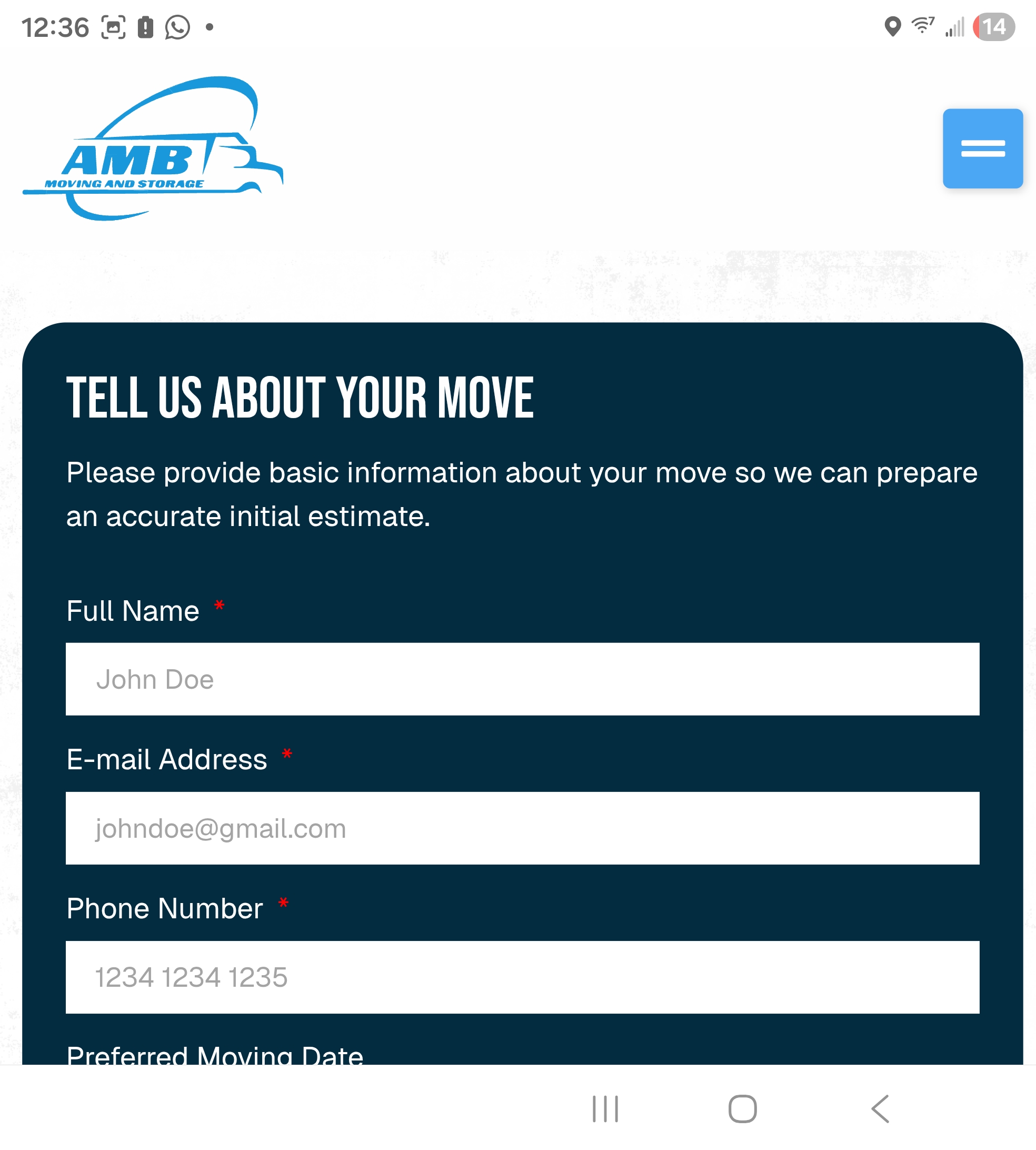
Ambmovingservices makes it straightforward to get a free moving estimate online for your interstate or long-distance relocation. The process starts with a simple quote form, followed by a thorough virtual or in-home survey that converts your initial range into a written, accurate estimate. Ambmovingservices is fully licensed and insured under FMCSA regulations, with transparent pricing that specifies estimate type, included services, and any applicable fees before you sign. Whether you are moving across two states or coast to coast, the team provides dedicated support from first quote to final delivery. Get your free estimate today and start your move with a number you can actually plan around.
FAQ
What is a moving estimate online?
A moving estimate online is a preliminary cost range generated by an internet-based calculator or moving company platform, using inputs like home size, distance, and move date. It is a planning tool, not a final price, and requires a follow-up survey to become a binding agreement.
How accurate are online moving cost calculators?
Online moving cost calculators provide useful planning ranges but final costs depend on actual shipment weight, services performed, and carrier availability. Scheduling a virtual or in-home survey after receiving an online quote produces a significantly more accurate figure.
What is the 110% rule for moving estimates?
Federal regulation 49 CFR 375.407 limits delivery-day charges on non-binding interstate estimates to 110% of the original quoted amount. Any charges above that threshold must be billed separately and paid within 30 days of delivery.
How many moving quotes should I get online?
Get at least three quotes from licensed interstate carriers before selecting a mover. Three estimates reveal the real market price range for your specific move and give you leverage to negotiate or identify outliers.
What is the difference between a binding and non-binding moving estimate?
A binding estimate fixes your total cost regardless of actual shipment weight, while a non-binding estimate allows the final charge to vary based on weight and services, subject to the 110% delivery-day cap. A binding not-to-exceed estimate is the most consumer-friendly option because it caps your cost while allowing savings if your shipment weighs less than estimated.