


Yes, you can legally move firearms across state lines, as long as you’re following federal law and can lawfully own the firearm in both your old and new state. Federal law under 18 U.S.C. § 926A protects transport when guns are unloaded and inaccessible from the passenger compartment. NFA items like suppressors or short-barreled rifles need ATF Form 5320.20 approval first. Before you pack a single box, research your destination state’s gun laws and tell your mover exactly what you’re shipping.
TL;DR:
- Federal law allows the transport of unloaded firearms that are stored in locked, inaccessible cases during interstate moves, but proper documentation is necessary for NFA items.
- State and local laws can significantly differ, requiring thorough research of each jurisdiction’s restrictions, registration, and permit requirements before packing.
- NFA items such as suppressors or short-barreled rifles need prior ATF approval via Form 5320.20 before transportation; failure to obtain this can result in felony charges.
- Shipping firearms with carriers or movers requires disclosure and careful packaging, along with verifying their policies and coverage for firearm-related items.
- Planning should include filing necessary forms early, verifying permits and restrictions, and coordinating with trained professionals to reduce legal and logistical risks during the move.
Table of Contents
- Federal Legal Baseline: What 18 U.S.C. § 926A and ATF Guidance Actually Allow
- State and Local Gun Laws: How to Research Your Destination Before You Pack
- NFA Items: ATF Form 5320.20 Approval, Timelines, and Carrier Rules
- Moving Firearms by Method: Car, Plane, Carrier, and Movers
- Working With Professional Movers: Disclosure, Insurance, and Gun-Safe Handling
- Your Move-Day Timeline: What to Do and When
- Why a Licensed Mover Reduces Risk on Complex Firearm Relocations
- How Ambmovingservices Handles Firearm-Inclusive Moves
- Sources
- FAQ
Federal Legal Baseline: What 18 U.S.C. § 926A and ATF Guidance Actually Allow
The federal law that matters most here is 18 U.S.C. § 926A, often called the safe passage provision of the Firearm Owners Protection Act. It says you can transport a firearm from one place you can legally possess it to another, even through states with stricter laws, as long as the gun is unloaded and neither the firearm nor its ammunition is readily accessible from the passenger compartment. If your vehicle doesn’t have a separate trunk or storage compartment, the firearm and ammo need to sit in a locked container that isn’t the glove box or center console.
ATF confirms this extends to household moves: if you legally own a firearm, you can include it with your household goods when relocating, and if you’re hiring movers, you need to tell them. Company policies on firearms vary widely, and some crews won’t touch a shipment that wasn’t disclosed upfront.
Here’s where people get tripped up. Section 926A is not a blanket shield. It covers transportation, not possession once you arrive. A few things it does not do:
- It doesn’t override a destination state’s registration or permit requirements once you’ve settled in.
- It doesn’t protect firearms that are illegal to own in either your origin or destination state.
- It doesn’t apply if you make an unscheduled stop and the firearm becomes accessible, which some courts have used to deny the defense.
- It doesn’t substitute for NFA approval on regulated items like suppressors or short-barreled rifles.
Regulatory text under § 478.28 reinforces the same unloaded, not readily accessible standard for certain firearms, and it’s worth reading if you’re transporting anything beyond a standard handgun or rifle.
State and Local Gun Laws: How to Research Your Destination Before You Pack
Federal protection is the floor, not the whole picture. States and cities layer on their own rules, and some of them genuinely conflict with what’s legal where you live now. Magazine capacity limits, “assault weapon” definitions, permit-to-purchase requirements, and even where you’re allowed to store a firearm in your car all shift depending on the state line you’re crossing.
Here’s a research routine that actually works before an interstate move:
- Start with your destination state’s attorney general or state police website. These pages typically list registration deadlines, banned features, and permit reciprocity in plain language.
- Check every state you’ll drive through, not just your destination. A weapon that’s perfectly legal in Ohio can be a felony in New Jersey if you stop for gas with it accessible.
- Look up local ordinances in your new city or county. Some municipalities add restrictions that state law doesn’t mention, particularly around magazine capacity or storage in multi-unit housing.
- Verify permit reciprocity if you carry concealed. A concealed carry permit from your old state may not transfer, and some states require a new application within a set window after establishing residency.
- Cross-reference with ATF’s published Q&A on interstate transport, which addresses common scenarios like layovers and registered NFA items.
If your research turns up a firearm that’s flat-out illegal in your new state, you have three real options: leave it in secure storage back home, transfer it legally to someone in your old state, or sell it before you move. Moving it anyway and hoping nobody checks is how a routine relocation turns into a felony charge.
NFA Items: ATF Form 5320.20 Approval, Timelines, and Carrier Rules
Suppressors, short-barreled rifles and shotguns, machine guns, and destructive devices fall under the National Firearms Act, and they play by different rules than a standard rifle or handgun. You cannot simply drive an NFA item across a state line the way you would a shotgun. You need prior written authorization from ATF using Form 5320.20 before you transport it interstate or temporarily export it.
A few practical points worth knowing:
- The form must be submitted in duplicate, and processing takes real time, so apply well before your move date, not the week you’re loading a truck.
- If you’re using a carrier or professional mover for the NFA item, they need a copy of your approved form in their possession during transit.
- Approval isn’t guaranteed instantly, and moving before you receive it isn’t a gray area. It’s a straightforward violation.
Pro Tip: File your Form 5320.20 the same week you sign a lease or purchase agreement on your new home. Sixty to ninety days of buffer gives you room if ATF processing runs long, and you won’t be stuck deciding whether to delay your entire move over a suppressor.
If approval hasn’t come through by your move date, ATF guidance outlines your fallback options: store the item securely in your prior state, transfer it under standard NFA rules, or surrender it. None of those options are fun, but they’re far better than the felony exposure of transporting an NFA item without authorization.
Moving Firearms by Method: Car, Plane, Carrier, and Movers
How you’re physically moving your guns changes the rules you follow. Here’s what applies to each method.
Personal vehicle. This is where most interstate moves happen, and the rule is simple: unloaded, locked, and not readily accessible from the passenger compartment. If your car lacks a trunk separate from the cabin, like an SUV or hatchback, put the firearm and ammunition in a locked hard-sided case rather than just tucking it under a seat. That distinction has mattered in actual court cases involving the § 926A defense.
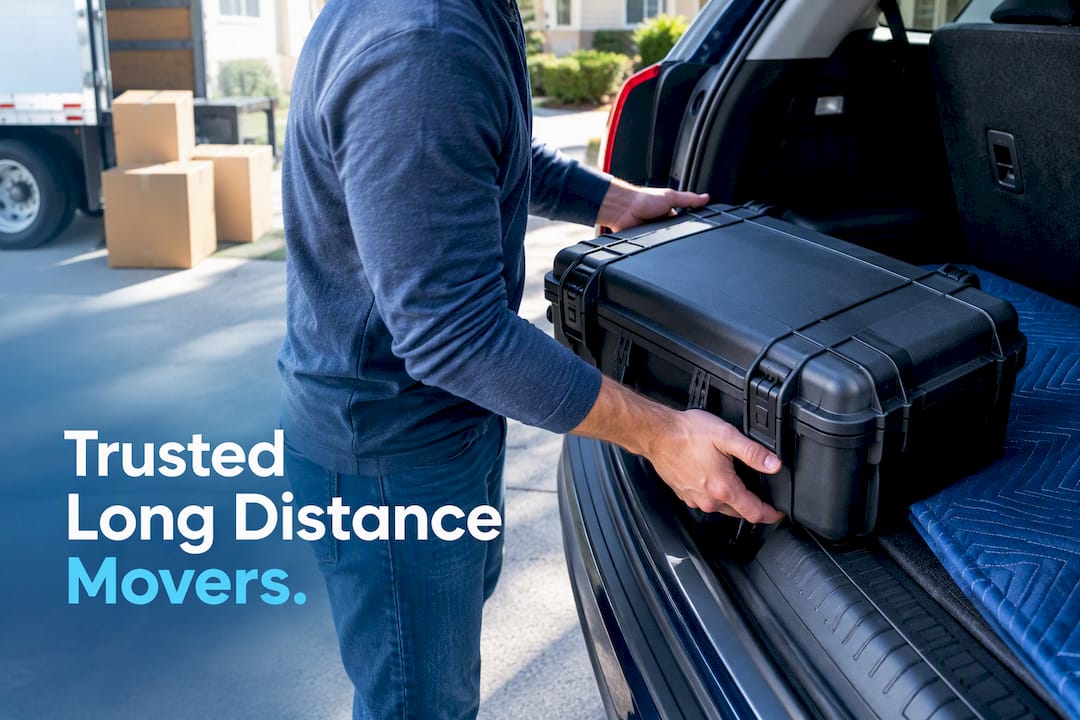
Air travel. TSA rules require firearms to be unloaded, packed in a locked, hard-sided container, and checked as baggage, never carried on. You must declare the firearm at the airline ticket counter when you check your bag. TSA’s detailed guidance specifically warns that original retail packaging often isn’t sturdy enough and recommends a crushproof case built for the purpose.
Shipping and common carriers. If you’re shipping a firearm rather than driving or flying with it, federal regulation § 478.31 requires you to give written notice to the carrier that the package contains a firearm. The carrier, in turn, is prohibited from marking the package externally in any way that reveals its contents, which protects against theft in transit.
Movers. Professional movers fall somewhere between personal transport and common carrier rules. You disclose the firearm, they set the packing and handling terms, and company policy varies significantly from one mover to the next.
A quick rundown of what to avoid regardless of method:
- Never route a move through Canada or Mexico with firearms aboard without separate export or import authorization. Crossing an international border with an undeclared firearm is a federal crime distinct from anything covered by domestic interstate transport law.
- Avoid unscheduled stops in states with strict possession laws if your firearm could become accessible during that stop.
- Don’t assume a state you’re just driving through shares your home state’s laws. Some states criminalize simple possession in transit regardless of your final destination.
Working With Professional Movers: Disclosure, Insurance, and Gun-Safe Handling
Telling your mover about firearms isn’t optional courtesy. It’s how the move stays legal and how your belongings stay covered if something goes wrong. ATF’s own guidance is direct about this: notify the moving company, because internal policies on firearms differ from one company to the next, and some crews require specific documentation before they’ll load a shipment that includes guns.
What that disclosure typically looks like in practice:
- A written note in your move inventory listing firearms as a category, without needing serial numbers disclosed to the crew.
- Confirmation of any NFA paperwork if applicable, kept with you rather than handed over to the crew.
- A conversation about how the firearms will be packed. Handguns often travel in a locked case inside a labeled box; heavier items like gun safes require dedicated equipment and a trained crew given their weight.
- A check of the mover’s tariff and valuation coverage, since basic liability coverage rarely reflects the full replacement value of a firearm collection or a large safe.
Here’s a quick reference for what to confirm before move day:
| What to verify | Why it matters |
|---|---|
| Mover’s written firearm policy | Some companies restrict what they’ll transport without advance notice |
| Valuation coverage level | Basic coverage often undervalues firearms and safes significantly |
| Specialty crew availability for safes | Safes over a few hundred pounds need proper equipment, not just extra hands |
| Delivery inventory and signature process | Protects you if an item is missing or damaged on arrival |
On delivery day, walk through your inventory list with the crew before signing anything. If a firearm or safe shows damage or doesn’t match what was loaded, note it in writing on the delivery paperwork immediately, not after the truck leaves.
Your Move-Day Timeline: What to Do and When
A firearm move goes smoothly when it’s planned in stages, not scrambled together the week of the truck. Here’s a workable timeline.
- 30+ days out: File ATF Form 5320.20 if you own any NFA items. Research your destination state and every state you’ll transit through.
- 21 days out: Book your mover and disclose firearms explicitly, including any safes or NFA items that need specialty handling.
- 14 days out: Confirm permit reciprocity for your destination state and check whether your new state requires registration within a specific window after you arrive.
- 7 days out: Gather documents: firearm registrations, NFA approval letters, and a photo inventory of each item for your own records.
- 48 to 24 hours out: Pack firearms unloaded, in locked hard-sided cases, separate from ammunition where required. Keep your NFA approval copy with you, not packed away.
- Day of move: Hand a copy of relevant documentation to your mover or carrier if you’re using one. Keep originals on your person.
- On arrival: Verify your inventory against what was loaded, check your new state’s registration deadline, and store firearms securely until you’ve confirmed local compliance.
If ATF approval is delayed past your move date, don’t transport the NFA item. Store it in secure storage in your prior state until approval comes through, a scenario where a short-term self storage arrangement can bridge the gap without forcing you to violate transport rules. If a transit state flatly refuses passage for a particular firearm configuration, reroute your driving path rather than risk it.
Why a Licensed Mover Reduces Risk on Complex Firearm Relocations
Firearm moves fail for the same reason most legal problems do: nobody flagged the issue until it was too late. A mover that asks about firearms upfront, builds NFA documentation into the move plan, and assigns trained crews to heavy safes catches problems before the truck ever leaves the driveway. DIY moving works fine for a single unloaded rifle in a locked case. Complex situations, NFA items, gun safes, cross-country routes through multiple jurisdictions, benefit from a team that has handled the paperwork before
— AMB
How Ambmovingservices Handles Firearm-Inclusive Moves
Moving firearms across state lines takes more coordination than a standard shipment, and that’s exactly the kind of complexity Ambmovingservices builds into its interstate moving process from the first phone call. 
Ambmovingservices offers long-distance moving with professional packing services priced per cubic foot, plus specialty handling for heavy items like gun safes starting at competitive rates. If your move includes secure storage while you wait on ATF approval or destination-state compliance, that’s part of the services lineup too, with storage offered at affordable rates.
Before you request a quote, have a few details ready: whether you’re transporting any NFA items and their approval status, the dimensions and weight of any gun safe, your preferred moving dates, and whether you want additional valuation coverage beyond standard tariff protection. That information lets the team assign the right crew and equipment from the start instead of sorting it out on move day.
Ready to get your interstate move quoted with firearms and safes accounted for from the beginning? Request a quote and tell the team what you’re bringing.
Sources
The legal claims in this guide are drawn directly from federal statute and agency guidance, not secondhand summaries:
- Firearms Questions and Answers | ATF
- Transporting Firearms and Ammunition | Transportation Security Administration
- 18 U.S. Code § 926A – Interstate transportation of firearms
This article is general information, not a substitute for advice from a qualified lawyer. Consult a qualified legal professional about your own circumstances before acting on anything here.
FAQ
Can I Keep My Guns if I Move to Another State?
Yes, as long as the firearm is legal to own in your new state and you complete any required registration or permitting after you arrive. Federal law under 18 U.S.C. § 926A protects the transport itself, but it doesn’t override your destination state’s ownership rules once you’ve settled in.
Can I Carry a Gun in My Car in All 50 States?
No. Interstate transport protection under § 926A requires the firearm to be unloaded and not readily accessible, but concealed carry permits and possession rules vary significantly by state and don’t automatically transfer. Check reciprocity and registration requirements for every state you’ll drive through, not just your final destination.
Do I Have to Notify the ATF if I Move With a Suppressor?
Yes. Suppressors are NFA items, and you need prior written approval via ATF Form 5320.20 before transporting one across state lines. Apply well ahead of your move date since processing isn’t instant.
Can I Legally Transport My Firearm Across State Lines?
Yes, under 18 U.S.C. § 926A, provided the firearm is unloaded, not readily accessible from the passenger compartment, and legal to possess in both your starting point and destination. NFA items are the exception and need separate ATF approval first.
Do I Need to Tell My Moving Company I’m Shipping Firearms?
Yes. ATF guidance confirms that mover policies on firearms vary, and disclosure is necessary so the crew packs and handles the shipment correctly. The company requests information about firearms and safes during quote requests to assign appropriate crew and equipment for the move.