


TL;DR:
- Interstate moving costs are mainly influenced by distance, weight, timing, and additional services.
- Real route data shows regional variations and seasonal increases affecting overall expenses.
- Choosing the right service level and asking detailed questions helps avoid hidden fees and budget surprises.
Most families planning an interstate move assume the cost is a mystery until the truck pulls away. But real route data tells a different story. Patterns emerge. Costs follow logic. And once you understand what drives your quote, you can make smarter decisions well before moving day. This guide breaks down how 2026 interstate moving costs are actually calculated, what families in different regions are paying, and where budgets tend to go sideways. Whether you’re moving 300 miles or 2,000, the insights here will help you anticipate costs, compare options, and avoid the surprises that catch most movers off guard.
Table of Contents
- How interstate moving costs are calculated
- 2026 data spotlight: Average costs by distance and region
- Comparing moving options: Full-service, self-pack, and hybrid
- Hidden costs and how to avoid them
- A moving expert’s perspective: What families REALLY need to focus on
- How AMB Moving Services can support your interstate move
- Frequently asked questions
Key Takeaways
| Point | Details |
|---|---|
| Cost clarity with route data | 2026 route data lets you predict interstate moving expenses more accurately. |
| Major cost drivers | Distance, volume, timing, and chosen services have the biggest effect on what you pay. |
| Compare move options | Full-service, self-pack, and hybrid moves differ widely in price, effort, and convenience. |
| Watch for hidden fees | Extra charges like long carries, stairs, and storage can easily add hundreds to your bill. |
| Focus beyond costs | Balancing budget with service quality and peace of mind leads to the best moving outcomes. |
How interstate moving costs are calculated
Understanding your moving quote starts with knowing what movers actually measure. Most interstate carriers price a move based on a combination of factors, and the formula is more predictable than most families expect.
The core cost drivers are:
- Distance (miles from origin to destination)
- Weight or volume of your household goods
- Move date and time of year
- Added services such as packing, furniture assembly, and valuation coverage
- Access conditions at either address (stairs, narrow streets, elevator restrictions)
Key cost factors include distance, volume, timing, and additional services, and each one can shift your total significantly. Most long-distance movers build their quote using a base formula: miles traveled multiplied by a rate per mile, plus labor hours, plus any applicable surcharges.
What surprises many families is that movers often have a minimum weight charge, typically 1,000 to 2,000 pounds, even if your actual shipment is lighter. Fuel surcharges are another line item that appears without warning if you aren’t looking for it. Seasonal demand also plays a real role: moving in July costs noticeably more than moving in January on the same route.
Not all pricing structures are identical. Some interstate moving services charge by weight, while others price by cubic footage. Weight-based quotes are regulated by federal law for licensed interstate carriers, but volume-based pricing from brokers or container companies can vary widely.
“A low headline price doesn’t always mean a low final bill. Always ask for the full breakdown before you sign anything.”
Pro Tip: When collecting quotes, ask each mover to itemize every charge: base rate, fuel surcharge, valuation fee, packing materials, and any access fees. If they won’t break it down, that’s a red flag worth taking seriously.
Making sense of quotes also means understanding the difference between a binding estimate and a non-binding one. A binding estimate locks your price regardless of actual weight. A non-binding estimate can go up if your shipment weighs more than projected. Knowing which type you have changes everything about budgeting. For tips on choosing a moving company that’s transparent about all of this, it’s worth doing your homework before the first call.
With the basics in mind, let’s see how costs actually look according to 2026 real route data.
2026 data spotlight: Average costs by distance and region
Now that you know what shapes your quote, let’s look at actual numbers from this year’s real moves.
Real route data for interstate moves in 2026 reveals significant regional variation and distance-related trends that most online calculators simply don’t capture.

| Distance range | Average cost (2BR home) | Average cost (4BR home) |
|---|---|---|
| 250–500 miles | $2,200–$3,400 | $4,100–$5,600 |
| 500–1,000 miles | $3,500–$5,200 | $5,700–$7,400 |
| 1,000+ miles | $5,500–$8,000+ | $8,500–$12,000+ |
These ranges reflect full-service moves including loading, transport, and unloading. Costs shift based on region, as some corridors are simply more competitive than others.
A standout finding from 2026: Certain southern routes saw costs increase by 11% compared to 2025, driven by higher demand for Sun Belt destinations and rising fuel costs in that corridor. That’s a meaningful jump for families who budgeted based on last year’s numbers.
The most and least expensive states to move to or from this year include:
- Most expensive to move from: California, New York, Massachusetts
- Most expensive to move to: Hawaii, Alaska (specialty routes), New York City metro
- Least expensive corridors: Midwest-to-Midwest routes, rural South, and Great Plains transfers
Seasonal pricing adds another layer. Peak summer rates (June through August) can run 20 to 30% higher than off-peak winter rates on the same route. If you have flexibility, scheduling your move in January through March can result in real savings. The full 2026 cost report includes route-by-route breakdowns worth reviewing before you finalize your plans.
For a broader view of what to expect on your specific budget, the moving cost guide covers regional ranges and what each price tier typically includes.
But costs also shift dramatically depending on the service model you choose.
Comparing moving options: Full-service, self-pack, and hybrid
Not every family needs the same level of help, and your service choice may matter as much as your route when it comes to total cost.
Full-service moves typically cost 30 to 50% more than self-pack options, but that gap represents real differences in what you get: trained packers, materials, liability coverage, and far less physical effort on your part.
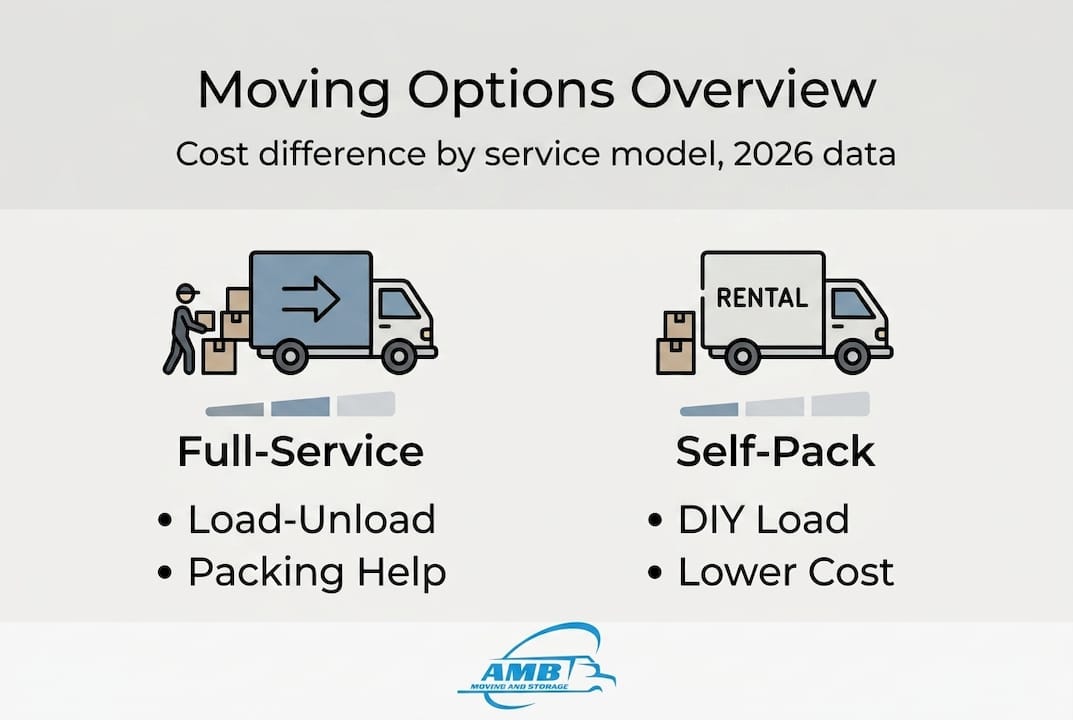
| Option | Avg. cost (1,000-mile move, 3BR) | Pros | Cons |
|---|---|---|---|
| Full-service | $6,500–$9,500 | Hands-off, insured, fast | Highest cost |
| Self-pack + rental truck | $2,000–$4,000 | Lowest cost | Maximum effort, liability risk |
| Hybrid (pack yourself, pros load) | $3,500–$5,500 | Good savings, less labor | Requires early packing discipline |
Here’s how to evaluate which option makes the most sense for your family:
- Assess your timeline. Full-service works best when you’re under time pressure. Self-pack works only when you have weeks to prepare.
- Inventory your belongings. Large, heavy, or specialty items (pianos, antiques) usually need professional handling regardless of your other choices.
- Factor in your physical capacity. A hybrid move still requires packing every box yourself. That’s significant for large households or families with health limitations.
- Calculate real savings. Cheaper options aren’t always cheaper when you add up truck rental, fuel, hotel stays during a multi-day drive, and packing materials.
- Review insurance coverage. Rental trucks offer minimal protection. A licensed carrier’s valuation coverage is more robust, though not a substitute for full replacement-value insurance.
Pro Tip: The hybrid model is one of the best-kept secrets in interstate moving. If you pack yourself but hire professionals for loading and unloading, you can trim your bill by 25 to 35% without doing the heaviest lifting. The step-by-step family guide walks through exactly how to plan this approach. For a direct side-by-side look at each model, the moving services comparison page is a practical next stop.
Beyond the basics, it’s vital to know about the fine print that pushes real budgets higher.
Hidden costs and how to avoid them
This is where many families feel blindsided. The base quote looks reasonable. Then the final bill arrives and it’s $800 higher. Hidden fees are common in the moving industry, but they’re also avoidable with the right questions.
Hidden costs can add hundreds to your final bill, including stair and elevator fees, long carry charges, and storage.
The top five fees most homeowners overlook:
- Stair and elevator fees: Charged per flight or per elevator use at pickup or delivery.
- Long carry charges: Applied when movers must carry items more than a set distance (often 75 feet) from truck to door.
- Fuel surcharges: Variable and sometimes not disclosed upfront.
- Last-minute rescheduling fees: Changing your move date close to the scheduled day often triggers penalties.
- Storage-in-transit fees: If your new home isn’t ready, your goods may sit in a warehouse at a daily rate.
The smartest move is to ask every potential mover: “What would cause my final bill to be higher than this estimate?” Write down the answer. Then ask for it in writing as an addendum to your contract.
“Never assume a charge isn’t possible just because it wasn’t on your quote. Ask specifically. Then get it confirmed on paper.”
For a full list of what to expect on the financial side, the relocation expense examples page covers scenarios most families don’t think about until it’s too late. If timing is uncertain, reviewing storage solutions in advance can help you plan for gaps between move-out and move-in dates.
Pro Tip: Request a virtual or in-person pre-move survey. Movers who assess your home before quoting are far less likely to add surprise fees on moving day because they’ve already accounted for every variable.
A moving expert’s perspective: What families REALLY need to focus on
Here’s a truth most cost guides won’t say directly: obsessing over price alone leads to worse moves, not better ones.
We’ve seen it repeatedly. A family saves $400 by choosing a lower-bid mover, then spends $600 dealing with delays, damaged furniture, and a carrier who won’t return calls. The “savings” evaporated. What they lost in stress and time was harder to quantify but very real.
The families who report the smoothest interstate moves share a few common habits. They ask hard questions early. They verify licensing and insurance before signing anything. They build a realistic timeline instead of assuming everything will go perfectly. And they invest in preparation: good packing, clear labeling, and a written plan for moving day.
Data matters, and the numbers in this article give you a genuine foundation. But numbers don’t tell you whether your mover will call you back when there’s a problem. That’s where judgment and research come in. The family moving step guide is built around exactly this kind of decision-making framework, not just cost comparison.
A smoother move comes from better decisions, not just a lower quote.
How AMB Moving Services can support your interstate move
If you want a smarter, simpler move, here’s how AMB Moving Services can help.
AMB Moving Services brings real route knowledge and transparent pricing to every interstate relocation we handle. We use current data to give families accurate estimates, not ballpark guesses that balloon by moving day.

Our interstate moving experts work with families across the country, handling everything from full-service relocations to hybrid options that keep costs in check. You can request your free quote today and get a detailed breakdown with no surprises. If you’re still in the planning phase, the complete moving guide gives you a step-by-step roadmap built for families navigating interstate moves in 2026. We’re here to make the process clear, not complicated.
Frequently asked questions
What is the average cost to move interstate in 2026?
The average interstate move in 2026 costs between $2,200 and $8,000 or more, depending on distance, the size of your household, and which services you choose.
How can I avoid hidden moving costs?
Ask for a fully itemized written quote, schedule a pre-move survey, and specifically confirm charges for stairs, long carries, and potential storage with your mover before signing. The most common hidden fees are avoidable when you ask the right questions upfront.
Is full-service moving always more expensive than self-pack?
Yes, full-service moves typically cost 30 to 50% more than self-pack options, but that premium covers packing labor, materials, liability coverage, and a significantly lighter workload for your family.
When is the cheapest time of year to move interstate?
Winter and early spring are consistently the most affordable windows. Off-peak months like January through March see lower demand, which translates directly into lower rates from most carriers.
What factors most affect the cost of an interstate move?
Distance, the total weight or volume of your belongings, your move date, and any add-on services like packing or storage have the biggest impact. These main cost drivers are consistent across nearly every interstate route in the country.