

TL;DR:
- Proper loading and unloading involve careful sequence, securement tools, and safety checks to prevent damage and injury during moves. Families should plan load order, use rated straps, and verify stability before transit and at destination. Professional moving services offer trained crews and safety standards compliance for safer, damage-free relocations.
Loading and unloading is defined as the process of moving belongings onto and off a truck in a controlled, weight-balanced sequence to prevent damage and injury. The Federal Motor Carrier Safety Administration (FMCSA) identifies shifting loads as a direct cause of vehicle rollovers and loss of control, making proper cargo securement a legal and safety priority. For families and individuals planning an interstate or long-distance move, mastering this process is the single most important factor in whether your belongings arrive intact. Ambmovingservices has guided thousands of households through this exact challenge, and the principles are consistent: plan the load order, secure every tier, and never rush the unload.
What tools and preparation do you need for loading and unloading?
The right equipment makes the difference between a controlled move and a chaotic one. Before a single box enters the truck, you need ratchet straps, load bars, moving blankets, furniture dollies, and tie-down rails. Each tool has a specific job, and skipping any one of them creates a gap in your cargo securement plan.
| Tool | Purpose |
|---|---|
| Ratchet straps | Lock each load tier to wall rails to stop forward or backward shifting |
| Load bars | Span the truck width to block lateral movement between tiers |
| Moving blankets | Wrap furniture surfaces to prevent scratches and dents |
| Furniture dolly | Move heavy appliances and dressers without straining your back |
| Tie-down rails | Anchor points built into truck walls for strap attachment |
Vehicle inspection comes before loading. Check the truck floor for debris, oil, or moisture that could cause boxes to slide. Confirm the ramp locks securely and the cargo door opens and closes without resistance. A five-minute inspection prevents a two-hour problem mid-move.
Plan your load order on paper before you touch a single item. Group belongings by weight category: heavy appliances and furniture in one group, medium boxes in another, and light or fragile items in a third. This mental map keeps you from making costly decisions on the fly when you are already tired.
- Inspect the truck floor and ramp before loading
- Gather all straps, blankets, and dollies at the truck entrance
- Label boxes by room and weight category
- Wear closed-toe shoes and work gloves throughout the process
- Keep a first aid kit accessible at the loading site
Pro Tip: Lay moving blankets on the truck floor near the ramp before you start. They protect both the floor and the first items you slide in, and they cost you nothing extra.
How do you load a moving truck step by step?
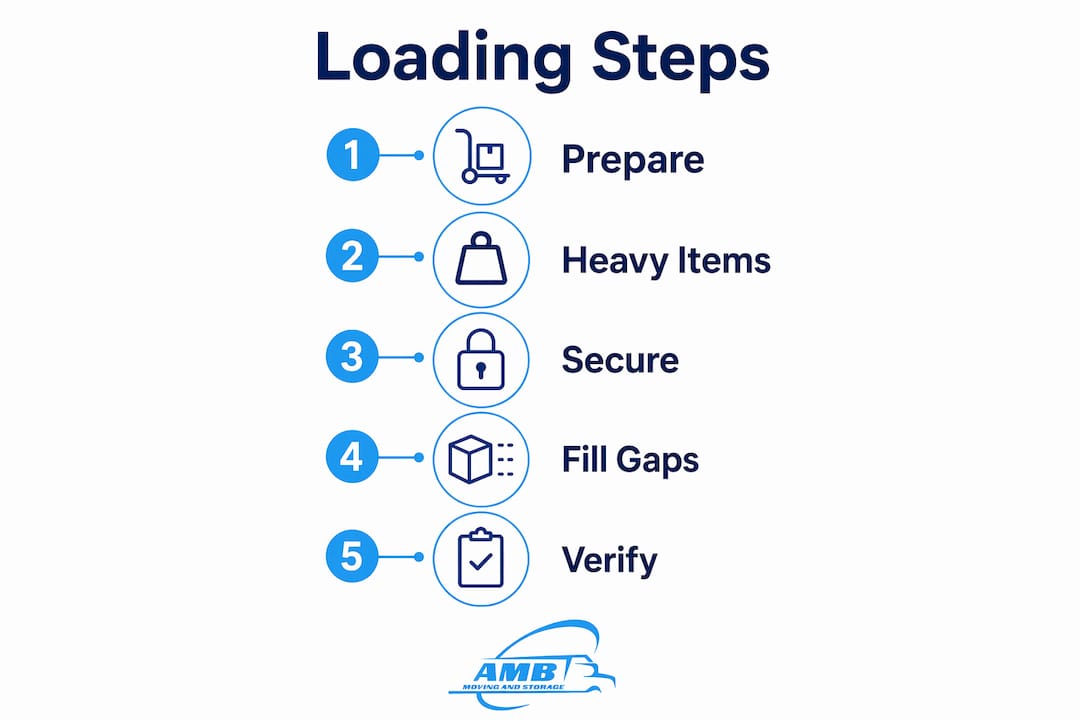
Loading a moving truck efficiently follows a strict sequence. Deviation from that sequence creates imbalance, and imbalance creates damage. Heaviest items load first, positioned low and pushed toward the cab wall. This keeps the truck’s center of gravity forward and low, which directly improves handling and braking on the highway.
- Load heavy appliances and furniture first. Refrigerators, washing machines, and dressers go against the cab wall. Keep them upright unless the manufacturer specifies otherwise. Wrap each piece in moving blankets before placing it.
- Stand mattresses and long furniture on edge. Mattresses, sofas, and headboards stand vertically against the side walls. Strap them to the tie-down rails immediately after placing them so they cannot fall inward.
- Fill the floor with medium-weight boxes. Stack boxes in tight rows from wall to wall. Heavy boxes go on the bottom, lighter ones on top. Never stack a heavy box on a fragile one.
- Fill every gap with soft goods. Pillows, comforters, and rolled towels fill gaps between boxes and stop items from shifting in transit. Soft goods act as built-in packing material at no extra cost.
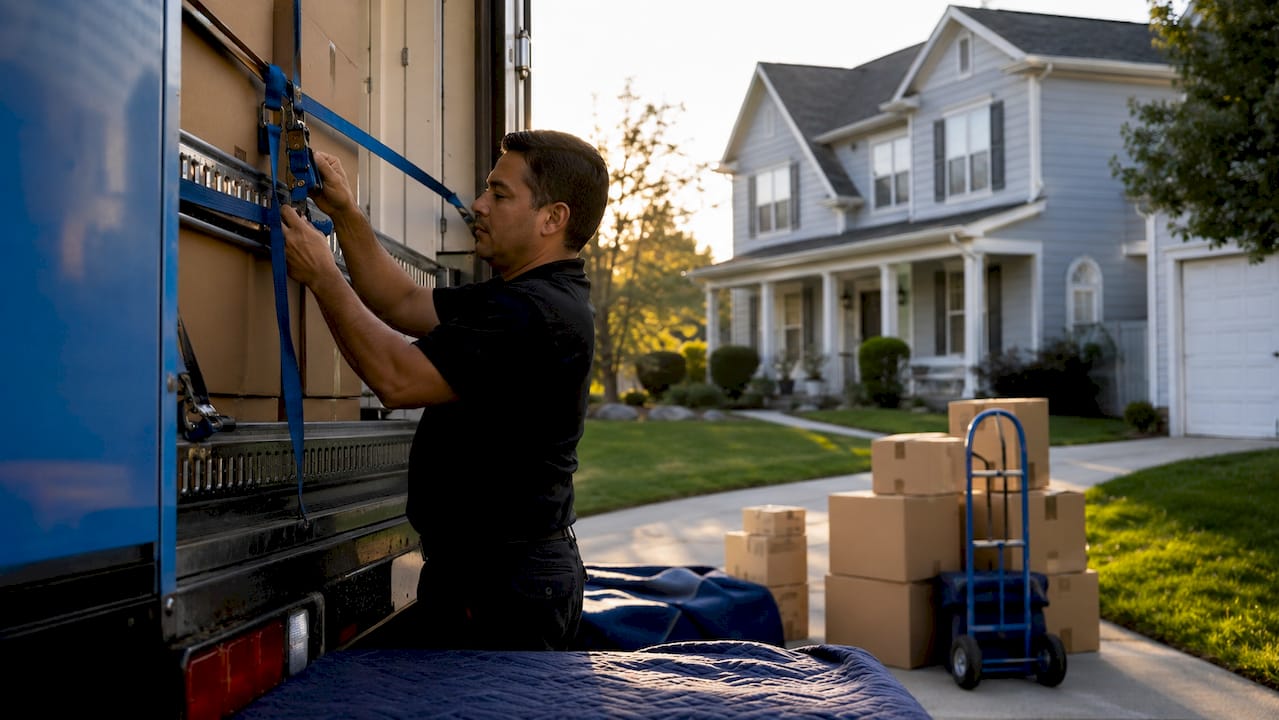
- Strap each tier before building the next. Ratchet straps and load bars secure each completed row to the wall rails. Never build a second tier on an unsecured first tier.
- Place fragile and light items last. Lamps, artwork, and electronics go on top of secured tiers or in designated fragile boxes near the truck door for easy access.
- Do a final walk-through before closing. Push lightly on each tier. Nothing should rock or shift. Tighten any strap that shows slack.
Wrapping furniture in moving blankets before placing it is a standard precaution that prevents surface scratches and dents. Tape or strap the blankets in place so they do not slip during transit.
Common mistakes families make include leaving large gaps between boxes, stacking all weight on one side, and skipping the strap step because the load “feels stable.” A load that feels stable in a parked truck can shift violently at highway speed. For a full overview of how loading fits into the broader relocation process, the interstate moving guide from Ambmovingservices covers each stage in detail.
Pro Tip: Use the “shake test” after strapping each tier. Grab the top box and push it firmly in all four directions. If it moves more than an inch, tighten the straps or add a load bar.
What are the safest unloading techniques after arrival?
Safe unloading starts before you open the truck door. The FMCSA requires securement status checks before removing any load-bearing item. This means checking that straps still hold tension and that no items have shifted against the door during transit. Opening the door on an unsecured load is the most common cause of unloading injuries.
- Open the truck door slowly and brace yourself for any items that may have shifted toward the door
- Check every strap for tension before cutting or releasing it
- Remove fragile and light items from the top first, reversing the load order
- Use a furniture dolly for anything over 50 pounds
- Place floor sliders under heavy furniture legs before dragging across hardwood or tile
Proper lifting technique prevents back injuries that sideline movers for weeks. Bend at the knees, keep your back straight, and hold the load close to your body. Never twist your torso while carrying weight. If an item requires two people, communicate every step before moving.
Protect your new home during unloading. Lay cardboard or moving blankets over hardwood floors near the entrance. Use door frame protectors on tight doorways. Assign one person to direct traffic inside the home while others carry items off the truck. This prevents collisions and keeps the unload moving at a steady pace.
Organize items as they come off the truck. Place boxes directly in their destination rooms rather than piling everything in the entryway. This saves a second round of heavy lifting and helps you protect belongings during the move from unnecessary handling.
Pro Tip: Set up a staging area at the base of the ramp. Place items there first, then carry them inside in batches. This keeps the ramp clear and reduces trip hazards.
What are the most common challenges during a move?
Shifting loads mid-move are the most frequent problem families encounter. If you notice the truck pulling to one side or hear items moving during transit, pull over safely and re-check your securement before continuing. Never assume a shifting sound is minor. The FMCSA is clear that shifting loads cause rollovers, and that risk applies to rental trucks as much as commercial freight vehicles.
- Weather delays: Rain makes ramps slippery and cardboard boxes weak. Cover the ramp with a rubber mat and wrap boxes in plastic sheeting before loading in wet conditions.
- Bulky or awkward items: Pianos, large sectional sofas, and gym equipment require disassembly or specialized equipment. Attempting to force them through doorways damages both the item and the door frame.
- Strap or tie-down failure: If a strap breaks mid-load, stop and replace it immediately. Never double-knot a rope as a substitute for a rated ratchet strap.
- Time pressure: Rushing causes injuries. If you are behind schedule, reduce the pace of carrying rather than skipping securement steps. A damaged back or broken item costs far more than a delayed arrival.
- Unexpected obstacles: Narrow hallways, low ceilings, and tight stairwells require a spotter. One person guides, one person carries. Never carry a large item blind around a corner.
For guidance on moving large items safely, professional advice on handling bulky loads covers equipment choices and body mechanics in practical detail. Planning your full move timeline around these potential delays is covered in the stages of the moving process guide from Ambmovingservices.
Key Takeaways
Proper loading and unloading requires a strict sequence, rated securement equipment, and a pre-unload safety check to prevent damage, injury, and load shifts during interstate moves.
| Point | Details |
|---|---|
| Load order matters | Place the heaviest items first, low and near the cab, to keep the truck balanced. |
| Secure every tier | Use ratchet straps and load bars after each row before building the next layer. |
| Fill all gaps | Pack soft goods like pillows and blankets between boxes to stop shifting in transit. |
| Check before unloading | Verify strap tension and load stability before opening the truck door at your destination. |
| Use proper lifting form | Bend at the knees, keep your back straight, and use a dolly for anything over 50 pounds. |
What I have learned from thousands of moves
After working with families on interstate relocations across the country, the pattern is always the same. The moves that go wrong share one trait: someone skipped a step because they were tired or in a hurry. The moves that go right share a different trait: the family treated the load plan as non-negotiable, even when it slowed them down.
The piece of advice I give every family before move day is this: your load plan is your contract with yourself. Write it down. Assign roles before anyone touches a box. Decide who calls the stops, who checks the straps, and who manages the ramp. When everyone knows their job, the process moves faster and safer than any improvised effort.
The equipment matters less than the discipline to use it correctly. A ratchet strap sitting in the truck bed does nothing. A moving blanket folded in a box protects nothing. The tools only work when you apply them at every step, not just the first one.
Speed is the enemy of a good move. The families who rush loading to “get on the road faster” are the same families calling about damaged furniture two days later. Patience at the truck pays off at the destination. If you feel the move is beyond your capacity, professional help is not a luxury. It is the right call.
— AMB
Ambmovingservices handles your loading and unloading professionally
Planning a long-distance or interstate move involves more than packing boxes. The loading and unloading phase carries the highest risk of damage and injury, and it requires trained hands and rated equipment to do it right.

Ambmovingservices provides fully trained crews, professional-grade securement equipment, and a damage-protection process built around FMCSA safety standards. Every long-distance move includes careful load planning, proper cargo securement, and a systematic unload at your destination. You do not have to figure this out alone. Get a free quote from Ambmovingservices at ambmovingservices.com/quote/ and let a licensed, insured team handle the heavy work.
FAQ
What does loading and unloading mean in a move?
Loading and unloading refers to placing belongings onto a moving truck in a balanced, secured sequence and then removing them safely at the destination. Proper cargo securement during both phases prevents damage and reduces injury risk.
How do you keep a moving truck load from shifting?
Use ratchet straps to secure each tier to the truck’s wall rails and place load bars across the truck width to block lateral movement. Fill all remaining gaps with soft goods like pillows or blankets to eliminate empty space where items can slide.
What is the correct order to load a moving truck?
Heaviest appliances and furniture go first, positioned low and against the cab wall. Medium-weight boxes fill the middle tiers, and fragile or light items load last near the truck door.
How do you unload a moving truck safely?
Check all strap tension before opening the truck door, then remove items from the top down, reversing the load order. Use a furniture dolly for heavy items and protect floors with cardboard or moving blankets before dragging anything inside.
When should you hire professionals for loading and unloading?
Hire professional movers when you have large appliances, pianos, heavy gym equipment, or a multi-story home with tight stairwells. Professional crews carry rated equipment and liability coverage that protects your belongings if damage occurs.