


TL;DR:
- Moving day management plans, coordinates, and oversees all aspects of a relocation to ensure a smooth process. It adds a supervision layer beyond traditional moving services by managing vendors, timelines, and contingency plans, especially on long-distance moves. Hiring a professional move coordinator reduces risks of delays and damages and ensures all logistical details are addressed before moving day.
Moving day management is the comprehensive process of organizing and overseeing every aspect of your relocation, from vendor coordination and inventory verification to timeline adherence and final setup in your new home. Unlike traditional moving, which focuses on physical labor and transportation, professional move management adds a coordination and oversight layer that keeps all parties aligned and decisions moving in one direction. Ambmovingservices, a nationwide long-distance moving company, applies this approach on every interstate and state-to-state relocation it handles. For families and individuals facing a cross-country move, understanding what is moving day management is the first step toward a calmer, more predictable relocation.
What is moving day management and what does it include?
Moving day management is a professional service that covers the planning, coordination, and oversight of the entire relocation process, from initial strategy through move-day execution and settling in. It is distinct from simply hiring movers to carry boxes. The person or team managing your move takes responsibility for the full picture, not just the truck.
The scope of moving day management covers several key areas:
- Planning and scheduling. This includes confirming crew arrival times, booking elevator access, and coordinating with building management at both the origin and destination.
- Inventory verification. A move manager reviews your item list, flags fragile pieces, and arranges special handling for artwork, antiques, or electronics.
- Parking permits and shuttle logistics. When a full-size moving truck cannot park at your building, a shuttle truck transfers items between the truck and the door. Permits for street parking must be secured in advance.
- Communication management. The move manager serves as the single point of contact between you, the moving crew, and any third-party service providers.
- Contingency planning. Weather delays, elevator breakdowns, and late crews happen. A move manager has backup plans ready before the day begins.
- Post-move services. Move managers also handle unpacking, furniture placement, box removal, and follow-up adjustments so your new space is functional from day one.
Pro Tip: Ask your move manager for a written timeline the day before your move. It should list crew arrival, loading start, departure, and estimated delivery window. Any gap in that schedule is a problem to solve before moving day, not during it.
How does moving day management differ from traditional moving services?

Traditional moving services focus on physical labor and transportation. Movers load your belongings, drive the truck, and unload at the destination. That is the core transaction. Move management goes further by adding project oversight, vendor coordination, and real-time decision-making to the process.

The table below shows the practical differences between the two approaches.
| Category | Traditional moving | Move management |
|---|---|---|
| Primary focus | Physical labor and transport | End-to-end coordination and oversight |
| Point of contact | Moving crew lead | Dedicated move manager |
| Vendor coordination | Client’s responsibility | Manager’s responsibility |
| Problem-solving | Reactive, on the day | Proactive, before the day |
| Post-move support | Rarely included | Unpacking, placement, follow-up |
| Best suited for | Local, simple moves | Long-distance, complex relocations |
Professional moving managers act as the single accountable lead, maintaining alignment and decision ownership across complex moves. That accountability matters most when timelines are tight or multiple vendors are involved. On a long-distance move from New York to Texas, for example, you may be coordinating a moving crew, a storage facility, a cleaning service, and a property manager at the destination. Without one person owning that coordination, gaps appear and costs rise.
Move management is most critical when the cost of misalignment is high, such as in live environments, tight timelines, or complex multi-stop moves. A single decision path prevents breakdowns when conditions change.
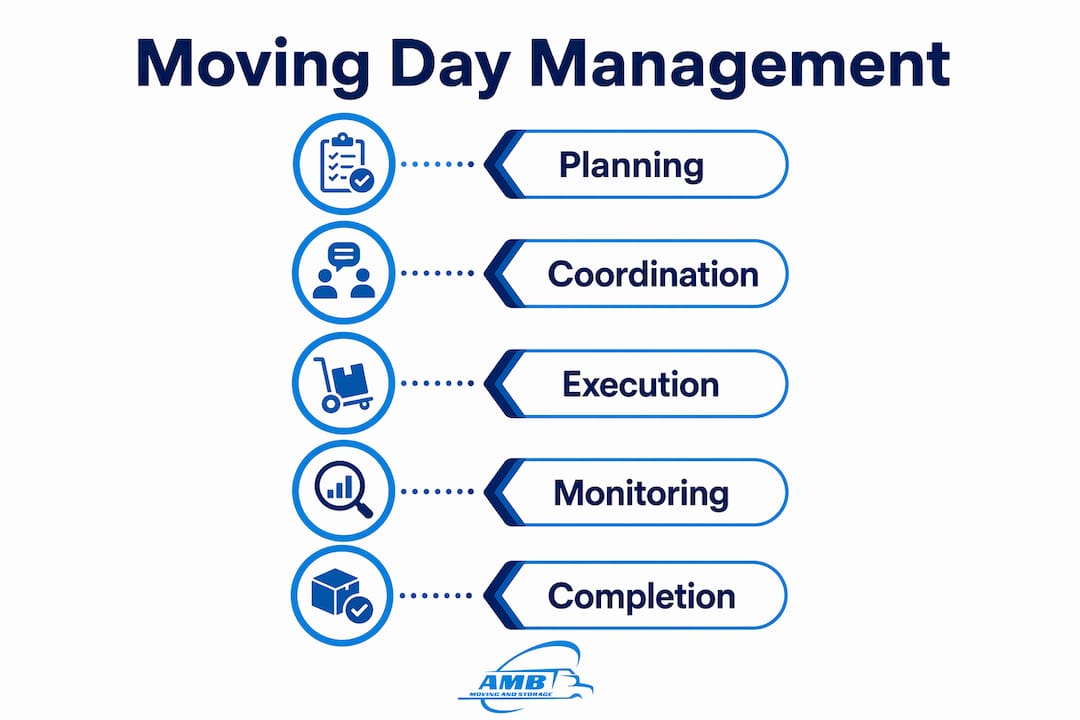
Pro Tip: If your move involves more than two vendors or crosses state lines, the coordination complexity alone justifies hiring a move manager. The fee is almost always less than the cost of one missed delivery window or a damaged specialty item.
What are the best practices for effective moving day management?
Effective moving day planning separates a smooth relocation from a chaotic one. Most moving day problems trace back to decisions that were not made early enough. The following steps give you a practical moving management guide you can apply whether you hire a professional manager or coordinate the day yourself.
-
Confirm all details the day before. Coordinators confirm parking permits, shuttle requirements, and crew arrival times the day before to avoid delays. Call your movers, building manager, and any service providers to verify every detail.
-
Pack an essentials box and keep it with you. Start moving day early and keep a first-night essentials box containing toiletries, pajamas, and basic bedding. This box rides in your personal vehicle, not the moving truck.
-
Label fragile and priority items clearly. Walk through your home with the crew lead before loading begins. Point out items that need extra padding, special positioning in the truck, or delivery to a specific room first.
-
Monitor the timeline actively. Check in with the crew lead every hour or two. If loading is running 45 minutes behind schedule, you need to know that before it becomes a three-hour delay at the destination.
-
Plan for food and breaks. Moving crews work physically hard. Having water, snacks, and a scheduled lunch break keeps energy up and reduces errors in the afternoon.
-
Coordinate utilities in advance. Contact your electricity, gas, internet, and water providers at least two weeks before your move date. Arriving at a new home without power or running water is avoidable.
-
Do a final walkthrough before leaving. Inspect every room, cabinet, and drawer carefully just before handing over keys. This step catches forgotten items and confirms the space is clean for the next occupant.
Pro Tip: Take photos of every room in your old home after it is empty. This protects you against any security deposit disputes and gives you a clear record of the condition you left the property in.
How do you select and work with a professional moving coordinator?
A moving coordinator is the professional who manages relocation logistics on your behalf, serving as your single point of contact from planning through delivery. Choosing the right one requires asking specific questions before you sign anything.
Key criteria to evaluate when hiring a move manager or coordinator:
- Credentials and experience. Ask how many long-distance or interstate moves they have managed. Experience with moves similar in size and complexity to yours matters more than total years in the industry.
- Scope of services. Confirm exactly what the coordinator handles. Some manage only the move day itself. Others cover pre-move planning, vendor sourcing, and post-move setup.
- References. Request two or three references from clients who completed similar moves. A coordinator unwilling to provide references is a red flag.
- Communication protocol. Ask how and when they will update you on moving day. A good coordinator sends a status update at loading start, departure, and estimated arrival.
- Contingency procedures. Ask what happens if the truck breaks down, a crew member does not show, or the destination is not ready. Their answer reveals how much they have actually planned.
- Pricing structure. Understand whether the fee is flat, hourly, or a percentage of the total move cost. Get it in writing.
Once you hire a coordinator, the moving coordinator role works best when you treat them as the decision-maker for logistics. Give them direct access to your building contacts, property manager, and any vendors. Reduce the number of people they have to go through to get answers. On moving day, designate one family member as the coordinator’s primary contact so communication stays clear and fast.
A dedicated moving coordinator handles inventory verification, scheduling parking permits or shuttle trucks, and troubleshooting logistics on the actual day of the move. That scope means they need complete information from you well before the move date. Share your full inventory list, any access restrictions at origin or destination, and your preferred delivery window at least one week in advance.
Key Takeaways
Effective moving day management is the single most reliable way to prevent costly delays, damaged items, and unnecessary stress on a long-distance or interstate relocation.
| Point | Details |
|---|---|
| Management vs. moving | Move management adds coordination and oversight; traditional moving covers only labor and transport. |
| Single point of contact | A dedicated coordinator owns all vendor communication, reducing errors and delays. |
| Advance confirmation | Confirm parking permits, crew times, and logistics the day before, not on moving day. |
| Essentials box | Pack a first-night box with toiletries and bedding and keep it in your personal vehicle. |
| Final walkthrough | Inspect every room before leaving to catch forgotten items and document property condition. |
What I’ve learned from managing long-distance moves
After working with families and individuals on hundreds of interstate relocations, one pattern stands out clearly. The moves that go wrong almost never fail because of the physical labor. They fail because no one owned the coordination.
The most common scenario: a family hires a moving crew, assumes the crew lead is managing the day, and discovers at 4:00 PM that the elevator at the destination building was never reserved. The crew cannot load the upper floors. The truck sits. The family pays for extra hours. That entire situation costs $300–$800 and three hours of stress. A coordinator would have confirmed the elevator reservation two days earlier.
The moving industry has shifted in 2026. Families moving across state lines now expect more than a truck and a crew. They expect someone to own the outcome. That is exactly what moving inventory management and full move coordination deliver. The families who invest in that layer of oversight consistently report less stress and fewer surprises.
My honest advice: if your move crosses a state line, treat it as a project with a project manager, not a task you hand off to a crew and hope for the best.
— AMB
How Ambmovingservices supports your moving day from start to finish
Ambmovingservices is a nationwide moving company specializing in long-distance relocations across the United States, including interstate and state-to-state moves for families and individuals. Every move includes dedicated coordination support, from pre-move planning and inventory verification to move-day oversight and delivery confirmation.
Families who need a stress-free moving process get a single point of contact who manages crew scheduling, parking logistics, and real-time updates throughout the day. Whether you are relocating from California to Florida or from Illinois to New York, Ambmovingservices handles the logistics so you can focus on your family. Get a personalized moving quote and start your relocation with a clear plan and a team that owns the outcome.
FAQ
What is moving day management?
Moving day management is the professional coordination and oversight of every aspect of a relocation, including vendor scheduling, inventory verification, and real-time problem-solving. It goes beyond physical moving by adding a dedicated management layer that keeps the entire process on track.
What does a moving coordinator do on moving day?
A moving coordinator serves as the single point of contact between the client, the moving crew, and any third-party providers, handling logistics such as parking permits, shuttle trucks, and timeline monitoring. They confirm all details the day before to prevent delays on moving day itself.
How is move management different from hiring regular movers?
Regular movers focus on loading, transporting, and unloading your belongings. Move management adds planning, vendor coordination, contingency handling, and post-move services like unpacking and furniture placement.
When does moving day management make the most sense?
Move management is most valuable on long-distance, interstate, or complex moves where multiple vendors, tight timelines, or limited access points create coordination risk. The more variables involved, the more a single accountable coordinator reduces cost and stress.
How far in advance should I confirm moving day logistics?
Confirm all logistics, including crew arrival times, parking permits, and elevator reservations, at least one day before your move. For long-distance or interstate moves, begin the confirmation process one week out to leave time to resolve any issues.