
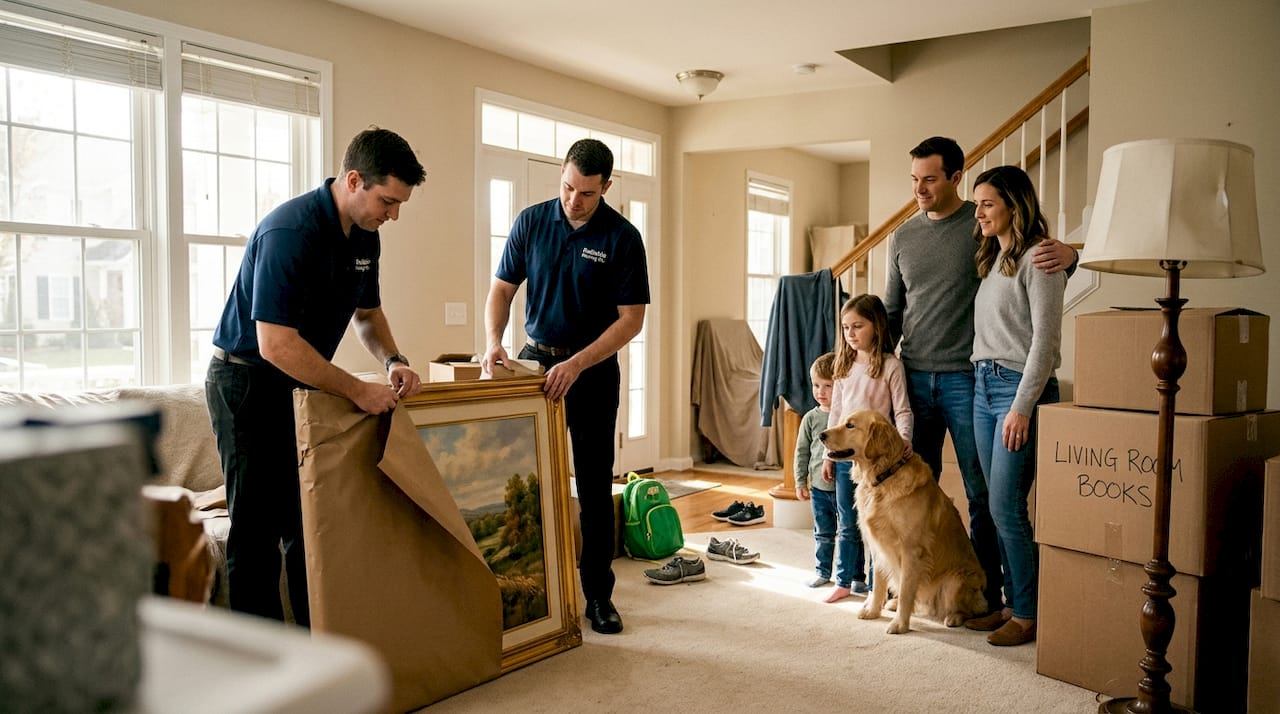

Most families assume renting a truck and doing it themselves will save money and headaches. The reality is more complicated. A full-service interstate move for a 2-3 bedroom home over 1,000 miles runs $3,000 to $6,000, while a DIY truck rental costs $2,000 to $4,000 before fuel, hotels, and lost work time. When you factor in 20 to 40 hours of physical labor, the risk of injury, and the emotional toll on your kids, professional movers start looking like the smarter investment. This article breaks down exactly what movers do, what it costs, and how to find one you can trust.
Table of Contents
- Why families trust professional movers for interstate relocations
- What professional movers do: services and responsibilities
- Professional movers vs. DIY: Cost, time, and risk comparison
- How to select trustworthy movers and avoid relocation scams
- Ready to plan your family’s interstate move?
- Frequently asked questions
Key Takeaways
| Point | Details |
|---|---|
| Movers ease family moves | Professional movers reduce stress and disruption, especially for families with kids relocating long-distance. |
| Cost vs. DIY explained | DIY moves look cheaper at first but often include hidden costs and risks that pros avoid. |
| Safety and expertise matter | Reputable movers provide secure handling, insurance, and minimize the chance of loss or damage. |
| How to choose safely | Always verify licenses, estimates, and check for warning signs to avoid common moving scams. |
Why families trust professional movers for interstate relocations
When a family moves across state lines, the logistics go far beyond loading boxes into a truck. You are simultaneously managing a home sale or purchase, school enrollment deadlines, utility transfers, and the emotional needs of children who are leaving their friends behind. Trying to physically move your household on top of all that is a recipe for burnout.
Professional movers take the physical and logistical burden off your plate so you can focus on what matters most. According to long-distance moving with kids, movers reduce child disruption, handle specialty items, and free up parents to manage the emotional side of the transition. That is not a small thing. A child’s sense of stability during a move depends heavily on how calm and present their parents can be.
Here is what professional movers specifically do for families:
- Coordinate timing around school calendars and closing dates so disruption is minimized
- Handle fragile and specialty items like pianos, artwork, and antiques with proper equipment
- Pack and label systematically so your family can find essentials on night one
- Manage heavy lifting to eliminate injury risk for parents and older kids
- Provide temporary storage when there is a gap between move-out and move-in dates
One often-overlooked detail is the first-night box. Experienced movers will help you identify and separately label a box with pajamas, medications, phone chargers, snacks, and a few comfort items for the kids. That single box can make the difference between a chaotic first night and a manageable one.
Pro Tip: When choosing interstate movers, ask specifically whether they offer a dedicated move coordinator. Having one point of contact throughout your relocation reduces confusion and keeps your timeline on track.
If you want a full breakdown of how to structure your timeline before moving day, the relocation planning guide walks through every phase from eight weeks out to move-in day.
What professional movers do: services and responsibilities
Not all moving companies offer the same scope of service. Understanding what is included in each tier helps you choose the right fit for your budget and situation.
At the core, every reputable interstate mover handles loading, transportation, and unloading. But full-service movers go much further. They bring packing materials, wrap furniture, disassemble and reassemble beds and shelving, and create a detailed inventory of every item that goes on the truck. That inventory is your protection if anything is damaged or goes missing.

Here is a breakdown of common service tiers:
| Service tier | What is included | Best for |
|---|---|---|
| Transport only | Loading, driving, unloading | Families who self-pack everything |
| Partial packing | Movers pack fragile/specialty items | Budget-conscious families |
| Full-service | Packing, transport, unpacking, assembly | Busy families, long distances |
| Full-service with storage | All above plus short or long-term storage | Gap between move-out and move-in |
The hybrid approach deserves special attention. Self-packing fragile items while hiring movers for transport and heavy furniture can save 15 to 25% on your total moving cost. You pack your own dishes and personal valuables, and the movers handle everything else. It is a practical middle ground for families who want professional help without the full-service price tag.
Other key responsibilities movers take on include:
- Inventory documentation with condition notes before loading
- Specialty item protection using custom crating for artwork, mirrors, and electronics
- Flexible scheduling for storage if your new home is not ready
- Liability coverage options for high-value items
You can explore the full range of packing services available for interstate moves, or review the different moving service types to match your needs. For families who want everything handled from start to finish, full-service moving is the most hands-off option available.
Professional movers vs. DIY: Cost, time, and risk comparison
Let’s put the numbers side by side so you can make an informed decision.
| Factor | Professional movers | DIY truck rental |
|---|---|---|
| Base cost (1,000+ miles, 2-3 bed) | $3,000 to $6,000 | $2,000 to $4,000 |
| Fuel and tolls | Included | $300 to $800 extra |
| Hotels en route | Included | $100 to $300 per night |
| Labor hours | 0 (handled by crew) | 20 to 40 hours |
| Injury risk | Low (trained crew) | High (untrained lifting) |
| Damage coverage | Yes (liability options) | None unless purchased separately |
| Child/family disruption | Minimal | High |
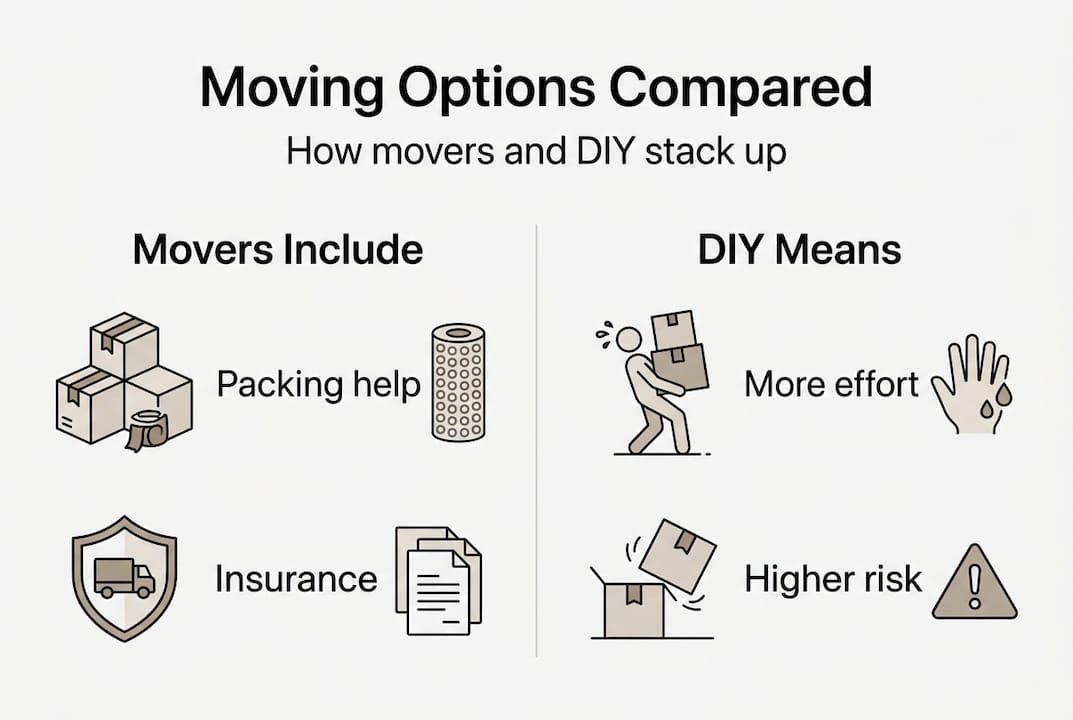
The full-service vs. DIY cost gap narrows significantly once you add fuel, lodging, and the value of your own time. And that is before accounting for the physical risk. Back injuries from moving furniture are one of the most common household accidents, and they can cost far more in medical bills than the price difference between hiring movers and renting a truck.
Here are the most common DIY pitfalls families run into:
- Underestimating truck size and needing a second trip or a larger rental
- No damage coverage for items broken during self-loading
- Exhaustion on arrival making the first days in a new home miserable
- Underestimating drive time across multiple states with a loaded truck
- Hidden fees on truck rentals including mileage overages and fuel surcharges
“DIY moving is cheaper for short local moves, but for interstate relocations the cost difference shrinks fast once you account for all the real expenses and the time you lose.”
Pro Tip: Before committing to either option, use the moving cost guide to build a realistic budget that includes every line item. You may find the gap between DIY and professional is smaller than you expected.
For a detailed look at what families actually spend on long-distance moves, the relocation expense examples page breaks down real costs by distance and home size. You can also compare moving service options to find the tier that fits your budget.
How to select trustworthy movers and avoid relocation scams
The moving industry has a fraud problem. Rogue movers collect large deposits, load your belongings, and then hold them hostage demanding more money before delivery. It happens more often than most people realize, and it targets families in exactly the vulnerable position you are in during a relocation.
The single most important protection is verifying FMCSA licensing. Every legitimate interstate mover must be registered with the Federal Motor Carrier Safety Administration and carry a valid USDOT number. You can check any mover’s registration status directly on the FMCSA website. The FMCSA complaint process also outlines your rights if something goes wrong, including the requirement to file damage or loss claims within nine months of delivery.
Here is a checklist for vetting any moving company before you sign:
- Confirm FMCSA registration and look up their USDOT number online
- Request a binding estimate in writing, not a vague verbal quote
- Check reviews on multiple platforms including Google, Yelp, and the Better Business Bureau
- Ask about their claims process before anything goes on the truck
- Avoid any company demanding more than 20% upfront as a deposit
- Get the full company name, address, and phone number in writing
One useful benchmark: reputable movers maintain a roughly 39% close rate on estimates, meaning they prioritize quality customers over volume. A company that pressures you to sign immediately or offers a price far below competitors is a red flag, not a deal.
For a step-by-step walkthrough of how to verify credentials, the guide to verifying licensed movers covers every check you should run before booking. You can also find practical interstate moving tips to help you prepare for the full process.
Ready to plan your family’s interstate move?
At AMB Moving & Storage Inc., we are a federally licensed interstate carrier operating under U.S. DOT: 3839636 and MC: 1395855. We specialize in long-distance and nationwide relocations for families who want professional handling, transparent pricing, and a team they can actually trust.
From packing and inventory management to transportation and storage, we handle every detail so you can focus on your family during one of life’s biggest transitions. We serve homeowners and families relocating across all 50 states, and we back every move with clear estimates and dedicated support from booking through delivery. If you are planning a long-distance relocation and want to know exactly what it will cost and what to expect, reach out to our team for a free, no-obligation quote. We make the process straightforward from day one.
Frequently asked questions
Are professional movers worth the cost for a family move across states?
Professional movers save families 20 to 40 hours of labor and reduce disruption significantly, and once you add up all real DIY expenses, the cost difference is often smaller than expected.
What safety measures do movers take to protect my belongings?
Reputable movers use professional packing and specialty protection for fragile items, create detailed inventories before loading, and offer liability coverage options for high-value belongings.
How can I tell if a moving company is legitimate?
Only hire movers with FMCSA licensing and a valid USDOT number, a written binding estimate, and verifiable reviews across multiple platforms.
Is a hybrid move (self-pack, movers transport) a good way to save?
Yes. Self-packing fragile items while hiring movers for transport and heavy furniture can reduce your total moving cost by 15 to 25% without giving up professional handling for the hardest parts of the job.
Recommended
- Define residential moving services for stress-free moves
- Services – AMB Moving Services
- How to Prepare for a Long-Distance Move – AMB Moving Services
- What is relocation planning? A guide for long-distance moves
- Smidigt flytthjälp av mindre bohag i Varberg
- Flyttstäd workflow i Varberg: steg för steg-guide 2026