


Long-distance moves are expensive, stressful, and surprisingly easy to get wrong. Costs range from $2,000 to $10,000 depending on your home size and how far you’re going, and that number climbs fast when you’re unprepared. Forgotten items, last-minute packing, and unverified movers are the most common culprits behind blown budgets and damaged belongings. The good news is that a structured approach changes everything. This guide walks you through every critical phase, from building your timeline to packing fragile items and preparing your family, so you can hand off your home to the movers with confidence.
Table of Contents
- Planning your move: timelines and requirements
- Decluttering and organizing: reduce load, lower costs
- Packing strategies: balancing DIY and expert help
- Preparing essentials and final steps before the movers arrive
- Special considerations for families: kids, pets, and transitions
- Seamless moves begin with expert support
- Frequently asked questions
Key Takeaways
| Point | Details |
|---|---|
| Start early | Begin planning 8–12 weeks before your move for maximum flexibility and stress reduction. |
| Declutter for savings | Eliminating unnecessary items lowers moving costs by reducing total weight. |
| Strategic packing | Pack fragile and high-value items professionally, while handling essentials and easier items yourself. |
| Essentials bag | Keep important documents, medications, and comfort items close during the move. |
| Family considerations | Notify schools and doctors, plan for pets, and prepare kids with comfort items and clear timelines. |
Planning your move: timelines and requirements
With the move’s challenges clear, let’s start laying out a timeline and checklist so you have a roadmap from day one. The single biggest mistake families make is starting too late. Start planning 8 to 12 weeks in advance for long-distance moves, which gives you enough time to research movers, collect estimates, and handle the paperwork without scrambling.
Here’s a simple week-by-week breakdown to keep you on track:
| Timeframe | Key tasks |
|---|---|
| 8–12 weeks out | Research and book licensed movers, get 3+ estimates |
| 6–8 weeks out | Declutter, donate, and sell unwanted items |
| 4–6 weeks out | Gather packing supplies, begin packing non-essentials |
| 2–4 weeks out | Notify schools, doctors, utilities, and post office |
| 1–2 weeks out | Confirm mover details, pack essentials bag |
| Moving day | Final walkthrough, sign Bill of Lading, hand over keys |
When you’re vetting movers, always verify licensed movers through the FMCSA database before signing anything. A legitimate interstate carrier will have a U.S. DOT number you can look up. Understanding the interstate moving process also helps you set realistic expectations around delivery windows, which typically range from 3 to 14 days depending on distance.
You’ll also need to choose between a binding estimate and a non-binding estimate. A binding estimate locks in your price regardless of actual weight. A non-binding estimate can change if your shipment weighs more than expected. For most families, a binding estimate offers better budget protection.
- Collect at least three written estimates before committing
- Confirm the mover’s USDOT number and insurance coverage
- Ask specifically about delivery windows and what triggers delays
- Keep copies of all contracts and correspondence in one folder
Pro Tip: If you’re preparing for a long-distance move for the first time, request an in-home or virtual survey rather than a phone estimate. It produces a far more accurate quote.
Decluttering and organizing: reduce load, lower costs
Once your timeline is set and movers shortlisted, it’s time to tackle the most cost-impacting phase: decluttering and organizing. Interstate moving costs are calculated by weight, which means every unnecessary item you ship costs you real money. Declutter aggressively before packing and aim to sell or donate anything you haven’t used in the past year.
Use a simple four-category system for every room:
- Keep: Items you use regularly and genuinely need
- Sell: Furniture, electronics, and clothing in good condition
- Donate: Usable items that won’t sell quickly
- Discard: Broken, expired, or truly worthless items
Here’s a rough look at how household weight and cost relate for a typical long-distance move:
| Home size | Estimated weight | Estimated cost range |
|---|---|---|
| Studio/1-bedroom | 1,000–3,000 lbs | $1,500–$3,500 |
| 2-bedroom | 3,000–5,000 lbs | $3,000–$6,000 |
| 3-bedroom | 5,000–8,000 lbs | $5,500–$9,000 |
| 4+ bedroom | 8,000–12,000 lbs | $8,000–$12,000+ |
These numbers shift based on distance and the specific carrier, but the pattern is clear: a lighter load means a lower bill. Families who cut even 500 pounds from their shipment can save hundreds of dollars.
Organizing before you pack also speeds up the entire process. Sort items by room and label boxes clearly with both the contents and the destination room. This saves time on both ends of the move. For more relocation logistics tips, including how to sequence your packing, check out our full logistics guide.

Pro Tip: Take photos of furniture arrangements in each room before disassembly. You’ll thank yourself when you’re trying to reassemble everything in a new home at 9 p.m.
Packing strategies: balancing DIY and expert help
With your household pared down and organized, the next step is to decide which items to pack yourself and which require professional expertise. Not everything needs a pro, but some items absolutely do.
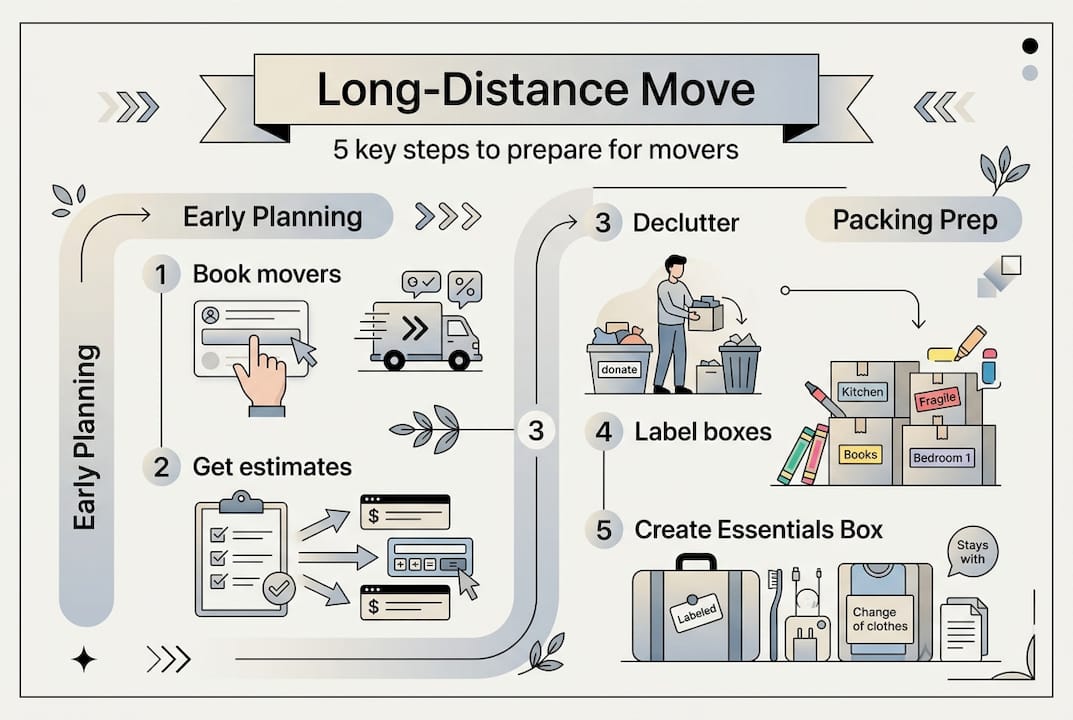
Use professional packing for fragile and high-value items like artwork, antiques, electronics, and glassware. Professionals use double-wrapping techniques and original manufacturer boxes when available. For everyday items like linens, books, and clothing, DIY packing is perfectly fine and saves money.
Here’s a step-by-step approach to packing your home efficiently:
- Start with rooms you use least. Guest rooms, storage areas, and seasonal items go first.
- Use the right box sizes. Heavy items like books go in small boxes. Lightweight items like pillows go in large ones.
- Wrap fragile items individually. Use packing paper, not newspaper, which leaves ink on your belongings.
- Fill empty space in boxes. Loose items shift and break in transit. Use towels or packing peanuts to fill gaps.
- Label every box on the side, not the top. When boxes are stacked, you can still read the label.
- Create a color-coded system by room. One color of tape per room makes unloading dramatically faster.
Professional movers will wrap your furniture in moving pads and plastic stretch wrap as a standard part of the process. You don’t need to wrap your couch yourself. What you do need to do is disassemble bed frames, remove legs from tables, and take apart anything that won’t fit through a doorway in one piece.
“The biggest packing mistake families make is using boxes that are too large and too heavy. A box over 50 pounds is a safety hazard for movers and more likely to be dropped.”
Explore professional packing services if you’re short on time or dealing with a large home. For families who want a stress-free packing experience without the guesswork, full-service packing is often worth the added cost.
Pro Tip: Pack a “open first” box for each room with the items you’ll need immediately after arrival: toilet paper, a shower curtain, basic kitchen supplies, and a change of clothes.
Preparing essentials and final steps before the movers arrive
Packing is nearly complete; now, focus on the crucial steps that safeguard your move and smooth the transition on moving day. The essentials bag is one of the most underrated parts of any long-distance move. It’s the bag that keeps you functional for the first 24 to 72 hours before your boxes are unpacked.
Your essentials bag should include:
- Important documents: passports, birth certificates, insurance cards, lease or mortgage papers
- Medications and a basic first-aid kit
- Phone chargers and laptop chargers
- One week of clothing per family member
- Toiletries: toothbrush, soap, deodorant
- Snacks and water bottles for the road
- Comfort items for children: a favorite toy, blanket, or book
- Pet supplies: food, leash, carrier, and any medications
Never put valuables like jewelry, cash, or irreplaceable documents in the moving truck. Keep those with you at all times. Pack essentials and valuables separately and transport them in your personal vehicle or carry-on luggage.
Before the movers arrive, do a full room-by-room walkthrough and photograph every space. This creates a visual record of your home’s condition before the move. On moving day, you’ll sign a Bill of Lading, which is the legal contract between you and the moving company. Read it carefully before signing. It lists your items, the agreed price, and the delivery window.
Pro Tip: Review the full moving services overview to understand exactly what your movers are responsible for and what falls on you. Knowing this in advance prevents disputes later.
Special considerations for families: kids, pets, and transitions
For those moving with family, there are additional steps and sensitivities to manage for a smooth transition and peace of mind. A long-distance move affects everyone in the household differently, and planning for those differences reduces stress significantly.
Start with the administrative side:
- Notify your children’s schools at least four to six weeks out and request official transfer records.
- Contact your family doctor and dentist to transfer medical and dental records to providers in your new city.
- Update your address with the post office, your bank, and any subscription services.
- Research your new state’s requirements for driver’s license transfer and vehicle registration, since most states give you 30 to 60 days after establishing residency.
For kids, the move is often emotionally harder than it is logistically. Let them pack their own small backpack with their most important items. This gives them a sense of control and keeps their comfort items accessible throughout the journey.
For pets, the logistics are different:
- Visit your vet before the move to get health certificates if crossing state lines
- Research pet-friendly hotels along your route if driving
- Keep your pet’s routine as consistent as possible during the transition
- Bring enough food, water, and familiar bedding for the entire trip
Delivery windows for interstate moves typically range from 5 to 14 or more days. Under 500 miles usually takes 3 to 5 days. Moves over 1,000 miles can take up to two weeks. Plan your family’s travel and temporary accommodations around this window so you’re not waiting in an empty house. For more on what to expect, our interstate moving solutions page breaks down the full process by distance and route.
Seamless moves begin with expert support
With your move prepped and the right strategies in place, partnering with seasoned professionals brings peace and efficiency to your relocation. At AMB Moving & Storage Inc., we specialize in long-distance and interstate moves for families across the United States. Our team handles everything from packing and logistics to transportation and delivery, all under one federally licensed roof.

Whether you need full-service packing, secure storage, or a binding estimate you can actually trust, we’re here to make the process straightforward. Explore our interstate moving solutions to see how we handle moves of every size and distance. Not sure which package fits your situation? Our guide on choosing a moving company walks you through exactly what to look for. You can also review our interstate moving cost report for real route data and pricing benchmarks before you commit to anything.
Frequently asked questions
How far in advance should I book my movers for a long-distance move?
Book your movers 8 to 12 weeks ahead to secure your preferred date and give yourself enough time to plan every phase of the move without rushing.
What should go in my essentials bag when moving?
Pack important documents, medications, toiletries, chargers, a week’s worth of clothing, and comfort items for kids and pets. Keep valuables and essentials separate from the moving truck at all times.
How does decluttering impact my moving costs?
Interstate moving fees are based on weight, so every pound you eliminate lowers your bill. Decluttering before packing is one of the most direct ways to reduce your total moving cost.
Are there different delivery timelines for interstate moves?
Yes. Delivery windows vary from 3 to 14 days based on distance. Shorter routes under 500 miles typically take 3 to 5 days, while cross-country moves can take up to two weeks.
What documents are needed on moving day?
Carry your Bill of Lading, a full inventory sheet, and a valid photo ID. Review and sign the Bill of Lading only after confirming all listed items and terms are accurate.