


TL;DR:
- Full-service moving includes packing, loading, transporting, unloading, unpacking, and debris removal.
- It offers the most convenience for long-distance moves, families with fragile items, and tight schedules.
- Costs vary by home size and distance, typically ranging from $1,800 to over $15,000 for national relocations.
Most people picture moving as renting a truck, calling a few friends, and hauling boxes down the stairs. The reality is far messier. Long-distance relocations involve logistics planning, fragile item handling, interstate regulations, and weeks of physical and emotional strain. Full-service moving addresses all of that, not just the heavy lifting. This guide breaks down exactly what full-service moving includes, how it compares to other options, what it costs, and how to find the right provider. Whether you’re moving your family across one state or across the country, understanding what full-service really means can save you time, money, and a lot of headaches.
Table of Contents
- What does full-service moving include?
- How full-service moving compares to other options
- Understanding what full-service moving costs
- Step-by-step: How a full-service move works for families
- Choosing the right full-service mover for your needs
- Why most people misunderstand full-service moving (and what you actually need)
- Ready for a stress-free move? Start with the experts
- Frequently asked questions
Key Takeaways
| Point | Details |
|---|---|
| Everything handled for you | Full-service moving companies manage packing, transport, and unpacking, making long-distance moves less stressful. |
| More than just muscle | Services include logistics, planning, specialty care, and storage, not just labor or transportation. |
| Know your options | Comparing full-service, partial, and DIY moving helps families pick the best fit for their needs and budget. |
| Smart, safe selection is key | Check licenses, reviews, and transparent pricing to choose a trustworthy full-service provider. |
What does full-service moving include?
Full-service moving is exactly what it sounds like: a moving company handles every part of your relocation from start to finish. You don’t rent a truck, you don’t buy boxes, and you don’t spend your weekend bubble-wrapping dishes. The crew comes to your home, packs everything up, loads it, drives it to your new address, unloads it, and can even unpack it for you.
Here’s what a genuine full-service move typically covers:
- Packing: Crews bring all materials, including boxes, tape, bubble wrap, and specialty containers, and pack every room in your home.
- Furniture disassembly and reassembly: Bed frames, shelving units, and large furniture pieces are broken down for transport and put back together at delivery.
- Loading: Movers load all items onto the truck using professional equipment like dollies, straps, and moving blankets.
- Transportation: Your belongings travel in a licensed, insured moving vehicle to your destination.
- Unloading: Everything comes off the truck and is placed in the correct rooms at your new home.
- Unpacking: Crews unpack boxes and place items where you direct them.
- Debris removal: Used packing materials, empty boxes, and wrapping are hauled away after the job is done.
As noted in a full service move overview, full-service movers handle packing, loading, transport, unloading, and even unpacking, offering a seamless experience from door to door.
Beyond the standard package, many providers offer optional extras. These include climate-controlled storage, specialty handling for pianos, artwork, antiques, and wine collections, plus temporary warehousing when your new home isn’t ready on moving day. These add-ons are worth discussing upfront so they’re reflected in your quote.
At the top end, some companies offer what’s called white-glove service. This goes beyond standard full-service by including custom crating for high-value items, room-by-room furniture placement, appliance installation, and even interior design coordination. It’s a premium tier, but for families with irreplaceable belongings or extremely tight schedules, it can be worth every dollar.
Understanding relocation logistics is key to knowing which tier of service fits your situation. Not every family needs white-glove, but most long-distance movers benefit from at least core professional packing services to protect their belongings across hundreds or thousands of miles.
Pro Tip: When reviewing a quote, ask the company to list every included service in writing. If a quote seems low, it often means unpacking, debris removal, or packing materials are billed separately. A truly all-inclusive offer will itemize everything.
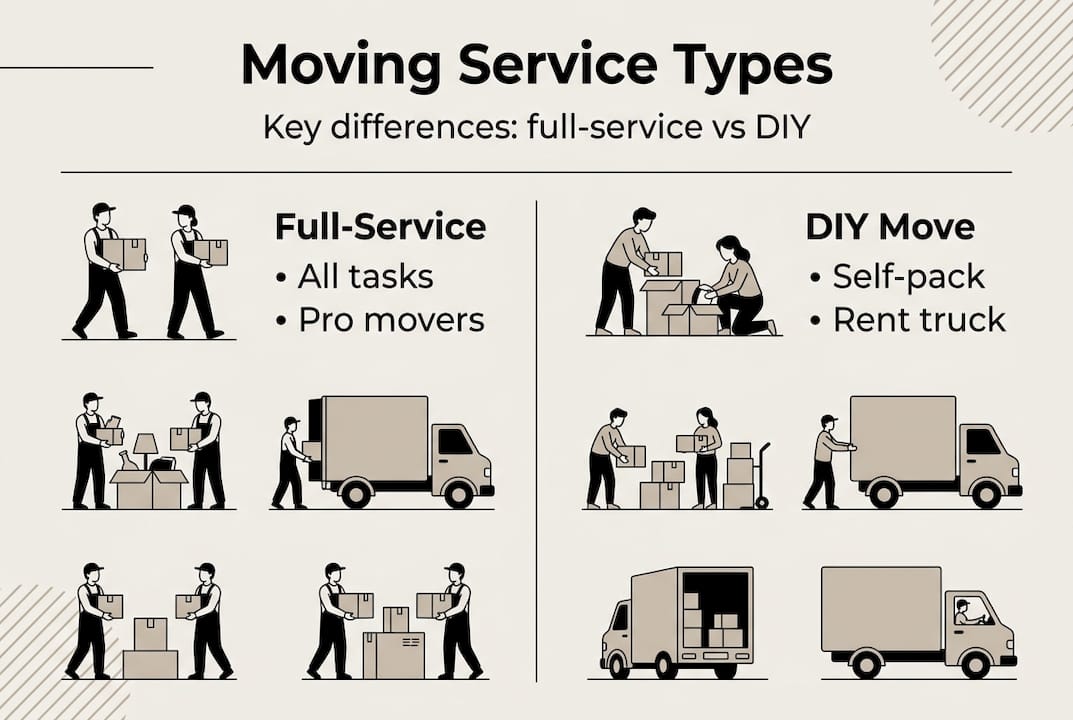
How full-service moving compares to other options
Not every move requires full-service, and not every budget allows for it. Knowing how the options stack up helps you make a smarter decision rather than just defaulting to the cheapest choice.
Here’s a side-by-side comparison:
| Option | Cost level | Your time investment | Stress and risk | Who does the work |
|---|---|---|---|---|
| Full-service | High | Very low | Low | Moving company handles everything |
| Partial-service | Medium | Medium | Medium | You pack, they move |
| Self-service (container) | Medium-low | High | Medium-high | You pack and load, they transport |
| DIY (rental truck) | Low | Very high | High | You handle everything |
As a general rule, full-service moving is the most comprehensive but can be more expensive than self-service or DIY options. The gap in cost, however, doesn’t always reflect the gap in value, especially when you factor in time off work, potential injuries, and the risk of damaged belongings.
Here are the scenarios where full-service moving delivers the most value:
- Long-distance or cross-country moves where driving a rental truck yourself is impractical or exhausting.
- Families with children who can’t afford to spend days packing and physically moving.
- Households with fragile or high-value items like antiques, artwork, or specialty electronics.
- Tight deadlines where you need to be in your new home by a specific date without room for error.
- People without a local support network who can’t rely on friends or family to help.
- Seniors or individuals with physical limitations for whom DIY moving poses a real safety risk.
On the flip side, a DIY approach can work well for local moves under 50 miles, small apartments with minimal furniture, or situations where budget is the primary constraint. You can also explore U-Haul alternatives if you want a middle-ground option with professional transport but self-managed packing.
For a detailed moving cost breakdown across service types, it helps to run the numbers before committing. Many families are surprised to find that full-service isn’t as out of reach as they assumed once hidden DIY costs like truck rental fees, fuel, hotel stays, and equipment rentals are added up. Consumer guidance on how to choose a mover wisely also recommends factoring in liability coverage, which DIY moves simply don’t offer.
When you compare moving services side by side, the decision usually comes down to your timeline, your household size, and how much risk you’re willing to absorb.
Understanding what full-service moving costs
Price is usually the first question families ask, and it’s a fair one. Full-service moving isn’t cheap, but the range is wider than most people expect.
Here’s a realistic cost table based on home size and distance:
| Home size | Under 500 miles | 500 to 1,500 miles | Over 1,500 miles |
|---|---|---|---|
| Studio or 1-bedroom | $1,800 to $3,500 | $3,000 to $5,500 | $4,500 to $7,000 |
| 2 to 3 bedrooms | $3,000 to $5,500 | $5,000 to $8,500 | $7,000 to $12,000 |
| 4+ bedrooms | $5,000 to $8,000 | $7,500 to $12,000 | $10,000 to $15,000+ |
Long-distance moves with full-service providers often range from $4,000 to $10,000 and up, depending on home size, services, and distance. These figures reflect 2026 market rates and can shift based on several variables.
Here’s what typically drives your final price up or down:
- Distance: The single biggest factor. Longer hauls cost more due to fuel, driver hours, and logistics.
- Home size and weight: Movers charge based on the total weight of your shipment.
- Season: Summer months, especially June through August, are peak season. Rates are higher and availability is tighter.
- Stairs and long carries: If the truck can’t park close to your door, or your home has multiple flights of stairs, expect surcharges.
- Packing materials: Some quotes include materials, others bill them separately.
- Storage needs: If your delivery needs to be delayed, temporary storage adds to the total.
- Valuation coverage: Basic carrier liability is minimal. Full-value protection costs more but covers replacement or repair of damaged items.
For a fuller picture, the moving cost guide and relocation expenses examples can help you build a realistic budget before you request quotes. You can also review external data on full-service move costs to benchmark what you’re being quoted.
Pro Tip: Always get at least three written estimates. If one quote is dramatically lower than the others, that’s a red flag, not a bargain. Low-ball estimates often lead to surprise charges on delivery day when you have no leverage to negotiate.
Step-by-step: How a full-service move works for families
Knowing the cost is useful, but understanding the actual experience helps you feel prepared rather than anxious. Here’s how a full-service move typically unfolds:
- Initial consultation: You contact the moving company and describe your move, home size, destination, and timeline. This can happen by phone, online form, or video walkthrough.
- In-home or virtual estimate: A moving coordinator assesses your belongings to provide an accurate quote. In-home estimates are more precise than phone-based ones.
- Custom packing plan: The company schedules a packing crew and prepares specialty materials for fragile or oversized items. You provide any special instructions at this stage.
- Packing day: Crews arrive with all materials and systematically pack your home room by room. Labeling is done for you.
- Moving day: The truck is loaded, your belongings are inventoried, and you receive a bill of lading, which is the official document listing everything being transported.
- Transport: Your shipment travels to the destination. For long-distance moves, this can take one to seven business days depending on the route.
- Delivery and unloading: The crew unloads and places items in the correct rooms per your instructions.
- Unpacking and cleanup: If unpacking is included, crews unbox items and remove all packing debris.
“Full-service moving companies provide a start-to-finish experience that can dramatically reduce stress, especially for families handling long-distance relocations.”
For families, the packing day is often the most nerve-wracking part. The key is to prepare a list of fragile or sentimental items in advance and walk the crew through them personally. Keep valuables like jewelry, documents, and medications with you rather than in the moving truck.
After delivery, a reputable company will follow up to confirm everything arrived in good condition and address any claims promptly. Good relocation logistics for families planning also includes having a checklist ready for your first week in the new home. For detailed relocation planning for long-distance moves, it helps to start the process at least six to eight weeks before your move date. If your new home isn’t ready, ask about storage solutions that can bridge the gap.

Choosing the right full-service mover for your needs
The moving industry has its share of bad actors. Choosing the wrong company can turn a manageable move into a nightmare. Here’s how to protect yourself.
Must-check criteria before hiring any full-service mover:
- USDOT number: Every interstate mover must be registered with the Federal Motor Carrier Safety Administration. You can check mover licenses directly on the FMCSA website.
- MC number: This confirms the company is authorized to operate as a for-hire carrier across state lines.
- Insurance and valuation options: Confirm what liability coverage is included and what full-value protection costs.
- Written contract: Never proceed without a written agreement that details services, pricing, and delivery windows.
- Online reviews: Check Google, Yelp, and the Better Business Bureau. Look for patterns in complaints, not just overall ratings.
- Complaint history: The FMCSA database also shows complaint records, which are worth reviewing.
- Transparent estimates: A reputable mover will give you a binding or not-to-exceed estimate, not a vague range with no ceiling.
Red flags to watch for include companies that demand a large cash deposit before the move, provide quotes without seeing your home or inventory, use generic rental trucks without company branding, or can’t produce official paperwork on request.
In-home estimates matter more than most people realize. A phone estimate is only as accurate as what you describe. An in-person walkthrough gives the mover a real picture of your inventory, which leads to fewer surprises on moving day.
As noted in guidance on how to choose a moving company for interstate relocations, it’s essential to check licenses, reviews, insurance, and clear pricing before hiring a full-service mover. Family-friendly movers who communicate clearly, provide dedicated coordinators, and offer flexible scheduling make a real difference when you’re managing kids, pets, and a tight timeline simultaneously.
Why most people misunderstand full-service moving (and what you actually need)
Here’s something we see constantly: families spend weeks agonizing over the price difference between full-service and DIY, then choose the cheaper option and spend twice as much in stress, time, and unexpected costs.
The mistake is treating moving like a commodity where the only variable is price. It isn’t. When you hire a licensed, insured full-service mover, you’re buying protection against a long list of risks: damaged furniture, lost items, physical injury, missed work, and the kind of exhaustion that follows you into your first week at your new home.
Most families who’ve done a long-distance DIY move once will tell you they’d never do it again. The interstate moving insights we gather from customers consistently show the same pattern: the people who regret their choice almost always went with the lowest bidder or tried to manage too much themselves.
The real question isn’t “Can I afford full-service moving?” It’s “Can I afford not to have professional support on a move that crosses multiple states?” For most families with children, full-time jobs, and a home full of belongings, the answer is clear. The value premium of full-service isn’t a luxury. It’s a practical investment in a move that actually goes smoothly.
Ready for a stress-free move? Start with the experts
If you’ve made it through this guide, you now understand what separates a genuinely full-service move from a basic truck-and-muscle operation. The next step is finding a provider who can deliver on that promise.
At AMB Moving & Storage Inc., our interstate moving experts are federally licensed under U.S. DOT 3839636 and MC 1395855, and we specialize in long-distance relocations for families across the United States. From our packing services that protect every item in your home to full logistics coordination, we handle the details so you can focus on your family. Ready to get started? Learn how to choose your mover and request a transparent, no-surprise estimate from our team today.
Frequently asked questions
Do full-service movers pack everything in my home?
Yes, packing is included in full-service moving, covering all household items from clothes and kitchenware to electronics and large furniture. You simply tell the crew about anything requiring special handling.
How long does a full-service move take?
Time to complete a move varies by distance and home size, but the entire process typically takes a few days to a couple of weeks from packing to final delivery.
Are there items full-service movers won’t move?
Yes, movers have restrictions on hazardous materials, live plants, and perishable food for safety and legal reasons. Ask your mover for a full restricted-items list before packing day.
Do I need to be present during packing and moving day?
You should be present to provide access and answer questions, but your crew handles all the physical work. Presence is required for access and to sign off on the inventory before transport.
Can full-service movers provide storage if my new home isn’t ready?
Yes, moving storage is often available as an add-on service, with both short-term and long-term options to bridge the gap between your move-out and move-in dates.