


TL;DR:
- Coordinating a commercial move involves planning, vendor management, and phased execution to minimize downtime and asset loss.
- Success depends on clear goals, a dedicated coordinator, and cross-functional teams managing IT, logistics, HR, and finance.
Coordinating a commercial move is defined as the end-to-end process of planning, vendor management, and phased execution required to relocate a business with minimal downtime and zero asset loss. Unlike a residential move, a commercial relocation involves cross-functional teams, binding estimates, IT infrastructure transfers, and regulatory notifications to bodies like the IRS. The core goal is business continuity: your operations must resume at full capacity as quickly as possible after the move date. Getting that outcome requires a structured approach, not improvisation. This guide walks you through every stage of office move coordination, from setting goals to post-move validation.
How to coordinate a commercial move: start with goals and a team
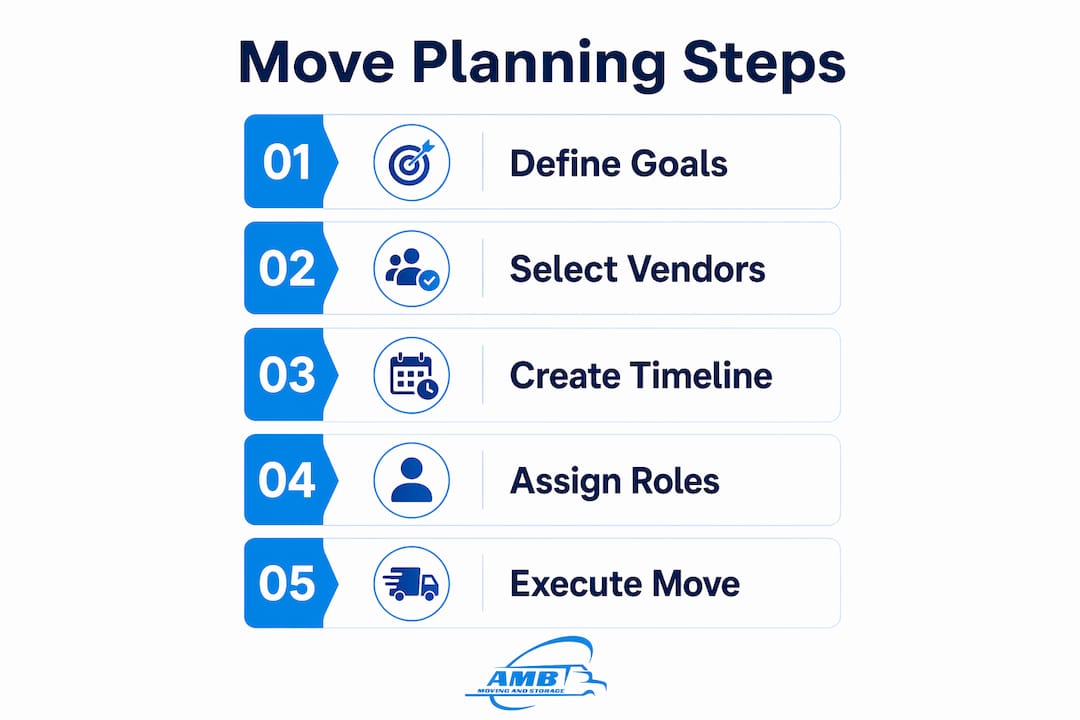
A successful commercial relocation starts with two decisions made before any box is packed: what success looks like, and who owns the process.
Define your relocation goals in writing. Success metrics might include a specific move date, a maximum number of downtime hours, a budget ceiling, or a target date for full IT restoration. Without written metrics, every decision becomes a debate.
Appoint a dedicated move coordinator with strong project management skills. This person owns the master timeline, resolves conflicts between departments, and serves as the single point of contact for all vendors. A coordinator without decision-making authority creates bottlenecks, not solutions.
Build a cross-functional relocation team covering these four areas:
- IT and infrastructure — responsible for server migration, network setup, and equipment testing at the new site
- Logistics and facilities — manages vendor contracts, floor plans, and physical asset movement
- HR and communications — handles employee notifications, scheduling changes, and change management
- Finance and legal — tracks budget, approves vendor payments, and manages regulatory filings
Create a 6–12 month timeline with fixed milestones. Milestones should include vendor selection, lease signing, IT audit, packing start, move date, and post-move system testing. Disciplined project management with clear governance structures is the single most effective way to avoid costly delays and schedule conflicts.
Pro Tip: Assign decision rights in writing at the start. Document who approves vendor changes, budget overruns, and timeline shifts. Ambiguity at this stage costs money later.
How do you select the right commercial moving vendor?
Vendor selection is where most business moves either gain or lose control of their budget. The standard practice is to request at least three itemized binding estimates from licensed moving providers. A binding estimate is a written price guarantee based on a defined inventory and scope. It eliminates the most common source of cost surprises in commercial relocations.
When evaluating vendors, verify these qualifications before signing anything:
- USDOT and FMCSA registration — required for any interstate commercial move under federal law
- Certificate of Insurance (COI) — must name your business as an additional insured for the move period
- Commercial moving experience — ask specifically about data center relocations, after-hours labor, and union access compliance
- Itemized scope — confirm whether packing, IT equipment handling, and furniture disassembly are included or billed separately
Vendor transparency on COIs and specific commercial experience are the two factors that most reduce scheduling risk and liability exposure. A vendor with residential experience but no commercial track record is a liability, not a resource.
Add a 10–20% contingency buffer to your approved moving budget. Lease overlap costs, IT migration expenses, and productivity dips are the three most common sources of unexpected charges in commercial moves. Budget for them before they happen.
| Evaluation Criteria | What to Verify |
|---|---|
| Licensing | Active USDOT and FMCSA registration numbers |
| Insurance | COI naming your business as additional insured |
| Commercial experience | References for data center and after-hours moves |
| Estimate type | Binding, itemized, scope-specific |
| Inclusions | Packing, IT handling, specialty equipment |
Pro Tip: Request a video walkthrough of your current space with each vendor instead of an in-person visit. It accelerates the quoting process and creates a documented record of pre-move asset conditions.
For guidance on comparing estimate types, the moving estimate planning guide from Ambmovingservices covers binding versus non-binding formats in detail.
What internal coordination steps prevent downtime during a business move?
Internal preparation is where most businesses underestimate the work. A clean, labeled inventory is the foundation of every efficient commercial relocation.

Assign inventory ownership by department and catalog every asset before packing begins. Each item should carry a label showing the department name, the owner, and the destination room at the new location. Clear labeling by department and destination makes unpacking and setup faster and reduces the risk of lost assets.
Communicate the move plan to all employees at least 60 days before the move date. Employees need to know their packing responsibilities, their move-day schedule, and who to contact with questions. Late or unclear communication creates confusion on move day and slows setup at the new site.
Plan a phased relocation schedule using these priorities:
- Move nonessential teams and storage first to test the process and identify problems early
- Relocate operational departments in sequence, maintaining at least one functional site during the transition
- Schedule IT infrastructure moves last and test all systems before staff arrive at the new location
- Notify the IRS using Form 8822-B, state revenue departments, and licensing boards at least 30 days before the move date
Phased move scheduling, including weekend or overnight moves, is the industry-recommended method for preserving mission-critical functions during a commercial relocation. Shifting nonessential teams first gives you a live test run before your core operations move.
Maintain a backup communication channel throughout the move period. A group messaging platform or a dedicated move-day phone line keeps your team connected when office phones and internet are offline during the transition.
What happens on move day and how do you validate post-move operations?
Move day is execution, not planning. Your coordinator should be on-site from the first truck arrival to the last item placed.
Follow this sequence to keep move day on track:
- Supervise loading — confirm movers follow your labeling system and handle fragile or high-value items according to the agreed scope
- Track vehicle departures — log departure and arrival times for each truck, especially for long-distance moving legs involving multiple vehicles
- Prioritize critical systems at the new site — internet connectivity, phone systems, and security access should be live before any staff arrive
- Conduct a room-by-room inventory check — compare delivered items against your pre-move catalog as each truck unloads
- Document damage immediately — photograph any damaged items and file claims within the vendor’s required timeframe
Final move-day punch lists that document missing items, damages, and unresolved fixes are the fastest path to recovery from unforeseen problems. Businesses that skip this step spend days tracking down missing assets and chasing vendor claims after the fact.
Pro Tip: Assign one team member per floor or department to own the inventory check at the new location. One coordinator cannot verify 50 rooms alone. Distributed accountability catches errors faster.
Post-move validation is a formal process, not a casual walkthrough. Test every workstation, phone line, and networked device before declaring the move complete. Resolve all punch-list items within the first 48 hours while vendors are still under contract and accessible.
Key Takeaways
A commercial move succeeds when disciplined project management, binding vendor agreements, and phased execution work together from day one.
| Point | Details |
|---|---|
| Appoint a move coordinator | One person with decision rights owns the timeline, vendor contacts, and team accountability. |
| Use binding estimates | Request at least three itemized binding estimates to lock pricing and eliminate surprise charges. |
| Plan in phases | Move nonessential teams first and schedule IT infrastructure last to protect core operations. |
| Label and catalog everything | Assign inventory ownership by department before packing to prevent asset loss and speed setup. |
| Budget for overruns | Add a 10–20% contingency buffer to cover lease overlaps, IT costs, and productivity dips. |
What coordinating commercial moves has taught me
After working with businesses across the country on interstate commercial relocations, the pattern I see most often is not a logistics failure. It is a planning failure that shows up as a logistics failure on move day.
The businesses that struggle most book vendors too late. Late bookings reduce scheduling flexibility and create bottlenecks that no amount of move-day hustle can fix. The best commercial movers fill their calendars months in advance, especially for after-hours and weekend slots.
The other mistake I see consistently is treating employee communication as an afterthought. Leaders focus on vendors and floor plans and forget that their team needs clear, early information to prepare. Confusion among staff on move day costs more in lost productivity than most people realize.
My honest advice: treat your commercial move like a product launch. Assign an owner, set a deadline, build a budget with a buffer, and communicate relentlessly. The businesses that do this finish on time and on budget. The ones that wing it pay for it twice.
— AMB
Ambmovingservices supports your commercial relocation
Planning a business move across state lines adds federal compliance requirements, longer transit windows, and more complex logistics to an already demanding process.
Ambmovingservices specializes in long-distance and interstate commercial moves for businesses that need a licensed, insured partner with real commercial experience. The team provides binding estimates, after-hours labor options, and project management support from quote to final delivery. Whether your office is relocating across one state or across the country, Ambmovingservices builds a move plan around your timeline and budget. Request a commercial moving quote to get an itemized estimate and start your relocation with a clear plan in place.
FAQ
What is a binding estimate for a commercial move?
A binding estimate is a written price guarantee from a licensed mover based on a defined inventory and scope of work. It prevents surprise charges and is the standard for professional commercial relocations.
How far in advance should you plan a commercial move?
Start planning 6–12 months before your target move date. Late bookings reduce vendor availability and eliminate scheduling flexibility for after-hours or phased moves.
What is the best way to minimize downtime during an office relocation?
Use a phased move schedule that shifts nonessential teams first and moves IT infrastructure last. Test all systems before staff arrive at the new location.
What regulatory notifications are required when a business relocates?
File IRS Form 8822-B, notify state revenue departments, and update all licensing board registrations at least 30 days before the move date to avoid compliance issues.
How do you verify a commercial mover is qualified for an interstate move?
Confirm active USDOT and FMCSA registration numbers, request a Certificate of Insurance naming your business as an additional insured, and ask for references from prior commercial or data center relocations.