

TL;DR:
- A moving estimate is a written projection of costs based on shipment details, helping consumers plan their budget. Different types—binding, non-binding, and binding not-to-exceed—offer varying levels of price certainty and protection, with accurate surveys being crucial for reliable estimates. Understanding these factors and requesting detailed, scope-matched quotes can prevent unexpected charges and ensure a smoother relocation process.
A moving estimate is a written price projection a moving company provides before your move, outlining expected costs based on your shipment size, distance, and requested services. Understanding this document is the difference between a move that stays on budget and one that delivers a shocking invoice at your front door. For anyone planning a long-distance move across state lines, knowing how estimates work, what types exist, and what legal protections apply is not optional. It is the foundation of smart move planning. Long-distance moves in 2026 can range from $1,500 to over $8,500 depending on home size and services, which makes reading your estimate carefully one of the most financially significant things you will do during your relocation.
What is a moving estimate and why does it matter?
A moving estimate, also called a moving cost estimate, is a preliminary written projection created from an inventory or survey of your belongings and reconciled at delivery against actual shipment weight and services performed. It is not a final invoice. The estimate gives you a planning number; the invoice is the legal record of what you actually owe. Confusing the two is one of the most common mistakes movers make, and it leads to disputes, stress, and sometimes delayed deliveries.
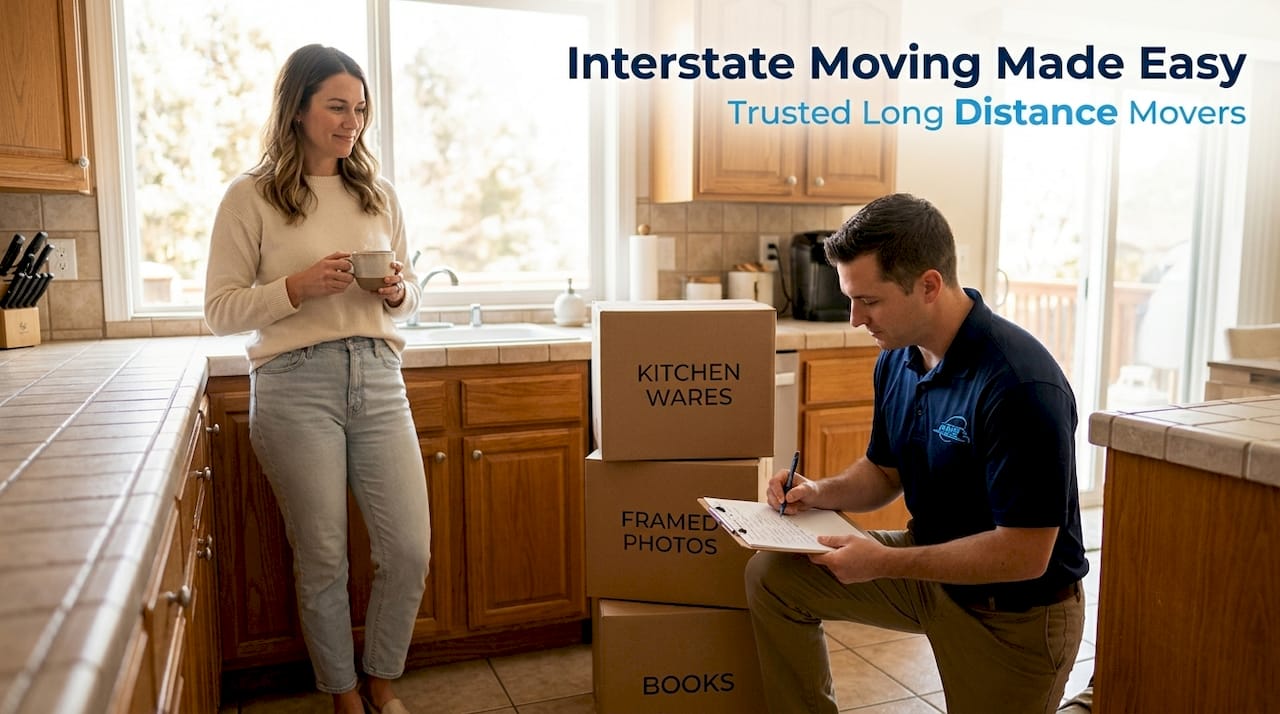
The estimate matters because it sets your financial expectations before a single box is packed. A well-prepared estimate from a licensed interstate mover will itemize labor, transportation, packing materials, and any accessorial charges like stair carries or long-haul distances from the truck to your door. Without that breakdown, you have no way to compare quotes from different companies or catch errors before they become problems.
Federal regulations require interstate movers to provide written estimates and to disclose the estimate type before you sign anything. This regulatory layer exists specifically to protect consumers from bait-and-switch pricing. Knowing your rights starts with knowing what your estimate says.
What factors do movers consider when preparing a moving estimate?
Movers calculate estimates from a defined set of inputs, and the accuracy of those inputs directly determines how close your estimate will be to your final bill. The primary factors are shipment weight or volume, move distance, and the specific services you request. For interstate moves, weight is the dominant pricing variable because federal tariffs are structured around pounds transported per mile.
The key factors that drive your moving cost estimate include:
- Shipment weight and volume: Heavier, bulkier loads cost more. A three-bedroom home typically weighs between 5,000 and 7,500 pounds, while a studio apartment may come in under 2,000 pounds.
- Move distance: Local moves are usually priced by the hour. Long-distance and interstate moves are priced by weight and mileage, which is why accurate inventory details matter so much.
- Services requested: Full-service packing, crating for fragile items, appliance servicing, and storage all add to the base cost.
- Accessorial charges: Stairs, elevator usage, long carries from the truck to your unit, and narrow street access all generate additional labor fees that are easy to overlook.
- Specialty items: Pianos, gun safes, pool tables, and large artwork require special handling and are priced separately.
- Survey method: In-home or virtual surveys produce more reliable estimates than online calculators. Online calculators are typically accurate within 15 to 25%, which is a wide margin on a $5,000 move.
Pro Tip: Before your survey, walk through every room and note items you plan to leave behind or sell. A leaner, more accurate inventory produces a tighter estimate and reduces the chance of a surprise bill.
The survey method is worth emphasizing. An in-home or virtual survey conducted by a trained moving consultant captures access details, specialty items, and service needs that a self-reported online form will miss. Movers who skip the survey and quote from a phone call alone are giving you a guess, not an estimate.
How do binding, non-binding, and binding not-to-exceed estimates differ?
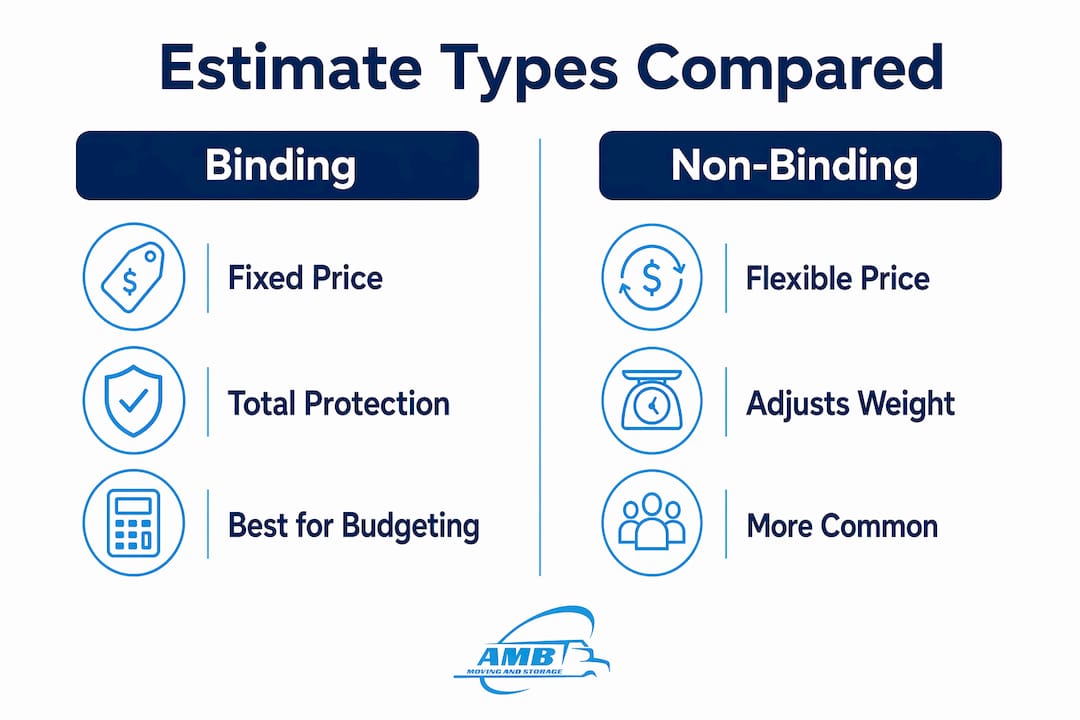
Estimate type is the single biggest factor affecting whether your final moving bill matches your initial estimate. There are three types, and each has distinct legal and financial implications.
| Estimate type | Price flexibility | Consumer protection | Best for |
|---|---|---|---|
| Binding | Fixed. You pay exactly the quoted amount. | Price is locked regardless of actual weight. | Predictable budgets, no surprises. |
| Non-binding | Variable. Final price based on actual weight and services. | 110% payment cap at delivery; excess billed later. | Lighter shipments that may come in under estimate. |
| Binding not-to-exceed | Capped. You pay the estimate or less, never more. | Best consumer protection. Savings if shipment weighs less. | Long-distance moves where you want upside protection. |
Binding estimates lock the price. If your shipment weighs more than projected, you still pay the quoted amount. If it weighs less, you still pay the quoted amount. The price is fixed at signing.
Non-binding estimates are projections only. Your final bill is calculated from actual shipment weight and services performed. Federal law under 49 CFR 375.407 caps what a mover can collect at delivery at 110% of the non-binding estimate. Any amount above that cap must be invoiced separately after delivery, not collected at your door.
Binding not-to-exceed estimates are the consumer-friendliest option. The mover cannot charge more than the estimate, but if your actual shipment weighs less, your final bill drops accordingly. This type is not universally offered, so ask for it specifically when getting quotes for interstate moves.
“The 110% rule is a critical consumer protection on delivery day that prevents movers from demanding more than a reasonable amount under non-binding estimates.” — Mover Scorecard
Always confirm the estimate type in writing before signing. It must appear on your order for service and your bill of lading. If a mover cannot tell you which type of estimate they are providing, that is a red flag.
Why might your final moving bill differ from the initial estimate?
An estimate is a planning document, not a contract for a fixed price unless it is binding. Several common scenarios cause the final invoice to diverge from the original projection.
- Inventory changes. You added items after the survey, such as a last-minute piece of furniture or boxes that were not counted. Every pound added to the shipment adds cost on a non-binding estimate.
- Actual weight differs from projected weight. Movers weigh the truck before and after loading. If your shipment is heavier than the survey suggested, a non-binding estimate will adjust upward.
- Accessorial services performed on move day. If the crew encounters three flights of stairs that were not disclosed, or has to carry items 200 feet from the truck to your door, those charges are added per the tariff schedule.
- Packing materials used. If you requested partial packing or the crew packed additional items on move day, materials and labor are billed accordingly.
- Storage added mid-move. If delivery is delayed and your shipment enters storage, storage fees accumulate and appear on the final invoice.
- Survey errors or omissions. If the original survey missed a room, a large appliance, or a specialty item, the estimate was built on incomplete data. This is the mover’s error, but it still affects your bill.
Understanding that the estimate and the invoice serve different roles prevents the confusion that leads to disputes. The estimate plans the move; the invoice records what actually happened. Your best defense is a thorough, accurate survey at the start.
How to get the most accurate and comparable moving estimates
Getting three or more estimates is standard advice, but comparing them accurately requires more than looking at the bottom line. A $500 price difference between two quotes means nothing if one includes full packing and the other does not.
Here is how to get estimates that are genuinely useful:
- Request in-home or virtual surveys from every mover. Do not accept phone quotes for interstate moves. In-home surveys produce far more accurate estimates and give you a chance to ask questions directly.
- Provide identical inventory and service details to each mover. If you tell one mover you need full packing and another that you will pack yourself, you are comparing two different moves.
- Ask for a complete breakdown of charges. A complete moving estimate includes inventory, labor hours, packing materials, accessorial charges, and valuation coverage. Any estimate that lists only a lump sum is incomplete.
- Confirm the estimate type in writing. Ask each mover whether the estimate is binding, non-binding, or binding not-to-exceed before you sign anything.
- Request a binding not-to-exceed estimate when possible. This type gives you the best protection on interstate moving costs and eliminates the risk of a higher-than-expected delivery bill.
- Verify the mover’s FMCSA registration. Licensed interstate movers are registered with the Federal Motor Carrier Safety Administration. Unregistered movers are not bound by federal consumer protections.
Pro Tip: Ask each mover to walk you through every line item on the estimate. A mover who cannot explain a charge clearly is a mover who may add it to your final bill without warning.
Comparing estimates on matched scope, not price alone, is the discipline that separates informed movers from those who get surprised at delivery. Scope-matched comparisons are the only valid way to evaluate competing quotes.
Key takeaways
A moving estimate is a written cost projection that determines your budget baseline, and the estimate type you choose governs whether your final bill can change.
| Point | Details |
|---|---|
| Estimate vs. invoice | The estimate plans the move; the final invoice is the legal record of actual charges. |
| Three estimate types | Binding, non-binding, and binding not-to-exceed each carry different price flexibility and consumer protections. |
| 110% delivery cap | Federal law limits delivery-day collection under non-binding estimates to 110% of the quoted amount. |
| Survey accuracy matters | In-home or virtual surveys produce far more reliable estimates than online calculators or phone quotes. |
| Compare on scope | Price comparisons between estimates are only valid when the scope of services is identical across all quotes. |
What we have learned from thousands of interstate moves
After working with families and individuals on long-distance relocations across the country, the pattern is consistent: the customers who feel blindsided by their final bill almost always skipped one step. They accepted a phone quote, or they did not ask which type of estimate they were signing. They assumed the number on the page was a guarantee when it was actually a projection.
The binding not-to-exceed estimate is the most underused consumer protection in the moving industry. Most people do not know to ask for it. When you do ask, and a mover refuses to offer it, that tells you something important about how they handle pricing disputes.
Accessorial charges are the other consistent surprise. Stairs, long carries, and elevator fees are not hidden fees in a predatory sense. They are real labor costs that were simply not captured in the original survey because the customer did not mention them. Disclosing every access detail upfront, including parking restrictions, building elevator schedules, and floor numbers, is the single most effective thing you can do to protect your estimate’s accuracy.
The customers who have the smoothest moves are the ones who treat the estimate process as seriously as the move itself. They ask questions, read every line, and confirm everything in writing. That approach takes an extra hour before the move and saves days of frustration afterward.
— AMB
Get a clear, accurate estimate from Ambmovingservices
Ambmovingservices provides detailed, written moving estimates for long-distance, interstate, and state-to-state relocations across the United States. Every estimate includes a full inventory review, transparent line-item pricing, and a clear disclosure of the estimate type so you know exactly what you are agreeing to before you sign. Ambmovingservices operates in full compliance with FMCSA federal regulations, giving you the consumer protections that licensed interstate movers are required to provide. Whether you need a binding estimate for budget certainty or a binding not-to-exceed estimate for maximum protection, the team is ready to walk you through your options. Request your moving estimate today and move forward with confidence.
FAQ
What is a moving estimate?
A moving estimate is a written price projection provided by a moving company before your move, based on shipment size, distance, and services requested. It is a planning document, not a final invoice.
What is the difference between a binding and non-binding estimate?
A binding estimate locks your price regardless of actual shipment weight, while a non-binding estimate adjusts based on actual weight and services, with federal law capping delivery-day collection at 110% of the quoted amount.
How do I calculate a moving estimate?
Movers calculate estimates from a survey of your inventory, the distance of the move, and the services you request. For the most accurate number, request an in-home or virtual survey rather than relying on an online calculator.
What is a binding not-to-exceed estimate?
A binding not-to-exceed estimate caps your final bill at the quoted amount but allows it to drop if your actual shipment weighs less. It offers the strongest consumer protection of the three estimate types.
Why did my final moving bill differ from the estimate?
Final bills differ from estimates when inventory changes after the survey, actual shipment weight exceeds projections, or accessorial services like stair carries are performed on move day that were not included in the original scope.