

TL;DR:
- Moving quotes reveal the true costs of long-distance moves before committing to a mover. Getting at least three estimates, along with in-home or virtual surveys, ensures accurate budgeting and protects against hidden fees. Comparing detailed, written, and binding estimates from reputable companies helps families choose trustworthy movers and avoid costly surprises.
Moving quotes are detailed cost and service estimates that reveal the true price of your relocation before you commit to a single mover. For families and individuals planning long-distance moving across state lines, getting these estimates is not optional. It is the single most effective way to budget accurately, compare movers fairly, and avoid the hidden fees that derail too many relocations. The industry term for these documents is “moving estimates,” and federal regulations govern how movers must present them. Understanding why get moving quotes matters is the first step toward a move that stays on budget and on schedule.
Why get moving quotes for every long-distance move
Moving quotes give you a nearly accurate prediction of total costs, which makes planning and budgeting far more reliable. Customers should get at least three quotes to compare pricing and avoid unexpected fees. Three quotes create a realistic price range, so you can spot outliers immediately. Ambmovingservices recommends starting this process early, especially for interstate or state-to-state moves where logistics are more complex.

The Federal Motor Carrier Safety Administration (FMCSA) sets the rules for how licensed movers must present estimates. Federal law requires movers to perform on-site or virtual inspections before issuing binding estimates, unless the customer waives that right. This regulation exists to protect you from vague pricing that balloons after your belongings are already on a truck. Knowing this rule puts you in a stronger negotiating position from the first phone call.

What does a moving quote actually include?
A transparent, itemized moving quote breaks down every cost category so you can compare offers on equal terms. Detailed moving quotes cover base transportation costs, labor, packing materials, insurance, and extra fees like stairs or long carries. Each line item tells you something specific about the mover’s pricing structure. A quote that lumps everything into one number is a red flag, not a bargain.
The most common surcharges that families overlook include:
- Stairs and elevator fees: Charged per flight when movers cannot use a direct path to the truck.
- Long carry fees: Applied when the truck cannot park close to your door, adding distance to each trip.
- Bulky or specialty item fees: Pianos, safes, and oversized furniture require extra labor and equipment.
- Timing premiums: Weekend, month-end, and summer moves typically cost more than mid-week or off-peak dates.
- Packing material costs: Boxes, tape, and wrapping are often billed separately unless you negotiate a package.
- Valuation coverage: Basic carrier liability covers only $0.60 per pound per item. Full-value protection costs more but covers actual replacement value.
Pro Tip: Ask every mover to confirm in writing whether insurance coverage and packing services are included or billed separately. A quote that omits these lines is incomplete and unreliable for budgeting.
How do you get the most accurate moving estimate?
The method you use to get a quote directly determines how accurate that quote will be. There are four common approaches, and they are not equally reliable.
- Instant online quotes: These are generated by entering basic details like origin, destination, and home size. Online instant quotes are marketing tools, not final prices. They miss inventory details, access challenges, and specialty items entirely.
- Phone estimates: A representative asks questions over the phone and builds a rough estimate. These are better than instant quotes but still rely on your memory of every item you own.
- Virtual surveys: A mover conducts a video walkthrough of your home. This method captures far more detail than phone estimates and works well for straightforward moves.
- In-home or on-site surveys: A mover visits your home in person, catalogs every item, and notes access challenges. This produces the most accurate estimate of all four methods.
On-site or virtual surveys are the only reliable way to capture all items and avoid costly surprises for large or complex moves. Minor omissions during a phone estimate can cause significant budget increases once the move begins. For any interstate moving job crossing multiple states, an in-home or virtual survey is not a luxury. It is a necessity.
Experienced movers advise waiting for binding or binding-not-to-exceed estimates after a proper survey before making any financial commitment. A binding estimate locks the price regardless of actual weight. A binding-not-to-exceed estimate caps your cost at the quoted amount even if the shipment weighs more. Both protect you. A non-binding estimate does not.
Pro Tip: Request a binding-not-to-exceed estimate whenever possible. It gives you a firm ceiling on costs while still allowing the price to drop if your shipment weighs less than projected.
What are the benefits of comparing multiple moving quotes?
Comparing at least three quotes is the most effective way to identify both the fair market price and the warning signs of a bad mover. Industry experts recommend at least three quotes for a balanced understanding of costs. A single quote gives you no context. Three quotes reveal the range.
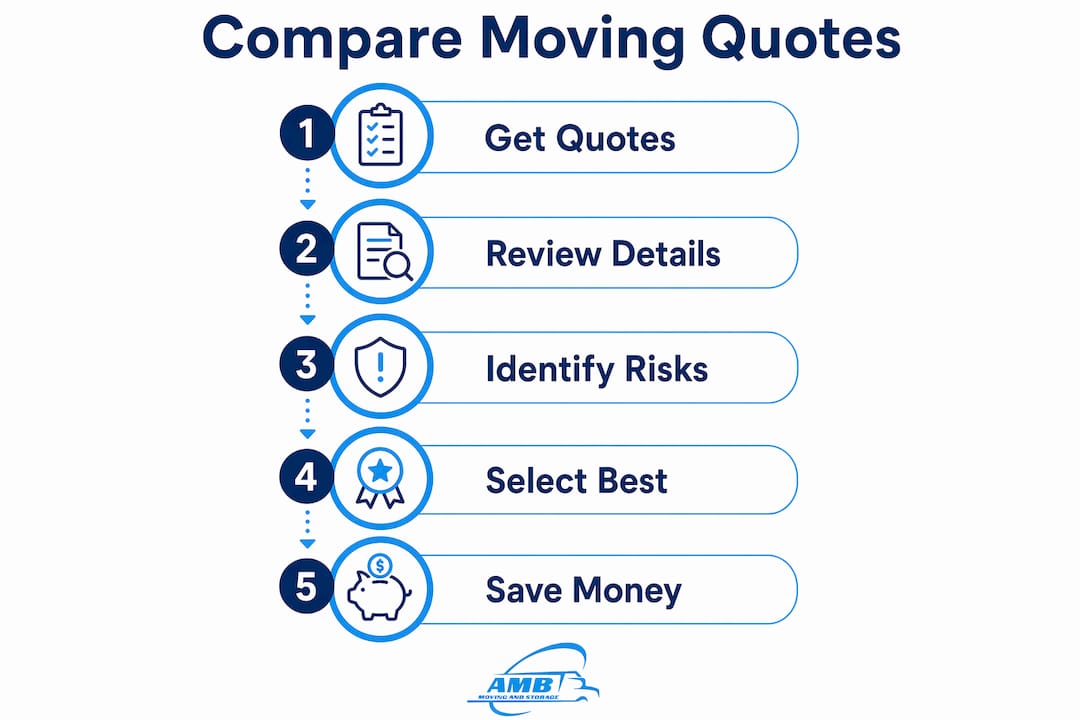
The table below shows what to examine when placing quotes side by side.
| Quote element | What to look for |
|---|---|
| Base transportation cost | Is it calculated by weight, distance, or a flat rate? |
| Labor hours included | Are loading and unloading both covered? |
| Insurance and valuation | Is full-value protection offered or only basic liability? |
| Packing services | Are materials and labor itemized or bundled? |
| Surcharges listed | Are stairs, long carries, and specialty items disclosed? |
| Contract completeness | Is every service listed before you sign? |
The cheapest quote is often the most dangerous one. A suspiciously low quote can signal a scam, underinsured service, or a company planning to add fees after your goods are loaded. The best value comes from balanced service quality, clear insurance coverage, and transparent pricing, not the lowest number on the page.
Transparent moving companies provide written, itemized estimates and never ask you to sign incomplete or blank documents. FMCSA guidelines protect consumers from unexpected charges and fraudulent practices. If a mover pressures you to sign before all services are listed, walk away.
Before finalizing any decision, check that your move-in location is ready. A move-in cleaning service at your destination can be scheduled in advance once your moving date is confirmed, which is one more planning step that a firm quote makes possible.
When should you request moving quotes for a long-distance move?
Timing your quote requests correctly gives you the best pricing and the most scheduling options. For any long-distance or nationwide moving job, the right window is earlier than most families expect.
- Request quotes 4–6 weeks before your move date. This gives movers enough time to conduct proper surveys and issue accurate estimates.
- Book during off-peak periods when possible. Moving mid-week or off-peak reduces timing-based surcharges that appear in quotes for weekend or summer moves.
- Lock in pricing before peak season. Summer months, month-end dates, and major holidays drive prices up. Early quotes help you secure favorable rates before demand spikes.
- Update your quote if details change. If you add items, change your destination, or shift your move date, contact your mover immediately to revise the estimate. An outdated quote is not a binding commitment.
- Confirm your quote in writing before signing any contract. Verbal agreements do not protect you under FMCSA rules.
Getting a moving estimate online is a useful starting point for budgeting, but always follow up with a virtual or in-home survey to confirm the numbers. Early planning also gives you time to compare quotes without pressure, which leads to better decisions.
Key Takeaways
Getting at least three moving estimates, including one binding or binding-not-to-exceed quote after a proper survey, is the most reliable way to budget accurately and choose a trustworthy mover for any long-distance relocation.
| Point | Details |
|---|---|
| Get at least three quotes | Three estimates reveal the fair price range and expose outliers or scams. |
| Use in-home or virtual surveys | On-site surveys produce the most accurate estimates for complex or large moves. |
| Request binding estimates | Binding or binding-not-to-exceed quotes protect you from post-move price increases. |
| Compare every line item | Evaluate transportation, labor, insurance, and surcharges, not just the total price. |
| Start 4–6 weeks early | Early requests secure better pricing and allow time for thorough comparison. |
What I’ve learned from watching families skip the quote process
After working with families on long-distance relocations across the country, the pattern is consistent. The moves that go wrong almost always share one thing: the family chose a mover based on a single phone estimate or an instant online price. They did not compare quotes. They did not ask about surcharges. They signed before the contract was complete.
The uncomfortable truth about moving estimates is that the process feels tedious when you are already managing a hundred other tasks. Packing, school transfers, lease deadlines. Getting three quotes feels like one more item on an already long list. But skipping it costs far more than the hour it takes. I have seen families arrive at their new home to find a bill hundreds of dollars higher than expected, with no legal recourse because they signed a non-binding estimate without reading it.
The clients who move smoothly are the ones who treat the quote process as seriously as they treat the move itself. They ask clarifying questions. They request itemized breakdowns. They verify that the mover is FMCSA-licensed and insured before committing. That diligence is not paranoia. It is the standard practice that separates a successful relocation from a stressful one.
One more thing worth saying directly: the cheapest quote is almost never the best choice. The best choice is the mover who gives you a complete, written, binding estimate after a proper survey and answers every question without hesitation. That mover respects your budget and your time.
— AMB
Get an accurate moving quote from Ambmovingservices
Ambmovingservices is a licensed, insured nationwide moving company specializing in long-distance and interstate relocations across the United States. Every estimate starts with a thorough inventory review, either in-home or virtual, so the price you receive reflects your actual move.
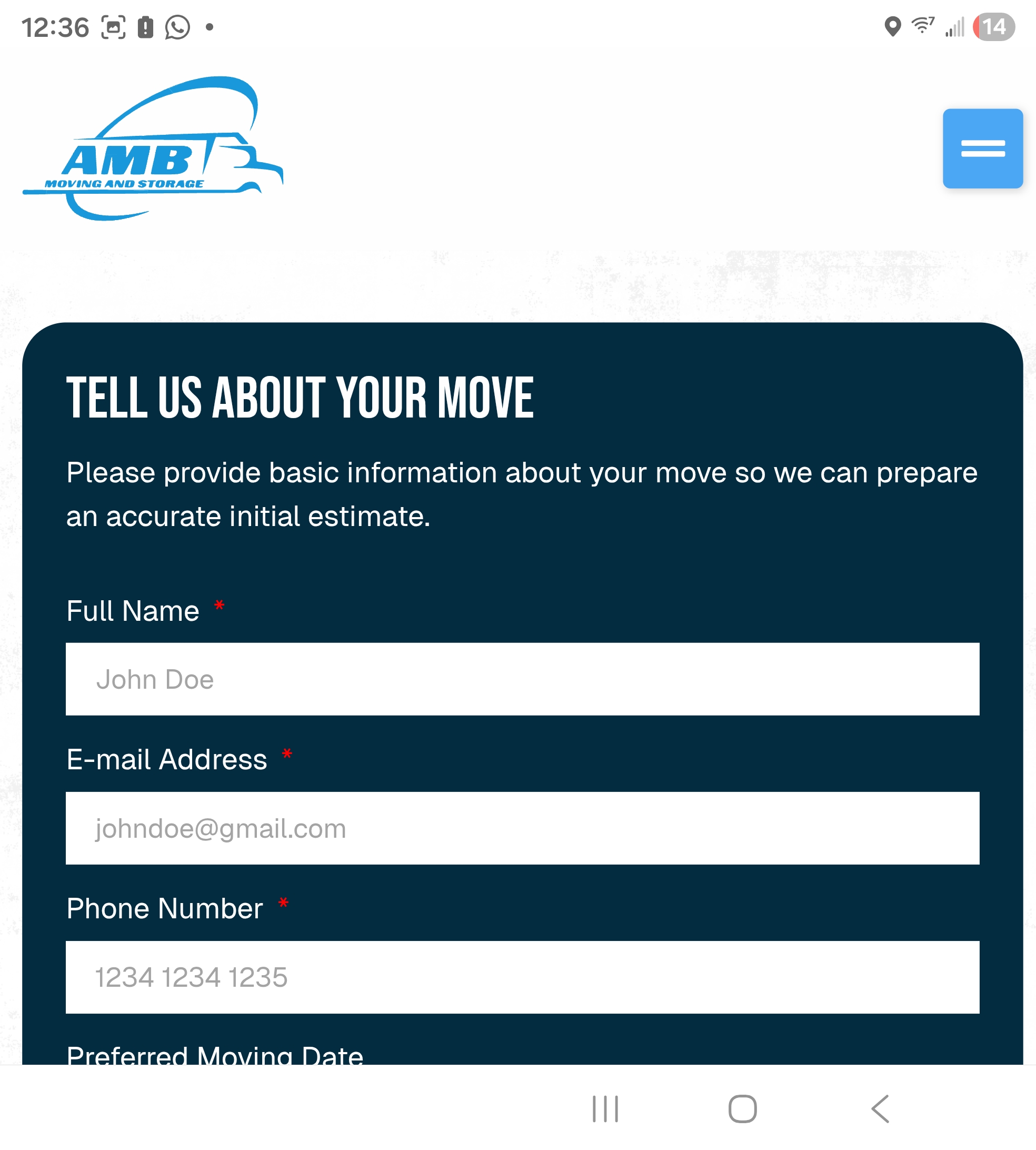
Ambmovingservices provides written, itemized quotes with no pressure to sign before you are ready. Whether you are relocating from New Jersey, California, or anywhere in between, the process starts with a single conversation. Visit the long-distance moving services page to learn what is included, or go directly to get your free quote and connect with a moving specialist today.
FAQ
Why should you get moving quotes before hiring a mover?
Moving quotes give you a detailed breakdown of expected costs, helping you budget accurately and compare movers fairly. Getting at least three quotes is the industry standard for avoiding unexpected fees and identifying unreliable companies.
What is the difference between a binding and non-binding moving estimate?
A binding estimate locks your price regardless of actual shipment weight, while a non-binding estimate can increase after the move. A binding-not-to-exceed estimate caps your cost at the quoted amount even if the shipment weighs more than projected.
How early should you get moving quotes for a long-distance move?
Request quotes 4–6 weeks before your move date to allow time for proper surveys, accurate pricing, and scheduling. Early requests also help you secure better rates before peak-season demand drives prices up.
Are instant online moving quotes accurate?
Instant online quotes are rough estimates based on limited information and should not be treated as final costs. Accurate pricing requires a virtual or in-home survey that captures your full inventory and any access challenges.
What should a legitimate moving quote include?
A legitimate moving quote lists base transportation costs, labor, packing materials, insurance or valuation options, and all applicable surcharges such as stairs or long carries. FMCSA guidelines require transparent, written estimates before any contract is signed.