


TL;DR:
- Understanding industry terms helps families avoid surprise fees and legal issues during relocation.
- The Bill of Lading is the essential legal contract that governs interstate moves, detailing costs and liability.
Industry terms for relocation are the specialized words and phrases professionals use to describe every step of the moving process, from the first estimate to final delivery. Knowing this vocabulary is not optional. The Federal Motor Carrier Safety Administration (FMCSA) governs all interstate moves in the United States, and the documents it requires, including the Bill of Lading and USDOT registration, carry legal weight that verbal agreements do not. Families and individuals who understand moving industry terminology before signing anything are far less likely to face surprise fees, disputed charges, or lost protections. This guide defines the terms that matter most, organized by how you will actually encounter them during a move.
What are the fundamental industry terms for relocation?
The Bill of Lading is the single most important document in any move. Under federal law 49 CFR §375.501, the Bill of Lading is the legally binding contract that governs the entire shipment. It details the agreed price, pickup and delivery dates, carrier liability, and the inventory of your belongings. Verbal promises from a sales representative carry no legal weight once the Bill of Lading is signed.
Estimates come in three forms, and the differences matter financially.
- Binding estimate: The price is fixed. The mover cannot charge more, even if your shipment weighs more than expected.
- Non-binding estimate: The final cost is based on actual weight. Your bill can exceed the estimate, though federal rules cap how much extra a mover can collect at delivery.
- Binding not-to-exceed estimate: The price can only go down. If actual weight is less than estimated, you pay the lower amount. This is the most consumer-friendly option for long-distance moves.
Released Value Protection is the default liability coverage included at no extra charge. It provides 60 cents per pound per item. That means a 50-pound television damaged beyond repair earns you $30.00 in compensation. Most families mistake this for insurance. It is not. Full Value Protection is the upgrade that covers actual replacement value, typically costing roughly 1% of your declared shipment value. For anyone moving high-value items, Full Value Protection is the only coverage worth having.
Accessorial charges are fees for services beyond standard transport. Common accessorial fees include long carry, stair carry, shuttle service, packing, and storage. Clarify every potential accessorial charge before your move date to avoid surprises on delivery day.
Pro Tip: Ask your mover to list every possible accessorial charge in writing before you sign the estimate. A mover who refuses to do this is a red flag.
How do move types affect relocation vocabulary and regulations?
The type of move you are making determines which rules apply, how your costs are calculated, and what documents you need. Getting this wrong leads to real financial consequences.

Local moves typically fall within 50–100 miles, depending on the state. Movers bill local moves by the hour, usually with a minimum hour requirement. State agencies regulate local moves, not the federal government. Because billing is hourly, the relocation vocabulary for local moves centers on labor time, truck size, and crew count rather than weight.
Intrastate long-distance moves cross significant distances but stay within one state. These moves are regulated by state agencies and billed by weight and distance, not by the hour. The terminology shifts accordingly. You will encounter terms like weight tickets, which are official documents from certified scales showing the actual weight of your shipment.
Interstate moves cross state lines and fall under federal FMCSA jurisdiction. Every legitimate interstate mover must carry a USDOT number and an MC (Motor Carrier) number. These are not optional credentials. They are federal identifiers that allow you to verify a mover’s license, insurance status, and complaint history through the FMCSA’s online database. Pricing for interstate moves is weight and distance based, which is why the term “linehaul charges” appears on interstate invoices but rarely on local ones.
| Move type | Governing body | Billing method | Key documents |
|---|---|---|---|
| Local (under 50–100 miles) | State agency | Hourly | Basic contract |
| Intrastate long-distance | State agency | Weight and distance | Weight tickets, contract |
| Interstate (crosses state lines) | FMCSA (federal) | Weight and distance | Bill of Lading, USDOT/MC verification |
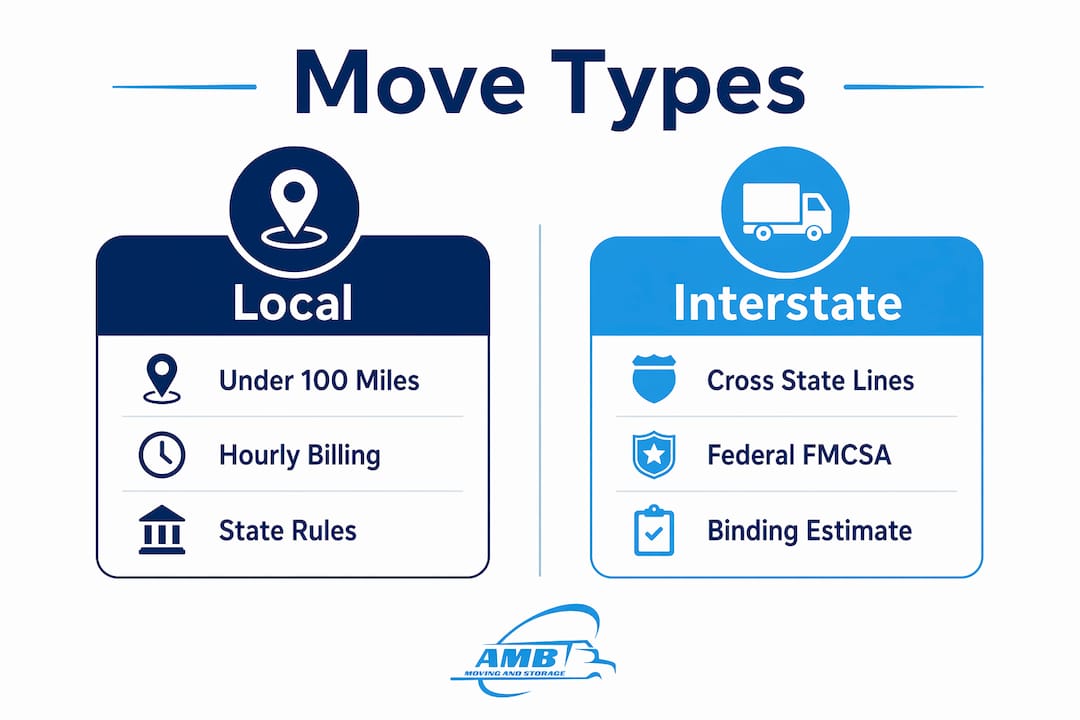
Understanding this table before you hire a mover tells you exactly which regulatory framework protects you and which documents to demand.
What are the key documents and protections in relocation jargon?
The Bill of Lading and the estimate are two different documents, and confusing them is one of the most common and costly mistakes families make. An estimate is preliminary. It reflects expected costs based on a visual or virtual survey of your belongings. The Bill of Lading is the final contract and may reflect actual shipment weight and adjusted costs. Final costs can exceed estimates within regulatory limits, which is why reading the Bill of Lading carefully on move day is non-negotiable.
The Order for Service is a separate document you sign before the move begins. It authorizes the mover to transport your belongings and confirms the agreed services and estimated charges. Think of it as the pre-move authorization. The Bill of Lading replaces it as the controlling document once the truck is loaded.
Key documents to review before and during your move:
- Bill of Lading: Review every line. Confirm pickup and delivery dates, declared value, and all charges.
- Order for Service: Verify it matches your estimate exactly before signing.
- Weight tickets: For interstate and intrastate long-distance moves, request copies of both the tare weight (empty truck) and gross weight (loaded truck) tickets.
- “Your Rights and Responsibilities When You Move”: Federal law requires interstate movers to provide this booklet. Many families skip it, which leaves them unaware of dispute procedures and protections against “hostage load” situations, where a mover holds belongings until additional fees are paid.
Pro Tip: Never sign a blank or incomplete Bill of Lading. If a field is empty, draw a line through it before signing so nothing can be added later.
You can review your full consumer rights on the Ambmovingservices website, which outlines what federal law requires movers to provide and what you are entitled to dispute. Understanding transport insurance complexities before your move also helps you choose the right level of protection for your shipment.
What other relocation jargon should families understand?
Beyond the core documents and estimate types, several additional terms appear regularly in moving contracts and invoices. Knowing them prevents confusion when your final bill arrives.
-
Linehaul charges. This is the base transportation cost for your shipment, calculated on weight and distance. Linehaul is the core freight cost before any extras are added. On a long-distance moving invoice, linehaul is typically the largest single line item.
-
Long carry fee. This accessorial charge applies when movers must carry your belongings more than a standard distance from the truck to your door. Narrow streets, gated communities, and high-rise buildings with distant loading docks commonly trigger long carry fees. Ask your mover to assess your pickup and delivery addresses in advance.
-
Shuttle service. A shuttle is a smaller vehicle used when a full-size moving truck cannot access your street or building. Shuttle service carries an additional fee and adds time to your move. Neighborhoods with low-clearance bridges, weight-restricted roads, or tight cul-de-sacs frequently require shuttles.
-
Storage in Transit (SIT). SIT is temporary warehousing of your belongings during the move, typically when your new home is not ready for delivery. SIT is charged separately from linehaul and accessorial fees. It is different from permanent storage. SIT has a defined end date, after which your shipment continues to its final destination.
-
Peak season. The moving industry’s peak season runs from late may through early september. During this period, availability tightens and prices rise. Booking a long-distance move during peak season without advance planning often means fewer date options and higher linehaul rates.
Understanding these terms before you receive your final invoice means you can verify every charge rather than simply accept it.
Key Takeaways
Mastering moving industry terminology is the single most effective way to protect yourself from unexpected charges, weak liability coverage, and contract disputes during a relocation.
| Point | Details |
|---|---|
| Bill of Lading is the legal contract | Review every line before signing; verbal promises hold no legal weight. |
| Estimate types determine your financial risk | A binding not-to-exceed estimate offers the strongest cost protection for long-distance moves. |
| Released Value Protection is not insurance | Default coverage pays only 60 cents per pound; upgrade to Full Value Protection for real coverage. |
| Move type determines your regulatory protection | Interstate moves fall under FMCSA; always verify a mover’s USDOT and MC numbers. |
| Accessorial charges add up fast | Confirm every potential extra fee in writing before your move date. |
What working with families on interstate moves has taught me
The term that causes the most damage is “Released Value Protection.” Families hear “protection” and assume they are covered. They are not. A 40-pound flat-screen television destroyed in transit earns $24.00 under released value. That gap between expectation and reality is where disputes start and trust breaks down.
The second pattern I see constantly is families signing the Bill of Lading without reading it. They are tired, the truck is there, and the crew is waiting. That pressure is real. But the Bill of Lading is the document that governs everything. A missing delivery date, a blank declared value field, or an unlisted accessorial charge on that form can cost thousands of dollars to resolve after the fact.
My honest advice is this: print the glossary terms in this article before your move day. Bring it to the truck. When the crew presents the Bill of Lading, go line by line. Ask what every charge means. A professional mover will welcome the questions. A mover who rushes you past the paperwork is telling you something important about how they operate.
Regulatory language in this industry also shifts. The FMCSA updates its consumer protection rules periodically, and terminology that was informal five years ago is now appearing in federal documentation. Staying current with relocation logistics guidance helps families keep pace with those changes.
— AMB
Planning a move? Ambmovingservices explains every term upfront
Ambmovingservices specializes in long-distance and interstate moving across the United States, and every quote includes a clear breakdown of linehaul charges, accessorial fees, and protection options before you sign anything. No buried terms, no surprise charges on delivery day.
The team at Ambmovingservices holds active USDOT and MC credentials and operates under full FMCSA compliance. Whether you are planning a residential move across two states or a commercial relocation with complex logistics, you will receive a written estimate that matches the language in your contract. Get your free moving cost estimate today and start your move with full clarity on every charge.
FAQ
What is a Bill of Lading in moving?
The Bill of Lading is the legally binding contract for your move, governed by federal law 49 CFR §375.501. It details the agreed price, pickup and delivery dates, carrier liability, and your full inventory.
What is the difference between binding and non-binding estimates?
A binding estimate locks in your price regardless of actual shipment weight. A non-binding estimate allows the final cost to adjust based on actual weight, within federally regulated limits.
What does Released Value Protection actually cover?
Released Value Protection covers only 60 cents per pound per item. It is the default liability option and is not insurance. Full Value Protection covers actual replacement costs and requires an additional purchase.
What is Storage in Transit?
Storage in Transit (SIT) is temporary warehousing of your belongings during a move, typically used when your new home is not ready for delivery. SIT is billed separately from your base transportation cost.
How do I verify a mover is legitimate for an interstate move?
Check the mover’s USDOT number and MC number through the FMCSA’s online database. Every licensed interstate mover in the United States is required to carry both credentials.