


TL;DR:
- Proper planning and inventorying prevent overspending and ensure storage needs match available space.
- Families benefit from a flexible approach, combining different storage options based on timelines and access.
- Decluttering before moving can save significant costs in storage and transportation.
Planning a long-distance move is already one of the most logistically demanding things a family can tackle. Add storage decisions into the mix, and it can feel like you’re trying to solve a puzzle while someone keeps adding pieces. Where do your belongings go between homes? How much space do you actually need? What happens to your grandmother’s antique dresser if the closing date shifts by two weeks? These are real questions, and the stress they create is real too. This guide gives you a step-by-step storage solutions checklist built specifically for long-distance relocations. We’ll walk you through assessing your needs, comparing your options, budgeting smartly, and executing a plan that keeps your move organized from start to finish.
Table of Contents
- Step 1: Define your storage needs and timeline
- Step 2: Compare common storage solution types
- Step 3: Choose the right size and features
- Step 4: Price out costs and optimize your budget
- Step 5: Final checklist for a seamless storage and moving plan
- Our perspective: What most storage checklists miss for families
- Need help making your move effortless?
- Frequently asked questions
Key Takeaways
| Point | Details |
|---|---|
| Inventory first | List and measure everything to avoid paying for extra space you don’t need. |
| Compare storage types | Choose between self-storage, portable containers, or hybrid solutions based on your timing and access needs. |
| Pick the right size | Fit your unit to your home size and belongings using simple guides to save money. |
| Declutter to save | Donate or sell unused items before moving to slash both moving and storage costs. |
| Use a checklist | A step-by-step storage checklist keeps your relocation organized and avoids common moving mistakes. |
Step 1: Define your storage needs and timeline
Before you rent a single square foot of storage space, you need a clear picture of what you’re actually storing. This sounds obvious, but most families skip this step and end up paying for space they don’t use or, worse, cramming belongings into a unit that’s too small.
Start by walking through every room in your home and creating a written inventory. List furniture dimensions, the number of boxes you expect to pack, and any oversized items like outdoor furniture, appliances, or sports equipment. Measure items and inventory first to avoid over-sizing your unit and potentially save over $1,000 per year on unnecessary storage costs. That’s not a small number, and it’s entirely preventable.
Next, think about timeline. Are you storing items for two weeks during a transition, or will belongings sit in storage for three to six months while you wait for your new home to be ready? Short-term storage needs are very different from long-term ones in terms of cost, unit type, and access requirements. Knowing your timeline upfront shapes every decision that follows.
You also need to identify what must stay accessible versus what can be sealed away. Seasonal clothes, kids’ school supplies, and work equipment might need to be reachable on short notice. Heavy furniture and rarely used items can go deep into a unit without much concern.
Finally, flag any special requirements before you book anything:
- Fragile items like artwork, mirrors, or antiques that need padding and stable conditions
- Electronics that are sensitive to humidity and temperature swings
- Valuables like jewelry or important documents that may need extra security
- Climate-sensitive furniture including wood pieces, leather sofas, or musical instruments
Using a solid relocation logistics checklist alongside your storage inventory helps you see the full picture of your move in one place. You can also reference a detailed residential moving checklist to make sure nothing slips through the cracks during planning.
Pro Tip: Declutter aggressively before you commit to any storage unit. Donating, selling, or tossing items you no longer need can dramatically reduce the unit size you require, cutting both storage and moving costs in one move.
Step 2: Compare common storage solution types
Once you’re clear on your needs, you can compare leading storage solution types to match your situation. There are three main options most families use during a long-distance relocation, and each has a distinct set of advantages depending on your timeline, budget, and access needs.
Traditional self-storage is what most people picture: a facility with rows of rental units in various sizes. You load it yourself, you access it on your schedule, and you pay monthly. It works well for longer storage durations and for families who need to retrieve items periodically. The downside is that you’re responsible for all the loading, unloading, and transportation.
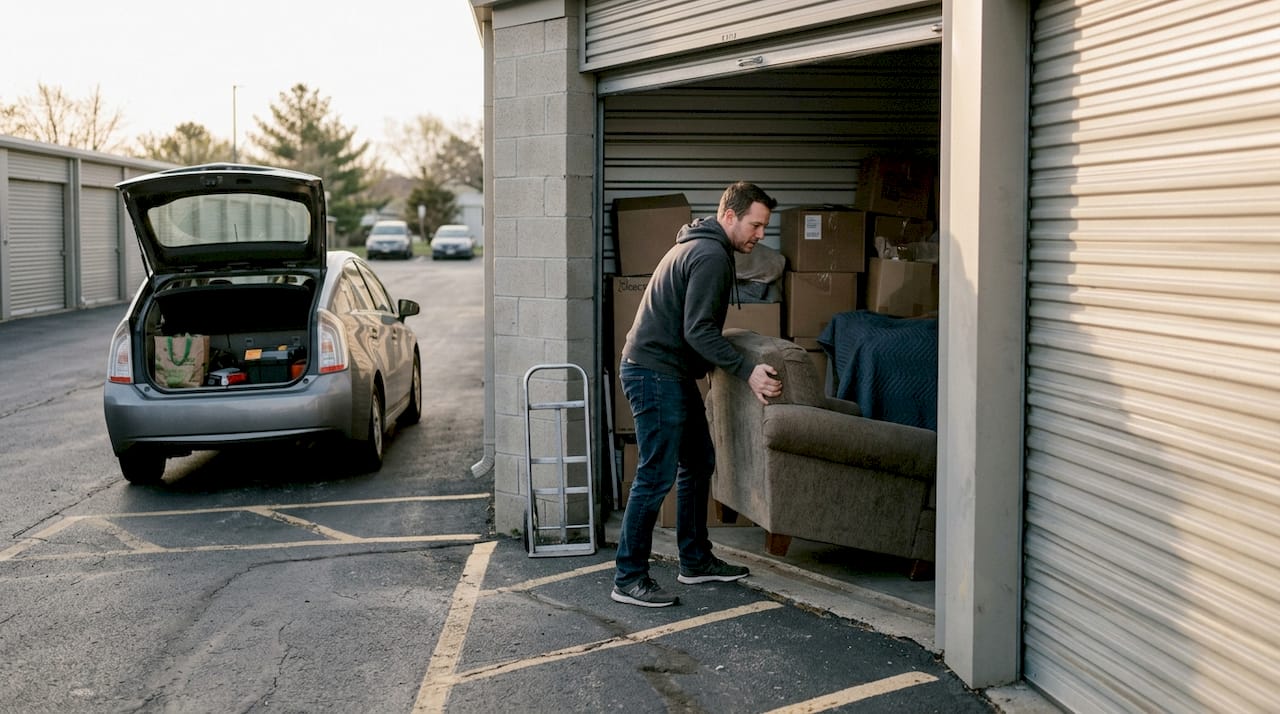
Portable storage containers are delivered to your driveway, you fill them at your own pace, and then the company picks them up and either stores them at a facility or delivers them directly to your new address. This is a major convenience for busy families. You only load and unload once, which saves time and reduces the risk of damage from multiple handlings.
Storage-in-Transit is a service offered by professional moving companies where your belongings are held in a secure warehouse between pickup and delivery. This is ideal when the timing between your move-out and move-in dates doesn’t line up perfectly. It keeps everything in the mover’s care, which simplifies coordination.
Here’s a quick comparison to help you decide:
| Feature | Traditional self-storage | Portable containers | Storage-in-Transit |
|---|---|---|---|
| Average cost | $80-$300/month | $3,000-$5,000 for 3 months | Included or added to move cost |
| Who handles logistics | You | You load, company moves | Moving company |
| Access | Anytime during hours | Limited, requires scheduling | Limited during transit |
| Best for | Long-term, frequent access | Busy families, one-time load | Long-distance, time gaps |
| Climate control available | Yes (upgraded units) | Limited | Yes (mover-managed) |
As outlined in our storage solutions guide, key storage options each serve different relocation scenarios, and the right choice depends heavily on how long you need storage and how much control you want over access.
“For most families relocating long distances, a hybrid approach combining portable containers for the transition period with traditional self-storage for longer-term needs delivers the best mix of cost and convenience.”
You can find more detail on interstate move storage tips and explore long-distance moving storage options to see how these solutions fit different move scenarios.
Step 3: Choose the right size and features
With your preferred solution type chosen, it’s crucial to get the size and key features correct. Renting too large a unit wastes money every single month. Renting too small means you’re scrambling to find overflow space at the worst possible time.
Here’s a practical sizing guide based on standard storage unit dimensions:
| Unit size | Square footage | What fits |
|---|---|---|
| 5×5 | 25 sq ft | Boxes, small items, seasonal goods |
| 5×10 | 50 sq ft | Contents of one room |
| 10×10 | 100 sq ft | One to two bedrooms |
| 10×20 | 200 sq ft | Two to three bedrooms |
According to unit sizing benchmarks, measuring your items and inventorying first helps you avoid over-sizing and can save over $1,000 per year in unnecessary rental fees. That’s real money back in your moving budget.
Beyond size, there are several features worth evaluating before you sign any rental agreement:
- Climate control: Essential for wood furniture, electronics, leather, and anything sensitive to heat or humidity. In states with extreme summers or winters, skipping climate control is a gamble that often doesn’t pay off.
- Security: Look for gated access, individual unit alarms, and 24-hour surveillance cameras. Your belongings deserve real protection.
- Insurance: Most facilities offer basic coverage, but it may not cover full replacement value. Check whether your homeowner’s or renter’s insurance extends to storage units.
- Drive-up access: If you’re moving large furniture or plan to access the unit frequently, drive-up units save enormous time and physical effort.
- Location: A facility close to your departure or destination city reduces transportation time and cost.
Our storage size guide walks through how to match your specific inventory to the right unit dimensions, which is especially useful if you’ve never rented storage before.
Pro Tip: In climates with significant seasonal temperature swings, climate-controlled storage isn’t a luxury. It protects furniture joints from warping, prevents mold on fabric items, and keeps electronics functional. The small monthly premium is almost always worth it.
Step 4: Price out costs and optimize your budget
Now that your options are clear, calculate and compare costs to fit your budget for moving and storage. Storage is a significant line item in any relocation budget, but there are smart ways to keep it under control.
Here’s a realistic breakdown of what you can expect to pay in 2026:
- Traditional self-storage: Ranges from $80 to $300 per month, with a standard 10×10 unit averaging $100 to $150 per month depending on location and features.
- Portable storage containers: Typically cost $3,000 to $5,000 for three months, including delivery, pickup, and transport to your new location.
- Long-distance moving costs overall: Range from $2,000 to $10,000 depending on home size and distance. Decluttering before your move can save you $0.50 to $0.80 per pound on moving costs alone, which adds up fast for a full household.
That last point deserves emphasis. A family moving a three-bedroom home might have 8,000 to 12,000 pounds of belongings. Cutting even 1,000 pounds through smart decluttering can save $500 to $800 on the move itself, plus reduce the storage unit size you need.
Here are practical strategies to keep your storage budget lean:
- Book early. Storage facilities and portable container companies charge more during peak moving season (May through September). Booking two to three months ahead locks in better rates.
- Bundle storage with your moving company. Many interstate movers, including AMB Moving & Storage, offer Storage-in-Transit as part of a coordinated package, which is often more cost-effective than managing two separate vendors.
- Skip features you don’t need. If you’re storing metal tools, outdoor furniture, or plastic bins, you probably don’t need climate control. Only pay for it when your inventory actually requires it.
- Negotiate month-to-month flexibility. Avoid long-term contracts if your move timeline is uncertain. Flexibility is worth more than a small discount if your closing date shifts.
- Use your inventory list to right-size. Going back to step one, preparing for moving costs is much easier when you know exactly what you’re storing and for how long.
Statistic callout: Families who inventory their belongings and match unit size precisely to their actual needs can save over $1,000 per year compared to those who estimate and over-rent storage space.
Step 5: Final checklist for a seamless storage and moving plan
With each decision in place, here’s your final checklist to stay organized and avoid costly or stressful mistakes during your long-distance move.
- Declutter every room before packing. Sell, donate, or discard anything you haven’t used in the past year.
- Inventory and measure all remaining items to determine the correct storage unit size.
- Choose your storage solution type based on your timeline, access needs, and budget.
- Select the right unit size using the sizing table in Step 3 as your guide.
- Confirm special features including climate control, security level, and insurance coverage.
- Book your storage unit or container at least four to six weeks before your move date, especially if moving during peak season.
- Coordinate your storage booking with your moving company’s schedule to avoid gaps or overlaps in coverage.
- Label every box clearly with contents and destination room before placing items in storage.
- Create a storage map showing where large items are placed so you can retrieve specific things without unpacking everything.
- Review your insurance coverage and purchase supplemental coverage if your stored items exceed basic policy limits.
- Schedule access or delivery dates in advance so there are no surprises on moving day.
- Confirm your full moving checklist aligns with your storage plan so both timelines run in sync.
According to decluttering benchmarks, reducing your load before a move significantly cuts costs, and 42% of renters who use storage during a move cite climate control as a key requirement. Planning for that upfront prevents last-minute upgrades at higher rates.
Pro Tip: Schedule any storage pickup, delivery, or access appointments at least a week in advance. Last-minute scheduling during peak moving season often means delays, and a delayed storage delivery on move-out day can cascade into a very stressful situation.
Our perspective: What most storage checklists miss for families
Most storage checklists are written as if a move is a perfectly linear event. Declutter, pick a unit, book it, done. But anyone who has actually moved a family across state lines knows the reality is messier than that.
What most guides miss is how your storage priorities shift as the move unfolds. You might start with a portable container as your primary plan, then realize three weeks in that your new home won’t be ready for two additional months. Suddenly you need a traditional self-storage unit as a backup. Flexibility isn’t a nice-to-have. It’s essential.
Another overlooked issue is same-day access. Families often discover mid-move that they packed something critical, like a child’s medication, school records, or a work laptop, into a sealed storage unit. Conventional checklists don’t address this at all. The fix is simple: keep a clearly labeled “immediate access” box separate from everything going into storage.
We’ve also seen families underestimate buffer time. Retrieving items from storage takes longer than expected, especially when you haven’t touched a unit in two months and boxes aren’t labeled well. Build in at least a full day for any major retrieval.
The most important insight we can offer is this: adapt your plan as real logistics change. The in-depth moving storage guide we’ve built reflects what actually happens during long-distance moves, not just what’s supposed to happen. A hybrid approach, flexible contracts, and a little buffer time will serve you far better than any single “perfect” option chosen on paper months before move day.
Need help making your move effortless?
Putting a storage and moving checklist together is a great start, but executing it across state lines is where things get complicated. AMB Moving & Storage Inc. is a federally licensed interstate carrier (U.S. DOT: 3839636) that handles the full picture, from packing and logistics to storage coordination and final delivery.
We offer flexible storage options that can be matched to your specific timeline, whether you need short-term Storage-in-Transit or longer-term solutions during a complicated relocation. Our team is available to answer questions, build a custom plan, and coordinate every step so nothing falls through the cracks. If you’re ready to stop guessing and start planning with confidence, explore our long-distance moving services or dive deeper into our storage planning resources to see exactly how we can simplify your next move.
Frequently asked questions
What size storage unit do I need for a three-bedroom house?
A three-bedroom house typically fits in a 10×20 unit at 200 square feet, but always measure and inventory your specific items first since every household is different.
Which storage type is best for a long-distance move?
Portable containers offer the most convenience for families on the move, but a hybrid approach combining portable containers for the transition with traditional self-storage for longer durations often delivers the best balance of cost and flexibility.
How much does storage cost during a move?
Self-storage averages $100 to $150 per month for a standard 10×10 unit, while portable container storage typically runs $3,000 to $5,000 for three months including delivery and transport.
How can I save money on moving storage?
Declutter before move day and measure your items precisely to avoid renting more space than you actually need, which is one of the most common and costly mistakes families make during a relocation.