
October 27, 2026
Ship a Car With Household Goods: What You Can Pack
Can you ship a car with household goods inside? See what carriers allow, the weight limits, the insurance gaps, and when to send belongings by a licensed mover.
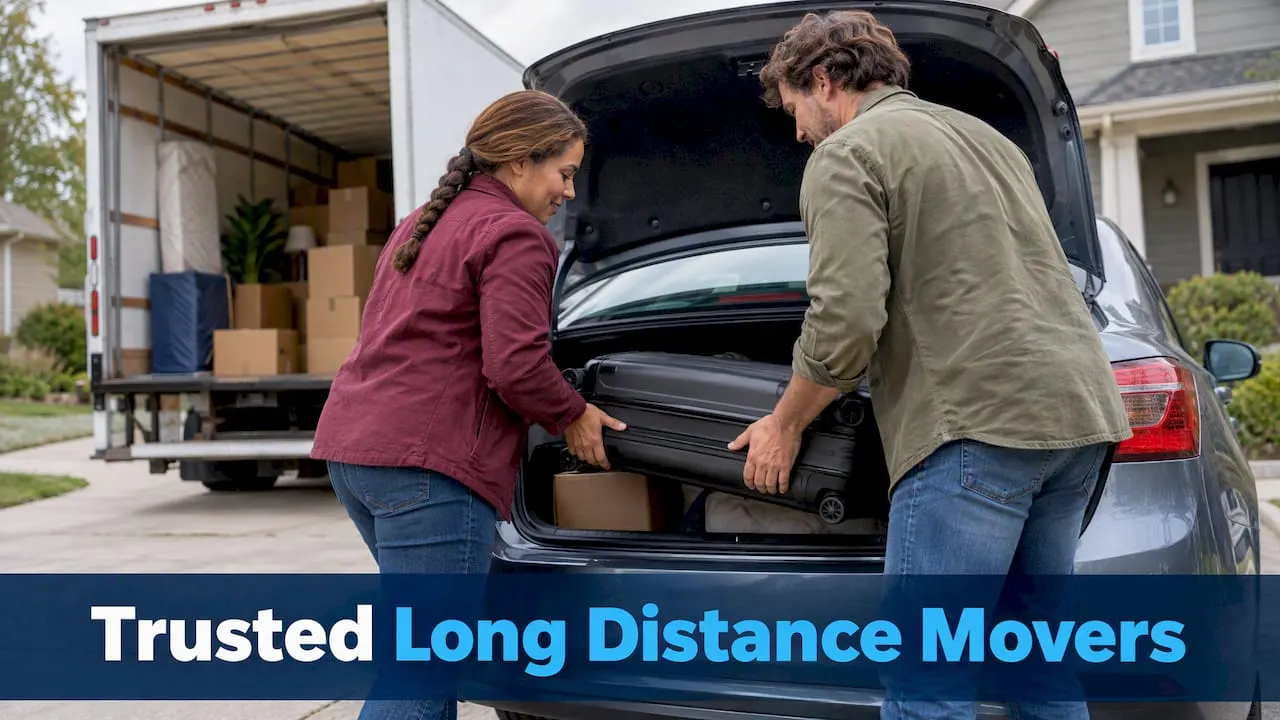
You can sometimes ship a car with a few belongings inside, but not with a household’s worth of furniture and boxes. Most auto carriers cap personal items at around 100 pounds, keep them out of the driver’s seat and windows, and don’t insure what’s inside. For anything larger than a couple of suitcases, the safe route is to ship the car with an auto transporter and send your household goods separately with a licensed interstate mover.
This guide explains what carriers typically allow, why the limits exist, how to pack if you decide to use the space, what it costs, and how to split a long-distance move between your car and your belongings.
TL;DR
- Auto carriers are licensed to move vehicles, not household goods. Policies on personal items vary by carrier, and some prohibit them entirely.
- Where items are allowed, the usual limit is about 100 pounds, packed in the trunk or below the window line, with the driver’s seat clear.
- Carrier cargo insurance generally does not cover what’s inside the car, so don’t pack valuables, documents, or anything you can’t replace.
- Furniture, boxes of kitchenware, and appliances belong on a moving truck, not in a car on a transporter.
- The cleanest plan for a cross country move: auto transport for the car, a licensed interstate mover for the household goods. Request a quote for the household side.
Table of Contents
- Why the answer is “sometimes, and not much”
- What carriers restrict, and why
- What to put in the car, and what to leave out
- How to prepare the car if you do pack it
- What it costs to ship the car
- When to ship the car and household goods separately
- What a licensed mover handles that a car can’t
- Our perspective: treat the car as transport, not storage
- Plan the household side with AMB
- How to build a moving cost estimate for a split move
- The bottom line
- FAQ
- Sources
Why the answer is “sometimes, and not much”
Search this topic and you’ll find two camps. One says no personal items at all. The other says up to 100 pounds is fine. Both are right, because each carrier sets its own policy.
A Move.org review of carriers’ personal item policies found that some prohibit belongings while others allow roughly 100 pounds in the trunk or below the window line. A carrier’s own FAQ shows the typical shape of a permissive policy: up to 100 pounds, the driver’s seat and the view out the windows kept clear, and nothing illegal, flammable, or hazardous.
Other carriers draw the line elsewhere. One set of terms and conditions says the carrier may refuse a shipment if the vehicle holds excessive personal items, over 200 pounds, or items in the passenger compartment. So the first step is always the same: ask your carrier for its written policy before you load anything, and get it in your booking confirmation.
The licensing issue behind the rules
The federal government treats moving a household’s belongings as its own regulated activity. Under 49 CFR §375.103, household goods include personal effects or property used in a dwelling, when the individual shipper arranges and pays for the transportation. The FMCSA says its household goods rules apply to such goods moved by motor vehicle in interstate commerce, with an exception for moves within a single commercial zone.
That matters because of how carriers are authorized. The FMCSA’s operating authority page separates household goods authority from authority for other property. Household goods carriers must file proof of public liability and cargo insurance. Carriers of other property are not required to file cargo insurance.
One auto transport company puts the practical result plainly: auto carriers are not licensed to transport household goods, so some allow limited personal items and others prohibit them. It also calls the legality a gray area, with any belongings inside the car a risk the owner takes on. We’d agree with that framing. Loading your car is a convenience, not a moving service.
What carriers restrict, and why
Three reasons come up again and again.
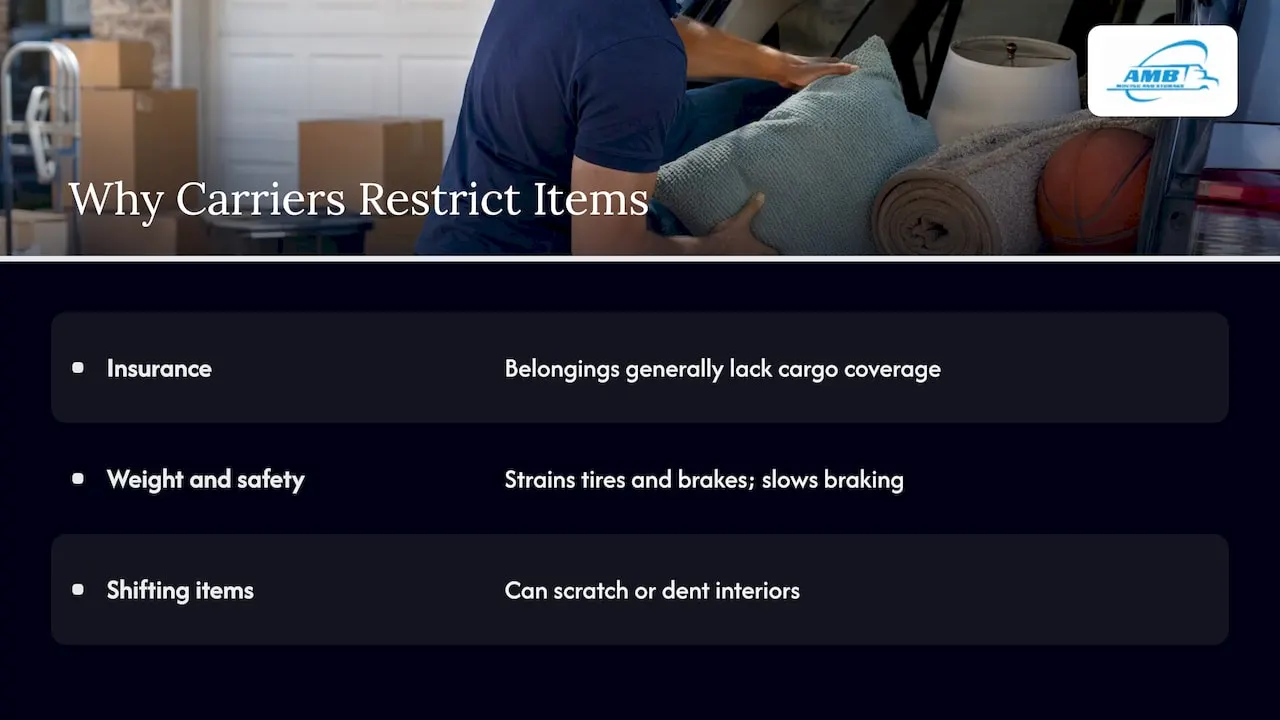
Insurance. Per Move.org, carrier insurance covers the vehicle, not items inside it, and transporting non-vehicle items can draw DOT fines. A help center from another shipper says personal belongings are generally not covered by the carrier’s cargo insurance and are not inventoried. It describes one or two pieces of luggage in the trunk or cargo area as generally acceptable, while heavy, bulky, or expensive items are discouraged.
Weight and safety. Move.org notes that extra weight can strain tires and brakes, slow braking, and raise tipping risk on a loaded trailer. Another carrier blog adds that a heavily loaded car can sit unusually low, which affects loading, and the driver may ask you to remove items or charge extra.
Damage from shifting. Items that slide around in transit can scratch or dent the interior, and that damage might not fall under standard cargo coverage.
A carrier’s FAQ also says overweight or unsecured items can result in refusal of service. That’s the worst case on a tight schedule: a driver turns up, finds a packed back seat, and the pickup doesn’t happen.
What to put in the car, and what to leave out
If your carrier allows personal items, treat the allowance as space for low-value, low-weight things. Think of it as a few bags, not a second moving truck.
| Usually fine (if the carrier allows it) | Leave out |
|---|---|
| One or two suitcases of clothing | Furniture of any size |
| Bedding and soft linens | Boxes of dishes, books, or tools |
| A few lightweight, replaceable items | Jewelry, cash, passports, and other documents |
| Child car seat, if secured | Electronics and anything fragile or expensive |
| Items below the window line | Flammables, propane, aerosols, cleaning chemicals |
| Total under the carrier’s stated limit | Plants, perishable food, alcohol, firearms |
The left column mirrors what carriers describe as acceptable. The right column reflects the same sources’ warnings on heavy, bulky, or expensive items and on hazardous or perishable goods. Our own guide to items movers won’t move covers the hazardous list in more detail, and the same logic applies to a car on a trailer.
Shipping by sea is different
If your car is going to or from Hawaii or another destination by ocean freight, plan on an empty vehicle. According to Move.org, port rules mean cars shipped by sea can’t carry personal belongings. Check with the shipper before you pack anything.
How to prepare the car if you do pack it
A short, disciplined routine protects both the car and your belongings.
- Get the policy in writing. Confirm the weight limit, where items may go, and whether a waiver or fee applies. Move.org lists signing a waiver and paying a fee for possible fines among the conditions some carriers set.
- Weigh what you load. A bathroom scale is enough. Stay under the stated limit, and remember that the rule of thumb across several carriers is 100 pounds or less, as one carrier blog puts it.
- Pack low and secure. Use the trunk or keep items below the window line. Keep the driver’s seat clear, as the carrier policies above require. Use closed bags or small boxes that can’t tip.
- Wash the car before pickup. A clean car lets the driver document existing damage on the Bill of Lading, according to Navi’s FAQ.
- Photograph everything. Take dated photos of the exterior, the interior, and the packed items.
- Remove toll tags. They can trigger at toll booths along the route and leave you with a bill, as this shipping guide notes.
- Keep essentials with you. Medications, documents, laptops, keys you can’t replace, and anything sentimental travel with you, not with the car.
What it costs to ship the car
The cost depends on the car and the route, not much on the few bags inside. According to one carrier’s published FAQ, most car shipments cost $600 to $1,400, and cross country shipments typically run $900 to $1,500 or more. The same page lists the main drivers: distance, vehicle size and weight, open versus enclosed transport, season, and how easy the pickup and delivery locations are to reach.
Two practical points for a family planning the whole relocation:
- Overweight items can bring extra charges. One carrier blog says the driver may charge extra if the load is heavy.
- A carrier quote for the car doesn’t include any value for your belongings. Treat the belongings as uninsured travelers.
Those numbers come from auto transport, which is a separate service from ours. Use them as a budgeting guide and confirm current prices with the carrier you choose.
When to ship the car and household goods separately
The shortcut of loading a car does not scale. If you’re moving a two-bedroom apartment or a full house, the car can carry a fraction of your things at best. One carrier’s FAQ recommends that for larger moves, you ship personal items separately through a professional moving company rather than inside the car (Star Logistics FAQ). Another shipper states that furniture should not go inside a vehicle on a transporter, because auto carriers aren’t licensed for household goods and interior damage may be uninsured (WeShipCars).
Here is a simple way to decide.
| Your situation | Best approach |
|---|---|
| Student or single mover with a few bags | Ship the car, put a few bags inside only if the carrier allows it, fly with the rest |
| One-bedroom, light furniture | Car by auto transport, household goods with a licensed interstate mover |
| Family home, multiple rooms | Same split, plus professional packing for fragile items |
| Piano, safe, or other heavy specialty items | Specialty handling by the mover, never in the car |
| Move timeline has a gap between homes | Short-term storage with the mover, then delivery |
Match the timing of the two shipments
The car and the truck rarely arrive on the same day. Plan a few days of overlap in your calendar. If your new home isn’t ready when your belongings arrive, short-term storage bridges the gap. Our storage solutions checklist walks through how to organize that handoff.
What a licensed mover handles that a car can’t
A professional long distance moving company is built for the part of your move that a car can’t carry. Federal rules also give you protections on this side. The FMCSA says movers must give interstate household goods customers its Your Rights and Responsibilities When You Move booklet and Ready to Move brochure. And per the FMCSA’s FAQ, an interstate move includes goods moving between states, and also goods moving between two places in the same state when the shipment passes through another state.
In practice, that means:
- Valuation coverage for your goods. Read our explanation of moving insurance and how to protect your items, and consider custom crating for high-value pieces.
- Proper packing. Fragile boxes should stay manageable in weight, as we explain in our guide to packing fragile items.
- Trained loading. See how crews approach it in our guide to loading and unloading a moving truck.
- Clear paperwork that names the carrier, the estimate, and what happens if something goes wrong. If the terms are new to you, start with what a moving carrier is.
Our perspective: treat the car as transport, not storage
We move households across state lines, so we see the same mistake every season: a customer books an auto transporter, loads the back seat and trunk to the roofline to “save” on the move, and then finds out at pickup that the driver won’t take it. Or worse, it ships and something is damaged with no coverage behind it.
Our advice is simple. Use the car’s allowance, if your carrier gives one, for the things you’d carry in a suitcase anyway. Everything else goes on the truck, where it’s inventoried, handled by a crew, and covered under the valuation terms you choose. We’d rather you spend a little more on packing than lose a box of dishes to a shifting load.
Our approach to interstate moving is built around structured planning, clear communication, and licensed, insured service compliant with federal regulations. We don’t publish a price for a full move, because the cost depends on your inventory, route, and timing. That’s why a written estimate matters more than any average.
— AMB
Plan the household side with AMB
Once the car is sorted, we can take care of everything else. Our long distance moving service covers the full household, our interstate moving team handles state-to-state routes, and as a nationwide moving company we work across the country, which is why many cross country moves start with us.
We can also help with the parts that make a split move easier. Our published guide to moving cost estimates lists the following:
| Service | Published price |
|---|---|
| Professional packing | $1-$2 per cubic foot |
| Storage | From $0.50 per cubic foot |
| Specialty item handling (pianos, safes) | From $200 |
| Elevator and stair fees | From $75 |
| Long carry charges | From $75 |
You can read more about professional packing services and storage on their own pages. For a number tied to your inventory, get your moving quote here.
How to build a moving cost estimate for a split move
Plan three lines in your budget, then compare each against written quotes.
- Car transport. Get quotes from at least two or three auto transport carriers, using the same pickup dates and open or enclosed choice. Ask for the personal item policy in writing.
- Household goods. Request an in-home or video survey with interstate movers and ask for a written estimate. The estimate should list your inventory, services, and any extra fees.
- Gaps and extras. Add storage if closing dates don’t line up, packing for fragile rooms, and any elevator, stair, or long carry fees at either address.
Then add a small buffer for travel: fuel, lodging, and flights if you’re not driving the car yourself. Doing this early, 30 to 60 days before your move, leaves time to line up the car pickup and the truck delivery window.
For a fuller walkthrough of the whole process, see our interstate moving step-by-step guide for families.
The bottom line
Shipping a car with household goods works only at the margins: a suitcase or two, under the carrier’s written weight limit, with nothing valuable and nothing you’ll miss. For the rest of your home, a licensed interstate mover gives you proper handling and documented coverage that a car on a trailer can’t offer. Book the car transport with a carrier whose policy you’ve read, and book the household move with a team that treats your belongings as cargo. When you’re ready for the second part, request your free quote from AMB.
FAQ
Can I ship my car with furniture inside?
No, not in any way a carrier will recommend. Auto carriers aren’t licensed to move household goods, and interior damage from shifting furniture may not be insured. Send furniture with a licensed moving company instead.
How much can I put in my car when shipping it?
It depends on the carrier. Where personal items are allowed, the common limit is about 100 pounds, kept in the trunk or below the window line with the driver’s seat clear. Some carriers allow none, and some may refuse a car with more than 200 pounds inside, so confirm in writing.
Is my stuff insured if it’s inside the shipped car?
Generally no. Carrier cargo insurance covers the vehicle, not personal items in it, and the items typically aren’t inventoried. Keep valuables, documents, and irreplaceable things with you.
How much does it cost to ship a car across the country?
One carrier’s published FAQ puts most car shipments at $600 to $1,400 and cross country shipments at $900 to $1,500 or more. Distance, vehicle size, open versus enclosed transport, season, and pickup access all move the price. Get several written quotes close to your move date.
Should I ship my car and household goods together or separately?
Separately, for anything beyond a few bags. Ship the car with an auto transporter and your household goods with a licensed interstate mover, then plan the delivery dates so both arrive around the same time. If the dates don’t match, short-term storage fills the gap.
Sources
- Car Shipping Companies That Allow You to Pack Your Car (Move.org)
- Frequently Asked Auto Transport Questions (Intercity Lines)
- Terms & Conditions of Transport (Online Auto Connection)
- General Requirements, Subpart A (FMCSA)
- Types of Operating Authority (FMCSA)
- Frequently Asked Questions (FMCSA)
- Protect Your Move (FMCSA)
- 49 CFR § 375.103 (Cornell LII)
- Can I Ship a Car with Personal Items Inside? (Navi Auto Transport)
- Car Shipping FAQ: Cost, Time & Insurance (Navi Auto Transport)
- Can I ship personal items in my car? (WeShipCars)
- Can furniture be shipped in my car during transport? (WeShipCars)
- Can My Car Be Shipped If It Has Things in It? (Ship a Car Direct)
- Ship a Car With Personal Items: 2026 Rules & Costs (TCI Ships)
- Ship A Car To College In 2026 (Compare the Carrier)
- Car Shipping FAQ (Star Logistics)