
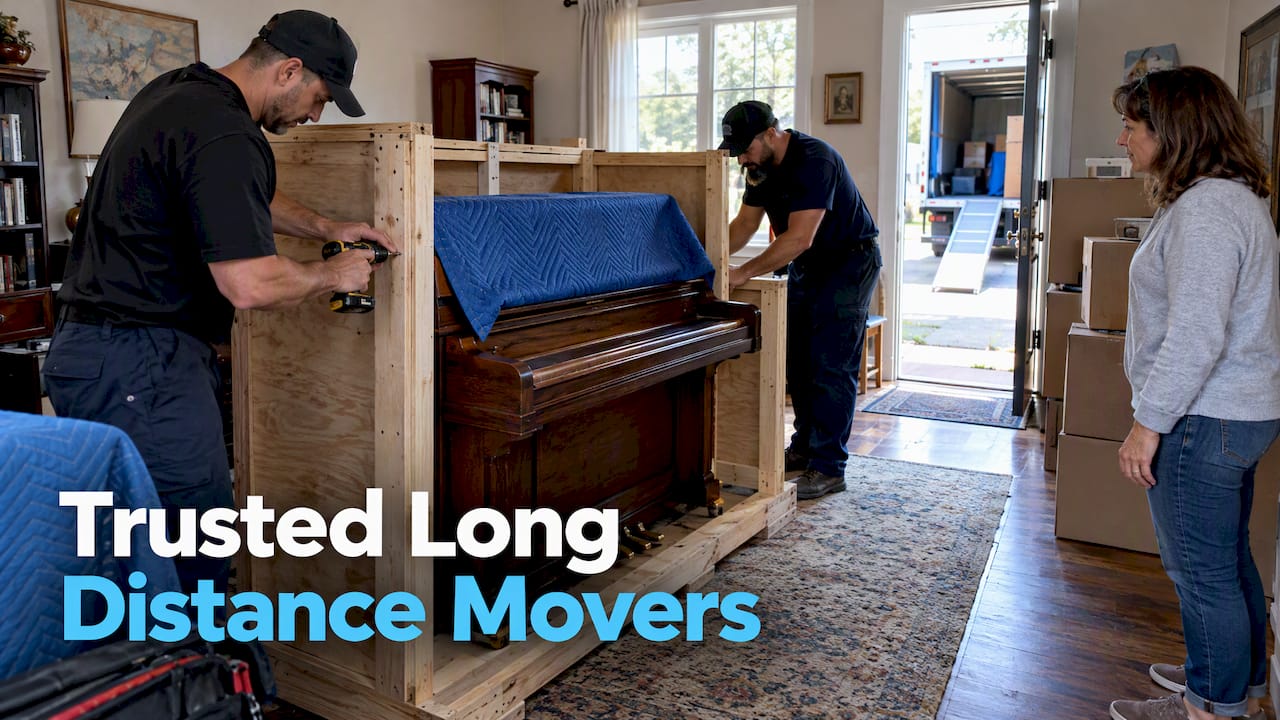

Custom crating makes sense for heavy, oversized, oddly shaped, fragile, or high-value items traveling on a long-distance or interstate move. The payoff is lower damage risk and far easier handling at every transfer point between pickup and delivery. If your inventory includes anything in that category, the right next step is to request an on-site crating survey or a detailed written quote before moving day.
TL;DR:
- Custom crating is essential for high-value, fragile, or irregularly shaped items like pianos, antiques, and sensitive equipment to reduce damage risk during long-distance moves.
- On-site builds, prefab crates, and climate-controlled crating vary in cost and lead time, with complex projects needing earlier planning and sourcing of treated wood.
- Crates are typically made from reinforced wood with internal padding and must meet ISPM 15 standards if crossing quarantine zones, affecting import/export compliance.
- Liability coverage options include Full Value Protection and Released Value, but high-value or crated items should be specifically listed and insured in writing beforehand.
- requesting an on-site survey and detailed written quote is crucial, especially for oversized, delicate, or high-value movements to ensure appropriate protection and accurate pricing.
Table of Contents
- What custom crating is and when to choose it
- Common crating services: on-site builds, prefab crates, and skids
- Materials, construction, and wood packaging rules you should know
- Typical costs and lead times for custom crates
- Liability, paperwork, and how to vet a crating partner
- How AMB handles custom crating and specialty item moves
- What happens from quote request to delivery
- What drives the final crating bill
- Storage options while your crated items are in transit
- Insurance beyond the basic valuation choice
- When the cost of custom crating is worth it
- Get a custom crating quote for your move
- FAQ
- Sources
What custom crating is and when to choose it
Standard moving boxes rely on cardboard and padding to absorb shock. Custom crating builds a rigid wood or composite structure around the item itself, sized and braced for its exact dimensions, weight, and fragility. The crate becomes the first line of defense, not the packing material inside it.
Not every item needs this level of protection, but some clearly do. A good rule: if an item is irreplaceable, structurally delicate, oddly shaped, or expensive enough that a repair or replacement would hurt, crate it.
Items that typically justify custom crating include:
- Fine art, mirrors, and glass tabletops that can crack under uneven pressure.
- Pianos, organs, and other instruments with delicate internal mechanisms.
- Safes, gun cabinets, and other extremely heavy, dense objects.
- Industrial or lab equipment with sensitive calibration.
- Antiques, sculptures, and marble or stone pieces with irregular shapes.
A grandfather clock, for example, has moving internal parts that rattle loose in a standard box but stay stable in a form-fitted crate. A commercial espresso machine with electronics and glass components benefits the same way.
Common crating services: on-site builds, prefab crates, and skids
Movers offer a few distinct crating approaches, and matching the right one to your item avoids paying for more (or less) protection than you need.
- On-site crating: a crew measures and builds the crate at your home or business, which suits one-of-a-kind items like built-in cabinetry, large artwork, or antiques that cannot be easily transported to a shop first.
- Prefabricated crates: shop-built crates in standard or semi-custom sizes, used for items like flat-screen TVs, mirrors, or smaller machinery where a close-enough fit still protects the piece.
- Pallets and skids: a flat wood base that lets forklifts and freight carriers move heavy or bulky items efficiently, often paired with shrink wrap or a partial crate frame.
- Climate-controlled crating: insulated or sealed crates with vibration isolation, used for oil paintings, antique wood furniture, and electronics sensitive to temperature swings or shock during transit.
- Hoisting and rigging: required when an item cannot pass through a standard doorway or stairwell, this service integrates with crating to lift and lower pianos, safes, or heavy furniture through windows or balconies.
Your mover should walk you through which combination applies before quoting the job, not after the truck arrives.
Materials, construction, and wood packaging rules you should know
Most crates use a wood frame (often pine or plywood) reinforced with internal bracing, foam or dense padding against the item itself, and bolts or ratchet straps to keep everything fixed in place. The goal is zero internal movement during transit, since shifting, not just impact, causes most crating damage.
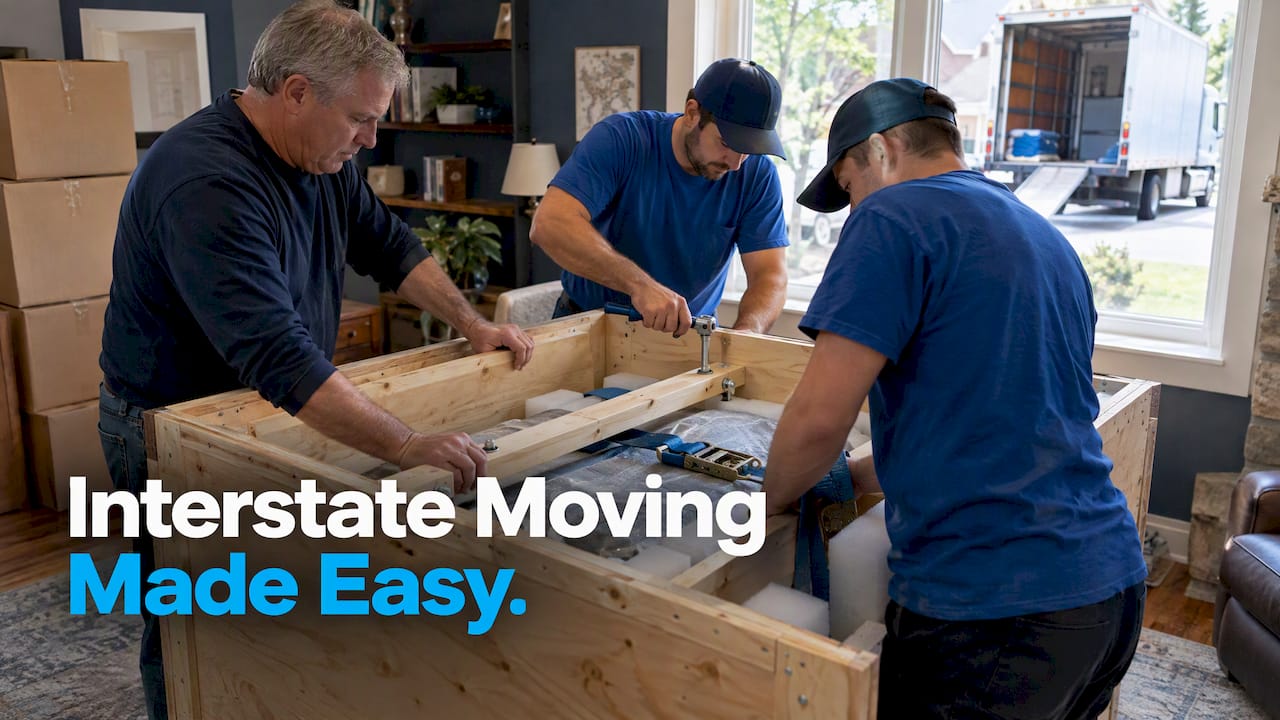
Wood packaging material also falls under federal pest-control rules. Treated wood used in crates, pallets, and dunnage must meet ISPM 15 standards for exports, which means heat treatment or fumigation followed by a visible stamp showing the treatment method and facility identifier.
An ISPM 15 stamp on a wood crate confirms it has been heat-treated or fumigated to prevent pest spread, a detail that matters directly if your move crosses into an export context or a domestic area under quarantine restrictions, according to CBP guidance.
A few practical notes on materials:
- Engineered or processed wood panels reduce pest-risk concerns compared to raw lumber.
- Plastic pallets and reusable containers are a solid alternative for repeat commercial shippers.
- Always ask to see the stamp or treatment certificate before the crate ships, especially for interstate moves through agricultural quarantine zones.
Typical costs and lead times for custom crates
Crating costs swing widely based on a handful of factors: the item’s size and weight, how complex the crate design needs to be, the materials used, whether climate control or vibration isolation is required, and whether on-site labor or rigging is involved.
A few things that drive the price up or down:
- Simple rectangular crates for flat items cost less than custom-contoured builds for irregular shapes.
- Climate-controlled or insulated crates add material and labor cost over a standard wood frame.
- On-site builds typically cost more than shop-built prefab crates due to crew time and travel.
- Rigging or hoisting services add a separate line item when stairs, windows, or tight doorways are involved.
Lead times matter too. A standard prefab crate might be ready within days, while a complex on-site build for an oversized sculpture or antique piece can take longer, especially if ISPM-compliant treated wood needs to be sourced first. Build this into your moving timeline rather than assuming crating happens the morning of pickup.
To get an accurate quote, provide clear measurements, photos from multiple angles, and notes on existing damage or fragile points. Many moving companies recommend an on-site survey for anything unusually large, heavy, or high-value, since photos alone can miss structural details that affect the crate design.
Liability, paperwork, and how to vet a crating partner
Before you hire anyone, understand how liability works on an interstate move. Under FMCSA rules, movers must offer two valuation options: Full Value Protection, which covers repair, replacement, or cash value for damaged items, and Released Value, a no-cost default that limits liability to a small amount per pound per article unless you list high-value items separately in writing.
That distinction matters enormously for crated items. A piano or safe damaged under Released Value could net you a payout based on weight alone, far below its actual worth, so confirm in writing that high-value crated items are specifically listed if you choose anything short of Full Value Protection.
Required documents for any interstate move should include a written estimate, a bill of lading, access to the mover’s tariff, and proof of insurance.
Before signing with a crating provider, ask:
- Have they crated this type of item before, and can they describe the process?
- What are their insurance limits for crated or specialty items?
- Do they proof-test rigging equipment, as OSHA standards require for custom lifting accessories rated to 125% of working load?
- Can they show an ISPM 15 treatment stamp if the move involves export or a quarantined domestic region?
- Can they provide references for similar past jobs?
Pro Tip: Get the valuation choice and any high-value item list in writing on the same document as your estimate, not as a verbal add-on.
Red flags include a mover who won’t put an estimate in writing, dodges questions about rigging safety or proof-testing, or can’t point to a single past example of a similar crating job.
How AMB handles custom crating and specialty item moves
AMB Moving & Storage Inc. operates as a licensed, insured nationwide mover, with crews experienced in handling pianos, safes, and other specialty items as part of its long-distance and interstate services. Estimates are documented in writing and valuation choices are laid out clearly, consistent with federal requirements around mover liability. AMB also provides packing services and secure storage for items waiting between crating and final delivery. If your move includes anything that needs a purpose-built crate, request a custom crating quote through the quote page before locking in a moving date.
What happens from quote request to delivery
The custom crating process generally follows a predictable sequence, though timing shifts based on item complexity and distance.
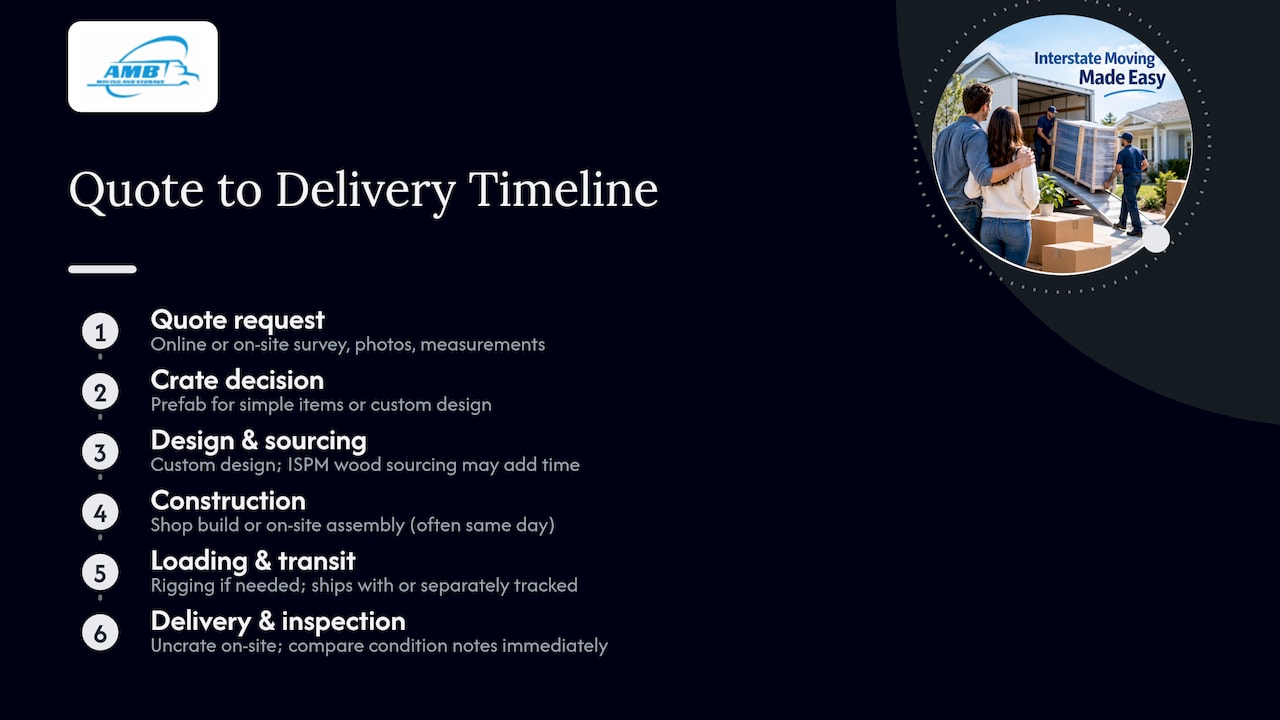
It starts with a quote request, either online or through an on-site survey where a crew measures the item, photographs it, and notes any existing damage. For straightforward items, a shop-built prefab crate might be scheduled within a few days. For complex or oversized pieces, the mover designs a custom crate structure first, which can add time if ISPM-compliant treated wood needs sourcing.
Once the design is confirmed, construction happens either in a shop or on-site at your home or business, depending on the service type you chose. On-site builds typically happen the same day as pickup, with the crew assembling the frame around the item in place rather than transporting it to a shop first.
After crating, the item is loaded, often requiring rigging equipment for anything that can’t pass through a standard doorway or down a staircase safely. It then travels with the rest of your shipment or, for high-value or especially fragile items, sometimes separately with its own tracking and handling protocol.
At delivery, the crate is uncrated on-site, and the item is inspected before the crew leaves. Document any damage immediately and compare it against the condition notes taken at pickup. The full window from initial quote to final delivery can range from about a week for simple items to several weeks for complex custom builds combined with long-distance transit, so build that into your overall moving timeline rather than assuming crating happens overnight.
What drives the final crating bill
A crating invoice usually breaks down into a handful of distinct cost categories, and understanding each one helps you compare quotes accurately instead of just looking at a bottom-line number.
Design and engineering time covers the labor to measure the item, plan the crate structure, and account for any special bracing or vibration isolation needs. This step matters most for irregular or structurally delicate items where a generic crate shape would not hold the piece securely.
Materials make up a significant share of the cost: lumber or plywood, foam or dense padding for interior protection, bolts, straps, and any ISPM 15-treated wood required for export or quarantine-area shipments. Climate-controlled crates add insulation or sealing materials on top of the base structure.
Labor covers both the build itself and any on-site work, which typically costs more than a shop-built prefab crate because of crew travel time and the complexity of working around existing furniture, doorways, or stairs.
Additional services often appear as separate line items rather than being bundled into the base crating fee. Specialty item handling for pianos and safes starts at $200 one-off, and that figure can scale up depending on the item’s size and the crating complexity involved. Elevator or stair fees start at $75 one-off, and long carry charges, which apply when a truck can’t park close to the entrance, also start at $75 one-off. Ask your mover for an itemized quote so you can see exactly which fees apply to your specific items before committing.
Storage options while your crated items are in transit
Custom-crated items sometimes need to sit in storage between pickup and final delivery, whether because of a scheduling gap, a multi-stop move, or a delay on the receiving end. The crate itself offers a baseline of protection, but storage conditions still matter for anything fragile, valuable, or sensitive to temperature.
Climate-controlled storage keeps temperature and humidity within a stable range, which matters most for crated artwork, antique wood furniture, and musical instruments that can warp, crack, or develop mold in extreme or fluctuating conditions. Standard storage, while less expensive, works fine for sturdier crated items like machinery or metal safes that aren’t sensitive to humidity swings.
Storage services start at $0.50 one-off per cubic foot, which gives you a straightforward way to estimate cost based on how much crated and non-crated inventory you need to hold. Ask whether the facility is climate-controlled if your crated items include anything delicate, and confirm how the crate is positioned and secured within the storage unit itself, since a crate resting on its side or stacked under heavier items can undo the protection it was built to provide.
For moves involving a long gap between pickup and delivery, request documentation of how your crated items are stored, including whether they’re kept separately from the general inventory. This matters especially for high-value pieces where you’ll want a clear paper trail if a claim becomes necessary later.
Insurance beyond the basic valuation choice
Full Value Protection and Released Value set the baseline liability framework for interstate movers, but they aren’t the only coverage option worth considering for custom-crated, high-value items.
Third-party moving insurance, purchased separately from your mover’s valuation coverage, can supplement the gap left by Released Value or add coverage beyond what Full Value Protection includes for extraordinary-value items. This matters most for crated pieces like fine art, antiques, or high-end musical instruments where the replacement cost could exceed what your mover’s standard valuation would pay out.
If you’re shipping a smaller high-value item independently rather than as part of a full household move, a managed luggage or specialty shipping service can be a reasonable alternative for lower-scale pieces that don’t require a full crating job.
For claims, start by documenting the item’s condition at pickup with photos and written notes, since this becomes your baseline comparison if damage occurs. If something is damaged, file a claim with your mover as soon as possible, referencing your written estimate, bill of lading, and valuation choice. FMCSA guidance on moving contracts explains that tariffs and bill of lading terms often set specific claim filing periods, so don’t delay once damage is discovered. If you purchased third-party insurance, that claim process runs separately from your mover’s valuation coverage and typically requires its own documentation and timeline.
When the cost of custom crating is worth it
Custom crating earns its cost when an item is irreplaceable, high-value, or critical to a business, think fine art, pianos, or precision equipment. For sturdier, lower-value items, standard padding and boxes are often enough. When in doubt, request a survey and a written quote before deciding.
— AMB
Get a custom crating quote for your move
AMB offers licensed, insured custom crating alongside long-distance and interstate moving services, backed by written estimates and clear valuation choices. If your move includes fragile, heavy, or high-value items, request a quote and ask about packing services or specialty item handling for pianos and safes.
FAQ
What is the difference between packing and crating?
Packing uses boxes, paper, and padding to protect items during a move, while crating builds a rigid wood or composite structure fitted to the item’s exact shape. Crating offers more protection for heavy, fragile, or irregularly shaped items that standard boxes can’t support safely.
How do you build your own shipping crate?
A basic shipping crate starts with a plywood or lumber frame sized to the item, reinforced with internal bracing and padding to prevent movement. For anything heavy, high-value, or headed on a long interstate haul, a professional crating service is safer since improper bracing is a common cause of transit damage.
How much does a freight crate cost?
Freight crate costs vary based on size, weight, materials, and construction complexity, with simple rectangular crates costing less than custom-contoured builds for irregular items. Request a detailed quote based on your item’s measurements and condition rather than relying on a general estimate.
What does a crating company do?
A crating company measures and builds protective crates for items like pianos, artwork, safes, and machinery, often offering both on-site builds and shop-built prefab options. Many also handle climate-controlled crating, rigging for heavy lifts, and ISPM 15-compliant treated wood for items moving through quarantine areas or crossing borders.
Do I need ISPM 15 treated wood for an interstate move?
ISPM 15 treatment is primarily an export requirement, but it can also apply to domestic moves through agricultural quarantine areas, according to CBP guidance on wood packaging material. Ask your mover whether your route crosses any quarantine zones so you know if a stamped, treated crate is necessary.
Sources
- Wood Packaging Materials | U.S. Customs and Border Protection
- Liability & protection | FMCSA
- OSHA interpretation: rigging equipment and proof-testing