


Many people think residential moving services just mean hiring a truck and driver, but this oversimplification leads to unexpected costs, delays, and even scams during interstate relocations. Understanding what these services truly include and the federal protections behind them can save you thousands of dollars and significant stress. This guide clarifies the regulations, common pitfalls, and practical steps to ensure your long-distance move goes smoothly. You’ll learn how to identify legitimate movers, avoid common traps, and protect your belongings across state lines.
Table of Contents
- Understanding Residential Moving Services And Federal Regulations
- Risks And Common Issues With Non-Compliant Moving Companies
- Case Study: Michael’s Long-Distance Move Experience
- How To Choose And Prepare For Reliable Residential Moving Services
- Find Trusted Residential Moving Services With AMB Moving
- Frequently Asked Questions
Key takeaways
| Point | Details |
|---|---|
| Federal regulations protect consumers | Interstate movers must follow strict rules including the 110% cap on non-binding estimates at delivery. |
| FMCSA registration is mandatory | All legitimate interstate movers carry valid USDOT numbers verifiable through federal databases. |
| Thousands face moving scams annually | Unlicensed operators cause delivery delays, hostage loads, and safety violations affecting consumers nationwide. |
| Verification prevents costly mistakes | Checking mover credentials through official channels reduces fraud risk and ensures legal protections. |
| Multiple quotes reveal true costs | Comparing binding and non-binding estimates helps identify fair pricing and avoid surprise charges. |
Understanding residential moving services and federal regulations
Residential moving services encompass the professional transportation of household goods across state lines, but they’re far more complex than simply loading boxes onto a truck. These services include packing, loading, transportation, unloading, and sometimes storage, all governed by strict federal oversight. When you hire an interstate moving company, you’re entering a contract regulated by the Federal Motor Carrier Safety Administration, which exists specifically to protect consumers from predatory practices.
Federal USDOT registration is mandatory for any company transporting household goods across state lines. This registration isn’t just bureaucratic paperwork. It establishes accountability, ensures insurance coverage, and provides consumers with recourse if things go wrong. Every legitimate interstate mover displays their USDOT number prominently on estimates, websites, and vehicles. Without this registration, a company operates illegally and leaves you without federal protections.
One critical consumer protection is the 110% rule limiting charges to 110% of non-binding estimates at delivery. This means if your mover provides a non-binding estimate of $5,000, they cannot demand more than $5,500 when they arrive at your new home, even if the actual weight exceeds their projection. You have 30 days after delivery to settle any remaining balance. This rule prevents the common scam where movers hold your belongings hostage until you pay inflated, unexpected fees.
Key federal protections for residential moves include:
- Mandatory written estimates before any work begins
- Required disclosure of mover rights and responsibilities
- Specific timelines for pickup and delivery windows
- Insurance options and liability coverage minimums
- Transparent pricing structures without hidden fees
When disputes arise, arbitration is required for specific financial thresholds, giving consumers a structured process to resolve conflicts without expensive litigation. Movers must participate in binding arbitration programs, which provide an impartial third party to settle disagreements about charges, damages, or service failures. This system levels the playing field between individual consumers and large moving companies.
Understanding these regulations transforms how you evaluate moving companies. Instead of choosing based solely on price, you can assess whether a company follows federal rules, carries proper registration, and offers the protections you deserve during a stressful life transition.
Risks and common issues with non-compliant moving companies
The moving industry attracts bad actors precisely because people are vulnerable during relocations. Thousands of consumer complaints each year involve unsafe vehicles, hostage load scams, and companies that simply vanish with deposits. These aren’t isolated incidents. They represent systematic problems when consumers unknowingly hire unlicensed or non-compliant operators who face no meaningful consequences for violations.

Delivery delays rank among the most common complaints, but they often mask deeper issues. A mover who arrives three weeks late didn’t just face traffic. They likely overbooked routes, lack sufficient trucks, or operate without proper logistics planning. These delays leave families sleeping on air mattresses, eating takeout, and missing work while their belongings sit in an unknown warehouse. The financial and emotional costs compound daily.
Hostage load scams follow a predictable pattern. A mover provides a lowball estimate to win your business, then dramatically inflates the price at delivery, refusing to unload until you pay thousands more than quoted. Since your furniture, clothing, and irreplaceable items sit in their truck, you face impossible choices: pay the ransom, abandon your belongings, or involve law enforcement in a process that takes weeks to resolve. Many movers operate outside compliance rules, leaving customers vulnerable to these tactics with limited immediate recourse.
Safety violations create physical dangers beyond financial harm. Unlicensed movers often use:
- Poorly maintained trucks without proper braking systems
- Untrained workers who damage property and risk injury
- Inadequate insurance leaving you liable for accidents
- Unsafe packing methods that destroy fragile items
- Vehicles that break down mid-route with your belongings inside
One industry expert noted that compliance violations occur at alarming rates, with some regions seeing over 40% of inspected moving vehicles pulled from service for safety defects. These aren’t minor issues like expired registration stickers. They’re brake failures, tire blowouts, and structural problems that endanger everyone on the highway.
The financial fallout extends beyond inflated moving costs. Victims of moving industry safety violations often spend months fighting for compensation, filing insurance claims, and replacing damaged belongings. Some never recover sentimental items like family photos, heirlooms, or children’s keepsakes. The emotional toll of losing irreplaceable possessions often exceeds the monetary value.
Preventing these outcomes requires proactive verification. Before hiring any mover, verify a licensed interstate moving company through official federal databases. Check their safety record, complaint history, and insurance status. A few minutes of research can prevent months of regret and financial loss.
Case study: Michael’s long-distance move experience
Michael’s relocation from Georgia to Florida illustrates the real-world complexities of residential moving services and the gap between expectations and reality. His 667-mile move required transporting a two-bedroom apartment’s worth of belongings, a common scenario for young professionals relocating for career opportunities. The experience revealed how even licensed movers can fall short of professional standards.
Michael selected Safebound Moving & Storage after receiving multiple quotes ranging from $2,800 to $4,500 for the same move. The price variation alone demonstrates why understanding estimate types matters. He chose a mid-range option hoping to balance cost and reliability, but encountered significant service problems that transformed what should have been a straightforward relocation into a stressful ordeal.
The move’s financial breakdown revealed hidden costs that many consumers overlook:
| Cost Component | Amount | Notes |
|---|---|---|
| Base moving quote | $3,200 | Non-binding estimate for 667 miles |
| Actual final charge | $3,650 | Within 110% federal limit |
| Tip for crew | $150 | Industry standard 5% of total |
| Total out-of-pocket | $3,800 | 18% above initial quote |
Service issues compounded the financial concerns. The delivery arrived four days later than the promised window, forcing Michael to extend his hotel stay and take additional time off work. Communication throughout the process proved inconsistent, with phone calls going unreturned and tracking information unavailable. Most troubling, the crew threatened to hold his belongings unless he paid in cash immediately, despite the contract allowing 30 days to settle balances above the estimate.
These problems highlight critical lessons for anyone planning an interstate move based on 2026 cost data:
- Written contracts protect you more than verbal promises or friendly sales calls
- Document everything including inventory lists, damage reports, and payment receipts
- Understand the difference between guaranteed and estimated delivery dates
- Know your rights regarding payment timing and acceptable payment methods
- Research company reviews beyond their own website testimonials
Pro Tip: Always obtain at least three written estimates and compare not just prices but also service terms, insurance coverage, and delivery guarantees. The cheapest option frequently becomes the most expensive when delays, damages, and unexpected fees accumulate.
Michael’s experience wasn’t catastrophic, but it represents the frustrating middle ground many consumers face. The mover held a valid license, charged within legal limits, and eventually delivered his belongings. Yet the poor communication, delivery delays, and aggressive payment demands created unnecessary stress during an already challenging life transition. This case demonstrates why choosing residential moving services requires evaluating professionalism and reliability alongside price.
How to choose and prepare for reliable residential moving services
Selecting a trustworthy interstate mover starts with verification, not price shopping. Visit the FMCSA’s ProtectYourMove.gov website and enter any company’s name or USDOT number to instantly see their registration status, insurance coverage, safety record, and complaint history. Verifying a carrier’s legitimacy through FMCSA takes five minutes but prevents months of potential problems. Companies with recent safety violations, numerous complaints, or lapsed insurance should trigger immediate red flags.
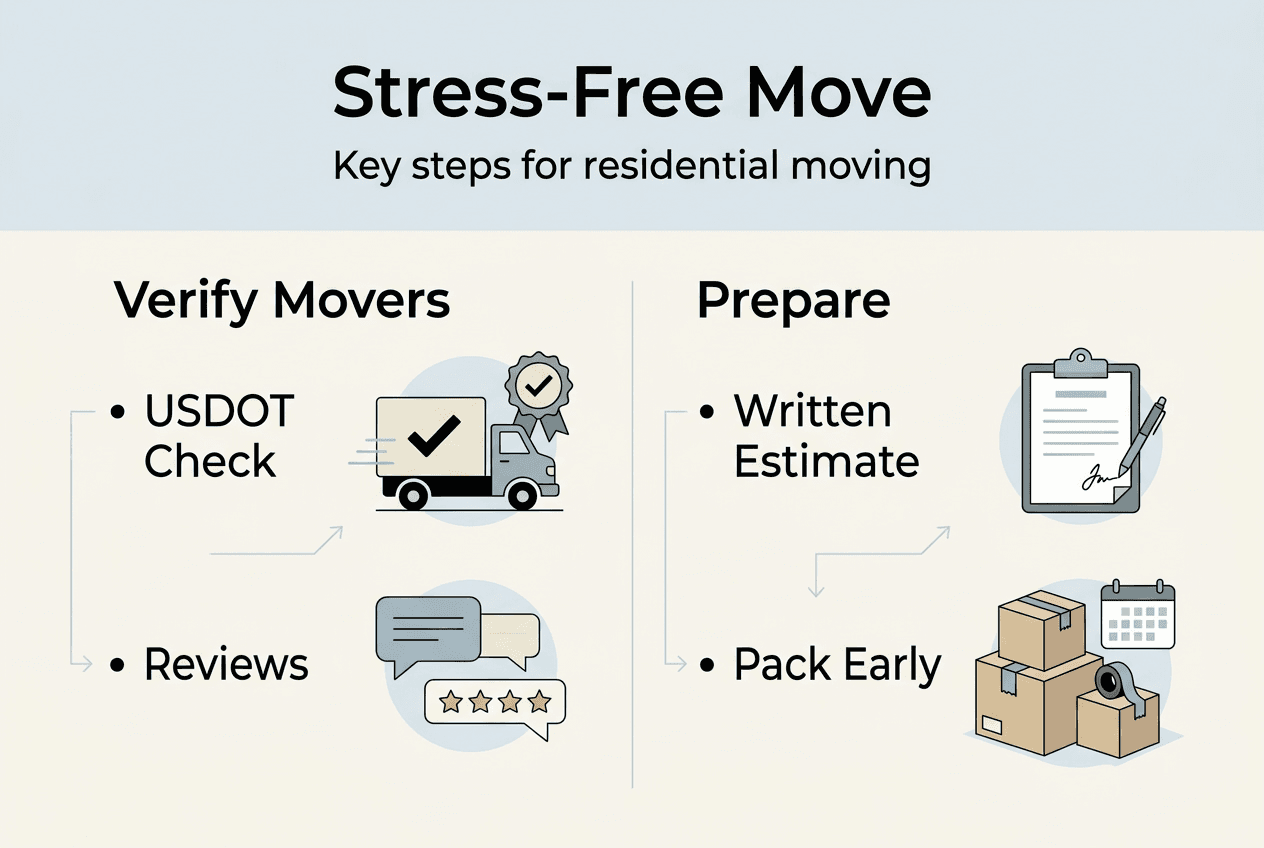
Understanding estimate types prevents the most common source of moving disputes. Binding estimates guarantee a fixed price regardless of actual weight, while non-binding estimates provide a projection that adjusts based on final weight and services. Each has advantages depending on your situation:
| Estimate Type | Price Guarantee | Payment Timing | Best For |
|---|---|---|---|
| Binding | Fixed total cost | Due at delivery | Predictable budgets, exact inventory known |
| Non-binding | Subject to 110% cap | Balance due within 30 days | Flexible moves, uncertain final weight |
| Binding not-to-exceed | Capped maximum, can decrease | Due at delivery | Maximum protection, potential savings |
Preparing your home and belongings reduces costs and protects fragile items. Professional movers charge based on weight and distance, so decluttering before packing directly impacts your final bill. Create a detailed inventory with photos of valuable items, noting existing damage to prevent disputes about who caused scratches or dents. Label boxes clearly with contents and destination rooms to streamline unpacking.
Critical questions to ask every mover before signing contracts:
- What’s your USDOT number and how long have you held federal registration?
- Do you use your own trucks and employees or subcontract to other carriers?
- What insurance options do you offer beyond the minimum 60 cents per pound?
- What’s your policy for delivery delays and how do you communicate schedule changes?
- Can you provide references from customers who completed similar distance moves?
Red flags that indicate unreliable or fraudulent movers include requests for large deposits before moving day, lack of physical business address, unwillingness to provide written estimates, and pressure to sign contracts immediately. Legitimate companies understand you need time to compare options and verify credentials. They provide detailed written estimates, clearly explain their terms, and answer questions without evasiveness.
Pro Tip: Keep copies of all moving documents including the bill of lading, inventory list, and estimate in both digital and physical formats. Store them separately from your packed belongings so you have immediate access if disputes arise during or after delivery.
Follow a comprehensive nationwide moving checklist to ensure you complete essential tasks weeks before moving day. This includes notifying utilities, updating addresses with government agencies, transferring medical records, and arranging temporary housing if delivery windows don’t align with your schedule. Planning reduces last-minute chaos and helps you focus on verifying your mover’s preparations rather than scrambling with personal logistics.
The licensed interstate moving company guide provides step-by-step instructions for checking credentials, understanding your legal rights, and documenting your move properly. These resources transform you from a vulnerable consumer into an informed client who can advocate effectively if problems occur.
Find trusted residential moving services with AMB Moving
Navigating federal regulations and verifying mover credentials feels overwhelming when you’re already managing the stress of relocating across state lines. AMB Moving & Storage Inc. eliminates that uncertainty by operating as a fully licensed, FMCSA-registered interstate carrier with transparent processes and proven reliability. Our USDOT 3839636 registration provides the federal protections you deserve, while our experienced team ensures your belongings travel safely between states.

We understand that choosing interstate moving services means trusting strangers with your most valuable possessions during a vulnerable life transition. That’s why we prioritize clear communication, accurate estimates, and professional handling at every stage. Our resources help you verify our credentials, understand your rights, and prepare for a long-distance move with confidence. Whether you’re relocating for work, family, or a fresh start, our team provides the expertise and support that transforms a potentially stressful experience into a smooth transition.
Frequently asked questions
What are residential moving services?
Residential moving services involve the professional transportation of household goods, including packing, loading, transit, and unloading. For interstate moves, these services must comply with federal regulations administered by the FMCSA. Licensed movers provide written estimates, maintain proper insurance, and follow strict consumer protection rules.
What federal protections exist for consumers hiring interstate movers?
The 110% rule caps charges at 110% of non-binding estimates at delivery, preventing surprise costs when movers arrive at your destination. Federal regulations also require mandatory arbitration for disputes, giving consumers a structured resolution process without expensive litigation. These protections apply only when you hire federally registered interstate carriers.
How can I verify if a moving company is legitimate and licensed?
Visit ProtectYourMove.gov and enter the company’s USDOT number to check their registration status, insurance coverage, and safety record. Legitimate interstate movers display their USDOT number on estimates, websites, and vehicles. Companies without valid federal registration operate illegally and leave you without consumer protections.
What should I watch out for when reviewing moving estimates?
Binding estimates guarantee a fixed price regardless of actual weight, while non-binding estimates adjust based on final weight but cannot exceed 110% at delivery. Always get written estimates, never verbal quotes. Compare not just prices but also insurance options, delivery windows, and payment terms before making decisions.
What are common red flags of unreliable movers?
Requests for large cash deposits before moving day, lack of physical business address, and refusal to provide written estimates all signal potential fraud. Pressure to sign contracts immediately without time to verify credentials indicates dishonest practices. Legitimate movers encourage you to check their registration and compare multiple companies before deciding.