


TL;DR:
- An out-of-state move crosses state lines and involves federal regulations, increasing logistical complexity.
- Choosing the appropriate moving method and confirming state compliance are crucial for a successful long-distance relocation.
An out-of-state move is defined as any residential or commercial relocation that crosses state lines, triggering federal regulations, new state compliance requirements, and logistical complexity that local moves never involve. This out-of-state moving overview covers everything you need to execute a successful long-distance relocation: how to choose between moving methods, what state laws apply to you, how to compare interstate movers like Allied Van Lines and Mayflower, and what a realistic state-to-state moving checklist looks like from eight weeks out to your first month in the new home. The decisions you make in the first two weeks of planning determine 80% of your final cost and stress level.
What is an out-of-state move and how does it differ from local moving?
An out-of-state move, also called an interstate move, is governed by the Federal Motor Carrier Safety Administration (FMCSA) rather than state-level movers’ associations. That regulatory distinction matters because it affects how your belongings are priced, insured, and transported. Local movers charge by the hour. Interstate movers charge by weight and distance, a pricing model that rewards decluttering before you pack a single box.
The scope of an interstate relocation also differs in timing. A local move is typically completed in one day. A cross-country move can take anywhere from 7 to 21 days for delivery, depending on distance, routing, and whether your shipment is consolidated with other households on the same truck. Understanding that delivery window upfront prevents the single most common complaint in long-distance relocation: expecting your furniture on day three and receiving it on day fourteen.
Three factors define the complexity of any out-of-state move: the distance between origin and destination, the total weight of your shipment, and the services you select. Add vehicle transport, packing services, or temporary storage, and both cost and coordination requirements increase significantly. Planning around these variables early is what separates a smooth state-to-state relocation from an expensive, stressful one.
What are the main logistical challenges and options in out-of-state moving?
The four primary methods for moving across states each carry different cost structures, effort levels, and delivery timelines. Choosing the wrong one for your situation is the most expensive mistake you can make.
Your four main options:
- Full-service interstate movers: The company handles packing, loading, transport, and unloading. Full-service cross-country moves typically cost between $4,000 and $12,000, depending on distance, home size, and included services. This is the lowest-effort option and the highest-cost one.
- Portable moving containers: Companies like PODS deliver a container to your home, you load it on your schedule, and they transport it. Container moves cost approximately $2,500 to $5,500 and require moderate physical effort from you.
- DIY truck rental: You rent a truck from a national provider, load it yourself, drive it to the destination, and unload. This is the lowest-cost option but demands the most time, physical labor, and logistical coordination.
- Hybrid moves: You rent a truck or container for furniture and hire day laborers at origin and destination for loading and unloading. This middle-ground approach works well for budget-conscious movers with flexible schedules.
For a three-bedroom home moved over 1,000 miles, full-service pricing typically falls between $5,000 and $8,000. That figure shifts based on the season. Summer moves (June through August) cost more because demand peaks. Booking in late fall or winter can reduce your quote by 15% to 20% with the same companies.
Packing considerations unique to long-distance moves:
- Use double-walled boxes for fragile items. Single-wall boxes that survive a local move fail under the vibration and stacking pressure of a multi-day truck journey.
- Label every box on the side, not the top. Boxes get stacked. Side labels remain visible.
- Prepare a personal essentials bag with three days of clothing, medications, chargers, and important documents. Keep it with you, not in the truck.
- Photograph all electronics and furniture before loading. This documentation supports any insurance claim if damage occurs.
Pro Tip: Request a specific delivery window in writing before signing your contract. Most interstate movers offer a spread of several days. Narrowing that window to two or three days lets you plan your arrival, utility setup, and work schedule without guessing.
Moving insurance deserves attention here. The default coverage included with most moves is Released Value Protection, which covers items at $0.60 per pound per article. A 50-pound television worth $800 would receive a $30 payout under that standard. Full-value protection costs more but covers repair or replacement at current market value. For any move involving electronics, art, or antiques, the upgrade is worth the cost.

How do state laws and regulations affect out-of-state moving?
State compliance is the part of long-distance relocation that most people underestimate until they face a fine or a failed registration. Every state sets its own deadlines for updating your driver’s license and vehicle registration after establishing residency.
Most states require a driver’s license update within 30 days of moving, but deadlines vary significantly. California requires the update within 10 days of establishing residency. Other states allow up to 90 days. Missing California’s deadline is not just an inconvenience. Missed DMV deadlines can trigger retests, additional fees, and delays in establishing legal residency, which cascades into problems with voter registration, banking, and employment verification.
Vehicle registration deadlines generally mirror driver’s license requirements. The consequence of missing them extends beyond a fine. Failing to register your vehicle in your new state within the required window can result in your auto insurance denying coverage if you are involved in an accident during the grace period. That is a financial risk most families cannot absorb.
Key compliance tasks to complete within your first 30 days:
- Update your driver’s license at the new state’s DMV
- Register your vehicle and obtain new license plates
- Update your voter registration through your new county’s election office
- File a change of address with the USPS, your bank, and all insurance providers
- Notify your employer’s payroll department of your new state for tax withholding purposes
Tax implications are significant and often overlooked. Nine U.S. states have no statewide income tax on wages: Texas, Florida, Washington, Nevada, Tennessee, South Dakota, Wyoming, Alaska, and New Hampshire. Moving to one of these states from a high-tax state like California or New York changes your payroll withholding immediately and can meaningfully increase your take-home pay. You will also need to file a partial-year return in both your origin and destination states for the year of the move.
Pro Tip: Download the DMV handbook for your destination state before moving day. Many states require a written knowledge test when transferring an out-of-state license, and reviewing the handbook in advance eliminates a second DMV trip.
How to compare and choose the right out-of-state moving company
Selecting an interstate mover is a decision that deserves the same rigor you would apply to a major purchase. The FMCSA requires all interstate movers to hold a valid USDOT number and a Motor Carrier (MC) number. Verifying both on the FMCSA’s official website before signing anything is non-negotiable. You can learn the full verification process for licensed movers to protect yourself from fraudulent operators.
Here is how four widely recognized companies compare on key criteria:
| Company | Deposit required | In-home estimate | Storage available | Notable strength |
|---|---|---|---|---|
| Allied Van Lines | No deposit | Virtual and in-person | Yes | Flexibility, nationwide coverage |
| Mayflower | Varies | Virtual and in-person | Yes | Established reputation, full-service |
| Colonial Van Lines | Yes | Virtual | Yes | Competitive pricing, broker model |
| American Van Lines | Yes | Virtual and in-person | Yes | Specialty item handling |
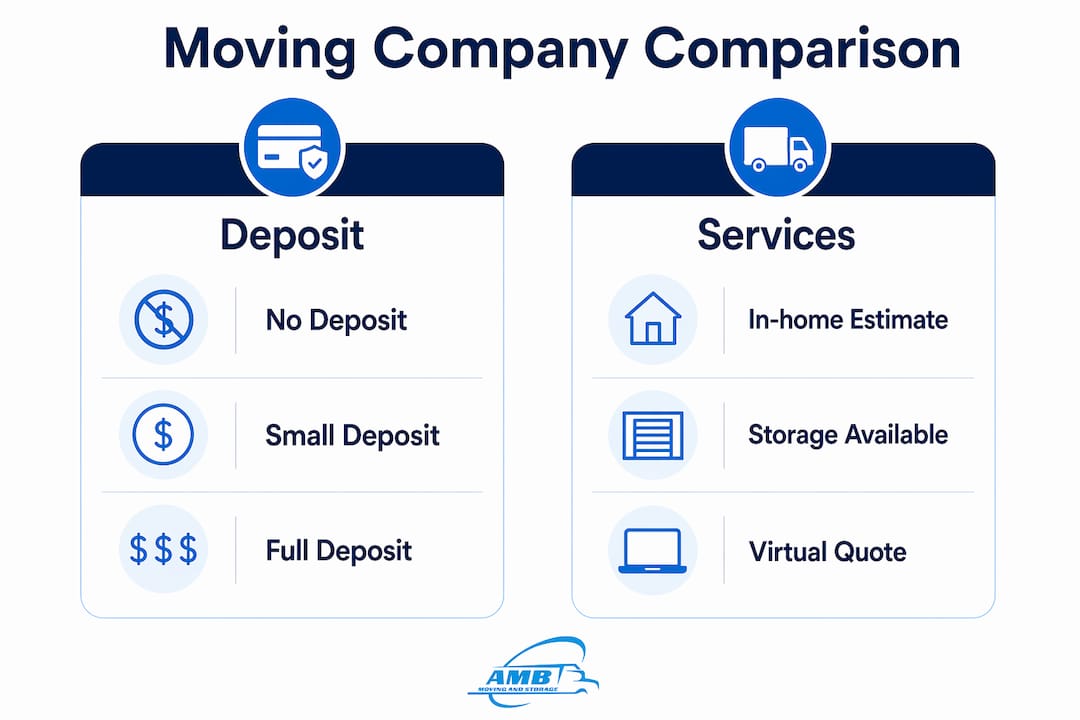
Allied Van Lines is ranked among the top long-distance movers for flexibility, requiring no deposit and offering virtual in-home estimates. The company has moved over 750,000 families across its history, which reflects both scale and operational experience. No-deposit policies matter because they protect you if the company fails to perform or if your plans change.
The distinction between binding and non-binding estimates is critical. A binding estimate locks in your price regardless of actual weight. A non-binding estimate can increase if your shipment weighs more than projected. Always request a binding estimate when possible, and get at least three quotes before committing. Reading verified reviews on platforms like the Better Business Bureau and Google adds a layer of protection that no contract clause can replace.
Pro Tip: When comparing quotes, ask each company how they handle delivery delays. A mover that offers compensation for late delivery is demonstrating accountability. One that offers no recourse is telling you something important about how they operate.
For guidance on choosing an interstate moving company that fits your specific timeline and budget, reviewing criteria beyond price is the most reliable path to a stress-free move.
What should your out-of-state moving checklist include?
A structured timeline is the difference between a move that feels controlled and one that feels like a crisis. The following sequence covers the full arc from early planning to settling in.
8 or more weeks before moving day:
- Research and book your moving company or reserve your container or truck
- Declutter every room and donate, sell, or discard items you will not move
- Request binding estimates from at least three interstate movers
- Notify your employer, children’s schools, and healthcare providers of your move date
- Begin collecting free or low-cost boxes from local retailers
4 to 6 weeks out:
- Start packing non-essential rooms: guest rooms, storage areas, seasonal items
- Arrange for vehicle transport if you are not driving your car to the new state
- Set up USPS mail forwarding at least two weeks before your move date
- Contact utilities at both addresses to schedule disconnection and connection dates
- Confirm your moving company’s delivery window in writing
Moving week:
- Pack your personal essentials bag and keep it separate from all truck inventory
- Photograph every room before the movers arrive for condition documentation
- Keep all critical documents (passports, birth certificates, financial records) with you
- Confirm your new address with your bank, credit card providers, and insurance carriers
First month in your new state:
- Visit the DMV to transfer your driver’s license within your new state’s deadline
- Register your vehicle and update your insurance policy to reflect the new state
- Register to vote in your new county
- Update your address with the Social Security Administration and IRS if applicable
Temporary storage is worth considering if your move-out and move-in dates do not align. Many interstate movers offer short-term storage as part of their service. Booking storage through your mover simplifies logistics and reduces the risk of damage from multiple load and unload cycles.
Key takeaways
A successful out-of-state move requires early booking, verified movers, state compliance within 30 days, and a written delivery window to control cost and timing.
| Point | Details |
|---|---|
| Choose your method by budget and effort | Full-service costs $4,000 to $12,000; containers run $2,500 to $5,500; DIY costs the least but demands the most. |
| Verify movers before signing | Confirm USDOT and MC numbers on the FMCSA database before paying any deposit. |
| Meet state deadlines | Most states require license and registration updates within 30 days; California’s deadline is 10 days. |
| Upgrade your moving insurance | Default coverage pays $0.60 per pound. Full-value protection is the only meaningful coverage for valuable items. |
| Tax implications start immediately | Moving to a no-income-tax state like Texas or Florida changes your payroll withholding from your first paycheck. |
What we have learned from thousands of interstate moves
After working with families and individuals on long-distance relocations across every state in the country, the pattern that separates smooth moves from painful ones is almost never about the distance. It is about the preparation window.
Most people start planning four weeks out. The families who report the least stress consistently start eight to ten weeks out. That extra time is not about packing earlier. It is about having room to respond when something changes, because something always changes. A binding estimate falls through. A lease start date shifts. A vehicle transport slot fills up. When you have built a buffer into your timeline, these events are inconveniences. When you have not, they become emergencies.
The second pattern worth naming: the cheapest quote is rarely the best value. I have seen families save $400 on a quote only to face a $1,200 charge at delivery for “additional weight” on a non-binding estimate they did not fully read. Binding estimates, verified credentials, and a written delivery window are worth more than any discount a mover offers over the phone.
One more thing most guides will not tell you: the stress of an out-of-state move peaks not on moving day but in the two weeks after arrival. You are in an unfamiliar place, your home is in boxes, and you have a list of DMV appointments and utility calls ahead of you. Building a simple post-arrival checklist before you leave your current home is the single most underrated preparation step in the entire process.
— AMB
Ready to plan your out-of-state move with confidence?
Ambmovingservices specializes in interstate and long-distance moves for families and individuals across the United States. Whether you need full-service packing and transport, flexible storage between move-out and move-in dates, or a personalized moving plan built around your timeline and budget, the team at Ambmovingservices is equipped to handle every detail.
Getting started takes minutes. Request a free moving quote at ambmovingservices.com/quote and receive a transparent, binding estimate from a licensed and insured nationwide moving company. No pressure, no hidden fees, and no deposit required to begin planning your relocation.
FAQ
What is included in an out-of-state moving overview?
An out-of-state moving overview covers the logistics, costs, state compliance requirements, and moving company selection process involved in any relocation that crosses state lines. It differs from local moving guidance because interstate moves are regulated by the FMCSA and priced by weight and distance rather than hourly labor.
How much does it cost to move out of state?
Full-service interstate movers typically charge between $4,000 and $12,000 for cross-country moves, while portable container options run $2,500 to $5,500. A three-bedroom move over 1,000 miles with a full-service mover generally falls between $5,000 and $8,000.
How soon do I need to update my driver’s license after moving to a new state?
Most states require a driver’s license update within 30 days of establishing residency, but deadlines vary. California requires the update within 10 days, while some states allow up to 90 days.
How do I verify that an interstate moving company is legitimate?
Confirm the company’s USDOT number and Motor Carrier number on the FMCSA’s official database before signing any contract or paying a deposit. Legitimate interstate movers are required by federal law to carry both registrations.
What is the difference between a binding and non-binding moving estimate?
A binding estimate locks in your total price regardless of the actual weight of your shipment. A non-binding estimate can increase at delivery if your belongings weigh more than projected. Always request a binding estimate for long-distance moves to avoid unexpected charges.