


TL;DR:
- Moving fraud involves dishonest movers using false estimates and hidden fees to overcharge customers. Protect yourself by verifying credentials, requesting binding estimates, documenting possessions, and filing complaints immediately if fraudulent activity occurs. Building a thorough verification process and maintaining detailed records are your strongest defenses against moving scams.
Moving fraud is defined as deceptive conduct by dishonest movers who use false estimates, hidden fees, or withheld belongings to extract more money from customers than originally agreed. Understanding moving scams how to avoid them is the single most protective step you can take before a long-distance or interstate relocation. The Federal Motor Carrier Safety Administration (FMCSA) documents fraud patterns including deliberately low estimates, false shipment weights, and hostage belongings as the most reported tactics. This guide covers every scam type, every red flag, and every recovery option you need to know before signing anything.
What are the most common moving scams and how do they work?
Moving fraud follows predictable patterns. Recognizing the playbook before you hire anyone is your strongest defense.
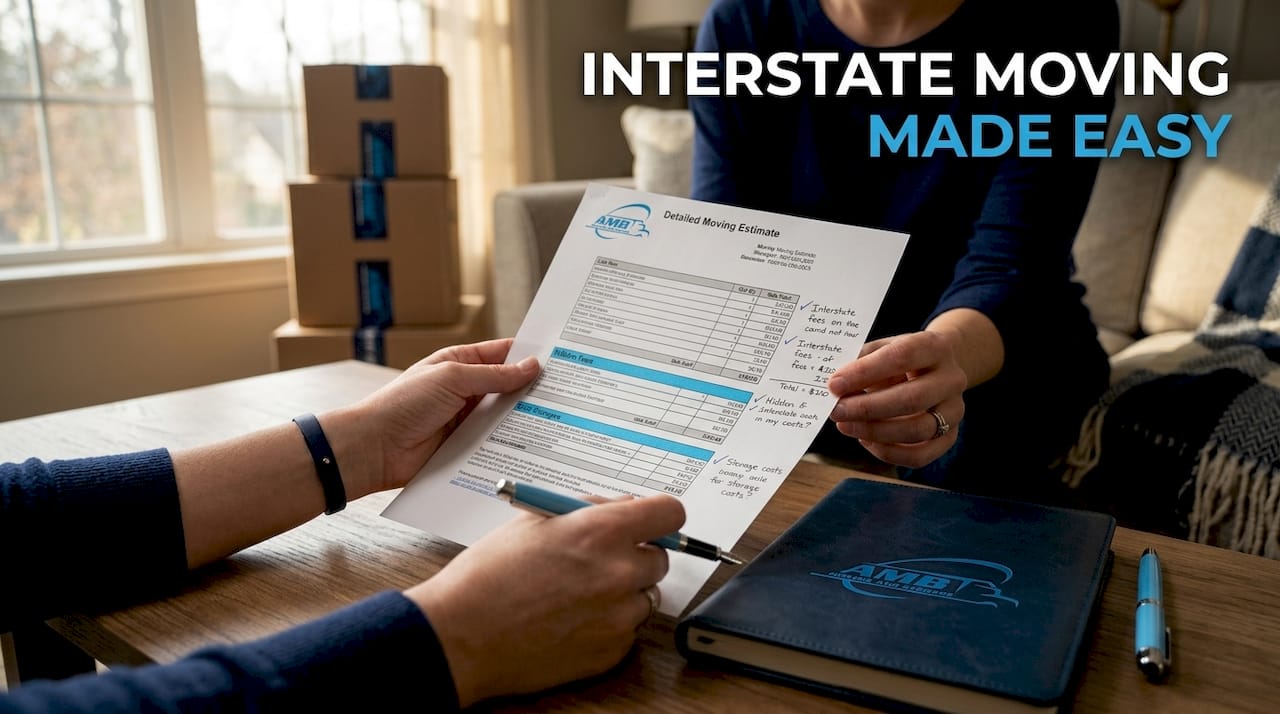
The most widespread scam is the bait-and-switch estimate. A mover quotes an attractively low price online, loads your belongings onto the truck, then claims the shipment weighs far more than estimated. The final bill doubles or triples. Because your possessions are already on the truck, you are in a weak negotiating position. The FMCSA lists weight-based fraud as one of its top reported moving fraud patterns, and the fix is straightforward: demand a binding estimate tied to a physical or virtual inspection, not a number generated from a phone call.
The deposit no-show is equally damaging. You pay a deposit, sometimes several hundred dollars, and the moving company never arrives on moving day. The phone number disconnects. The website disappears. Freddie Mac’s consumer guidance confirms that reputable movers avoid upfront payments entirely, so any demand for a large deposit before service is a direct warning sign.
Hostage situations are the most stressful variant. The mover loads your belongings, drives to the destination, then refuses to unload until you pay fees that were never disclosed. These fees are often labeled as “fuel surcharges,” “stair fees,” or “long carry charges” and can run into the thousands of dollars. You either pay or your furniture stays on the truck.
The scale of this problem is significant. In 2025, the Better Business Bureau recorded over 21,280 consumer inquiries about moving scams in Wisconsin alone. That number represents one state. Nationally, the problem is far larger, and it peaks every summer when moving demand is highest and consumers are most rushed.
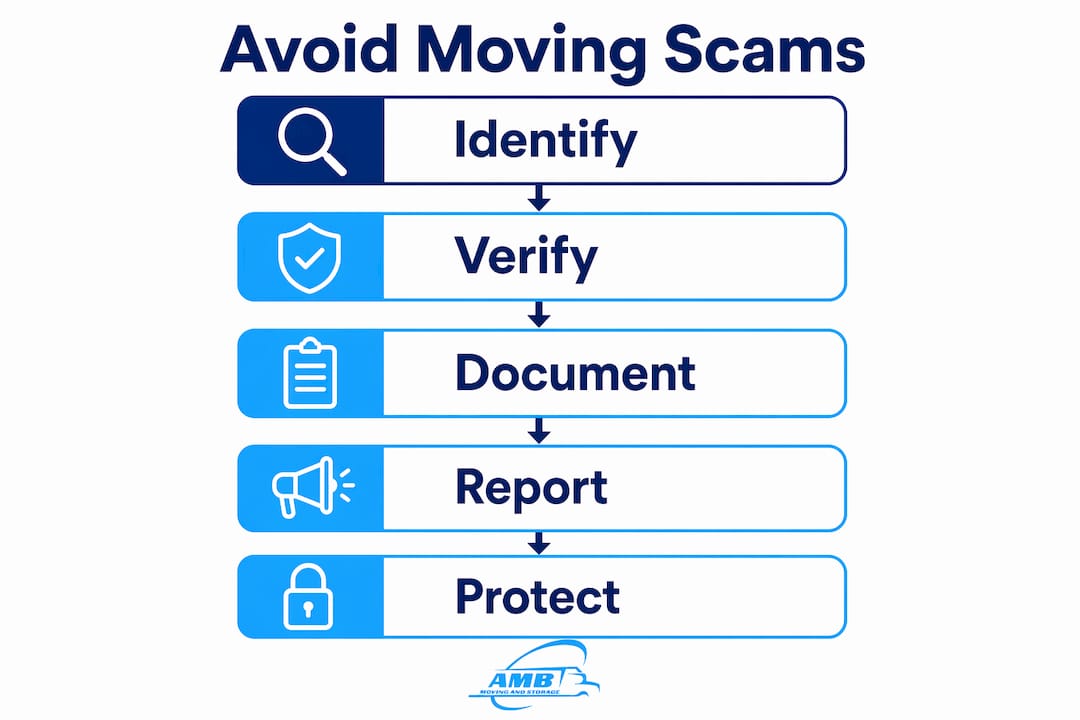
What are the red flags for moving companies to watch for?
Spotting a fraudulent mover before you sign a contract is entirely possible. These warning signs appear consistently across reported cases.
- No physical address or verifiable office. Legitimate interstate movers maintain a physical business location. A company that lists only a phone number or a P.O. box on its website has no accountability trail.
- Generic phone answering. If you call and someone answers “movers” or “moving company” instead of the actual business name, you are likely dealing with a broker or a scam operation.
- Rented or unmarked trucks. Licensed moving companies operate branded vehicles. A mover showing up in a rented U-Haul or an unmarked truck is a serious red flag, as ABC7 New York confirms in its consumer guidance on moving fraud.
- No in-person or virtual inspection before the estimate. A legitimate mover needs to see your belongings to price the job accurately. Any company that generates a quote from a brief phone conversation without conducting an in-person or virtual inspection is either incompetent or setting up a bait-and-switch.
- Demands for large upfront payment. Reputable movers collect payment at delivery, not before pickup. Requiring full payment or a large deposit in advance is the clearest financial red flag in the industry.
- No U.S. DOT or MC number. Every interstate mover operating legally in the United States must be registered with the FMCSA and carry a U.S. DOT number. A company that cannot provide this number on request is operating illegally.
Pro Tip: Search any mover’s DOT number directly on the FMCSA’s Protect Your Move website before signing anything. The lookup takes under two minutes and confirms whether the company is licensed, insured, and in good standing.
Pressure tactics are another consistent signal. The BBB notes that scammers rely on urgency during life transitions, pushing customers to commit quickly before they can do independent research. If a mover tells you the price is only valid for the next 24 hours, slow down. That pressure is manufactured.
How to verify and choose a reputable interstate moving company
Verification takes time, but it eliminates the majority of fraud risk before your move begins. Follow these steps in order.
- Confirm FMCSA registration. Visit protectyourmove.gov and enter the company’s DOT or MC number. Confirm the license is active, the insurance is current, and the company’s registered address matches what they provided you.
- Check the BBB and Google reviews. Focus on reviews that describe specific experiences, not generic praise. Look for patterns: repeated complaints about final bills exceeding estimates, damaged goods, or unresponsive customer service are disqualifying.
- Request a binding estimate after an inspection. A binding estimate locks the price regardless of actual weight. It requires the mover to inspect your belongings first. Linking your estimate to a detailed inventory is the proven method to prevent weight-based upcharges.
- Get everything in writing. Verbal promises are unenforceable. Every fee, every service, and every delivery window must appear in a signed contract. Freddie Mac’s guidance is direct: reviewing contracts carefully and refusing advance payments are the two actions that most reduce your exposure to fraud.
- Compare at least three binding quotes. Comparing quotes from multiple licensed interstate movers gives you a realistic price range and makes suspiciously low bids obvious.
- Document your inventory with photos. Before loading day, photograph every item and label every box. This documentation serves two purposes: it prevents disputes about weight and it supports any damage or loss claim after delivery.
| Verification step | Why it matters |
|---|---|
| FMCSA DOT lookup | Confirms legal registration and active insurance for interstate moves |
| Binding estimate after inspection | Locks price and prevents weight-based bait-and-switch charges |
| Written contract review | Makes all fees enforceable and eliminates verbal-only promises |
| Photo inventory before loading | Provides evidence for damage claims and weight dispute defense |
| Three-quote comparison | Exposes outlier pricing that signals fraud or hidden fees |
Pro Tip: When collecting quotes, ask each mover specifically whether the estimate is binding or non-binding. A non-binding estimate is not a price guarantee. Only a binding estimate protects you from a higher final bill.
For long-distance moves, you can also review guidance on getting reliable moving quotes to understand what a fair price range looks like before you start calling companies.
What to do if you suspect or experience a moving scam
Acting quickly after a scam improves your chances of recovering belongings and money. Assemble your documentation first, then file complaints in parallel.
Documents to gather immediately:
- The original written estimate
- The Bill of Lading (the legal contract signed at pickup)
- The inventory list from the mover
- All receipts, payment records, and written communications
- Photos of your belongings before loading
- The company’s DOT number, MC number, and physical address
Once you have these documents, file complaints with the following agencies. The FMCSA specifies that detailed complaint packets with company identifiers and supporting documents produce the strongest enforcement outcomes.
- FMCSA (for interstate moves): File at protectyourmove.gov. Your complaint becomes part of the company’s enforcement record and can trigger investigations.
- BBB Scam Tracker: File at bbb.org/scamtracker. This creates a public record that warns other consumers.
- Federal Trade Commission (FTC): File at reportfraud.ftc.gov. The FTC aggregates fraud reports to identify patterns and pursue enforcement actions.
- Your state attorney general: Most states have a consumer protection division that handles intrastate moving fraud.
- Local law enforcement: If your belongings are being held hostage, this is theft. File a police report immediately and provide the truck’s license plate number and the driver’s name.
Time matters. Some dispute windows, including certain insurance claims and credit card chargebacks, close within 60 to 90 days of the incident. Filing complaints and initiating disputes promptly preserves your options. FMCSA complaint records support enforcement actions that protect future customers as well, so reporting is not just self-interested. It contributes to industry accountability.
Key takeaways
Avoiding moving fraud requires verifying credentials before booking, demanding binding written estimates, and filing complaints immediately if something goes wrong.
| Point | Details |
|---|---|
| Verify FMCSA registration | Look up every mover’s DOT number on protectyourmove.gov before signing any contract. |
| Demand binding estimates | Only a binding estimate tied to a physical inspection locks your price against weight-based upcharges. |
| Refuse large upfront deposits | Legitimate interstate movers collect payment at delivery, not before pickup. |
| Document everything with photos | A photo inventory before loading is your primary evidence for damage claims and weight disputes. |
| File complaints immediately | FMCSA, FTC, BBB, and your state attorney general all accept moving fraud complaints that support enforcement. |
What I’ve learned from years of watching moving fraud play out
Working in long-distance moving, I’ve seen the same fraud patterns repeat with minor variations. The customers who avoid them share one habit: they slow down when everyone around them is pushing them to hurry.
Scammers count on the stress of a move. You have a lease ending, a new job starting, and a truck supposedly arriving in three days. That pressure is real, and dishonest movers exploit it deliberately. The BBB is right that urgency is the primary mechanism scammers use during life transitions. The solution is not to eliminate urgency. It’s to build your verification steps into the timeline before you feel pressured.
The piece of advice I give most often is this: treat your estimate and contract as legal documents, not paperwork formalities. Your contract is your leverage if a mover tries to add fees after loading. Your inventory photos are your evidence if a weight dispute arises. Your Bill of Lading is your proof of what was agreed. Customers who treat documentation as investigative tools are far harder to defraud than customers who sign quickly and trust verbal assurances.
One more thing: never pay a mover in cash. Cash transactions leave no paper trail and eliminate your chargeback options entirely. Pay by credit card whenever possible. The dispute rights that come with a credit card are a meaningful safety net if a company disappears or refuses to deliver.
— AMB
Move with a company that has nothing to hide
Ambmovingservices operates as a fully licensed and insured nationwide moving company, registered with the FMCSA and compliant with all federal interstate moving regulations. Every quote is binding, every contract is written, and every move includes a detailed inventory process so you know exactly what was loaded and what will be delivered. There are no hidden fuel surcharges, no surprise stair fees, and no demands for full payment before your belongings arrive safely. If you are planning a long-distance relocation or an interstate move and want a verified, transparent moving partner, request a free quote today at ambmovingservices.com/quote/ and move with confidence.
FAQ
What is the most common moving scam?
The bait-and-switch estimate is the most reported moving scam. A mover provides a low quote, loads your belongings, then inflates the final bill based on claimed shipment weight.
How do I check if a moving company is legitimate?
Look up the company’s U.S. DOT number on the FMCSA’s protectyourmove.gov database. A legitimate interstate mover will have an active license, current insurance, and a verified physical address.
Should I pay a deposit to a moving company?
Reputable movers do not require large upfront deposits. Freddie Mac’s consumer guidance identifies advance payment demands as a primary red flag linked to moving fraud.
Where do I report a moving scam?
File complaints with the FMCSA (for interstate moves), the FTC at reportfraud.ftc.gov, the BBB Scam Tracker, your state attorney general, and local law enforcement if belongings are being withheld.
What documents do I need if I’m a victim of moving fraud?
Gather your written estimate, Bill of Lading, inventory list, all payment records, and any written communications with the mover. The FMCSA recommends including company identifiers like the DOT and MC numbers in every complaint filing.