

TL;DR:
- In-home estimates provide more accurate, transparent pricing by assessing real move variables.
- They reduce surprises, hidden fees, and billing disputes compared to online moving quotes.
- Investing time in a thorough estimate saves money, stress, and ensures a smoother long-distance move.
Most families planning a long-distance move assume that filling out an online form and getting a digital quote is enough to budget their relocation. It feels fast, convenient, and modern. But that assumption costs people real money. Online quotes are built on averages and assumptions, and they routinely miss the details that actually drive your final bill. An in-home estimate, by contrast, puts a trained professional in your space to see exactly what needs to move, how it needs to move, and what obstacles stand in the way. This article breaks down why in-home estimates are the most reliable tool for transparent, accurate pricing on any long-distance move.
Table of Contents
- The pitfalls of online moving quotes vs. in-home estimates
- How in-home estimates increase accuracy and transparency
- Preparing for your in-home moving estimate
- The customer service and cost-saving benefits of in-home estimates
- Why most people underestimate the value of in-home estimates
- Get your accurate in-home moving estimate today
- Frequently asked questions
Key Takeaways
| Point | Details |
|---|---|
| In-home estimates increase accuracy | They provide a precise assessment, reducing chances of hidden fees and costly mistakes. |
| Preparation boosts estimate value | Being organized and transparent helps movers deliver the most accurate quote possible. |
| Customer service improves | In-home estimates support clearer communication and fewer disputes, resulting in smoother relocations. |
| Prevent surprises and save money | Detailed upfront evaluations ensure your long-distance move stays on budget and on track. |
The pitfalls of online moving quotes vs. in-home estimates
Online moving quotes are tempting because they take about five minutes to complete. You enter your origin, destination, and a rough inventory, and a number appears. The problem is that number is built on assumptions, not reality. It cannot see your antique armoire, your third-floor walkup, or the narrow hallway that makes moving a king-size bed a two-hour job. Those details matter enormously when it comes to what you actually pay.
Online quotes rarely account for special items or unexpected logistical hurdles. That gap between the quote and the final bill is where most moving disputes begin. A digital form cannot ask follow-up questions. It cannot notice that your piano sits in a basement with a 90-degree turn at the bottom of the stairs. A human estimator can.
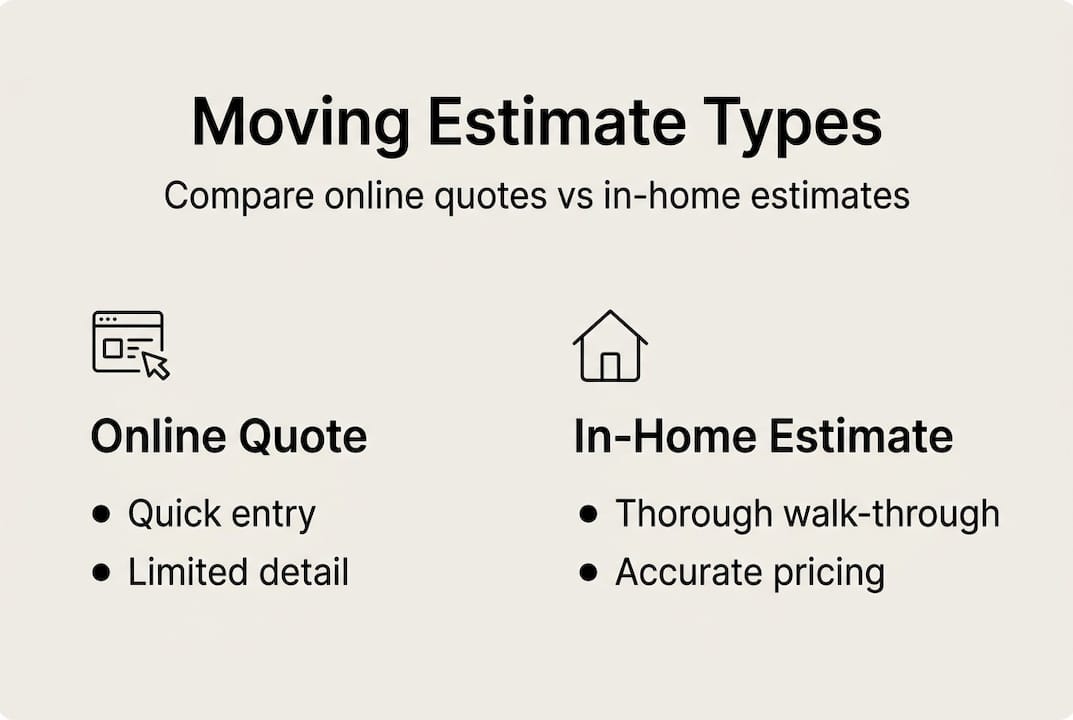
Here is a direct comparison between the two approaches:
| Factor | Online quote | In-home estimate |
|---|---|---|
| Accuracy | Low to moderate | High |
| Transparency | Limited | Full written breakdown |
| Hidden fees risk | High | Low |
| Special item coverage | Rarely included | Always assessed |
| Stair/access assessment | Not possible | Done in person |
| Time to complete | 5 minutes | 45 to 90 minutes |
The table makes it clear. An in-home estimate takes more time upfront, but it eliminates the surprises that derail budgets and relationships with movers.
Some of the most common surprises during moves that online quotes miss include:
- Heavy or oversized furniture that requires extra crew members
- Specialty items like pool tables, safes, or artwork needing crating
- Long carry distances from door to truck
- Elevator reservations or building access restrictions
- Packing materials and labor for fragile items
- Disassembly and reassembly of large furniture pieces
“The biggest gap we see between quoted price and final bill comes from items and access issues the customer never thought to mention online. An estimator walking through the home catches everything in one visit.”
Before you sign anything with a moving company, review the questions to ask movers so you know exactly what to cover during the estimate process. Consumer Reports also offers a solid moving guide on evaluating movers before you commit. Understanding your full list of relocation expenses before moving day is the single best way to protect your budget.
How in-home estimates increase accuracy and transparency
An in-home estimate is not just a visit. It is a structured assessment designed to capture every variable that affects your moving cost. When a professional estimator walks through your home, they are building a complete picture of your move, not guessing based on a form you filled out in three minutes.
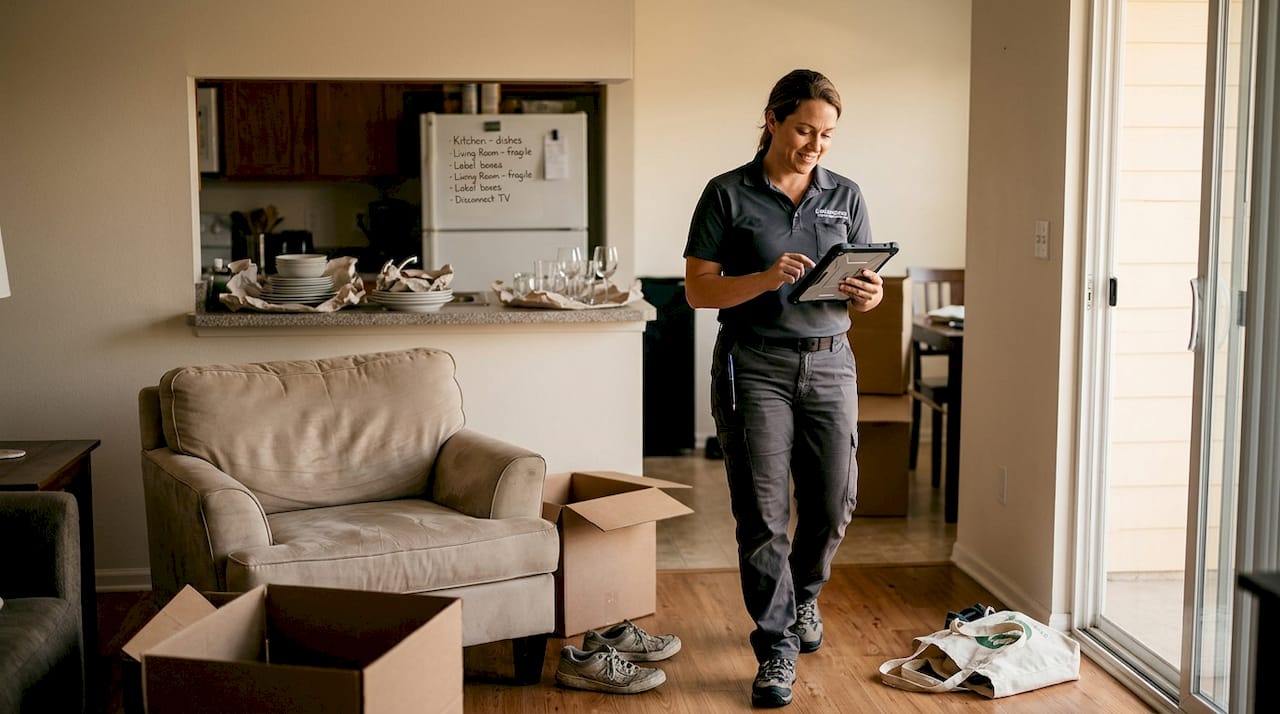
Here is what a typical in-home estimate walk-through looks like:
- Initial consultation: The estimator reviews your moving timeline, destination, and any special requirements before touring the home.
- Room-by-room inventory: Every room is walked through and all items are logged, including furniture dimensions, appliance weight, and fragile pieces.
- Access assessment: Doorways, hallways, staircases, elevators, and parking access at both origin and destination are evaluated.
- Specialty item review: Items like pianos, safes, artwork, or antiques are flagged for special handling and priced accordingly.
- Packing needs evaluation: The estimator determines what requires professional packing versus what you can handle yourself.
- Written estimate delivery: You receive a detailed, itemized cost breakdown you can review, compare, and hold the company accountable to.
A thorough walk-through lets moving professionals account for fragile items and unique logistics, leading to fair pricing. That fairness works in both directions. You are not overcharged for a simple move, and the mover is not blindsided by a home full of specialty items they did not know about.
Here is how specific items assessed during an in-home estimate affect your final cost:
| Item assessed | Cost impact | Transparency score |
|---|---|---|
| Total cubic footage | High | 9/10 |
| Stair carries (per flight) | Moderate | 8/10 |
| Specialty items | High | 9/10 |
| Packing labor | Moderate to high | 8/10 |
| Long carry distance | Moderate | 7/10 |
| Disassembly/reassembly | Low to moderate | 8/10 |
The FMCSA provides a moving checklist that outlines your rights as a consumer during the estimate process. Knowing those rights helps you ask better questions and hold movers accountable.
Pro Tip: Always request a written, itemized estimate rather than a verbal one. A written breakdown lets you compare multiple companies on equal terms and protects you if the final bill looks different from what was discussed.
For a full picture of what interstate moves cost in 2026, our moving cost guide and latest moving cost report give you real route data to benchmark any estimate you receive.
Preparing for your in-home moving estimate
Getting an in-home estimate is only as useful as the preparation you put into it. If you hide clutter in closets or forget to mention the storage unit down the street, your estimate will be incomplete. The goal is to give the estimator a fully accurate picture of everything that needs to move.
Here are the key items to highlight for your estimator during the visit:
- Fragile or high-value items: Artwork, antiques, collectibles, and electronics that need special packing or crating
- Large or heavy furniture: Sectional sofas, king-size beds, dressers, and dining tables that may require disassembly
- Outdoor equipment: Grills, patio furniture, lawn mowers, and sports equipment stored in garages or sheds
- Appliances: Refrigerators, washers, dryers, and other large appliances, especially if they need disconnection
- Access challenges: Narrow hallways, low ceilings, spiral staircases, or limited parking at either location
- Storage units or off-site items: Anything not in the main home that still needs to be moved
- Items you plan to leave behind: Helps the estimator focus only on what actually moves
Clear communication with movers about specialty items and access points improves estimate accuracy. That means being upfront, even about things that feel minor. A tight driveway or a low-hanging tree branch can affect how the truck parks and how long the carry takes.
Pro Tip: Create a written inventory of every room before the estimator arrives. Walk through your home the day before and list every piece of furniture, appliance, and box you expect to move. This takes about 30 minutes but can save hours of back-and-forth later.
Communication also shapes the services you end up booking. If you mention that you are moving elderly parents or have a newborn at home, a good estimator will suggest services that reduce your physical workload. Knowing the full range of moving service types helps you ask for exactly what fits your situation. Moving.com also offers a helpful planning checklist to make sure nothing falls through the cracks before moving day.
The more honest and thorough you are during the estimate, the more accurate and useful the final quote will be. Think of it as a two-way conversation, not a sales pitch.
The customer service and cost-saving benefits of in-home estimates
Beyond accuracy, in-home estimates deliver real, measurable benefits that affect how smoothly your move goes from start to finish. They are not just a pricing tool. They are a planning tool, a communication tool, and a dispute-prevention tool all in one.
Here are the top three customer service benefits of choosing an in-home estimate:
- Fewer surprises on moving day: When the crew arrives already knowing your inventory, access challenges, and specialty items, the move runs on schedule. There is no renegotiating at the door.
- Stronger accountability: A written, itemized estimate creates a paper trail. If the final bill does not match what was agreed upon, you have documentation to reference.
- Better crew preparation: The moving team can bring the right equipment, the right number of people, and the right packing materials because they know exactly what they are dealing with.
Detailed in-home assessments reduce haggling and prevent billing disputes in long-distance relocations. That matters a lot when you are moving across multiple states and cannot easily drive back to resolve a problem in person.
Cost-saving outcomes that come directly from in-home estimates include:
- Fewer add-on charges on moving day because everything was priced upfront
- Ability to compare multiple written estimates on equal terms
- No duplicate charges for items the mover did not expect to handle
- Smarter decisions about what to move versus sell or donate
- Reduced risk of damage claims because specialty items are identified and handled correctly from the start
“Customers who received in-home estimates reported significantly less stress and fewer billing disagreements than those who relied on online quotes alone. The difference comes down to preparation and transparency.”
For families doing state-to-state moving, the stakes are higher than a local move. You cannot easily pop back to retrieve a forgotten item or dispute a charge in person. In-home estimates reduce that risk substantially. Angie’s List outlines additional in-home estimate benefits worth reviewing before you book.
The bottom line is that in-home estimates do not just protect your wallet. They protect your time, your nerves, and your relationship with the moving company you trust to handle everything you own.
Why most people underestimate the value of in-home estimates
Here is something the moving industry rarely says out loud: most homeowners skip in-home estimates not because they think they are unnecessary, but because they feel inconvenient. Scheduling a visit, cleaning up enough to feel presentable, and spending 90 minutes with an estimator feels like a lot when you can just fill out a form online in five minutes.
That logic is understandable. It is also expensive.
What an algorithm cannot do is notice that your couch cannot exit through the front door and will require a window removal. It cannot see that your garage is packed with tools that will add 800 pounds to the load. It cannot feel the weight of a marble dining table or recognize that your “standard bedroom” has a built-in wardrobe that needs full disassembly. Our interstate moving cost report consistently shows that customers who skipped in-home estimates paid more in unexpected charges than the time they saved by going digital.
The real wisdom here is counterintuitive. Slowing down at the estimate stage speeds everything else up. A 90-minute visit eliminates days of back-and-forth emails, surprise charges, and moving-day renegotiations. It is the one investment of time that pays back multiple times over.
Pro Tip: Schedule your in-home estimate at least four to six weeks before your move date. This gives you time to compare multiple written estimates, ask follow-up questions, and book with confidence rather than under pressure.
The families who feel most in control of their long-distance moves are almost always the ones who invested in a proper in-home estimate. That is not a coincidence.
Get your accurate in-home moving estimate today
If this article has shown you anything, it is that the gap between a rough online quote and a real in-home estimate is where most moving budgets fall apart. You deserve a number you can actually plan around, not a placeholder that shifts on moving day.
At AMB Moving & Storage Inc., our interstate moving services are built around transparent, in-home estimates that give you a complete picture of your move before you commit to anything. We walk through your home, assess every item, and deliver a written breakdown with no hidden surprises. Our costs and tips page gives you context on what long-distance moves typically cost so you can evaluate any estimate with confidence. And if you are still in the early planning phase, our relocation planning guide walks you through every step of organizing a successful interstate move. Reach out today and let us show you what a truly transparent moving estimate looks like.
Frequently asked questions
What can I expect during an in-home moving estimate?
A moving professional will walk through your home, assess all items including specialty and bulky pieces, and provide a detailed written cost breakdown. This thorough walk-through ensures fragile items and unique logistics are factored into your final price.
Are in-home estimates more accurate than online quotes?
Yes, in-home estimates are nearly always more accurate because they account for real-world factors like stairs, access, and special items. Online quotes rarely account for the logistical hurdles that drive up costs on moving day.
How should I prepare for an in-home estimate?
Create a written inventory of your belongings, communicate special needs, and highlight items that may require special handling. Clear communication with movers about access points and specialty items directly improves the accuracy of your estimate.
Will an in-home estimate help prevent billing disputes?
Yes, a detailed in-home assessment minimizes unexpected charges and reduces the likelihood of disagreements during your move. Detailed in-home assessments are one of the most effective ways to prevent billing conflicts in long-distance relocations.