
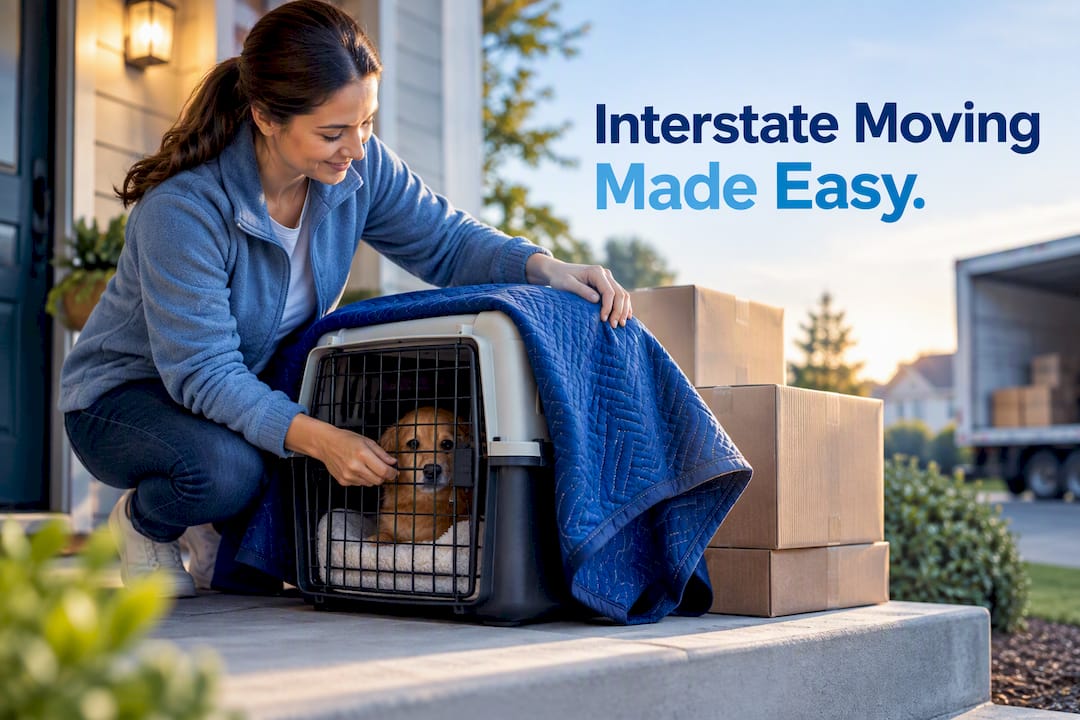

For most U.S. cross-country moves, driving with your pet is the safest practical option because it avoids cargo-hold risk and lets you control stops, temperature, and stress. If flying is unavoidable, book an in-cabin seat or an accredited pet transporter after a veterinary exam. Your first move: schedule a vet visit now to get medical records in order and confirm your destination state’s entry rules, since standard moving companies do not transport live animals.
TL;DR:
- Driving is the safest option for most pets, especially in multi-pet or medically complex households, but it adds several days to the move.
- Book veterinary visits, pet transport, and airline reservations early, as space and appointments fill quickly during peak moving season.
- For air travel, in-cabin flights are safest for small animals, while checked or cargo options pose higher risks, especially for brachycephalic breeds in extreme temperatures.
- Ensure all pet paperwork, including health certificates and microchip updates, is confirmed with destination state officials weeks before moving day.
- Use a structured plan like the 3-3-3 rule to help your pet adjust, setting up a familiar environment, routine, and microchip updates upon arrival.
Table of Contents
- Comparing your transport options for moving pets safely
- Building your pre-move vet and paperwork checklist
- Packing the right travel kit and prepping the crate
- Planning a safe driving route with pets on board
- Flying with pets: airline rules and weather limits
- Coordinating pet transport with your household movers
- Estimating pet moving costs and scheduling buffers
- Helping your pet settle in during the first weeks
- What most people get wrong about moving pets long distance
- Get your household move handled while you manage pet travel
- Sources
- FAQ
Comparing your transport options for moving pets safely
The right method depends on your pet’s health, size, and how many animals you’re relocating, not just distance. Driving works well for most dogs and cats and lets you manage stress in real time, though it adds days to a move that flying could finish in hours. Flying suits healthy pets small enough for the cabin, but checked or cargo travel carries higher risk, especially for brachycephalic breeds like bulldogs and pugs whose short airways struggle with pressure and heat changes. Professional pet transport services, whether ground shuttles or accredited air couriers, suit owners moving multiple animals, exotic pets, or animals with medical needs that make DIY travel unsafe.
- Driving: Best for most healthy pets and multi-pet households; requires extra days and frequent stops.
- Flying in-cabin: Suits small pets under the airline’s carrier-size limit; requires early booking and a health certificate.
- Flying checked or cargo: Usable for larger, healthy pets in mild weather; not recommended for brachycephalic breeds or extreme temperatures.
- Professional pet transport: Fits multi-pet, senior, or medically complex moves; costs more but removes logistics from your plate.
Whichever option fits, book it as soon as your move date is set with expert guidance from Moving Company SEO Services | Show Up & Book More Moves. Vet appointments, airline reservations, and pet transporter slots all fill up during peak moving season, and each one has its own lead time.
Building your pre-move vet and paperwork checklist
Every state sets its own entry rules for incoming pets, and the USDA APHIS state-to-state travel page confirms there is no single national standard: you need to contact your destination state’s Animal Health official directly to confirm what’s required. Most states ask for a Certificate of Veterinary Inspection (CVI), and some emergent health alerts, like recent New World Screwworm related interstate travel restrictions, can shorten the CVI window or add inspection steps with little notice.
- Book a veterinary exam several weeks before your move date, longer if your destination requires special permits.
- Confirm your pet’s rabies vaccination and other core shots are current and documented.
- Verify or update microchip registration with your new address ahead of arrival.
- Request copies of full medical records to hand off to a new vet.
- Find an accredited veterinarian if your move requires a federally endorsed CVI, since not every vet holds that accreditation.
- Call your destination State Veterinarian’s office to confirm current requirements before you finalize travel plans.
The AVMA’s pet travel guidance notes that health certificates for air travel are usually valid only within 10 days of departure, so timing your vet visit around your actual travel date matters more than doing it early and hoping it holds.
Packing the right travel kit and prepping the crate
A well-stocked travel kit prevents most on-the-road emergencies. Pack medical records, any medications with dosing instructions, a recent photo of your pet, collapsible bowls, familiar food, bottled water, bedding, and a leash or harness you trust.
- Medical records and medications with clear dosing notes, kept accessible, not buried in a moving box.
- A crash-tested crate sized so your pet can stand, turn, and lie down comfortably.
- ID and a current photo in case your pet gets loose during a stop.
- Food, water, and familiar bedding to reduce novelty stress on travel days.
Start crate acclimation at least two weeks before departure by feeding meals inside it and letting your pet nap there voluntarily. On travel day, feed a light meal a few hours before departure rather than right before, and keep exercise breaks calm rather than exciting. The AVMA cautions against sedating pets for travel without veterinary guidance, since sedation can increase respiratory risk in transit.
Pro Tip: Practice short car rides with the crate in the weeks before your move so the first long stretch isn’t also your pet’s first experience with motion.

Planning a safe driving route with pets on board
Add 25 to 50% more time to your GPS estimate to account for pet-related stops, and set a daily mileage goal you can hit without rushing the last stretch of the day.
- Stop every 2 to 3 hours for exercise, water, and a bathroom break.
- Book pet-friendly lodging in advance and carry proof of vaccination in case a hotel asks.
- Secure crates or harnesses in the car every time, and never leave a pet alone in a parked vehicle.
- Build slack into your schedule for weather delays or an unexpected vet visit along the route.
Flying with pets: airline rules and weather limits
Airline pet policies vary widely, and the Department of Transportation’s flying-with-pets guidance recommends booking nonstop flights and confirming your carrier’s specific rules before you buy a ticket.
- Book early: in-cabin space is limited and fills fast during peak moving months.
- Choose mild-weather travel days, since airlines often embargo pets during extreme heat or cold.
- Confirm whether your pet qualifies for the cabin or must fly checked or cargo, and avoid cargo travel for brachycephalic breeds when possible.
- Have your health certificate ready, since many airlines require one issued within 10 days of travel.
Coordinating pet transport with your household movers
Household movers do not transport live animals as part of a standard move. That’s a firm line across the industry, so pet transport has to run as its own parallel plan alongside your moving truck. The upside is that once you know your pet’s travel method, you can build your moving day schedule around it instead of the other way around.
- Decide early whether you’re driving with your pet or hiring a separate transporter, since that decision shapes your entire move-day timetable.
- Keep pets in a quiet, closed-off room or with a friend while movers load the truck.
- Label pet supplies and crates clearly so they don’t end up packed by mistake.
- Ask your mover about storage options if your move-out and move-in dates don’t line up with your pet’s travel schedule.
AMB’s coordination experience with long-distance moving and interstate moving means we build move schedules that work around your pet’s travel plan, rather than competing with it. Our guide on filing pet paperwork before booking the truck walks through the sequencing in more detail.
Estimating pet moving costs and scheduling buffers
Pet transport costs vary by distance, pet size, number of animals, and season, with peak summer moving months typically pushing prices higher across every option. Driving costs the least in direct fees but adds days of fuel, lodging, and time off work. Flying in-cabin usually costs an added airline pet fee on top of your ticket, while professional ground or air pet transport services charge more but handle logistics you’d otherwise manage yourself.
- Book vet appointments and CVI paperwork weeks ahead, and sooner if a special permit applies.
- Reserve airline pet spots as soon as your flight is booked, since space is limited.
- Ask any pet transporter about insurance coverage, cancellation policy, and temperature embargo rules before you pay a deposit.
- Confirm your mover’s moving cost guide covers storage or specialty handling fees separate from pet transport costs.
Helping your pet settle in during the first weeks
Many pet owners use the 3-3-3 rule as a rough timeline: roughly 3 days to decompress, about 3 weeks to settle into a routine, and up to 3 months to feel fully at home.
- Set up a small “home base” room with familiar bedding and toys rather than giving full run of the house right away.
- Keep feeding and walk schedules as close to your old routine as possible.
- Update your pet’s microchip and ID tags with your new address as soon as you arrive.
- Watch for prolonged appetite loss, hiding, or aggression that goes past the first few weeks, and call your vet or a behaviorist if it does.
Pro Tip: Walk the same short route around your new block for the first week so your pet builds a predictable mental map before you introduce anything new.
What most people get wrong about moving pets long distance
The most common mistake is treating pet paperwork as an afterthought, something to handle “closer to the date,” until the vet’s earliest opening is after the move. The fix is simple: book your vet visit and your mover’s dates in the same week you commit to a move date, not weeks apart. Our moving with pets guide covers the sequencing if you want a deeper walkthrough.
— AMB
Get your household move handled while you manage pet travel
Licensed and insured interstate and nationwide moving companies offer scheduling flexibility that lets you lock in your pet’s travel plan first and build the truck date around it.

| Service | What it covers |
|---|---|
| Long-Distance Moving | Cross-country household relocation |
| Professional Packing Services | Crate-safe packing for fragile and pet items |
| Secure Storage Solutions | Bridging gaps between move-out and move-in dates |
Request a free, no-obligation quote at Ambmovingservices and tell us your target dates so we can schedule around your pet’s travel plan.
Sources
- Take a Pet from One U.S. State or Territory to Another
- Traveling with your dog or cat | AVMA
- Flying with pet | U.S. Department of Transportation
FAQ
What is the 3-3-3 rule for pets?
The 3-3-3 rule is a general guideline suggesting pets need about 3 days to decompress, 3 weeks to settle into routine, and up to 3 months to feel fully at home after a move. It helps owners set realistic expectations instead of expecting immediate comfort.
What is the best way to move cross-country with my pet?
For most healthy pets, driving gives you the most control over stress, temperature, and stops. When flying is necessary, an in-cabin booking or an accredited pet transporter arranged after a veterinary exam is safer than checked or cargo travel.
Does the 3-3-3 rule apply to dogs specifically when moving?
Yes, the 3-3-3 guideline applies broadly to dogs and cats adjusting to a new home after relocation. Dogs may show it through clinginess or reduced appetite in the first few days before settling into a routine over the following weeks.
Can my 60 pound dog travel by train?
Amtrak’s pet policy generally allows only smaller pets in the cabin, so large dogs typically will not qualify for standard rail travel. Check the DOT’s traveling animals guidance and your carrier directly, since size limits and documentation rules can change.
Do I need a health certificate to move my pet across state lines?
Most states require a Certificate of Veterinary Inspection, but exact rules vary, so you should confirm requirements with your destination state’s animal health office before you travel. An accredited veterinarian can issue the certificate and advise on any additional vaccination or timing rules.