


A first night box is a single accessible bag or bin holding the three things you can’t skip: your sleep setup, your phone chargers and a power source, and your medications and important documents. Everything else in this checklist is helpful. Those three are non-negotiable. Pack them together, label the container clearly, and keep it within reach the moment you walk through your new front door.
TL;DR:
- The first night box should include sleep essentials, tech chargers, and important documents, which must be kept accessible and separated from other items.
- Pack items by category one to two days before the move, sealing liquids separately and labeling the box clearly with “OPEN FIRST” or “FIRST NIGHT.”
- Keep the box in your own vehicle if possible, or load it last on the truck to ensure immediate access upon arrival.
- Finalize packing those essentials just before the move, and verify the box has sheets, chargers, medications, and vital documents before departure.
- Always communicate with your movers to confirm the first night box’s handling priority and request written instructions for cross-state moves.
Table of Contents
- What Goes in a First Night Box: The Quick Checklist
- Sleep and Bedding Essentials to Pack for Night One
- Bathroom and Personal Hygiene Items
- Kitchen, Food and Basic Meal Items for Immediate Needs
- Tech, Power and Important Documents to Keep With You
- Tools, Safety and Cleaning Supplies for Immediate Setup
- Kids and Pets: What to Pack to Comfort Them
- How to Pack, Label and Transport the First Night Box
- When to Pack It: A Simple Timeline
- Professional Moving Tips From AMB on Load Order and Documentation
- A Publisher’s Take on First Night Boxes
- Get a Moving Quote Built Around Your Timeline
- Sources
What Goes in a First Night Box: The Quick Checklist
A first-night box is meant to cover roughly the first day or two in a new home, according to a breakdown of first-night essentials from Four Guys and a Truck. That means grouping by function, not by room, so you’re not hunting through five boxes for a phone charger at 11 p.m.
- Sleep: sheets, pillow, blanket, air mattress or sleeping bag
- Hygiene: toothbrush, soap, towel, toilet paper, medications
- Food: water, snacks, coffee or tea, disposable plates and utensils
- Tech: chargers, power strip, flashlight, portable battery
- Tools: box cutter, screwdriver, duct tape, trash bags
- Documents: ID, lease or closing paperwork, insurance info
For a family, one shared box often isn’t enough. A better approach is one main household box plus a small personal bag per person, especially for kids who want their own things within reach. Keep documents and valuables with you in your bag or car, never in the moving truck.
Sleep and Bedding Essentials to Pack for Night One
You won’t feel like assembling a bed frame after a full day of moving, so plan around that reality. Pack sheets, a pillow, and a blanket or sleeping bag in one clearly labeled bag, separate from your regular linens. An air mattress with its own pump is a smarter fallback than hoping the real bed gets built that night.
Toss in a lamp or headlamp with spare batteries. Overhead lighting is rarely hooked up or even located on move-in night, and fumbling for a light switch in an unfamiliar room gets old fast. Keeping bedding in its own labeled bag, apart from the general first night box, means you’re not digging through snacks and chargers to find a pillowcase.
Bathroom and Personal Hygiene Items
Pack a toiletry bag with a toothbrush, toothpaste, soap or shampoo, and at least one towel per person. Add a roll of toilet paper. It sounds obvious until you’re the one standing in an empty bathroom at 10 p.m. with none in sight.
Prescription medications belong in this bag too, along with a compact first-aid kit. The American Red Cross’s standard first-aid kit list covers the basics: adhesive bandages, antiseptic wipes, gauze, and a basic pain reliever, all of which fit easily into a small pouch. Seal any liquids in plastic bags before packing, and bring backups of whatever your nightly routine actually requires, whether that’s contact solution or a specific soap.
Kitchen, Food and Basic Meal Items for Immediate Needs
Nobody wants to find a grocery store after a 10 hour drive with a moving truck behind them. Pack bottled water, a few ready-to-eat snacks, and single-serve coffee or tea packets so morning one doesn’t start with a search for the nearest coffee shop.
Bring disposable plates, napkins, plastic utensils, and a roll of trash bags. Skip the full kitchen unpacking. Plan one simple meal for arrival night, whether that’s takeout or something that needs no cooking, and keep a small breakfast kit separate so it’s the first thing you grab in the morning.
Tech, Power and Important Documents to Keep With You
Chargers for every device, a small power strip, a portable battery pack, and a flashlight all belong in the box. Losing power on a device an hour after arrival, with no outlet located yet, is a frustration you can avoid entirely with five minutes of prep.
Documents deserve their own folder: ID, lease or closing paperwork, and insurance information. Sources across the moving industry, including Wheaton Moving and Storage’s guide to first-night boxes, consistently recommend keeping prescriptions and important paperwork on your person rather than in the truck. Keep the originals with you at all times, and scan backups to cloud storage before moving day so a lost folder never turns into a lost document.
Tools, Safety and Cleaning Supplies for Immediate Setup
A box cutter, a small screwdriver set, duct tape, and extra trash bags handle most of what comes up in the first hours. Disinfectant wipes, paper towels, and a small all-purpose cleaner let you wipe down a counter or shelf before anything touches it.
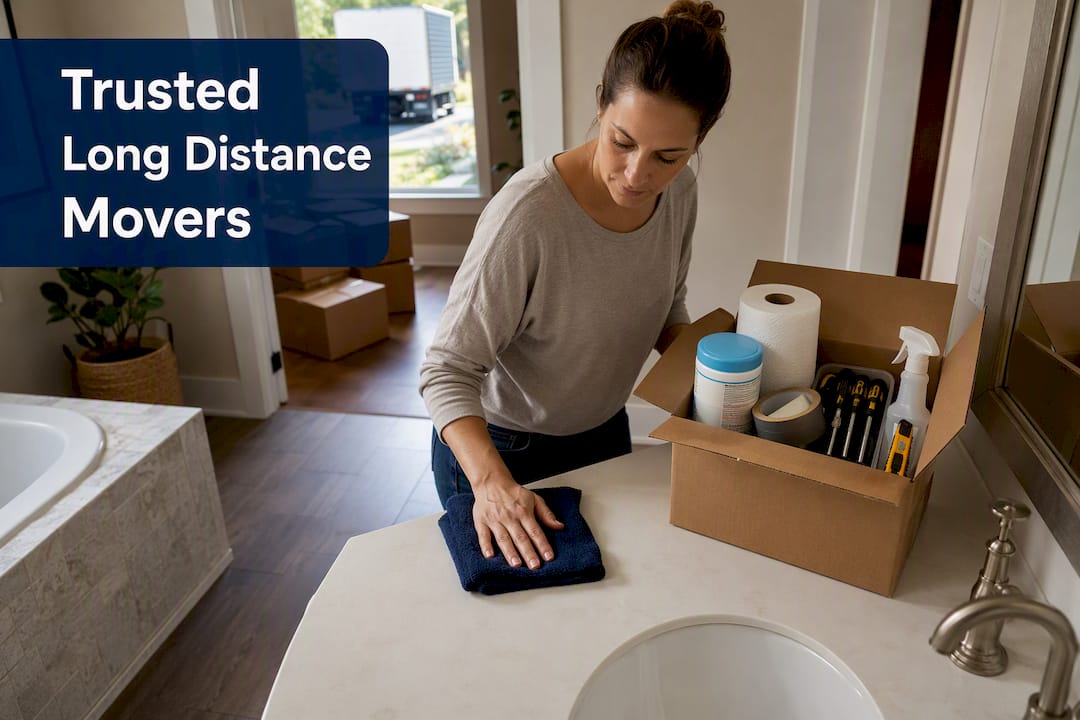
Leave flammable items and anything your movers list as prohibited out of this box entirely. Aerosols, propane, and certain cleaning chemicals often fall under items movers won’t transport, so check your carrier’s rules before you pack.
Kids and Pets: What to Pack to Comfort Them
A favorite toy, a nightlight, and familiar pajamas do more to settle a child on move-in night than any amount of extra furniture. For pets, pack food, bowls, a leash, and litter supplies, along with a blanket that already smells like home.

Reddit threads full of real moving experiences consistently point to one detail: small, familiar comforts, like a favorite pillow or a nightlight, reduce stress more than any amount of extra stuff. A separate small bag per child or pet keeps their essentials from getting buried under everyone else’s.
How to Pack, Label and Transport the First Night Box
Skip the cardboard. A medium plastic bin or a sturdy duffel resists leaks and survives being handled roughly, which matters when it’s the last thing tossed on the truck. Seal any liquids in bags before they go in, and label every visible side “OPEN FIRST” or “FIRST NIGHT” in large, unmistakable lettering.
Where you keep it matters as much as what’s in it. Keep it in your own vehicle whenever possible. If it has to ride on the truck, load it last so it’s the first thing unloaded, a practice confirmed across professional moving guides as standard load-order discipline.
- Gather items by category (sleep, hygiene, food, tech, tools, documents).
- Seal liquids and fragile items separately.
- Pack into a labeled plastic bin or duffel.
- Place it in the car, or load it last on the truck.
- Unload it first at the new home.
Pro Tip: Before the truck pulls away, do a final lid check: sheets, chargers, meds, documents, toothbrush. If any of those five are missing, open the box back up before it goes anywhere.
When to Pack It: A Simple Timeline
Pack the first night box after most of your main packing is done, ideally one to two days before moving day, not the morning of. Finalize meds, chargers, documents, and a change of clothes for the next day last, right before the box gets sealed.
On the morning of the move, do one more sweep for the small things that ride with you personally: phone, wallet, keys, medications, and any moving paperwork you’ll need to hand to your crew.
Professional Moving Tips From AMB on Load Order and Documentation
Movers mark boxes “Open First” for a reason: it tells the entire crew, not just you, which container gets special handling on both ends. Load and unload priority for a clearly labeled first-night box is standard practice on interstate jobs, where trucks are often packed for multiple stops and days on the road.
Before moving day, ask your movers a few direct questions: How will fragile items in the first-night box be protected? Is the shipment insured for the full transit? Can the crew guarantee the first-night box gets pulled off the truck before anything else? For readers planning a move that crosses state lines, AMB’s guides on long-distance moving and interstate relocations cover the full planning process beyond just this one box.
A Publisher’s Take on First Night Boxes
Three things matter: sleep, power, and documents. Everything else is comfort, not necessity. If you’re moving across state lines, keep original documents on your person and get your first-night box placement confirmed in writing with your movers if you can. For a full-service move where none of this falls on you alone, that’s exactly what a nationwide moving company is built to handle.
— AMB
Get a Moving Quote Built Around Your Timeline
Professional moving services handle the parts of a long-distance move that turn a first-night box from a nice idea into an actual plan: insured interstate transport, professional packing, and load-order handling that keeps your essentials accessible instead of buried under a truckload of boxes. Whether you’re moving state to state for work, family, or a fresh start, a cross country move goes smoother when the crew loading the truck already knows what needs to come off first.
If you’re comparing moving cost estimates or just want a realistic number for your specific route, request a quote from AMB and get a plan built around your actual move, not a generic one.
Sources
For broader planning, see AMB’s residential moving checklist and packing practices guide. For first-aid basics, check the Red Cross kit guide.