


TL;DR:
- Before booking, verify your mover’s USDOT number and build a realistic cost estimate for your move. Moving costs vary based on distance, route, season, and services, with proper planning reducing expenses. Confirm access details, get binding estimates, and choose the appropriate method to lower risks and expenses.
If you’re planning to move across states, do two things before you book anything: build a realistic total-cost estimate and verify your mover’s USDOT number on the FMCSA portal. Those two steps alone eliminate the most common and most expensive surprises.
TL;DR — do these first:
- Estimate your total move cost using distance, home size, and season as your three main variables.
- Choose your move method (full-service, DIY truck, container, or hybrid) based on budget and physical capacity.
- Verify the mover’s USDOT number on the FMCSA portal before signing anything.
- Request a binding in-home or virtual survey estimate, not a phone quote.
- Confirm pickup and delivery dates in writing on the bill of lading.
- Request a quote from a licensed interstate mover and download the FMCSA’s Your Rights and Responsibilities When You Move booklet before moving day.
Table of Contents
- How much does it cost to move across states?
- Which moving method is right for your situation?
- How do you pick and verify a legitimate interstate mover?
- How should you pack and declutter before an interstate move?
- How do you move people, pets, and vehicles across state lines?
- What should you expect on moving day and at delivery?
- What do you need to do after you arrive in your new state?
- How can you lower your moving costs without taking on extra risk?
- How do you protect yourself from moving fraud?
- Why Ambmovingservices is built for interstate moves
- Key Takeaways
- What movers actually see that surprises customers
- Get a compliant, binding quote for your interstate move
- Useful sources for verifying movers and researching costs
How much does it cost to move across states?
The national average cost for a cross-country 3-bedroom move varies and shifts significantly by route, season, and service level. That number varies significantly by route, season, and service level, so treat it as a starting point, not a budget.
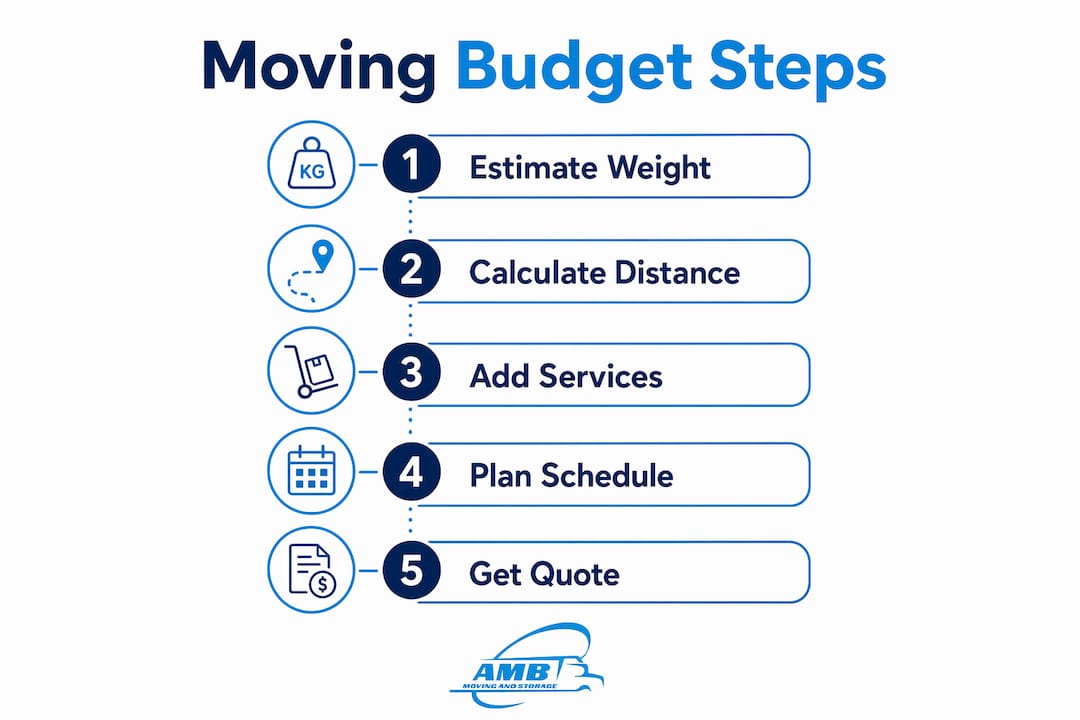
What actually drives the price
Distance is the biggest lever, but it’s not the only one. Origin and destination markets matter almost as much. Northeast moves tend to be priced notably above the national baseline; West Coast routes are also higher, while Midwest routes generally come in lower than average. Home size and total shipment weight directly affect the base rate. Add-on services like full packing, white-glove handling, and specialty item moves stack on top of that base.
Accessorial charges catch people off guard most often. Stair carries, long carries from a truck to your door, elevator waits, and parking permits are billed separately and rarely appear in a phone quote. Season matters more than most people expect: peak summer months typically cost more than off-peak months.
Sample route costs (3-bedroom, full-service)
| Route | Approx. Distance | Avg. 3BR Cost |
|---|---|---|
| New York → Los Angeles | [distance not specified] | Average $6,750 |
| Chicago → Dallas | [distance not specified] | Cost varies by service and specifics |
| Atlanta → Seattle | [distance not specified] | Cost varies by service and specifics |
| Boston → Miami | [distance not specified] | Cost varies by service and specifics |
Seasonal savings: Moving in February instead of July can reduce your total cost significantly on the same route with the same mover.
Quick budget formula: Take your estimated shipment weight in pounds, divide by 1,000, and multiply by your mover’s per-hundredweight rate. Add a flat $300–$600 for accessorials on a typical home. That gives you a working floor before packing services and storage.
Which moving method is right for your situation?
No single approach fits every move. The right choice depends on how much you want to spend, how much physical work you’re willing to do, and how much liability you’re comfortable carrying.

The main options
DIY truck rental gives you the lowest base cost but puts all the labor, fuel, tolls, and liability on you. Fuel alone for a cross-country truck can be a major additional cost. If anything breaks in transit, you own that loss unless you purchased the rental company’s damage waiver.
Portable containers (POD-style services) split the difference. You pack and load at your own pace; the container company handles transport. Storage flexibility is a genuine advantage if your move-in date is uncertain. Hidden costs include delivery fees, monthly storage charges, and overweight penalties.
Freight/LTL shipping works well for small loads or single rooms. You crate and palletize your items; a freight carrier moves them on a shared truck. It’s economical for small loads but requires more prep work and carries higher damage risk without proper crating.
Full-service interstate movers handle packing, loading, transport, and delivery. The cost is highest, but so is the protection when you use a properly licensed carrier with a binding estimate and a written bill of lading.
Hybrid moves (you pack, movers load and drive) are a practical middle ground for budget-conscious movers who still want professional transport.
Method comparison
| Method | Typical Cost (3BR) | Effort | Liability | Best For |
|---|---|---|---|---|
| DIY truck rental | Cost depends on rental fees and fuel | High | You | Tight budgets, short distances |
| Portable container | Cost depends on container size and duration | Medium | Shared | Flexible timelines, mid-size loads |
| Freight/LTL | Cost depends on volume and distance | High | You | Small loads, single rooms |
| Full-service movers | Cost can vary widely, often higher | Low | Mover (with binding estimate) | Larger homes, long routes |
| Hybrid | Cost varies based on services selected | Medium | Shared | Budget-conscious, full-home moves |
Pro Tip: DIY savings evaporate fast on moves over 1,000 miles. Factor in two to three nights of hotels, meals, fuel, and the physical toll of driving a 26-foot truck before you commit to the rental route.
How do you pick and verify a legitimate interstate mover?
Start here: look up the mover’s USDOT number on the FMCSA portal before you do anything else. The FMCSA requires every registered interstate mover to provide you with the booklet Your Rights and Responsibilities When You Move and information about their dispute settlement program. If a mover can’t produce either, walk away.
Verification checklist
- Confirm active USDOT registration on the FMCSA portal (takes two minutes).
- Ask for the mover’s MC (Motor Carrier) number and verify it matches their operating authority.
- Request the Your Rights and Responsibilities booklet and their arbitration program details in writing.
- Get at least three binding estimates from in-home or virtual surveys, never phone-only quotes.
- Confirm that pickup and delivery dates appear in the written contract.
- Review the bill of lading before loading begins. Federal regulations require movers to issue a bill of lading at or before loading; it is both your contract and your receipt.
Red flags to watch for
- No USDOT number or refusal to provide it.
- Demands a large cash deposit upfront (legitimate movers typically collect at delivery).
- Provides only a phone or online quote without a physical or virtual survey.
- Presents blank or incomplete contract forms.
- Quotes a price dramatically lower than every other estimate you received.
Phone-only quotes routinely miss access conditions, stairs, long carries, and elevator waits. Those omissions become surprise charges on delivery day. A virtual or in-home survey is the only way to get an estimate that actually holds.
Statistic: Industry experts consistently find that estimates change most often because initial digital or phone quotes miss access conditions at origin or destination, leading to accessorial charges the customer never anticipated.
Pro Tip: Before your survey appointment, photograph your building entrance, stairwells, elevator dimensions, and any narrow hallways. Send those photos to the estimator in writing. That documentation makes it much harder for a mover to add access-related charges after the fact.
How should you pack and declutter before an interstate move?
Declutter before you pack. Removing 20%–30% of your household items before a long-distance move can meaningfully lower your shipment weight and, with it, your final cost. Sell bulky furniture locally, donate what you haven’t used in a year, and toss anything that costs more to move than to replace.
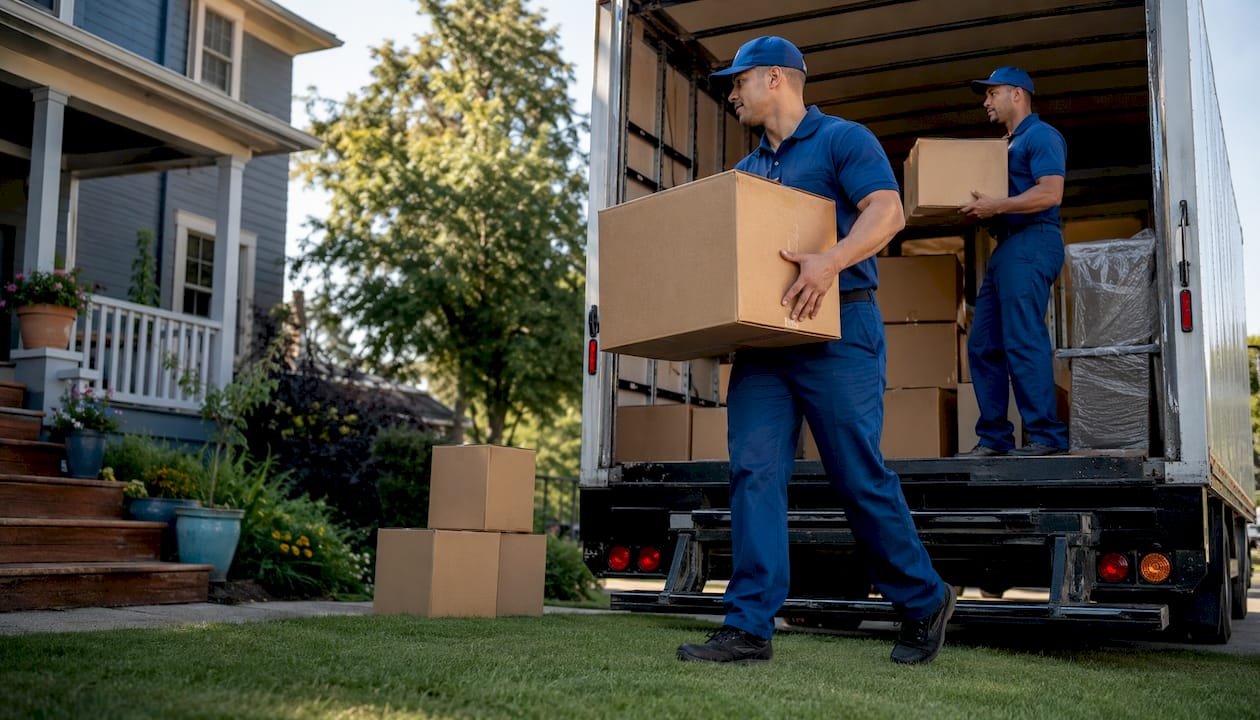
Week-by-week packing timeline
8+ weeks out: Sort every room. Sell, donate, or toss items you won’t move. Order packing supplies. Start researching and getting binding estimates from interstate movers.
4 weeks out: Pack non-essentials (seasonal items, books, décor). Photograph high-value items and create an itemized inventory. Confirm your move date and binding estimate in writing.
2 weeks out: Pack most of the house except daily-use items. Confirm utility stop/start dates. Notify your bank, employer, and subscriptions of your address change.
1 week out: Pack remaining items. Prepare your essentials box (see below). Confirm pickup window with your mover and recheck the bill of lading.
Moving day: Keep your inventory list and bill of lading with you. Do not sign anything at delivery until you’ve inspected every item.
Essentials box for the first 48 hours
Pack one clearly labeled box or bag that rides with you, not on the truck:
- Medications and medical records
- Phone chargers, laptop, and power bank
- Two days of clothing and toiletries
- Snacks, water, and a small toolkit
- Important documents: lease/deed, insurance cards, passports, birth certificates
- Cash and payment cards
- Pet food, leash, and vaccination records if traveling with animals
Keep a copy of your itemized inventory and bill of lading in this bag. The FMCSA moving checklist specifically advises keeping the bill of lading until delivery and all claims are settled.
How do you move people, pets, and vehicles across state lines?
Book your travel plan at the same time you book your mover. Waiting costs you money on flights and hotel rooms, and it creates scheduling conflicts if your delivery window shifts.
People: drive or fly?
Driving makes sense when you have multiple vehicles to move, when you’re traveling with pets, or when the route is under 1,000 miles. For longer routes, flying and shipping your car often costs less than the combined fuel, hotel, and wear-and-tear of a cross-country drive. If you drive, plan your legs at no more than 8–9 hours per day and book hotels in advance along your route.
Moving your vehicles
- Drive it yourself: Free, but adds mileage and wear. Works well for routes under 1,500 miles.
- Open auto transport: Most common and affordable. Your car rides on an open carrier with other vehicles.
- Enclosed transport: Higher cost, used for classic cars, luxury vehicles, or high-value trucks.
- Tow behind a rental truck: Feasible for one vehicle, but adds length and fuel cost to your rental.
When shipping a car across state lines, confirm the transport company carries adequate cargo insurance. Check your vehicle’s title and registration requirements in the destination state before you arrive; most states give you 30–90 days to re-register, but that window varies.
Pets
- Book airline pet reservations early. Cabin spots for pets are limited and fill fast.
- Driving with pets is usually less stressful for the animal. Plan rest stops every 2–3 hours.
- Carry current vaccination records and a health certificate from your vet (required by most airlines and some states).
- Use an airline-approved crate sized for your pet to stand, turn, and lie down comfortably.
- Research your destination state’s pet import rules; a small number of states have specific requirements for certain breeds or species.
What should you expect on moving day and at delivery?
Expect a pickup window, not an exact time. Most interstate movers give a 2–4 hour arrival window. Transit time depends on distance and whether your shipment is consolidated with other loads. For a 1,000-mile move, plan on 3–5 transit days. For cross-country routes, 7–14 days is realistic.
Common extra charges and when they trigger
- Stair carry: Billed per flight of stairs above the first, at origin or destination.
- Long carry: Triggered when the truck cannot park within a set distance (often 75 feet) of your door.
- Shuttle service: Required when a full-size moving truck cannot access your street or building.
- Appliance disconnect/reconnect: Charged separately for washers, dryers, and refrigerators.
- Reweigh fee: If the mover requests a reweigh at a certified scale, you have the right to observe it.
What to do during loading and at delivery
Stay present during loading. Walk through every room with the crew and note any pre-existing damage on the inventory sheet before you sign it. At delivery, inspect every item before signing the delivery receipt. Note any damage directly on the paperwork. Do not release final payment until the paperwork is complete and accurate.
Pro Tip: If your delivery is delayed beyond the dates in your bill of lading, document the delay in writing immediately. Under FMCSA rules, you may be entitled to compensation. Keep every piece of paperwork until your claim window closes.
What do you need to do after you arrive in your new state?
Change your USPS address, update your driver’s license and vehicle registration at your new state’s DMV, and set utility start/stop dates before you leave your old home. Those three tasks prevent the most common post-move headaches.
Post-move admin checklist
- USPS address change: Do this online at usps.com before moving day. Mail forwarding starts within a few days.
- Driver’s license: Most states require you to get a new license within 30–60 days of establishing residency. Check your new state’s DMV for the exact window.
- Vehicle registration: Typically due within 30–90 days. You’ll need your title, proof of insurance, and often a VIN inspection.
- Voter registration: Update at usa.gov/change-voter-registration or your new state’s election office.
- School enrollment: Contact the district early. Most require proof of residency, immunization records, and prior school transcripts.
- Auto and home insurance: Update your address immediately. Coverage terms and rates change by state.
- Health care: Transfer prescriptions, find new in-network providers, and request medical records before you leave.
- State income taxes: If you move mid-year, you may owe partial-year returns in both states. Check each state’s tax authority website for filing requirements.
Grace periods for licenses and registration vary widely by state. California gives you 10 days to get a new license after establishing residency; Texas gives you 90 days. Look up your specific state’s rules before you assume you have time.
How can you lower your moving costs without taking on extra risk?
Move off-peak and reduce your shipment volume. Those two moves produce the largest savings with the least added risk. Summer peak pricing is higher than off-peak rates; a January or February move on the same route with the same mover can result in significant savings.
Lower-risk savings tactics
- Pack yourself: Packing labor is one of the largest line items on a full-service quote. Doing it yourself cuts that cost entirely.
- Book mid-week: Monday through Wednesday slots are less in demand and often priced lower than Friday or Saturday.
- Accept a flexible delivery window: Movers charge a premium for guaranteed delivery dates. A 3–5 day window instead of a specific date can reduce your quote.
- Get three binding estimates: Prices vary more than most people expect between carriers on the same route. Three estimates give you real market data.
- Sell bulky furniture locally: Large, heavy items (sectional sofas, treadmills, dressers) cost more to move than they’re worth. Sell them and buy replacements at your destination.
- Time your move for January or February: MoveSmart data shows February moves average roughly 28% less than July on comparable routes.
Pro Tip: Choosing to move during off-peak months and packing yourself can substantially reduce your total moving costs without changing your mover or route.
How do you protect yourself from moving fraud?
The FMCSA requires every interstate mover to be registered with a USDOT number and to provide you with Your Rights and Responsibilities When You Move before you sign. Verify that USDOT number on the FMCSA portal. If a mover can’t pass that check, they’re not a legal interstate carrier.
Red flags checklist
- No USDOT number or refusal to share it.
- Demands a large cash deposit before pickup (legitimate movers collect at delivery).
- Provides only a verbal or online-only estimate with no in-person or virtual survey.
- Presents blank or partially completed contract documents.
- Quotes a price far below every other estimate you received.
- Holds your belongings hostage pending additional payment not in the original contract.
Your rights under FMCSA
The FMCSA’s consumer rights framework gives you specific protections. Your mover must provide a written bill of lading before loading begins. You have the right to be present at any reweigh. If your goods are lost or damaged, you have nine months from delivery to file a written claim. The mover must acknowledge your claim within 30 days and resolve it within 120 days.
Understand the difference between released value protection (included at no charge, but pays only $0.60 per pound per article) and full-value protection (the mover is liable for repair, replacement, or cash settlement at current market value). Released value sounds like coverage; it rarely is.
Statistic: Estimates change most often because initial phone or digital quotes miss access conditions at origin or destination. An in-home or virtual survey is the most reliable way to lock in a price that holds.
Pro Tip: Note the mover’s USDOT number and MC number on your own phone before you sign anything. If a dispute arises, those numbers are how you file a complaint with the FMCSA and track your case.
Why Ambmovingservices is built for interstate moves
Ambmovingservices (AMB Moving & Storage Inc.) is licensed and insured for interstate moves and operates in compliance with FMCSA requirements, including USDOT registration, written bill of lading, and a dispute settlement program. For readers who want a compliant, full-service option, AMB covers the full range of interstate moving needs.
AMB service capabilities:
- Long-distance moving for residential and commercial clients across the country
- Interstate and state-to-state relocations with FMCSA-compliant documentation
- Full packing services and specialty item handling
- Secure storage solutions for moves with staggered delivery timelines
- Commercial and business relocation services
Every estimate from Ambmovingservices is based on a virtual or in-home survey, not a phone guess. That means the price you’re quoted is the price that holds, with no surprise accessorial charges on delivery day.
Key Takeaways
A cost-conscious interstate move requires three things done in the right order: a realistic budget built from real route data, a USDOT-verified mover with a binding written estimate, and a move timed for off-peak months to capture the largest available savings.
| Point | Details |
|---|---|
| Verify USDOT first | Check every mover’s USDOT number on the FMCSA portal before signing any contract. |
| Budget from real data | National average for a 3BR cross-country move is $8,950; example: New York to Los Angeles averages $6,750 for a 3BR move. Route and season shift that figure significantly. |
| Move off-peak | Moves during February tend to cost less than those in July on comparable routes and carriers. |
| Get a binding survey estimate | Phone quotes miss access conditions; only in-home or virtual surveys produce prices that hold at delivery. |
| Ambmovingservices | AMB provides FMCSA-compliant interstate moves with binding estimates, written bill of lading, and dispute settlement. |
What movers actually see that surprises customers
Most interstate moving problems trace back to the same handful of issues, and almost none of them are about the truck or the crew.
The most common one: customers give incomplete access information at the time of the estimate. A third-floor walkup with no elevator, a street too narrow for a 53-foot trailer, a gated community that requires 48-hour notice. These details don’t show up in a phone quote, and they become line-item charges on delivery day. The fix is simple: photograph your building access at both ends and send those photos to your estimator before the survey.
Transit time surprises come second. On a 1,000-mile move, expect 3–5 transit days from pickup to delivery. Cross-country routes (2,500+ miles) realistically run 7–14 days, especially when your shipment is consolidated with other loads. A mover who promises delivery in two days on a coast-to-coast move is either running a dedicated truck at a premium price or overpromising. Ask specifically whether your shipment will be consolidated and what the realistic delivery window is, not the best-case scenario.
Pickup windows work the same way. Your mover will give you a date range, typically 1–3 days, not a guaranteed hour. Plan your own travel around the later end of that window so you’re not scrambling if pickup runs a day behind schedule.
Get a compliant, binding quote for your interstate move
Ambmovingservices takes the guesswork out of interstate moving. Every quote starts with a virtual or in-home survey, so the price you see is the price you pay. AMB is USDOT-registered, carries full liability insurance, and issues a written bill of lading on every move, which means you have the federal protections the FMCSA requires.
Whether you’re moving a studio apartment from Chicago to Austin or a four-bedroom home from New York to Los Angeles, AMB’s long-distance moving team handles the logistics from first estimate to final delivery. Storage options are available for moves with staggered timelines. Commercial relocations are covered too.
Ready to lock in a price that holds? Request your binding quote from Ambmovingservices today and get a compliant, written estimate based on your actual move, not a phone guess.
Useful sources for verifying movers and researching costs
Use these primary sources to verify mover credentials, understand your rights, and research cost benchmarks before you book.
FMCSA resources
- Protect Your Move | FMCSA: Verify mover USDOT registration, access the consumer rights booklet, and download the Ready to Move brochure.
- FMCSA Moving Checklist: Before-move, moving-day, and delivery-day checklists from the federal agency that regulates interstate movers.
- Consumer Rights and Responsibilities | FMCSA: Full explanation of your rights under federal law, including bill of lading requirements and claims processes.
- Your Rights and Responsibilities When You Move (2022 booklet) | FMCSA: The required booklet every licensed interstate mover must give you before you sign.
Cost data
- Moving Cost Database | MoveSmart: National averages, route-level data, and regional cost indexes based on verified moves.
Post-move admin
- Voter registration update | USA.gov: Update your voter registration after relocating to a new state.
- Your new state’s DMV website: Look up driver’s license and vehicle registration deadlines specific to your destination state.


