


TL;DR:
- Storage solutions help bridge timing gaps during long-distance moves caused by delays or schedule changes.
- Different storage types offer flexibility, security, and climate control to protect belongings during transit.
- Incorporating storage into your move reduces stress, protects valuables, and can save money through bundled services.
Most families assume an interstate move is simple: pack everything, load the truck, drive to the new home, and unload. Reality rarely cooperates. Closing dates shift, new landlords push back move-in dates, and cross-country logistics create gaps that no amount of planning fully eliminates. When your old home is empty but your new one isn’t ready, you need somewhere safe for your belongings. Storage solutions fill exactly that gap, and understanding how they work can mean the difference between a smooth relocation and a genuinely stressful ordeal.
Table of Contents
- Why storage solutions matter during long-distance moves
- Key types of storage solutions explained
- How storage protects your belongings in transit
- Maximizing flexibility and cost-efficiency with storage
- Our take: Why storage is a moving essential, not a luxury
- Make your interstate move easier with expert storage support
- Frequently asked questions
Key Takeaways
| Point | Details |
|---|---|
| Bridges moving gaps | Storage solutions prevent stress by bridging the gap between move-out and move-in dates. |
| Protects your items | Secure, climate-controlled facilities keep your belongings safe during complex moves. |
| Saves money and time | Using storage strategically can help you avoid emergency rentals and speed up your transition. |
| Offers flexible options | Various storage types let you customize your solution for timing, budget, and access needs. |
Why storage solutions matter during long-distance moves
Interstate moves are fundamentally different from local ones. You can’t easily make a second trip if something doesn’t fit or if your new home isn’t ready. The truck rolls once, and everything has to go somewhere. That reality creates a logistical pressure that storage solutions are specifically designed to relieve.
Many families face gaps between move-out and move-in dates during interstate relocations, and those gaps can last anywhere from a few days to several weeks. The reasons vary, but they tend to cluster around a handful of common situations:
- Closing date delays: Real estate transactions fall through or get pushed back, leaving you homeless between properties.
- Staggered schedules: Your lease ends before your new home is available, or your employer needs you to start before your family can follow.
- Downsizing decisions: You’re moving into a smaller home and need time to decide what stays and what goes.
- Renovation timing: The new home needs work done before you can move in, and contractors rarely finish on schedule.
- Multi-stop moves: You’re relocating in stages, perhaps staying temporarily with family before settling into a permanent address.
“Planning your storage needs at least four to six weeks before your move date gives you the best chance of securing the right unit size at a competitive price.”
Exploring storage solutions for long-distance moves early in your planning process gives you options instead of emergencies. The 2026 family storage guide recommends treating storage as a built-in part of your moving budget rather than a last-minute add-on.
Pro Tip: Reserve your storage unit before you finalize your moving date. Units in popular sizes fill up fast, especially in summer months when most families relocate.
Key types of storage solutions explained
Not all storage services fit every type of move, and knowing the differences simplifies planning considerably. There are three main categories worth understanding.
Self-storage is the classic approach. You rent a unit at a facility, load it yourself, and access it on your own schedule. It’s flexible and often the most affordable option, but it puts the labor on you.
Portable storage containers (sometimes called pods) are delivered to your driveway. You load them at your own pace, and the company picks them up and either stores the container or delivers it to your new address. Great for people who want to pack gradually.
Full-service storage is what moving companies like us offer. Your belongings are packed, transported, stored in a secure facility, and then delivered when you’re ready. You never have to touch a box twice.
| Storage type | Access | Typical cost | Security | Best for |
|---|---|---|---|---|
| Self-storage | Anytime | Low to moderate | Varies | Budget-conscious movers |
| Portable containers | Scheduled pickup | Moderate | Good | Flexible loading timelines |
| Full-service storage | On request | Higher | Excellent | Long-distance, hands-off moves |
Choosing the right approach comes down to a few clear steps:
- Estimate your volume. Count rooms, not boxes. A three-bedroom home typically needs a 10×20 unit or larger.
- Set your timeline. Short-term needs (under 30 days) favor portable containers. Longer gaps favor full-service or self-storage.
- Check your access needs. If you’ll need to retrieve items frequently, self-storage wins. If you want everything handled, full-service is worth the cost.
- Review insurance coverage. Your homeowner’s policy may not cover items in storage. Confirm before you sign anything.
For a broader look at how storage fits into your overall plan, the relocation logistics guide breaks down the full moving timeline in practical detail.
How storage protects your belongings in transit
Long-distance moves expose your belongings to risks that local moves simply don’t. Temperature swings across multiple states, longer time in transit, and the physical stress of loading and unloading multiple times all increase the chance of damage. Storage, when done right, actually reduces those risks.
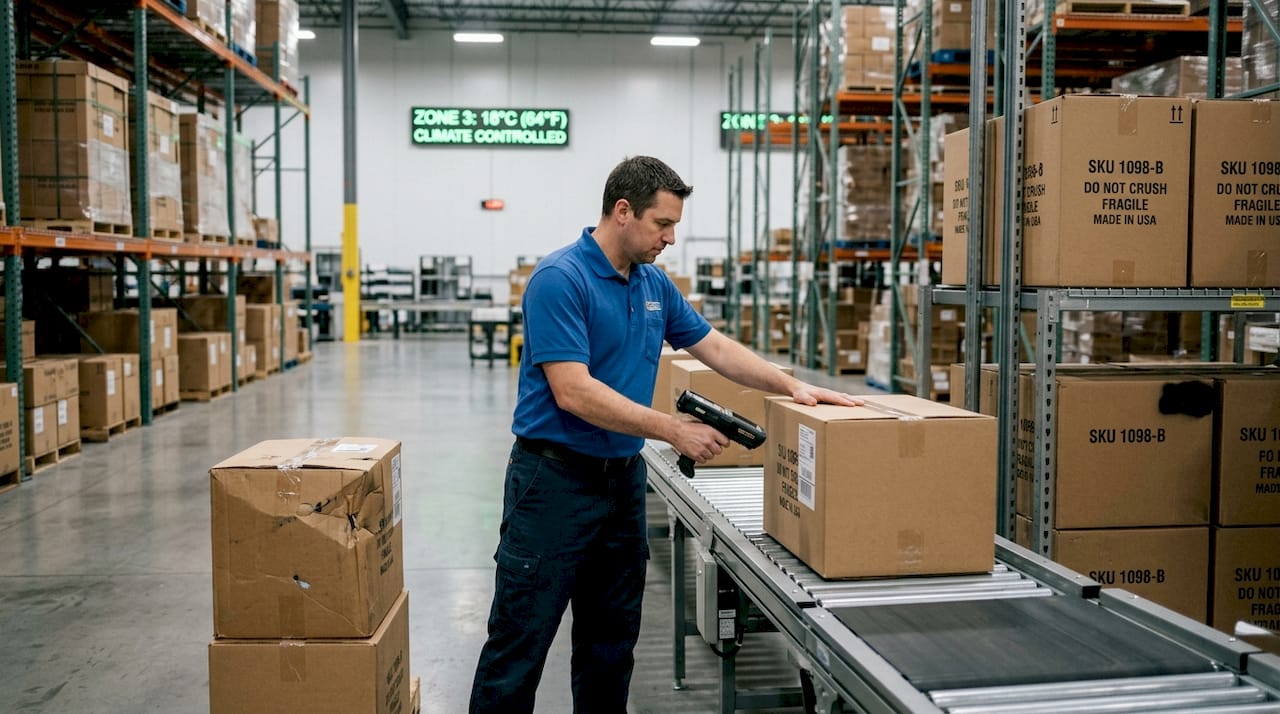
Professional storage solutions can include climate control, insurance options, and 24/7 monitoring, features that matter enormously when your furniture and valuables sit in a facility for weeks.
Here’s what modern storage facilities typically offer and why each feature matters:
| Feature | What it does | Why it matters |
|---|---|---|
| Climate control | Maintains stable temperature and humidity | Prevents warping, mold, and cracking in wood, electronics, and art |
| 24/7 surveillance | Continuous video monitoring | Deters theft and provides accountability |
| Individual unit locks | Personal access codes or padlocks | Limits access to your unit specifically |
| Insurance options | Covers replacement value of stored items | Protects you financially if something goes wrong |
Families who use professionally managed storage report significantly fewer damaged or missing items compared to those who improvise storage in garages or with friends. The controlled environment alone makes a measurable difference for sensitive items like electronics, antiques, and musical instruments.
Protecting your belongings starts before the truck arrives. Proper packing, labeling, and choosing the right storage environment are all part of the same strategy.
Pro Tip: Create a numbered inventory list and photograph each box before it goes into storage. If you ever need to file a claim or locate a specific item quickly, that list saves hours of searching.
Maximizing flexibility and cost-efficiency with storage
Storage isn’t just about protecting your stuff. Used strategically, it gives you control over your entire moving timeline and can actually save you money in ways that aren’t obvious at first.
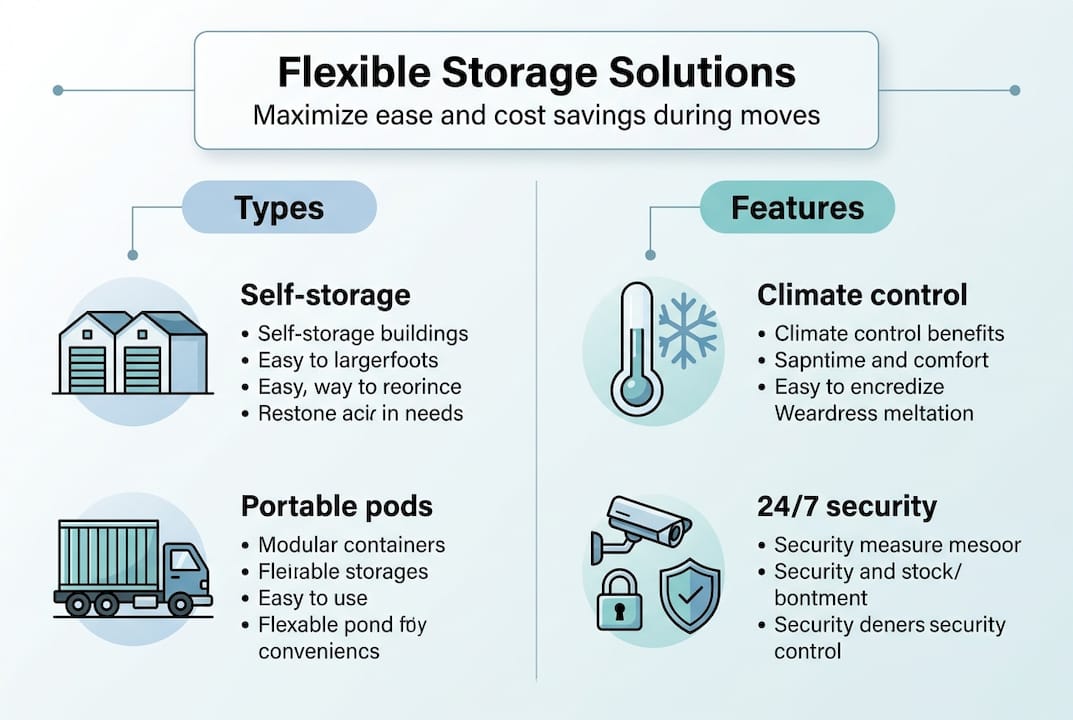
Families can avoid last-minute hotel or rental arrangements by leveraging storage to bridge the moving timeline, which adds up fast when you’re talking about weeks of temporary housing for a family of four.
Here’s how flexible storage makes the whole process more manageable:
- Split moves: Send the bulk of your belongings to storage first, then travel light to your temporary address while waiting for your new home to be ready.
- Avoid delay penalties: If your new home isn’t ready and you’ve already vacated your old one, storage keeps you from paying double rent or facing penalties for overstaying a lease.
- Staggered move-in: Move in gradually, bringing items from storage as you unpack and organize each room. This is especially useful in smaller homes where unpacking everything at once creates chaos.
- Negotiating power: When you’re not in a rush to empty the storage unit, you have more leverage in real estate negotiations. You can wait for the right closing date instead of accepting a bad one.
- Avoiding rushed decisions: Downsizing is hard. Storage gives you time to decide what to keep, donate, or sell without making those calls under pressure on moving day.
The smartest cost move is bundling storage with your moving company. When your mover handles both transportation and storage, you eliminate the double-handling fee that comes from using two separate providers. Items go from your home to the storage facility once, and from storage to your new home once.
Pro Tip: Ask your moving company about combined moving and storage packages before booking separately. Bundled pricing is almost always cheaper than coordinating two vendors, and it reduces the risk of miscommunication about delivery windows.
For flexible storage solutions that adapt to your timeline, look for providers who offer month-to-month terms rather than locking you into a fixed contract.
Our take: Why storage is a moving essential, not a luxury
We’ve helped hundreds of families relocate across state lines, and the pattern is consistent. The families who planned for storage, even when they hoped they wouldn’t need it, had smoother moves. The ones who assumed everything would line up perfectly were the ones calling us in a panic at 9 p.m. on a Thursday because their closing got pushed back three days.
Storage is not an upsell. It’s a buffer against the unpredictability that is built into every long-distance move. Real estate delays, weather, traffic, contractor schedules, none of these are in your control. Storage is.
The real value isn’t just protecting furniture. It’s the peace of mind that comes from knowing your timeline has room to breathe. When you’re not scrambling, you make better decisions about your new home, your new neighborhood, and your new life. Moving storage insights consistently point to one truth: families who use storage report less stress and fewer regrets about their moves. That’s not a coincidence.
Make your interstate move easier with expert storage support
Now that you understand how storage fits into a long-distance move, the next step is finding a provider who handles both moving and storage under one roof.
At AMB Moving & Storage Inc., our interstate moving services are built around the reality that moves rarely go in a straight line. We offer integrated trusted storage options that work alongside your moving plan, not as an afterthought. Whether you need storage for three days or three months, our team coordinates the full picture so nothing gets lost, damaged, or forgotten. Reach out today for a transparent estimate and let us build a moving plan that actually fits your timeline.
Frequently asked questions
How long can I keep my items in storage during a move?
Short- and long-term storage options are available for interstate relocations, ranging from a few days to several months, so you can match the duration to your exact moving timeline without being locked into a rigid contract.
Will my belongings be safe in storage during a long-distance move?
Modern facilities provide climate control, security monitoring, and insurance options that protect your belongings from damage, theft, and environmental risks throughout your move.
Is storage necessary if my move-out and move-in dates align perfectly?
Even perfectly aligned dates can unravel due to unforeseen issues like closing delays or contractor setbacks, so having storage available gives you a reliable backup without added stress.
What kind of storage is best for valuable or delicate items?
Climate control and insurance options are the two most important features to look for when storing valuables, antiques, electronics, or anything sensitive to temperature and humidity changes.