


TL;DR:
- Interstate moving offers families access to larger job markets, lower costs, and better services across state lines. Proper planning, licensing, and timing can reduce costs, ease logistics, and maximize financial and lifestyle benefits. Moving with professional carriers ensures federal compliance, protection, and smoother transitions into wider housing and community options.
Interstate moving is defined as any residential or commercial relocation that crosses state lines, and it delivers measurable advantages in career growth, financial health, and quality of life. The benefits of interstate moving go well beyond a change of scenery. Families who relocate across states often access larger job markets, lower costs of living, better school districts, and housing markets that simply do not exist in their current state. The Federal Motor Carrier Safety Administration (FMCSA) governs all interstate carriers, which means your move comes with federal consumer protections built in. Understanding these advantages helps you decide whether a long-distance relocation is the right call for your household.
1. What are the economic and career benefits of interstate moving?
Relocating across state lines opens access to job markets that do not exist locally. The biggest career benefit from an interstate move comes when a rare opportunity cannot be found within your current region. That single factor drives more long-distance relocations than any lifestyle preference.
The financial upside extends beyond salary. Relocating to states with no income tax, such as Texas, Florida, and Washington, can produce a 4–13% take-home pay increase depending on your earnings bracket. That difference compounds over years, not just months.
Tax filing adds complexity worth planning for. Moving mid-year requires part-year resident returns in both states. Some states have reciprocity agreements that reduce the filing burden, but a tax professional familiar with multi-state returns is worth the cost.
Licensed professionals face an additional layer of planning. Occupational licensing reciprocity varies widely by state and profession. Verifying whether your credentials transfer before you sign a lease protects your income from day one.
- Access to specialized industries concentrated in specific states (tech in Washington, finance in New York, energy in Texas)
- Employer relocation packages that cover moving costs, temporary housing, and signing bonuses
- Lower cost of living in destination states that increases real purchasing power even at the same salary
- Remote work flexibility that lets you move to a lower-cost state while keeping a higher-paying employer
Pro Tip: Negotiate your relocation package before you accept the offer. Many employers cover full moving costs, and that negotiation window closes the moment you sign.
2. How interstate moving improves quality of life and lifestyle
Quality of life improvements from a long-distance relocation are real, but they take time to materialize. Long-distance movers take an average of 74 days to feel settled in a new area. Establishing routines and exploring the neighborhood are the two factors most tied to faster adjustment.
The lifestyle gains families report most often include climate, schools, and healthcare access. Moving from a high-cost urban center to a mid-sized city in the Southeast or Mountain West frequently delivers all three at once. You get warmer weather, lower property taxes, and access to regional medical centers that rival major metro hospitals.
- Better school districts with higher graduation rates and more extracurricular programs
- Access to outdoor recreation, national parks, and climate preferences that match your household’s priorities
- Diverse communities with cultural amenities that match your family’s background and interests
- Reduced commute times in less congested metros, which returns hours to your week
- A psychological reset that research consistently links to increased motivation and reduced stress
The social cost is real too. Leaving established friendships and community ties is the factor most likely to affect long-term satisfaction after an interstate move. Families who plan for this, by joining local groups, scheduling return visits, and maintaining digital connections, report faster and more complete adjustment.
3. Logistical advantages of using professional interstate moving services

Professional interstate movers do more than carry boxes. They manage federal compliance, coordinate delivery windows, and carry the liability that protects your belongings across hundreds or thousands of miles.
FMCSA-registered carriers operate under federal rules that require written estimates, defined liability coverage, and dispute resolution processes. Hiring professional movers simplifies interstate relocation with expertise in safe packing, regulatory compliance, and stress reduction. That expertise is not available when you rent a truck and move yourself.
- Federal compliance management. Licensed carriers handle FMCSA documentation, weight tickets, and delivery receipts so you do not have to.
- Packing and crating expertise. Professional packers use industry-standard materials and techniques that reduce damage claims significantly.
- Binding estimates. A binding estimate locks your price at the agreed weight and services, protecting you from surprise charges at delivery.
- Valuation coverage. Full-value protection covers replacement cost for lost or damaged items, not just depreciated value.
- Storage coordination. When closing and move-in dates do not align, professional carriers offer secure storage solutions that bridge the gap without you scrambling for a self-storage unit.
- Delivery window management. Long-distance carriers schedule delivery windows and communicate proactively, which removes the guesswork from your arrival planning.
Pro Tip: Always request a binding estimate in writing before your move date. A non-binding estimate can increase at delivery based on actual weight, and that surprise bill arrives at the worst possible moment.
Interstate moves require 8–12 weeks of advance planning for regulatory compliance and logistics coordination. Booking early also locks in carrier availability during peak season.
4. Financial considerations and how to prepare for interstate moving costs
The average cost of an interstate move is approximately $9,060 in 2026, with typical costs ranging from $4,000 to $10,000 for a 2–3 bedroom household. Distance and shipment weight are the two primary cost drivers. Understanding both helps you budget accurately before you commit.
| Cost Factor | Typical Impact |
|---|---|
| Distance (miles) | Primary pricing variable; longer routes increase base cost |
| Shipment weight (lbs) | Heavier loads raise both transport and labor costs |
| Service level | Full-service packing adds cost; labor-only reduces it |
| Timing (season) | Peak season (may–august) costs 20–30% more than off-peak |
| Storage needs | Bridge storage adds a monthly fee if dates do not align |
Financial advisors recommend a dedicated relocation fund of $8,000 to $20,000 plus 3–6 months of living expenses before moving interstate. These funds cover deposits, moving fees, temporary housing, and travel costs that appear before your income stabilizes in the new location.
- Declutter aggressively before your move. Removing 1,000 pounds of items reduces transportation costs by approximately $750 due to weight-based pricing.
- Schedule your move in september, october, or november to capture off-peak savings of 20–30% compared to summer rates.
- Get at least three written estimates from FMCSA-registered carriers before choosing a mover.
- Review the relocation home sale process early if you own your current home, since sale timing directly affects your moving budget.
- Check whether your employer offers a relocation assistance program before paying out of pocket.
For a detailed breakdown of what drives costs on specific routes, the 2026 interstate moving cost report from Ambmovingservices provides real route data that generic estimates cannot match.
5. How interstate moving opens access to wider housing and community options
Interstate relocation expands your housing options beyond what any single metro market offers. States with competitive tax and housing policies compound financial benefits over time, which is why policy environment ranks among the top motivators for interstate migration.
Moving from a high-cost coastal market to a mid-tier city in the South or Midwest can cut your housing payment by 30–50% for a comparable property. That difference translates directly into savings, investment capacity, or a larger home for the same budget.
- Access to newer housing stock in growing Sun Belt metros where inventory is higher and prices are more competitive
- Lower property tax rates in states like Tennessee, Alabama, and South Carolina compared to California, New York, or New Jersey
- Renter-friendly markets with stronger tenant protections in states like Oregon and Minnesota
- Retirement-friendly states with no tax on Social Security income and lower overall cost of living
- Suburban communities with top-rated school districts that are priced out of reach in major coastal metros
The community dimension matters as much as the financial one. Families who research neighborhoods before moving, using school rating tools, local crime data, and community forums, report significantly higher satisfaction in their first year.
Key Takeaways
Interstate moving delivers compounding advantages across career, finances, lifestyle, and housing when families plan thoroughly and use licensed professional carriers.
| Point | Details |
|---|---|
| Career and income gains | No-income-tax states can raise take-home pay by 4–13% compared to high-tax states. |
| Budget before you move | Build a relocation fund of $8,000–$20,000 plus 3–6 months of living expenses before your move date. |
| Use licensed carriers | FMCSA-registered movers provide binding estimates, valuation coverage, and federal consumer protections. |
| Time your move off-peak | Moving in fall or winter saves 20–30% compared to peak summer rates. |
| Research housing markets | States with favorable tax and housing policies compound financial benefits over years, not just months. |
What I have learned from years of interstate moves
The families who benefit most from interstate relocation are the ones who treat it as a financial and lifestyle decision, not just a logistics problem. Most people spend weeks comparing moving quotes and almost no time comparing the tax environments, school ratings, or job market depth of their destination. That imbalance costs them.
The overlooked benefit I see consistently is the reset effect. Moving to a new state forces you to rebuild routines, which turns out to be an opportunity most people do not realize they needed. New neighborhoods, new professional networks, and new community involvement tend to accelerate personal and career growth in ways that staying put rarely does.
The challenge most families underestimate is the social cost. Leaving a support network is real, and it affects wellbeing for months. The families who plan for it, by budgeting for return visits and joining local groups within the first 30 days, adjust faster and report higher satisfaction at the one-year mark.
My honest advice: do the financial math first, then let lifestyle preferences guide the final choice. The numbers either support the move or they do not. If they do, the lifestyle benefits tend to follow.
— AMB
How Ambmovingservices supports your interstate move
Planning a long-distance relocation involves more moving parts than most families anticipate. Ambmovingservices specializes in full-service interstate moving for residential and commercial clients across the United States, with transparent pricing, FMCSA compliance, and dedicated move coordinators who manage your timeline from first contact to final delivery.
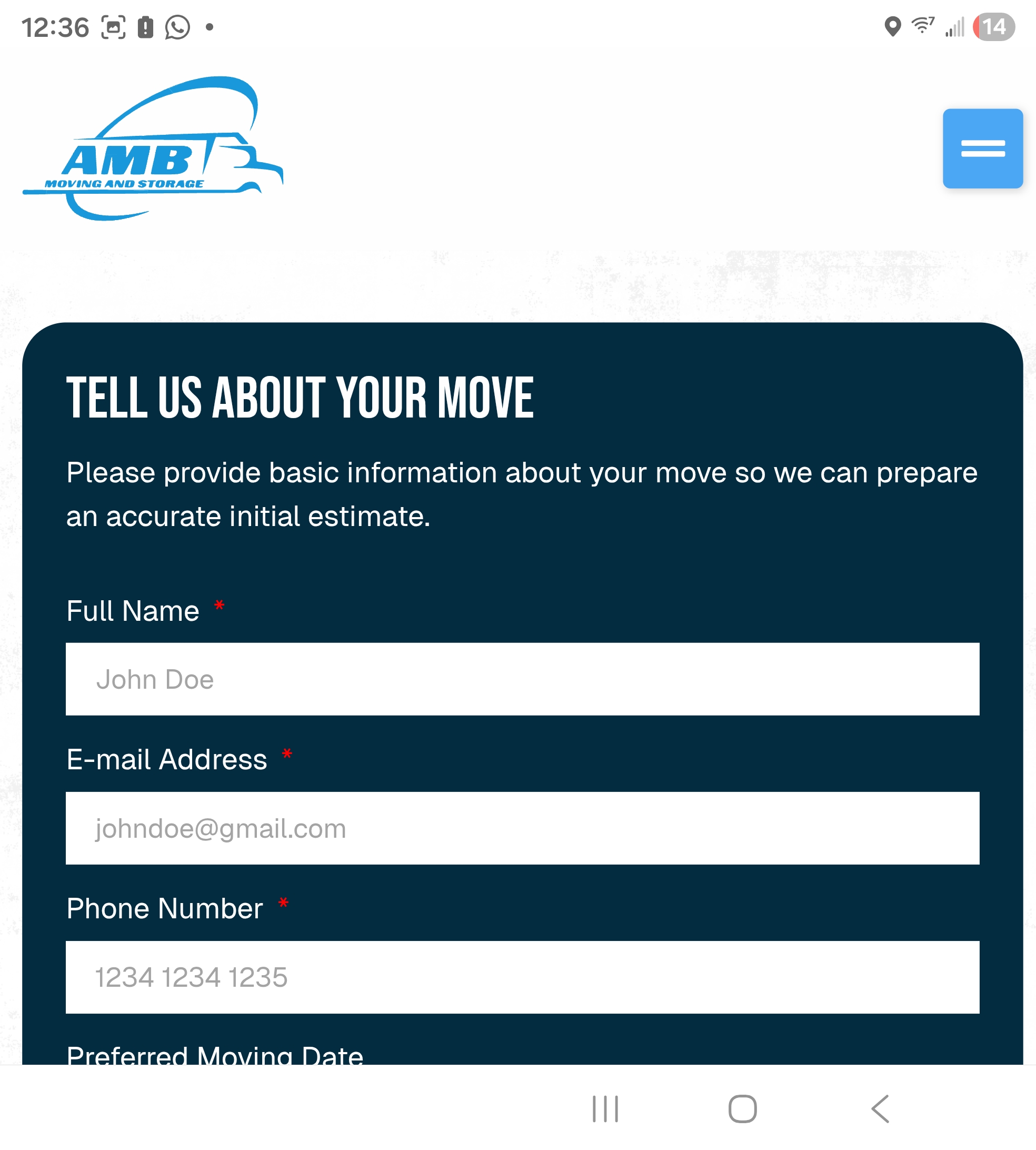
Every move starts with a customized plan built around your route, household size, and schedule. Ambmovingservices provides binding estimates, secure storage options, and professional packing services so nothing is left to chance. Whether you are moving a two-bedroom apartment or a five-bedroom home across the country, the team handles the logistics while you focus on your family. Request a free quote and get a clear, written estimate for your specific move.
FAQ
What is the average cost of an interstate move in 2026?
The average cost of an interstate move is approximately $9,060 in 2026, with most 2–3 bedroom households paying between $4,000 and $10,000 depending on distance, weight, and service level.
How far in advance should I book an interstate mover?
Book your carrier 8–12 weeks before your move date. Long-distance moves require more lead time than local moves due to carrier scheduling and regulatory coordination.
Can I save money by timing my interstate move?
Moving in fall or winter instead of the peak may through august season saves 20–30% on total moving costs. Off-peak availability is also higher, which gives you more carrier options.
What financial reserves do I need before moving interstate?
Financial advisors recommend a dedicated relocation fund of $8,000 to $20,000 plus 3–6 months of living expenses to cover deposits, temporary housing, and travel costs before income stabilizes.
Do I need to file taxes in two states after an interstate move?
Moving mid-year requires filing part-year resident returns in both your origin and destination states. Some states have reciprocity agreements that reduce this burden, but consulting a tax professional is the safest approach.