


A moving delivery window is the agreed range of dates your mover may deliver your belongings — expect a multi-day spread for most interstate moves, not a single guaranteed day. For long-distance moving, that spread typically runs anywhere from 2 to 14 business days depending on distance, route, and season.
TL;DR: Your mover gives you a date range, not a single day. Know your first available date, confirm everything in writing, and designate someone who can accept delivery on any day within that window.
Three things to do right now:
- Confirm your paperwork. Locate the delivery spread and your first available delivery date on your Order for Service and Bill of Lading.
- Set a realistic first available date. Tell your mover the earliest day you can genuinely accept delivery — not the day you hope it arrives.
- Designate an alternate recipient. If you can’t be there every day of the window, name someone who can sign and accept on your behalf.
Key Takeaways
For interstate moves, a delivery window is a date range — not a single day — and planning around the end of that range rather than the start prevents most of the common problems.
| Point | Details |
|---|---|
| Set a realistic FADD | Tell your mover the earliest day you can genuinely accept delivery to avoid storage fees. |
| Expect a multi-day spread | Interstate windows typically run 2–14 business days depending on distance and season. |
| Confirm the window in writing | Both your Order for Service and Bill of Lading must show specific dates, not vague language. |
| Know your 24-hour notice right | Federal rules require your mover to notify you at least 24 hours before arrival in most cases. |
| Ambmovingservices | Offers guaranteed delivery options, proactive dispatch updates, and storage-in-transit for interstate moves nationwide. |
Table of Contents
- What is a moving delivery window, exactly?
- How do movers set your delivery window?
- How long is a typical delivery window?
- Why does your delivery window change, and what causes delays?
- What do U.S. rules require of your mover?
- How to prepare for and manage your delivery window
- What to check in your paperwork and which fees to watch for
- Questions to ask your mover — and red flags to watch for
- How Ambmovingservices approaches delivery windows
- A professional perspective on planning delivery windows
- Planning your move with Ambmovingservices
- Sources
What is a moving delivery window, exactly?
A delivery window (also called a delivery spread) is the range of calendar dates within which your mover is contractually permitted to deliver your shipment. It is not a single arrival day. For most interstate moves, the mover picks up your goods on a set date and then has a defined window of days to complete delivery.
This is different from a guaranteed delivery date, which is a specific day the carrier commits to — usually for an additional fee. Without that upgrade, your contract will show a spread: for example, “delivery between Day 5 and Day 12 after pickup.”
First available delivery date (FADD) is the earliest day you are willing and able to accept your shipment. You set this date when you book. It matters because federal rules allow the mover to place your goods in storage — at your expense — if they arrive before your FADD and you cannot accept them.
Here is how the two options compare:
- Standard delivery window: Lower cost, multi-day spread, mover has flexibility to route and consolidate loads. You must be available throughout the window.
- Guaranteed delivery date: Higher cost (often a surcharge on top of your base rate), single committed day, mover bears responsibility if they miss it and may owe compensation for lodging and meals.
For most families planning an interstate move, the standard window is the default. Understanding it upfront prevents the most common frustration in long-distance moving: expecting a truck on Tuesday and getting a call on Friday.
How do movers set your delivery window?
Movers don’t pull a window out of thin air. Several operational factors feed directly into how wide that spread will be, and knowing them helps you judge whether a quoted window is reasonable.
The primary inputs:
- Distance and mileage band. A 300-mile move has far less routing complexity than a 2,500-mile cross-country haul.
- Consolidated loads. As FreightWaves reports, many carriers combine multiple customers’ shipments onto one truck. Your goods may share space with two or three other households, and the truck makes stops before reaching you.
- Driver Hours-of-Service (HOS) rules. Federal HOS regulations cap how many hours a driver can operate per day. Even if a customer needs a faster delivery, HOS limits can make it legally impossible to add extra driving time to hit a specific date.
- Terminal schedules and route density. Carriers route through regional terminals. If your destination is off a major corridor, your shipment may wait at a terminal for the next available run.
- Carrier capacity and equipment availability. Truck and driver shortages, especially during peak season (May through September), can push windows wider.
- Shipment size and access conditions. A large household with a narrow driveway or elevator-only building adds time at both ends.
Pro Tip: Ask your mover these specific questions: “Is my shipment on a dedicated truck or a consolidated load?” and “Which terminal will my goods route through?” The answers tell you immediately whether your window is tight or has built-in slack.
How long is a typical delivery window?
Distance is the single biggest driver of window length. Typical transit and delivery window ranges vary by distance band, generally increasing with mileage; longer distances and coast-to-coast moves have wider delivery windows under normal conditions.

For context, standard commercial ground shipping for domestic parcels typically falls in the 3–7 business day range. A full household move is far more complex than a parcel, which is why interstate delivery windows tend to run longer even for shorter distances.
Peak season, particularly in summer months, commonly adds additional days to delivery windows, especially for coast-to-coast and consolidated routes.
Two real-world timeline examples:
New York to Dallas (~1,600 miles)
- Booking confirmed: Day 0
- Pickup: Day 7
- First available delivery date: Day 12
- Delivery window: Day 12–Day 19
- Actual delivery (typical): Day 14–16
Chicago to Las Vegas (~1,750 miles)
- Booking confirmed: Day 0
- Pickup: Day 5
- First available delivery date: Day 10
- Delivery window: Day 10–Day 18
- Actual delivery (typical): Day 13–15
Both examples assume standard consolidated routing. A dedicated truck or expedited service would compress these timelines significantly.
Why does your delivery window change, and what causes delays?
A quoted window is an estimate built on assumptions. When those assumptions shift, the window shifts with them. Multiple factors affect delivery time on long-distance moves, and most fall into two categories: things within the mover’s control and things that aren’t.
Common causes of delays:
- Weather. Winter storms, hurricanes, and ice closures can halt a truck for 24–72 hours or force a complete reroute. This is the most common uncontrollable cause.
- Traffic and road conditions. Construction zones and accidents on major interstates add hours to long hauls.
- Mechanical issues. A breakdown mid-route means waiting for repairs or a replacement vehicle, which can add 1–3 days.
- Consolidation reshuffles. If another customer on the same truck cancels or changes their FADD, your shipment’s routing may shift.
- Paperwork and permits. Some states require special permits for oversized loads or certain residential areas. Missing paperwork at a state line can cause a hold.
- Driver shortages. The trucking industry faces ongoing capacity constraints, particularly during peak moving season. When a driver calls out sick or a truck is reassigned, your window can expand.
- Customer unavailability. If you’re not reachable when the mover calls with the 24-hour notice, delivery may be rescheduled — adding days and potentially triggering storage fees.
Weather and mechanical issues are outside the mover’s control. Consolidation reshuffles, paperwork gaps, and customer unavailability are largely preventable with good planning on both sides.
What do U.S. rules require of your mover?
Federal regulations give you real protections when a delivery window is set or changes. The Federal Motor Carrier Safety Administration (FMCSA) governs interstate movers under Subpart F, and the rules are specific.
Under 49 CFR and FMCSA Subpart F, your interstate mover must provide reasonable dispatch service, notify you of any pickup or delivery delay at the mover’s expense, provide alternate delivery dates in writing, and tender your shipment within the dates listed on the Bill of Lading. In most cases, the mover must give you at least 24 hours’ advance notice before delivery.
Key protections to know:
- Written delay notice. If your mover cannot deliver within the agreed window, they must notify you in writing and offer alternate dates. They must keep a record of that notification.
- 24-hour advance notice. Before the truck arrives, your mover must call or contact you at least 24 hours ahead — with limited statutory exceptions.
- Storage rules. If the mover can deliver more than 24 hours before your FADD and you cannot accept, they may place your goods in storage at their expense. However, if you later request alternate dates or are unavailable when they try to deliver, storage and re-delivery costs shift to you.
- Guaranteed date remedies. When a mover misses a guaranteed delivery date, you may be entitled to compensation for lodging and meal costs up to the contract amount. For standard windows, the mover has more flexibility but must still honor the agreed spread and notification requirements.
The Bill of Lading is your primary legal document. It must list the agreed pickup and delivery dates or timeframes. The mover is contractually bound to what appears there. Read it before you sign, and keep a copy.
For a plain-language summary of your rights, Ambmovingservices publishes a customer rights overview that walks through FMCSA obligations in straightforward terms.
How to prepare for and manage your delivery window
Preparation before the window opens is what separates a smooth delivery from a chaotic one. Work through this in two phases.
The week before your window opens:
- Confirm your mover has your current cell number and a backup contact.
- Designate an alternate recipient in writing — someone who can sign for and accept delivery if you’re unavailable on a given day.
- Verify your final charges match the estimate. Disputes at the door slow everything down.
- Prepare your payment method. Most movers require cash, certified check, or money order at delivery — not a personal check or credit card unless pre-arranged.
- Arrange parking and access. If your new building has a loading dock, elevator reservation system, or HOA rules about move-in hours, book those slots now.
- Review the residential moving checklist to catch anything you may have missed.
During the window, day by day:
- Keep your phone on and charged. The 24-hour notice call can come any day within the spread.
- When you receive the notice, confirm the delivery time and address with the driver or dispatcher.
- Do a walkthrough of your new space before the truck arrives — clear pathways, prop open doors, confirm elevator access.
- Have your ID and payment ready at the door.
- Inspect every item as it comes off the truck. Note any visible damage on the Bill of Lading before you sign.
Pro Tip: If your job starts or your lease begins on a fixed date, book a guaranteed delivery date rather than a standard window. The surcharge — often in the range of a few hundred dollars — is far cheaper than a hotel stay or a missed first day at work. Get the guarantee terms in writing, including what compensation applies if the mover misses the committed date.
Pro Tip: If your new home won’t be ready when your window opens, tell your mover before pickup. Arranging storage-in-transit in advance is almost always cheaper than emergency storage triggered by an early arrival.

What to check in your paperwork and which fees to watch for
Your delivery window appears in two documents: the Order for Service (issued before pickup) and the Bill of Lading (issued at pickup). Both must reflect the same agreed terms.
What to locate and confirm in each document:
- First available delivery date (your FADD)
- The full delivery spread (start date through end date)
- Whether a guaranteed delivery date was purchased and its terms
- Storage-in-transit terms: who pays, how long before charges begin, daily rate
- Re-delivery fee: what the mover charges if they attempt delivery and you’re not available
- Long-carry and stair/elevator carry fees for your new address
Common extra charges that catch people off guard:
- Storage-in-transit (SIT). If your goods go into a warehouse during the window, expect a handling fee plus a daily storage rate. Rates vary by market and shipment weight.
- Re-delivery fee. If you miss the delivery attempt, the mover bills for a second trip. This can run $150–$400 or more depending on distance and shipment size.
- Long carry. If the truck can’t park within a standard distance of your door (often 75 feet), you pay a per-foot or flat fee for the extra carry.
- Elevator and stair carries. High-rise buildings and walk-ups almost always trigger these.
- Residential access fees. Narrow streets, gated communities, or locations requiring a shuttle truck add to the bill.
For a full breakdown of what these charges mean and how to spot them before signing, the accessorial charges guide covers each fee type in detail.
Quick paperwork checklist before you sign anything:
- FADD matches what you told your mover verbally.
- Delivery spread is written out as specific dates, not vague language like “approximately 10 days.”
- Guaranteed date option is either checked with terms listed, or clearly absent.
- Storage terms show who bears the cost and when the clock starts.
- All accessorial fees are itemized, not bundled into a single line.
Questions to ask your mover — and red flags to watch for
A reputable mover answers these questions without hesitation. If they hedge, deflect, or refuse to put answers in writing, pay attention.
Ask these before you sign:
- “Is my shipment on a dedicated truck or a consolidated load?”
- “Which terminals will my goods route through, and how does that affect my window?”
- “Can I purchase a guaranteed delivery date, and what are the exact compensation terms if you miss it?”
- “Who is my dispatch contact during transit, and how do I reach them?”
- “What is your 24-hour notice procedure — phone call, text, or email?”
Red flags that should make you pause:
- The mover promises a single exact delivery day for a long-distance move at no extra cost. Consolidated routing makes this operationally unrealistic for most interstate moves.
- They refuse to put the delivery spread in writing or give only verbal assurances.
- The storage policy is vague or absent from the contract.
- They can’t name a dispatch contact or explain their notification process.
- The Bill of Lading shows no delivery dates at all — just “TBD.”
If you see a red flag:
Ask your move coordinator for a revised contract with specific dates in writing. If they can’t provide one, request an explanation in writing and consider whether a different carrier better fits your needs. You can also verify a carrier’s license and complaint history through the FMCSA’s mover search tool before booking.
How Ambmovingservices approaches delivery windows
Most delivery-window problems trace back to the same root cause: a mover who quoted an optimistic window to win the booking, then couldn’t deliver on it. Ambmovingservices takes a different approach on its nationwide moving operations.
The process starts at booking. Rather than quoting the tightest possible window to look competitive, Ambmovingservices sets conservative first-available dates based on actual route density and terminal schedules. That means the window quoted is one the operation can realistically meet, not one that requires everything to go perfectly.
During transit, dispatch contacts customers proactively rather than waiting for the 24-hour minimum. If a route change or delay is coming, customers hear about it before it becomes a problem. Storage-contingency plans are arranged in advance for customers whose new homes won’t be ready at the window’s start, so there’s no scramble if the truck arrives early.
For customers with hard deadlines (job start dates, school enrollment, lease expirations), Ambmovingservices offers expedited and guaranteed delivery options. The terms, including compensation if a guaranteed date is missed, are spelled out in writing before pickup.
A professional perspective on planning delivery windows
The single biggest mistake people make when planning a long-distance move is treating the delivery window like a delivery date. They book temporary housing through Day 5, assume the truck arrives on Day 5, and then face a real problem when it shows up on Day 9. The window exists because interstate logistics are genuinely complex — consolidated loads, HOS rules, terminal routing, and weather don’t bend to a customer’s preferred Tuesday.
The smarter approach: plan your life around the end of the window, not the beginning. Book your temporary housing through the last day of the spread. Set your job start date at least three business days after the window closes. If that buffer is impossible, buy the guaranteed date. The cost is predictable; the cost of a missed start date or an extra week in a hotel is not.
Use the FMCSA protections you have. Demand written notification of any delay. Keep a copy of your Bill of Lading. If a mover goes silent during transit, you have the right to escalate — and the FMCSA’s complaint process is a real lever, not just a suggestion.
Planning your move with Ambmovingservices
Knowing your rights and understanding how delivery windows work is the first step. The next is working with a carrier that actually operates the way this article describes.
Ambmovingservices handles long-distance and interstate moves across the country, with services built specifically for customers who need delivery timing they can count on: guaranteed delivery date options, storage-in-transit with clear pricing, proactive dispatch updates, and a move coordinator you can reach during transit.
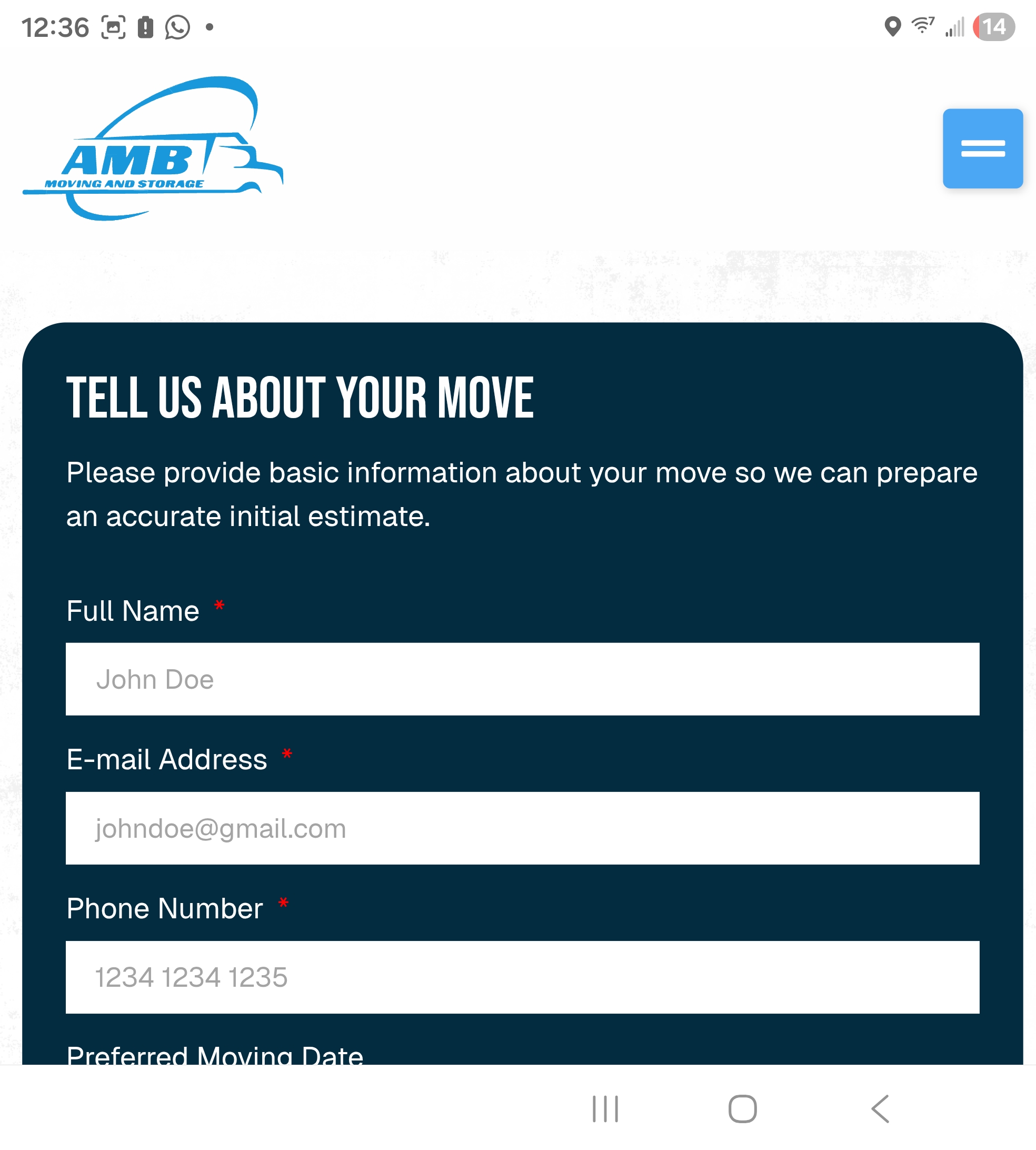
When you request a quote, have your first available delivery date, destination address, and approximate shipment size ready. That information lets the team give you an accurate window and a realistic guaranteed-date cost if your timeline is fixed. Get your quote at Ambmovingservices and know exactly what to expect before your truck leaves the driveway.
Sources
The following primary and industry sources were used throughout this article. Each covers a specific aspect of delivery windows and consumer rights.
- Transportation of My Shipment (Subpart F) | FMCSA
- 49 CFR Appendix A to Part 375 – Your Rights and Responsibilities When You Move | Legal Information Institute (LII)
- Moving Company Delivery Windows: How Do They Work? | FreightWaves
- Factors affecting delivery time for long distance movers
- What Is Standard Shipping? Full Guide in 2025 | Carriyo Blog