


A movers certificate of insurance is a broker-issued ACORD 25 form proving a moving company carries general liability, workers’ compensation, and applicable auto or cargo coverage. Request it from the mover’s insurance broker, not the mover itself, and send it to your building with sufficient lead time before move day to allow for review and approval. The COI protects the property, not your furniture, so pair it with a valuation or moving insurance conversation if you’re worried about your belongings.
TL;DR:
- Most property managers reject COIs with outdated or incorrect address, name mismatches, or expired coverage that does not fully span the move date.
- A broker-issued COI with verified contact information is essential to confirm the insurer’s legitimacy and prevent delays or rejected move access.
- Federal regulations require interstate movers to carry a U.S. DOT number and maintain active registration in the FMCSA SAFER system, which should match the COI.
- Ensuring the COI includes the building as an additional insured and has accurate effective dates can significantly reduce rejection risks during move planning.
- Coordinating with the mover’s broker early, ideally 7 to 10 business days before the move, ensures proper review, corrections, and approval of the certificate.
Table of Contents
- What Is a Certificate of Insurance for Movers?
- Key COI Fields and Building Requirements That Actually Matter
- Why Property Managers Require a COI Before Movers Arrive
- How to Request and Submit a Movers COI Step by Step
- How to Verify a Mover’s Insurance and Operating Credentials
- Common COI Rejections and How to Fix Them Fast
- How AMB Handles COI Coordination on Interstate Moves
- The Real Priority Behind Movers COI Paperwork
- Get a Quote and Let AMB Manage Your COI Paperwork
- Where to Verify COI Rules and Mover Registration
- Sources
What Is a Certificate of Insurance for Movers?
A certificate of insurance is not the insurance policy itself. It’s a one-page snapshot, almost always built on the ACORD 25 form, that tells a building or client which coverages a moving company has active and at what limits. Think of it like a report card summary rather than the full transcript. The underlying policy still governs what’s actually covered, what’s excluded, and how a claim gets paid. The COI just tells you the policy exists.
A standard mover’s COI typically lists four kinds of coverage:
- General liability covering property damage or bodily injury during the move
- Workers’ compensation protecting the building if a mover’s employee gets hurt on-site
- Commercial auto liability covering the moving truck itself, especially relevant for long distance moving
- Motor truck cargo coverage, which sometimes appears separately and protects goods while in transit
The form has a field labeled “PRODUCER” near the top left. That’s the insurance broker or agency that issued the certificate, and it matters more than most people realize. A broker-issued COI carries a phone number and contact name you can actually call to confirm the document is real. A COI typed up on the moving company’s own letterhead, with no broker listed, is a paperwork red flag worth chasing down before move day.
Buildings ask for this documentation constantly. Apartment complexes, condo associations, HOAs, and corporate office buildings all want proof that a mover carries adequate coverage before they’ll let a truck near the loading dock or a crew near the elevator. It’s standard practice, not an inconvenience specific to your building, and it’s one reason interstate movers and nationwide moving companies keep current COIs on file year-round.
Key COI Fields and Building Requirements That Actually Matter
Not every COI that lands in a property manager’s inbox gets approved. Buildings check specific fields, and missing even one can bounce the whole certificate back for correction.
Coverage limits sit at the top of the list. Most buildings want to see a general liability limit that is considered standard for property coverage, though luxury high-rises and commercial office towers may require higher limits. Federal rules add another layer for interstate carriers: under 49 CFR Part 387, long-haul movers crossing state lines may need to meet minimum public liability limits set by federal regulation, separate from whatever limit your specific building requires. Checking both numbers, not just one, is the only way to know a mover is actually covered for your situation.
Effective dates matter just as much as the dollar figures. A COI that expired last month, or one that doesn’t start until after your move date, is functionally worthless even if every other field looks perfect.
Here’s what property managers scan for on every submitted certificate:
- Certificate holder name and address matching the building’s legal entity exactly as instructed
- Additional insured language naming the building or management company on the mover’s liability policy, not just listed as a certificate holder
- Waiver of subrogation, when the building requires it, which stops the mover’s insurer from coming after the building after paying a claim
- Policy numbers and carrier names filled in, not left blank or marked “TBD”
- Effective and expiration dates that fully bracket the move date, with no gap
A finding worth remembering: buildings reject COIs constantly over things that have nothing to do with actual coverage. A certificate holder address that’s off by one digit, or a management company listed under its old name, is enough to send the whole thing back. That’s not the building being difficult. It’s the difference between a document that holds up if something actually goes wrong and one that becomes a headache during a claim.
Additional insured language deserves its own callout because it trips people up constantly. Being listed as a “certificate holder” only means the building receives a copy of the certificate. Being listed as an “additional insured” means the building is actually covered under the mover’s policy if something goes wrong in a common hallway or elevator. Those two things sound similar and are legally very different.
Why Property Managers Require a COI Before Movers Arrive
Buildings aren’t asking for a COI to create friction. They’re managing risk they didn’t choose to take on, and the certificate is how they transfer that risk back to the party actually causing it.
Common-area damage is the obvious concern. Scraped hallway paint, a dented elevator door, a cracked marble threshold in the lobby: these happen during moves more often than anyone likes to admit, and buildings need a documented way to make the mover’s insurance pay for repairs instead of the building’s own policy or the reserve fund. That’s the whole point of general liability coverage on the certificate.

Personal injury liability runs alongside that. If a mover’s employee gets hurt using the building’s freight elevator, workers’ comp coverage on the COI keeps that claim off the building’s own workers’ comp and general liability policies.
There’s also a purely operational reason buildings gate move access behind paperwork:
- Loading docks and freight elevators run on tight reservation schedules, and a building won’t book a slot without insurance on file first
- Additional insured status lets the building’s own insurer coordinate directly with the mover’s insurer if a claim happens, instead of the building fighting a battle alone
- Some buildings set higher limits or require specific endorsements based on the age of the property, the presence of expensive finishes in common areas, or a history of prior claims
- Getting the paperwork settled early protects the mover too, since a documented, approved COI means no last-minute scramble or a truck turned away at the dock
A building that seems overly strict about COI requirements is usually just trying to avoid a fight with its own insurer six months down the road. That instinct is reasonable, even when the paperwork feels excessive in the moment.
How to Request and Submit a Movers COI Step by Step
Getting an accepted COI on file before move day comes down to sequencing and clear communication, not luck. Here’s the process that avoids most delays.
-
Get the building’s exact COI requirements in writing. Ask your property manager or HOA for their specific certificate holder name, required limits, and any additional insured or waiver of subrogation language. Get this in an email you can forward, not a verbal summary.
-
Forward those requirements directly to your mover. Send the exact wording, not a paraphrase. If the building wants “ABC Property Management LLC, its officers, agents, and employees” listed as additional insured, that phrase needs to go to the mover word for word.
-
Ask the mover to route the request to their insurance broker, and specifically ask that the broker send the COI directly to the building rather than routing it back through you. This keeps the PRODUCER field populated with real broker contact information the building can call to verify.
-
Start this process 7 to 10 business days before your move date. Brokers process these requests quickly most of the time, but that window leaves room for corrections if the building rejects the first version.
-
Confirm acceptance three days out. Call the property manager directly and ask if the COI is approved and on file. Don’t assume silence means approval.
-
If the building requests corrections, email the broker the exact rejected field and the exact corrected language needed. Copy the property manager on that email so everyone’s working from the same version.
Pro Tip: Save the building’s COI requirement email and reuse it word for word every time you request a new certificate. Retyping the additional insured language from memory is where most of the small errors that trigger rejections come from.
If you’re coordinating a move that touches interstate moving logistics, build in extra buffer. Long distance moving companies often work across multiple state lines and juggle several move dates in the same week, so the earlier you hand off building requirements, the smoother the broker request moves through their system.
How to Verify a Mover’s Insurance and Operating Credentials
A COI is only useful if it’s real, and unfortunately not every certificate that crosses a property manager’s desk holds up to scrutiny.
Start with the PRODUCER field. A legitimate, broker-issued COI lists a real insurance agency name and phone number in that field. Call it. A broker who confirms the certificate on the spot is a good sign. Hesitation, a disconnected number, or a voicemail that never gets returned is a reason to slow down before approving move access.
Next, verify the mover’s federal registration. Every interstate mover is required to carry a U.S. DOT number, and FMCSA’s SAFER system lets you search that number to confirm active registration, review insurance filings on record, and check complaint history. This step alone catches a surprising number of movers operating without proper authority. AMB Moving Services covers exactly this process in a step-by-step FMCSA search guide that walks through what a clean record looks like.
If something about the carrier still feels off, your state’s Department of Insurance can confirm whether a specific insurance company is licensed to write policies in your state at all.
A COI that arrives on the mover’s own letterhead, with no broker listed and no PRODUCER field filled in, should be treated as unverified until proven otherwise. The fix is simple: ask for the broker-issued version and call the number on it yourself.
Watch for these red flags specifically:
- A self-issued certificate with no independent broker contact
- Evasive or delayed answers when you ask direct questions about coverage limits
- No workers’ compensation listed at all, which is a serious gap for any crew working in your building
- Repeated excuses about why the “real” COI is still coming
If you spot any of these, don’t approve the move date until the mover produces a broker-verified certificate. A short delay beats a damaged common area with no insurance to cover it.
Common COI Rejections and How to Fix Them Fast
Most rejected certificates aren’t fraudulent. They’re just wrong in some small, fixable way, and knowing the usual culprits saves you a round of frustrating back-and-forth.
The most frequent issues:
- Name mismatches, where the certificate holder is listed under an old management company name or a slightly different legal entity
- Wrong or incomplete address on the certificate holder line
- Missing additional insured or waiver of subrogation language that the building specifically requires but the broker didn’t include
- Dates that don’t cover the move, either expired coverage or a policy that starts after the scheduled date
The fastest fix is precision, not persistence. Send the building’s exact rejected field back to the broker in writing, quote the specific language needed, and copy the property manager so there’s no confusion about what changed. Brokers can usually reissue a corrected certificate within a business day once they know exactly what’s wrong.
There’s a point where you should walk away from a mover entirely rather than keep chasing paperwork. If a company refuses to produce a broker-issued COI, can’t explain why workers’ comp is missing, or keeps delaying past your move date with vague promises, that’s not a paperwork problem anymore.
Pro Tip: Keep the COI conversation separate from the valuation coverage conversation. The certificate protects the building’s common areas and staff. It has nothing to do with what happens to your couch if it gets damaged in transit, and that’s a completely separate coverage decision worth understanding through a resource like what moving insurance actually protects.
How AMB Handles COI Coordination on Interstate Moves
Coordinating a movers certificate of insurance shouldn’t fall entirely on the customer’s shoulders, and at Ambmovingservices, it doesn’t. On long distance and interstate jobs, the operations team collects the building’s exact COI requirements upfront and routes them directly to the insurance broker, so the certificate holder language, limits, and additional insured wording get handled without the customer playing messenger between three different parties.
Ambmovingservices maintains active U.S. DOT registration along with general liability, workers’ compensation, and commercial auto coverage as a matter of standard operating practice for every crew dispatched on a job, whether it’s a local move or a full cross country moving relocation.
Here’s what customers can expect when Ambmovingservices manages the COI process:
- A request for the building’s exact certificate holder name and any special endorsement language, collected before scheduling
- Direct broker-to-building delivery of the completed COI, timed to land within the standard 7 to 10 business day window
- A confirmation call or email once the building has approved the certificate, so nobody’s guessing on move day
- Fast turnaround on corrections if the building flags a field that needs adjusting
The goal is simple: the customer focuses on packing and logistics, and the compliance paperwork gets handled by people who deal with it daily across every state the company services.
The Real Priority Behind Movers COI Paperwork
Most advice on this topic treats the COI like a box-checking exercise, and that’s where it falls short. The certificate matters because of what happens after something goes wrong, not before. A building doesn’t care about the paperwork on a move that goes perfectly. It cares intensely the day a mover’s crew scratches a marble lobby floor or someone twists an ankle on a loading dock.
The conventional advice to “just get a COI” skips the part that actually determines whether that document protects anyone: the additional insured language, the certificate holder accuracy, and the broker verification. A certificate with the wrong entity name or missing endorsement language is functionally the same as having no certificate at all when a claim actually gets filed.
If you’re arranging a move, prioritize the broker phone call over the paperwork itself. A five-minute call confirming the PRODUCER field is real tells you more about whether you’re protected than staring at policy limits ever will. Get the requirements exact, get them early, and verify before you assume.
— AMB
Get a Quote and Let AMB Manage Your COI Paperwork
Chasing down broker contacts, matching certificate holder language, and confirming coverage limits eats hours most people don’t have during a move. Ambmovingservices handles that coordination directly, working with your building’s property manager and the insurance broker so the certificate arrives correct the first time, not after three rounds of corrections.
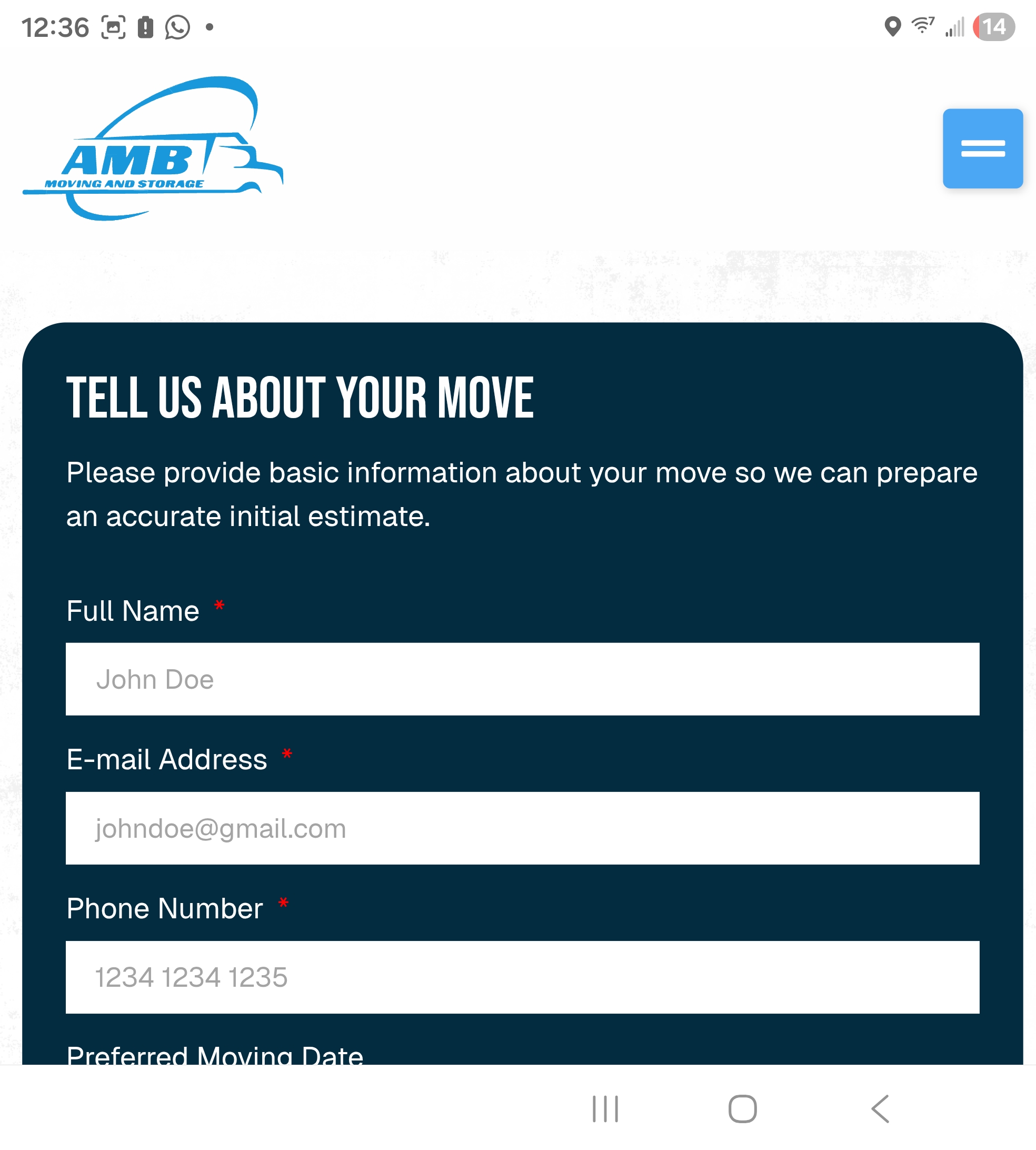
Request a free moving quote and upload your building’s COI requirements when you submit the form. The team will forward them to the broker and manage the timeline so everything’s approved well before your move date, whether you’re relocating across the state or handling a full long distance moving job across the country.
Pro Tip: Send your building’s COI requirements at the same time you request your quote, not after booking. It shaves days off the total turnaround and avoids a last-minute scramble with the broker.
Where to Verify COI Rules and Mover Registration
A few official sources settle most COI questions without guesswork:
- FMCSA’s SAFER search confirms a mover’s U.S. DOT registration, insurance filings, and complaint history in one lookup
- ACORD publishes the standard form specifications behind the ACORD 25, the template most brokers use to issue COIs
- Travelers Insurance’s COI guide breaks down the legal difference between a certificate and the actual policy behind it
- Mover Scorecard offers practical, consumer-focused guidance on requesting and reading a mover’s COI
Cross-checking a mover’s FMCSA record against the COI they provide is the single fastest way to confirm both documents tell the same story before move day arrives.
Sources
- Certificate of Insurance (COI) for Movers | Mover Scorecard
- What Is a Certificate of Insurance? | Travelers Insurance
- Search for a Registered Mover | FMCSA
- ACORD