


TL;DR:
- Clear written communication and documentation are essential for a successful long-distance move.
- Verify mover credentials and understand estimate types to avoid unexpected charges or delays.
- Maintain ongoing contact and proper records throughout the process to resolve disputes effectively.
Planning a long-distance move across state lines is one of the most logistically demanding things a family can do. Boxes, timelines, and budgets are just the surface. The real challenge is making sure you and your moving team are always on the same page. Thousands of annual complaints filed with the Federal Motor Carrier Safety Administration (FMCSA) trace back to miscommunication, not bad luck. Missed delivery windows, surprise charges, and lost items often happen because families assumed movers would fill in the gaps. This guide walks you through exactly how to communicate at every stage of your move so you can avoid those costly mistakes.
Table of Contents
- What to prepare before contacting movers
- How to ask the right questions and set expectations
- Best practices for ongoing communication during your move
- How to resolve disputes and confirm the move is complete
- The uncomfortable truth most families miss when communicating with movers
- Ready to move with confidence? Discover expert help.
- Frequently asked questions
Key Takeaways
| Point | Details |
|---|---|
| Ask critical questions | Always vet movers with questions about licensing, estimate types, and service specifics to prevent misunderstandings. |
| Document communications | Keep written records of all exchanges and confirm details to protect your interests during the move. |
| Clarify delivery and payment | Request written timelines, payment terms, and understand compensation options for any delivery delays. |
| Verify credentials | FMCSA registration and USDOT verification are crucial to choosing reliable, accountable movers. |
What to prepare before contacting movers
Before you pick up the phone or fill out an online quote form, gather your moving details. Movers need specific information to give you an accurate estimate, and walking in unprepared leads to vague quotes that can shift dramatically on moving day.
Here is what you should have ready:
- Origin and destination addresses (including floor number and elevator access)
- Inventory list of all major items, especially bulky or fragile ones
- Preferred moving dates and any hard deadlines (lease end, closing date)
- Special requirements like piano moving, art handling, or climate-controlled storage
- Your budget range so movers can suggest appropriate service levels
Once you have this information, use it to vet potential companies. The FMCSA consumer protection guide outlines the key questions to ask movers before signing anything, including licensing status, estimate type, payment terms, delivery windows, and whether the company is a carrier or a broker.
Understanding the carrier versus broker distinction matters more than most families realize. Here is a quick comparison:
| Feature | Carrier | Broker |
|---|---|---|
| Handles your move directly | Yes | No |
| Hires subcontractors | Rarely | Often |
| Direct accountability | High | Lower |
| FMCSA registration required | Yes | Yes |
| Best for interstate moves | Strongly recommended | Use with caution |
A carrier physically moves your belongings. A broker arranges the move and passes it to another company. That handoff creates a communication gap that can cause real problems on a long-distance move.
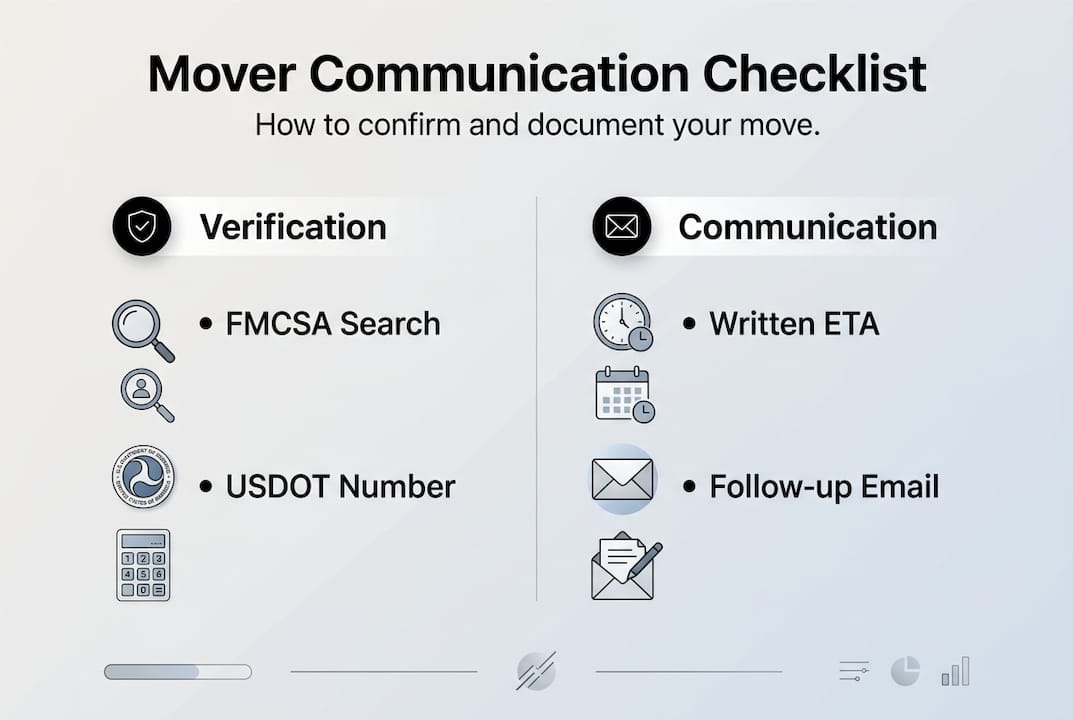
Pro Tip: Always verify moving company license status directly on the FMCSA website using the company’s USDOT number. Do not rely on the mover to self-report their credentials.
How to ask the right questions and set expectations
After gathering your moving details, the next step is engaging movers with the right questions and clarifying expectations up front. This is where most families lose ground. They accept a quote without fully understanding what it covers, and then feel blindsided when the final bill looks different.
Here are the top questions to ask every mover you consider:
- Is this a binding or non-binding estimate?
- How is weight or cubic footage calculated?
- Will my items share a truck with another customer’s belongings?
- What is the typical delivery window for my route?
- What payment methods do you accept, and when is payment due?
- Are you a licensed carrier or a broker?
- What happens if my delivery is delayed past the agreed window?
The FMCSA recommends asking specifically whether the price is guaranteed, how weight is quoted, whether the truck is shared or dedicated, and what the average wait time is for your route. These are not optional questions. They are the foundation of a clear agreement.
Understanding estimate types is critical. A binding estimate locks in the price regardless of actual weight. A non-binding estimate can change based on what your shipment actually weighs. If you go with a non-binding estimate, ask the mover to explain under what circumstances the price could increase and by how much.
Always get estimates and delivery windows in writing. Without written documentation, you have no recourse if something goes wrong later.
Common mistakes families make during this phase:
- Accepting verbal promises instead of written confirmations
- Skipping the inventory review before signing the estimate
- Assuming all fees are included without asking about add-ons
- Not confirming who the actual carrier will be if using a broker
- Failing to ask about handling late movers and what remedies exist in the contract
Review your interstate moving guide to understand what a complete moving agreement should look like before you sign.
Best practices for ongoing communication during your move
With expectations set, maintaining effective communication throughout the move is just as important, especially when complications arise. Long-distance moves are not a one-day event. They involve pickups, transit, and delivery spread across days or even weeks.
Typical delivery windows vary significantly by route. Here is a general reference:
| Route distance | Estimated delivery window |
|---|---|
| Under 500 miles | 1 to 5 days |
| 500 to 1,000 miles | 3 to 7 days |
| 1,000 to 2,000 miles | 5 to 10 days |
| Over 2,000 miles | 7 to 16 days |
As noted by moving industry experts, delivery windows typically span 3 to 16 days depending on distance, with no federal deadline. Your contract governs everything. That is why reading it carefully before signing is not optional.
Documentation essentials to keep throughout your move:
- Copies of all signed contracts and estimates
- Email and text confirmations of pickup and delivery dates
- A written log of every phone call, including date, time, and what was discussed
- Photos of your items before they are loaded
- The driver’s name and contact number on pickup day
Pro Tip: Request updated ETAs in writing at least 48 hours before expected delivery. If your mover is unresponsive, that silence is a red flag worth acting on immediately.
For delays, the right move is to document communications, request ETAs in writing, and check your contract for compensation terms. You can also explore relocation logistics tips to stay organized during transit. Staying proactive prevents small delays from turning into major disputes. Families who document everything are in a much stronger position if they need to escalate.

How to resolve disputes and confirm the move is complete
As your move wraps up, knowing how to resolve issues and verify that everything promised has been delivered is essential. This phase is where communication often breaks down completely because families are exhausted and ready to be done.
Steps to resolve a dispute with your moving company:
- Document the issue with photos, written notes, and timestamps
- Contact the mover directly in writing, referencing your contract terms
- Send a formal written complaint to the company’s management or claims department
- File a complaint with the FMCSA if the mover does not respond within a reasonable time
- Consult your contract for arbitration or dispute resolution clauses
Checklist to confirm your move is complete:
- All items on the inventory list are accounted for
- No visible damage to furniture, appliances, or boxes
- All agreed services (packing, assembly, storage) have been performed
- Final payment matches the written estimate or binding price
- You have received a final receipt and delivery confirmation
Here is a number worth knowing: 28 million Americans move every year, and the FMCSA receives thousands of complaints annually. Mistakes are common, but most are avoidable with clear communication and documentation. Families who treat their move like a formal transaction, rather than a casual handshake deal, consistently have better outcomes.
If you face moving cost disputes, having written records makes all the difference. The FMCSA move protection resources are also available to help you understand your rights as a consumer.
The uncomfortable truth most families miss when communicating with movers
Here is something most moving guides will not tell you directly: families assume that hiring a well-reviewed company means communication will take care of itself. It will not. Even reputable movers get busy, routes change, and drivers run behind schedule. The gap between what was promised and what happens on the ground almost always comes down to one thing: nobody wrote it down.
Brand reputation matters, but it does not protect you when your delivery is three days late and you have no written ETA in your inbox. The families who come out ahead are the ones who treated their move like a business transaction from day one. They asked for written confirmations after every phone call. They kept logs. They followed up.
We have seen this pattern repeatedly at AMB Moving & Storage. Customers who verify licensed mover credentials and document every exchange have smoother moves, fewer surprises, and faster resolutions when issues do arise. Trust is important, but verification is what protects you.
Pro Tip: After every significant conversation with your mover, send a quick follow-up email summarizing what was discussed. It takes two minutes and creates a paper trail that could save you hundreds of dollars.
Ready to move with confidence? Discover expert help.
Now that you know how to communicate effectively at every stage of your long-distance move, the next step is finding a moving partner who values that same transparency. Clear communication is not just your responsibility. It should be a two-way commitment from your moving company.

At AMB Moving & Storage Inc., we specialize in long distance moving services that are built around honest estimates, written confirmations, and real accountability. Whether you are a family relocating across the country or a homeowner making a first interstate move, our team is here to guide you. Explore our residential moving for families options or connect with our team directly at AMB Moving Services to get a transparent quote and start your move with confidence.
Frequently asked questions
How can I verify if my mover is licensed and trustworthy?
Look up their USDOT number on the FMCSA website to confirm active registration. FMCSA-registered carriers offer more direct accountability than brokers, so always ask for written credentials before signing.
What should I do if my moving company is late or my belongings are delayed?
Document all communications immediately and request a written ETA from your mover. If the delay exceeds your contracted window, review your contract for compensation rights and file a complaint with the FMCSA if needed.
What’s the difference between a carrier and a broker?
A carrier physically handles and transports your belongings. A broker arranges the move through a third-party carrier, which can reduce direct accountability. FMCSA guidance recommends prioritizing registered carriers for interstate moves.
Can I get compensation if my move doesn’t meet delivery windows?
There is no federal deadline for delivery, so your contract is what matters. If the mover misses the contracted delivery window, document everything and reference your agreement’s compensation or arbitration clause when filing a claim.
Recommended
- Top questions to ask moving companies for a smooth move
- How to prepare for movers: 5 steps for long-distance moves
- Guide to relocation logistics: smooth and stress-free moves
- How professional movers ensure a stress-free family relocation
- Business Chinese: Effective communication for business productivity
- Flyttstäd workflow i Varberg: steg för steg-guide 2026