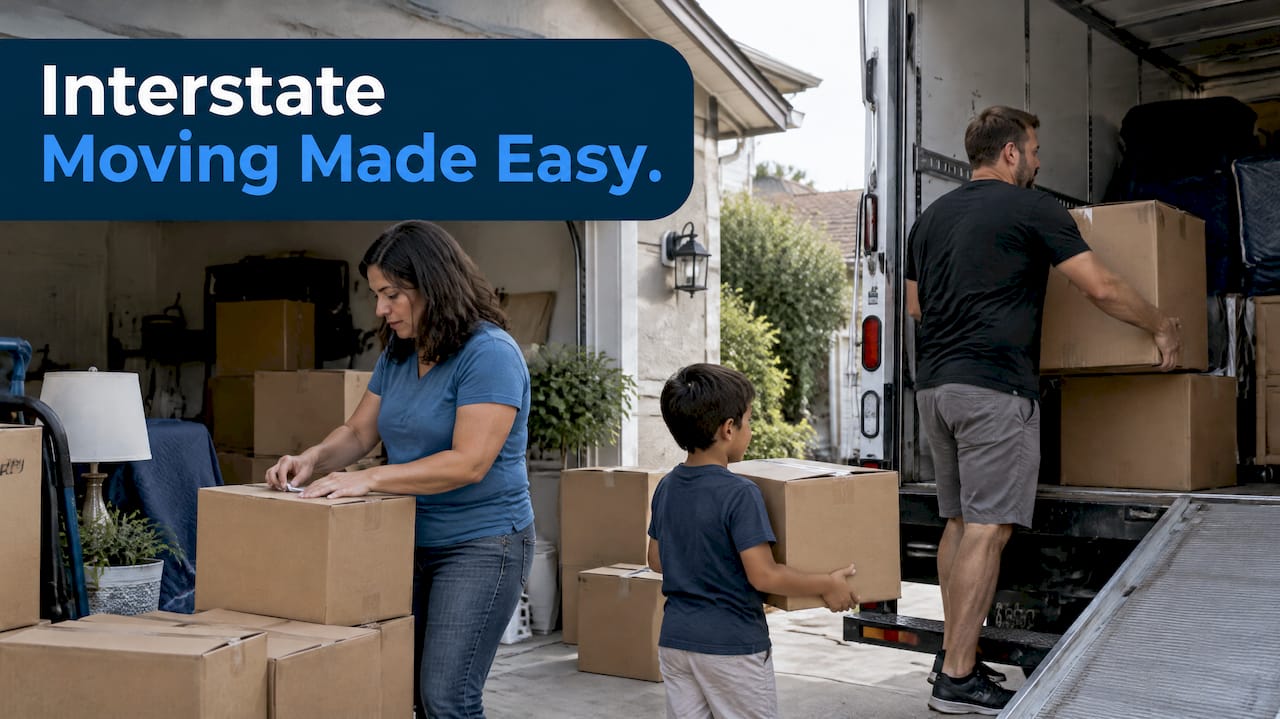


For most college students, door-to-door pickup-and-delivery storage is the best default for student summer storage: a company packs up your dorm, holds everything through the summer, and drops it back at your new address in the fall. It costs more than a bare self-storage unit, but it saves you a car, a truck rental, and a full day of hauling boxes during finals week. Choose self-storage instead if you own a car and want to grab your stuff mid-summer. Choose ship-and-store if you’re going home overseas or across the country and don’t want to pay for a full unit.
- Best for convenience: Pickup-and-delivery student storage service
- Best if you have a car: Traditional self-storage unit near campus
- Best for long-distance or international students: Ship-and-store (per-item shipping plus bundled storage)
- Best for full-service moving and storage together: A nationwide mover like Ambmovingservices
Key Takeaways
Door-to-door pickup-and-delivery storage offers the best balance of convenience and cost for most students without a car or nearby storage access.
| Point | Details |
|---|---|
| Default recommendation | Choose pickup-and-delivery storage unless you have a car or live far from campus. |
| Book early | Reserve pickup slots by early April for May move-outs to avoid rush fees. |
| Watch hidden fees | Ask about stairs, missed-appointment, and mid-summer access charges before signing. |
| Match size to load | Use a 5×5 for boxes only, a 5×10 for a full dorm room with furniture. |
| Full-service option | Ambmovingservices offers insured, climate-controlled storage plus interstate moving for students relocating across state lines. |
Table of Contents
- What Are Your Student Summer Storage Options?
- What Do Storage Options Actually Cost?
- How Do You Choose the Right Storage Model?
- What Storage Unit Size Fits a Dorm Room?
- How Should You Pack and Inventory Your Belongings?
- When Should You Book Student Storage?
- How Secure Are Student Storage Facilities?
- What Containers and Materials Work Best for Student Items?
- What Packing Materials Should You Buy Before Move-Out?
- Should You Declutter Before Storing Everything?
- How Do You Prepare Electronics and Perishables for Storage?
- What Are Typical Cancellation and Refund Policies?
- Get a Quote for Your Student Move and Storage
- Sources
What Are Your Student Summer Storage Options?
Four models cover almost every situation a student runs into at move-out. Knowing the differences up front saves you from booking the wrong one and paying for a redo.
- Self-storage unit. You rent a unit at a facility, haul your own boxes over, and lock it up. Cheapest per month, but you need a vehicle and physical time to move things twice.
- Student pickup-and-delivery. A company picks everything up from your dorm or apartment, stores it, and delivers it back when the new term starts. Highest convenience, moderate cost, minimal effort on your end.
- Ship-and-store. You ship individual boxes or bins to a storage provider that holds them for a flat period, often up to six months, then ships them back or to a new address. Works well for long-distance and international students who can’t easily transport bulky items.
- Peer or local movers. Friends with trucks, or a small local mover, haul your stuff to a relative’s garage or a rented storage unit. Cheap but unreliable, and there’s no written inventory if something goes missing.
Before booking any of these, check your university’s housing portal. Some schools run their own on-campus storage program that beats outside vendors on price and logistics.
What Do Storage Options Actually Cost?
Price is where most students get surprised, usually by a fee nobody mentioned during booking. Here’s what the real numbers look like across the three main models.
A 5×10 self-storage unit in a typical college market runs roughly $60 to $120 per month, depending on the city and whether the facility offers climate control. Student pickup-and-delivery services usually charge a flat summer rate covering pickup, storage, and redelivery in one price. Ship-and-store pricing works per item or per box, and because it often bundles up to six months of storage into that fee, it can beat renting and hauling a full unit yourself for students who live far from campus.
By the numbers: Using a professional pickup-and-delivery partner can cut hands-on move time during finals week from an average of 6 to 8 hours doing it yourself down to about 20 to 30 minutes of supervised pickup.
Watch for these add-on costs before you sign anything:
- Stairs or elevator-less buildings often trigger a pickup surcharge
- Missed appointment fees if you’re not there for the scheduled window
- Packing supplies (boxes, tape, wardrobe boxes) billed separately unless the plan includes them
- Insurance or declared-value coverage, sometimes optional and sometimes mandatory above a certain item value
- Mid-summer access fees if you need something back before the fall delivery
Pro Tip: Ask every provider, in writing, whether mid-summer retrieval is even possible and what it costs. Some flat-rate plans don’t allow it at all, which is a dealbreaker if you’re not sure where you’ll be living in August.
Before you pay anyone, confirm three things: climate control (dorm furniture and electronics don’t do well in a hot metal box all summer), a written inventory or barcode-tracked list of what they took, and clear insurance terms in case something breaks.
How Do You Choose the Right Storage Model?
Run through this checklist before you book anything:
- How much stuff do you have? A few boxes points toward ship-and-store or a small self-storage unit. A room full of furniture points toward pickup-and-delivery.
- How far is home? Under a few hours by car, self-storage or peer movers make sense. Cross-country or overseas, ship-and-store or a professional mover wins.
- Do you have a car on campus? No car basically rules out DIY self-storage unless you can borrow one for moving day.
- Do you need mid-summer access? If yes, prioritize a provider that allows scheduled retrieval, not a flat-rate plan that locks everything away.
- Do you know your fall address yet? Housing assignments often land late, so ask about redelivery flexibility before committing.
When you call a provider, ask directly: Do you pick up from inside the dorm room or just the lobby? Is packing help included? Can you redeliver to a different address than the pickup location? What’s the minimum storage term, and how do extensions work?
Red flags worth walking away from: no written inventory, a vague or undefined service area, no climate control for anything electronic, and pricing that changes after you’ve already scheduled pickup.
Pro Tip: Storage contracts are usually built around calendar dates, not your semester calendar. Read the actual end date on your agreement instead of assuming it lines up with move-in day.
What Storage Unit Size Fits a Dorm Room?
Sizing guidance for self-storage lines up closely with typical dorm-room loads:
- 5×5: Boxes, a desk chair, a few bins, maybe a bike. Fits a minimalist dorm room.
- 5×10: A twin mattress, a small dresser, a mini-fridge, and a full closet’s worth of boxes. This is the most common size for a single dorm room.
- 10×10: A full studio or shared-apartment load, including a couch, a bed frame, and multiple dressers.
A solo student with just boxes and a few bins often does fine with a 5×5 self-storage unit at $60 to $90 a month. A student with a bed frame, dresser, and mini-fridge usually needs a 5×10 or the full pickup-and-delivery flat rate of $150 to $400 for the summer, since carrying furniture solo isn’t realistic without a truck.
How Should You Pack and Inventory Your Belongings?
Wrap electronics in bubble wrap or blankets, never bare cardboard against a screen or motherboard. Disassemble anything with legs or a frame, bed frames, desks, bookshelves, so it packs flat and doesn’t warp in a hot storage unit. Use wardrobe boxes for hanging clothes instead of stuffing them into bins, which crushes fabric and invites mildew.
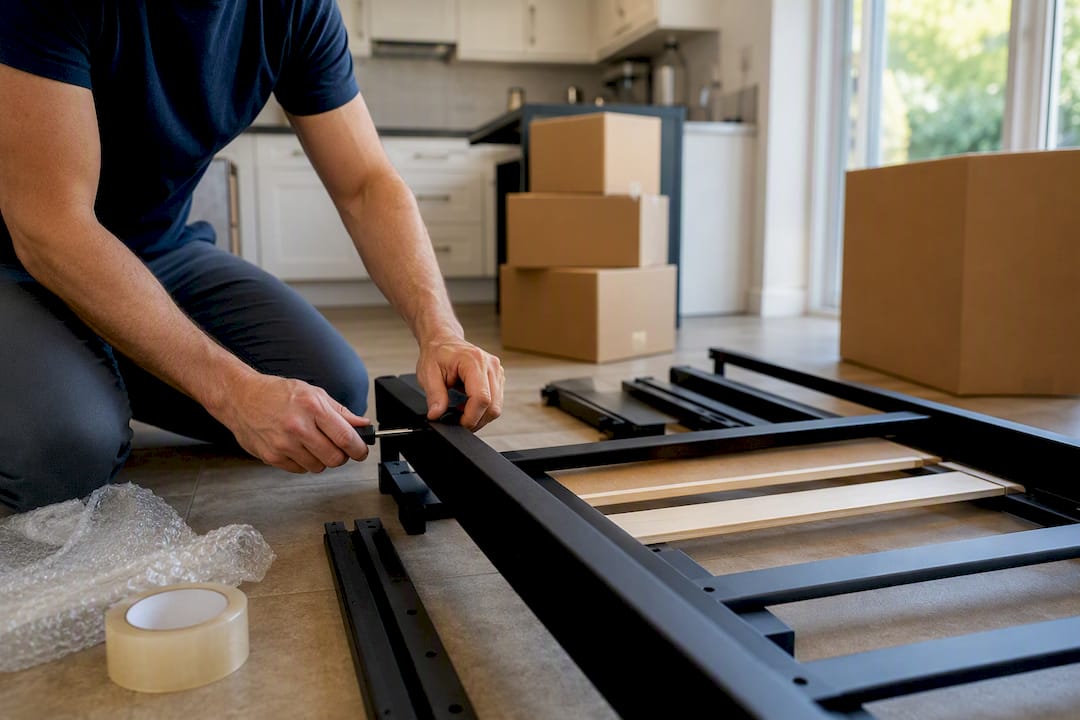
Keep your own digital inventory: a photo of every box’s contents and a spreadsheet with a rough value estimate. Ask your provider for their inventory confirmation or barcode list, and cross-check it against yours before you sign off on pickup.
Providers generally won’t take perishable food, hazardous materials (propane, paint, aerosols), or loose lithium batteries outside a device. Mini-fridges and small appliances usually need to be cleaned, defrosted, and completely dry before pickup, or they’ll get flagged and left behind.
When Should You Book Student Storage?
Book pickup-and-delivery service by early April for a May move-out. Popular college towns fill their pickup slots fast once finals week hits, and last-minute bookings often come with rush fees. For winter break storage, three to four weeks of notice is usually enough since demand is lighter.
Watch your housing portal and RA communications for the exact move-out window your building gets assigned. If you’re already late, look at rush pickup options, on-demand local movers, or simply shipping textbooks and small items ahead separately to buy yourself time.
How Secure Are Student Storage Facilities?
Security is where the cheapest option and the safest option often diverge, and it’s worth checking before you hand over a semester’s worth of belongings. Reputable self-storage facilities run 24/7 video surveillance covering entry points, hallways, and loading areas, not just the front gate. Individual units should have their own lock, ideally a disc lock or cylinder lock rather than a basic padlock that’s easy to cut.

Gated access with a keypad code tied to your account is standard at most mid-size and larger facilities, and it creates a log of who entered and when. Ask whether the facility restricts access hours. Some campus-adjacent facilities lock down overnight, which is a plus for security but can be a problem if you need something late.
For pickup-and-delivery services, security works differently since your items sit in a warehouse you never personally visit. That’s where inventory and barcode tracking matter more than a padlock: every box should get scanned in and scanned out, with a paper or digital trail you can request. Climate-controlled warehouses also tend to have tighter access control than budget outdoor self-storage lots, since the facility itself is a bigger investment.
Before you commit, ask directly whether the facility or service carries insurance or declared-value coverage on stored items, and what the claims process looks like if something is damaged or missing. A provider that can’t answer clearly, or that dodges the question, is telling you something. Fire suppression systems and pest control are smaller details, but they matter for anything stored for a full summer in a warm climate.
What Containers and Materials Work Best for Student Items?
Cardboard moving boxes remain the standard for books, kitchen items, and general dorm gear, but they’re not ideal for everything. Plastic storage bins with locking lids hold up far better against humidity and pests over a summer than cardboard, which can soften or attract insects in a non-climate-controlled unit. For anything staying in storage more than a couple of months, bins beat boxes.
Wardrobe boxes with a built-in hanging bar are worth the extra cost for anyone storing dress clothes, suits, or anything you don’t want to re-iron in August. Dresser drawers can often stay loaded and simply get wrapped, which saves box space, though heavier furniture should still be checked for weight limits during transport.
Storage lockers, smaller than a full unit and often stackable, work well for students with a light load who don’t need a full 5×5 unit. Some campus programs and pickup services also offer lockers as a lower-cost tier for students storing just a few items over break.
Mixing materials by category makes retrieval easier: bins for clothing and linens, sturdy boxes for books and kitchenware, and original packaging (or a snug-fitting box with padding) for electronics. Skip garbage bags entirely. They tear, they don’t stack, and they offer zero protection against moisture or pests.
What Packing Materials Should You Buy Before Move-Out?
A basic student packing kit doesn’t need to be complicated: medium and large cardboard boxes, a roll of packing tape, bubble wrap or packing paper for anything fragile or electronic, and permanent markers for labeling. Wardrobe boxes are worth renting or buying if you have more than a few hanging items.
Furniture blankets or moving pads protect anything with a finish, desks, dressers, bed frames, from scratches during transport, especially if a pickup crew is stacking multiple students’ items in the same truck. Stretch wrap keeps drawers shut and bundles loose cords or small parts together so nothing gets separated.
Zip-top bags are useful for small hardware: screws and bolts from disassembled furniture, taped to the piece they came from so reassembly in the fall isn’t a scavenger hunt. Sticky labels with both a box number and a short contents description save real time when you’re digging through a storage unit looking for one specific item.
Many student-focused providers ship boxes and packing supplies directly to your dorm before pickup day, along with in-room pickup service that saves you from hauling anything to a lobby or loading dock yourself. If your provider offers that, take it. It’s one less trip during a week already packed with exams.
Should You Declutter Before Storing Everything?
Paying to store things you don’t actually want back in the fall is the most common way students overspend on summer storage. Before you pack a single box, sort everything into three piles: keep and store, donate or sell, and trash.
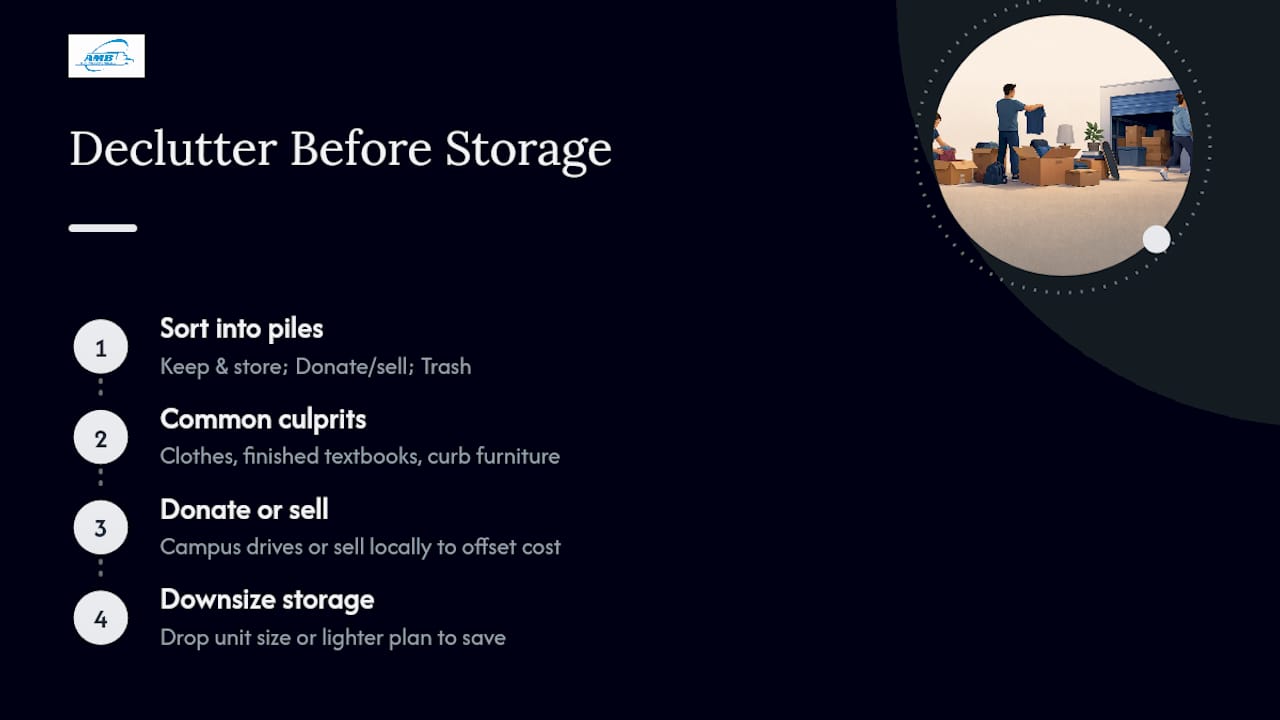
Clothes you haven’t worn all year, textbooks from classes you’ve finished, and free furniture picked up from a curb are the usual culprits. Many campuses run donation drives during move-out week specifically because so much gets left behind, and selling lightly used furniture or electronics locally can offset a chunk of your storage cost.
Downsizing also directly affects price. Dropping from a 10×10 unit to a 5×10, or from a full pickup-and-delivery plan to a lighter one, is often the single biggest cost lever a student has. If you’re on the fence about an item, ask whether it’s worth the several dollars a month it’ll cost to store it through summer. Often it isn’t.
How Do You Prepare Electronics and Perishables for Storage?
Electronics need to be fully powered down, not just in sleep mode, and unplugged well before pickup day. Remove batteries from remotes, controllers, and anything else that takes replaceable batteries, since a leaking battery can ruin the device and anything packed near it. Wrap monitors, laptops, and gaming consoles in anti-static bubble wrap or their original packaging when you still have it.
Perishable food is a hard no for basically every storage provider, and for good reason: a warehouse or unit sitting closed for months with spoiled food is a pest problem waiting to happen. Clean out your mini-fridge completely, unplug it at least a day before pickup so it’s fully defrosted, and leave the door propped slightly open during transport and storage to prevent mildew.
Non-perishable pantry items are generally fine to store, but check with your provider first since some facilities restrict food items entirely regardless of shelf life. If in doubt, donate unopened non-perishables rather than risk a rejected pickup.
What Are Typical Cancellation and Refund Policies?
Storage contracts, whether self-storage or a pickup-and-delivery plan, almost always run on calendar dates rather than academic ones, so read your specific end date rather than assuming it matches your move-in day. Most self-storage facilities operate month-to-month, meaning you can cancel with 30 days’ notice and won’t be charged for months you don’t use, though you typically won’t get a partial refund for canceling mid-month.
Flat-rate summer pickup-and-delivery plans work differently. Because you’re paying one fee upfront for the full pickup-to-redelivery cycle, canceling after pickup has already happened often means losing some or all of that fee, since the provider has already committed a truck and warehouse space. Canceling before pickup is usually far more forgiving, sometimes fully refundable if you cancel a set number of days out.
Ask specifically about extension policies too. If your fall housing gets delayed, can you extend storage, and at what daily or weekly rate? Get this in writing before you book, not after you need it.
AMB’s Perspective on Student Storage
As a nationwide, insured mover and storage provider, Ambmovingservices has handled student relocations alongside interstate household moves. A licensed partner adds real value when your summer storage overlaps with a move across state lines.
— AMB
Get a Quote for Your Student Move and Storage
If your summer plans involve more than just holding a few boxes, if you’re heading home across the country, transferring schools, or your family is relocating while you’re away, Ambmovingservices handles the pickup, secure storage, and redelivery as one coordinated service instead of three separate headaches. That matters most for students whose “summer storage” problem is really a cross-country move in disguise.
Ambmovingservices offers climate-controlled storage with written inventory tracking, insured coverage on stored items, and pickup windows built around campus move-out schedules rather than generic warehouse hours. For students combining storage with an actual relocation, the company’s long distance moving and interstate moving services cover the transport side, while the storage team handles anything that needs to sit in a secure facility until fall. As a nationwide moving company serving cross country movers and families relocating state to state, AMB builds moving cost estimates around your actual inventory instead of a flat guess.
Ready to see what your summer looks like on paper? Request a quote and get a real cost estimate for pickup, storage, and redelivery before your move-out date locks in.
Sources
- Campus storage contract / student storage guidance (Cal Poly)
- LuggageToShip — Student summer storage overview
- Lugg blog — student storage sizing and pricing