


Whether you need a parking permit for moving day depends on where you live. In many U.S. cities, a temporary no-parking permit is optional but strongly recommended. In others, like Philadelphia and Boston, there are formal permit systems with specific fees, lead times, and sign-posting rules you must follow. Skip the permit and you risk finding your truck blocked by parked cars, losing hours of move time, or facing a fine.
The fastest path to compliance: find your city or county’s moving permit page today, then apply within the required lead time. Philadelphia’s Temporary No Parking (TNP) program requires at least four full business days. Boston’s online application requires 15 days. Miss those windows and you’re moving without enforcement backup.
You need a moving vehicle parking permit in these situations:
- You’re using a commercial-grade moving truck that can’t double-park safely
- You’re placing a portable storage container or pod at the curb
- You need a temporary dumpster during a cleanout before the move
- You want official towing authority if a neighbor’s car blocks your loading zone
Pro Tip: If you’re booking long-distance moving services, ask your mover about permit coordination at the same time you confirm your move date. Ambmovingservices handles this as part of its interstate moving logistics.
Key Takeaways
Securing parking permits for moving is a city-specific process: apply early, post signs on time, and coordinate COI and elevator reservations with building management to avoid move-day delays.
| Point | Details |
|---|---|
| Apply within the lead time | Philadelphia requires 4 business days minimum; Boston online requires 15 days; missing these windows removes your enforcement rights. |
| Fees are calculated by length and day | Philadelphia charges $50 per 40 ft/day in Center City and $25 per 40 ft/day elsewhere; Boston fees typically run $69–$109. |
| Signs must be posted in advance | Post signs at least 48 hours before the move in Boston; Philadelphia recommends posting as soon as signs are in hand from the police district. |
| Permits don’t override all restrictions | Snow emergencies, fire hydrant zones, and active construction areas remain off-limits regardless of permit status. |
| Ambmovingservices coordinates permits | As a nationwide moving company, Ambmovingservices handles permit applications, COI requests, and elevator reservations for long-distance and interstate moves. |
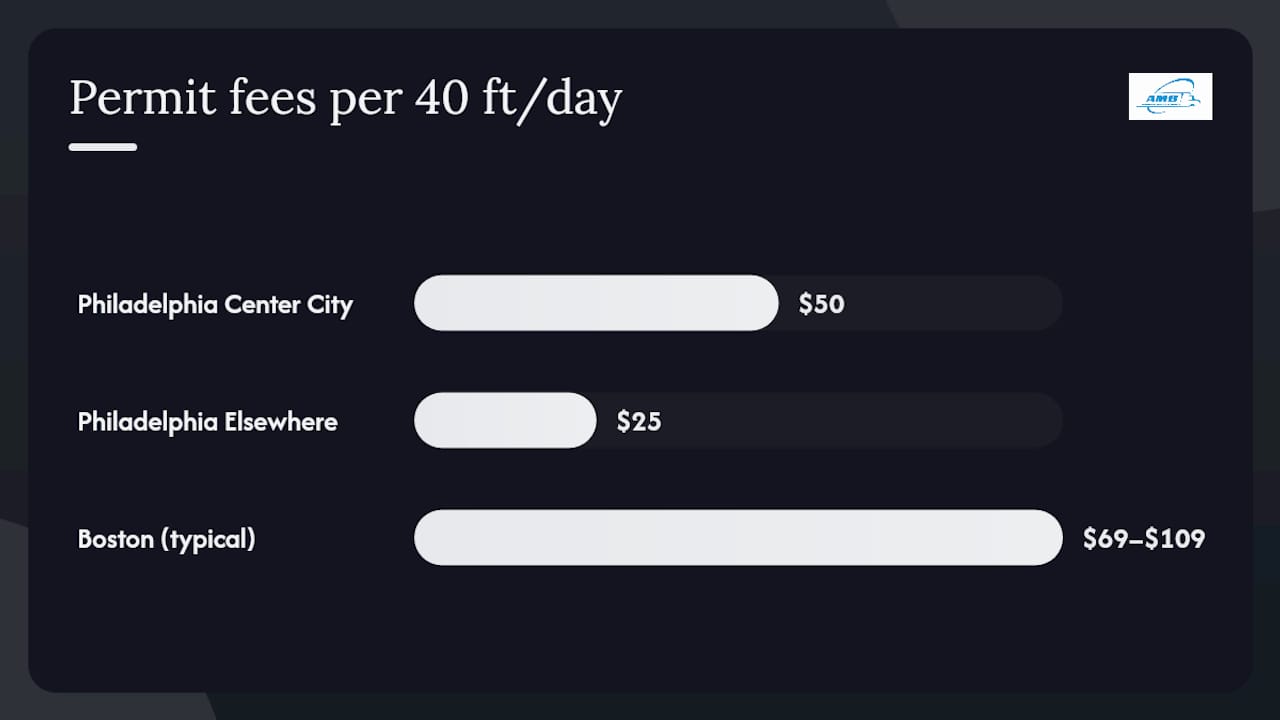
Table of Contents
- How do you get a temporary parking permit for a move?
- How do city rules differ, and what should you check locally?
- What do moving permits typically cost, and how long does approval take?
- What are your options if you can’t get a permit or need a backup plan?
- How can a professional mover help with permits and move-day logistics?
- AMB Moving & Storage handles permits so you don’t have to
- Sources
How do you get a temporary parking permit for a move?
The process looks similar across most cities, but the details vary enough that skipping steps costs you. Here’s the full workflow.
Step 1: Identify the right permit type
Confirm whether your city issues a moving truck permit, a temporary no-parking authorization, or a temporary street-use permit. Also check whether personal rental vans qualify. In many jurisdictions, permits are issued only for commercial-grade moving vehicles. A standard cargo van from a consumer rental company may not be eligible.
Step 2: Gather your application information
Every municipal application asks for roughly the same fields:
- Exact move address (street number, street name, city)
- Truck or container length in feet (or the number of 40-foot equivalents needed)
- Move start and end time, including date
- Contact name and a working cell number for move day
- Invoice or mailing address for fee payment
Knowing your truck size before you apply matters here. A 53-foot trailer needs more curb space than a 26-foot truck, and the fee calculation follows directly from that length.
Step 3: Apply online or in person
- Go to your city’s official parking or transportation department website.
- Locate the moving truck permit or temporary no-parking section.
- Complete the application with the fields above.
- Pay the fee (most cities require payment at submission; fees are typically non-refundable).
- Receive your permit confirmation by email or mail.
Philadelphia’s TNP portal accepts one address per permit. If you need coverage at two addresses (origin and destination), you file two separate applications. Boston’s Office of the Parking Clerk accepts online applications up to 15 days before the move and in-person applications with as little as 3 days’ notice, per Boston.
Step 4: Receive your permit and signs
After approval and payment verification, most cities mail or make available official no-parking signs. Philadelphia distributes signs through the local police district. Boston typically mails physical permits within 7–10 business days after approval.
Step 5: Post signs and enforce
Post signs at the curb at least 24–48 hours before your move. Boston’s guidance asks for a minimum of 48 hours when materials arrive by mail. Philadelphia recommends posting as early as possible once signs are in hand. If a vehicle remains in the zone after signs are posted and the permit window opens, contact the local police district to request enforcement. The permit is your legal documentation that the space is reserved.

Pro Tip: When using professional movers for an interstate or long-distance move, confirm COI requirements and elevator reservations with building management at least 7–10 business days before move day. Permit paperwork and building access rules are separate processes that must align.
How do city rules differ, and what should you check locally?
No two cities handle moving permits the same way. Here’s what the major examples reveal about what to look for in your own city.
Philadelphia
Philadelphia’s TNP program is one of the most structured in the country. Fees run $50 per 40 feet of curb space per day in Center City and University City, and $25 per 40 feet per day in other areas. Containers cost $50 per container (maximum 5 days), and dumpsters run $40 per dumpster (maximum 7 days). The minimum lead time is four full business days, no exceptions. Signs are picked up from the local police district, not mailed. Readers planning a Pennsylvania move should account for this pickup step in their timeline.
Boston
Boston frames its moving permit as optional but recommended. The permit’s true value is legal authority: if a car is parked in your zone on move day, you have no enforcement path without one. Online applications require 15 days’ lead time; in-person applications at the Office of the Parking Clerk need 3 days. Fees typically fall in the $69–$109 range. Permits do not override snow emergencies, construction zones, or other posted restrictions.
Portland
Portland’s Temporary Street Use Permitting (TSUP) draws a clear line between metered and non-metered streets. In metered areas, city staff place signs 1–2 business days before the permit start. In non-metered areas, the applicant posts signs, and those signs become enforceable 72 hours after verification. That 72-hour window means you need to post well before move day, not the morning of.
New York City
NYC operates differently from most cities. There is no universal residential moving permit. Instead, movers coordinate with the local NYPD precinct and, where needed, obtain a DOT no-parking authorization. Building management in Manhattan and other dense boroughs almost always requires a Certificate of Insurance (COI) and a freight elevator reservation made days in advance. Missing or incorrect COIs are a common reason moves get rejected at the building door.
Common restrictions that permits rarely override, regardless of city:
- Snow emergency routes and declared snow emergencies
- Fire hydrant clearance zones (typically 15 feet)
- Active construction or no-stopping zones
- Accessible parking spaces
- Streets owned by state or regional park authorities (DCR in Massachusetts, for example)
What do moving permits typically cost, and how long does approval take?
Fees and timelines vary by city and permit type, but the pricing logic is consistent: you’re paying for curb space by length and by day.
Common pricing models:
- Per 40 feet of curb space per day (Philadelphia’s structure)
- Per parking space per day (common in smaller municipalities)
- Flat fee per container or pod placement
- Metered-area surcharges where the city must cover lost meter revenue
Philadelphia’s fees are among the most transparent: $50 per 40 feet/day in Center City, $25 per 40 feet/day elsewhere. A standard 26-foot truck in a non-Center City neighborhood costs $25 for a one-day permit. Boston’s fees typically fall in a moderate price range depending on the permit type and area. Portland’s fees vary by permit type and whether the space is metered.
Processing timelines at a glance:
- Philadelphia: minimum 4 full business days (no exceptions; non-refundable fees)
- Boston online: 15 days before the move date
- Boston in-person: 3 days before the move date
- Portland: varies by area type; non-metered signs need 72 hours after verification
If your permit is denied, most cities allow reapplication. Check whether the denial was for an ineligible street, a duplicate address conflict, or a documentation gap. Those are fixable. If the street itself is ineligible (a state-owned road, a construction zone), you’ll need to plan an alternate loading location. Non-refundable fees mean you want to get the application right the first time, so double-check the address, truck length, and dates before submitting.
Extensions work the same way as new applications in most cities. File early, pay the additional fee, and repost signs for the extended window.
What are your options if you can’t get a permit or need a backup plan?
Permits get denied, applications miss deadlines, and sometimes the street simply isn’t eligible. Here’s how to keep the move on track anyway.
- Arrive early. Claiming curb space at 6 AM before the neighborhood wakes up is a legitimate tactic for short moves. It doesn’t give you enforcement authority, but it works for a two-hour window.
- Coordinate with neighbors directly. A note on doors the night before asking neighbors to move their cars is surprisingly effective, especially in residential neighborhoods where people want to be helpful.
- Use private loading zones or off-street parking. Some apartment complexes and commercial buildings have loading docks or private lots the truck can stage in. Confirm access with building management in advance.
- Schedule during off-peak hours. Mid-morning on a weekday typically sees less street parking than evenings or weekend mornings. Less competition for curb space means less need for enforcement.
- Stagger the load. If you can’t reserve enough space for a full truck, split the move into two smaller loads. Fewer feet of curb needed means less permit complexity.
- Rent short-term private lot space. Parking apps and lot operators near dense urban areas often sell hourly or daily access. A truck staged in a nearby lot can shuttle loads to the building entrance.
When official signs are posted and a vehicle still blocks the zone, call the non-emergency police line and reference your permit number. Don’t move the signs or the vehicle yourself.
Pro Tip: For interstate or cross-country moves, coordinate permit tasks and COI requirements with your moving company at least two weeks before move day. Communicating these details clearly with your movers prevents last-minute scrambles across multiple jurisdictions.
How can a professional mover help with permits and move-day logistics?
Permit coordination is one of the clearest advantages of hiring a professional moving company over renting a truck yourself. Here’s what a full-service mover typically handles:
- Identifying the correct permit type for the origin and destination addresses
- Filing applications within the required lead time for each city
- Handling COI requests from building management (a document that specifies the mover’s insurance coverage and names the building as an additional insured)
- Coordinating freight elevator or loading dock reservations at apartment buildings
- Picking up city-issued signs from the police district and posting them at the curb
- Coordinating with local police for enforcement if a vehicle blocks the zone on move day
What you still need to provide: accurate move times, the confirmed address, authorization for fee payments, and any building-specific rules your property manager has communicated. The mover can’t file a permit without your exact address and truck size, and they can’t satisfy a building’s COI requirement without knowing the building’s specific insurance demands.
For interstate movers handling cross-country relocations, permit coordination spans two jurisdictions. The origin city and the destination city may have completely different systems, lead times, and fee structures. A nationwide moving company with experience across multiple states handles that complexity as a matter of routine. Ambmovingservices bundles permit coordination with moving cost estimates, packing, and storage when needed, so the logistics don’t fall entirely on you.
Pro Tip: Before booking any mover, ask specifically whether they handle permit applications and COI coordination, or whether those tasks fall to you. Questions to ask your moving company about permits and building access can save you a costly surprise on move day.
Why a permit matters more than most movers expect
The permit isn’t just paperwork. It’s the difference between a move that runs on schedule and one that loses two hours because a neighbor’s car is sitting exactly where the truck needs to be. Without a permit, you have no legal standing to request enforcement. With one, a single call to the police district gets the problem resolved.
There’s a second, less obvious benefit: the permit documents your right to occupy that curb space. If a dispute arises with a neighbor, a building manager, or a parking enforcement officer, the permit is your evidence. That matters especially on long-distance and cross-country moves where the crew is working on a tight schedule and can’t afford to wait.
For interstate moves specifically, permit coordination across two cities is where professional movers earn their fee. The rules in Philadelphia are not the rules in Boston, and neither set resembles what you’ll encounter in Portland or NYC. A mover who has handled hundreds of relocations across those cities knows which portals to use, which police districts to call, and how early to file. That institutional knowledge is hard to replicate on a one-time DIY move.
AMB Moving & Storage handles permits so you don’t have to
Ambmovingservices provides long-distance moving and interstate moving services that include permit coordination, COI handling, and full move-day logistics. Instead of tracking down municipal portals, calculating 40-foot curb increments, and driving to a police district to pick up signs, you hand those tasks to a team that manages them across every state where you’re moving.
The practical difference: your move starts on time, the curb is clear, and the building’s freight elevator is reserved before the truck arrives. Ambmovingservices works with building managers, local police districts, and municipal permit offices so the logistics align before move day, not during it.
Ready to get a moving cost estimate that includes permit coordination? Request a quote and tell the team your origin and destination addresses. They’ll handle the rest.
Sources
Start your application at the right source. Generic permit guides are useful for context, but only the official municipal page gives you the current fee schedule, lead time, and application portal.
- Apply for a Temporary No Parking (TNP) permit | Services | City of Philadelphia
- Home
- Boston
- Temporary street use permitting | City of Portland