


Unplug the fridge and start defrosting at least 24 hours before pickup, empty and clean the interior, shut off the water line to the icemaker, remove loose shelves and bins, and tape the doors shut before movers arrive. If your move requires laying the unit down, keep it on its side rather than its back and expect to wait before powering it on. Professional moving companies handle this routine daily on interstate jobs, so professional help is available if you would rather skip the prep work.
TL;DR:
- Starting defrosting at least 24 hours before moving prevents messes and allows proper interior drying, especially if the fridge needs to be laid on its side.
- Disconnecting the water line and raising the ice maker arm are essential steps to avoid leaks and ice buildup during transit.
- Securing shelves and drawers individually, taping doors shut, and protecting the exterior reduces shifting and potential damage during the move.
- Maintaining an upright position during transport is critical, with a maximum tilt of 45 degrees, and waiting 15 to 24 hours before powering on depends on how long it was tilted.
- Professional movers follow strict protocols, including checking clearances, sealing loose parts, and ensuring proper orientation to minimize appliance failure and damage.
Table of Contents
- When to start: a fridge moving timeline you can follow
- Emptying, defrosting, and disconnecting the water line
- Cleaning steps that prevent odors and damage
- Securing shelves, taping doors, and protecting the exterior
- Transport rules: orientation, tilt limits, and wait times
- At the destination: leveling, reconnecting, and powering back on
- Moving day tactics that prevent damage
- How professional movers handle refrigerators on long hauls
- Why upright transport is the default for professionals
- When it makes sense to bring in AMB for your fridge move
- Sources
- FAQ
When to start: a fridge moving timeline you can follow
Fridge prep starts well before moving day, not the morning the truck arrives. Manufacturer guidance from brands like Whirlpool recommends beginning at least 24 hours ahead of the move, which gives you time to defrost properly and avoid a rushed, messy job.
Here’s a practical sequence for long distance movers to follow:
- One day before pickup, turn off the water supply line to the icemaker and let it drain.
- At the same time, unplug the refrigerator so defrosting can begin, since ice buildup needs a full day to melt safely.
- Sort through what’s inside and decide what to keep in a cooler, give away, or throw out, since perishables won’t survive a multi-day haul.
- The evening before the move, pull out shelves, drawers, and bins and pack them separately so they don’t shift or crack in transit.
Following this order avoids the common mistake of unplugging the fridge the morning movers show up, which leaves you scrambling to mop up melted ice while the crew waits. If you’re mapping out a broader move, our interstate moving checklist covers how appliance prep fits into the rest of your timeline.
Emptying, defrosting, and disconnecting the water line
Start by locating the water shutoff valve, usually behind the fridge or under the sink, and close it before disconnecting the line. If your model has an icemaker arm, raise it to the Off position so it doesn’t keep trying to make ice with no water supply. Once the water is handled, unplug the unit entirely and let the defrost cycle run its course.
- Place old towels or a shallow pan under the freezer to catch melting ice as it drips.
- Prop both doors open so air can circulate and speed up drying.
- Leave the unit unplugged and open for at least a full day before cleaning, per Whirlpool’s moving instructions.
- Mix one cup of baking soda per gallon of water for wiping down the interior, a ratio Consumer Reports recommends for cutting odors without harsh chemicals.
- For stubborn grime on removable bins, a diluted bleach solution works, but rinse thoroughly and let parts air-dry before repacking.
Pro Tip: Keep a stack of old towels by the fridge the night before. Defrosting always makes more of a mess than you expect.
Cleaning steps that prevent odors and damage
Once the fridge is empty and dry, pull out every shelf, drawer, and bin you can remove and wash them in warm soapy water in the sink rather than the fridge itself. Glass shelves are prone to cracking from sudden temperature swings, so let them come to room temperature before running them under hot water.
- Wipe the interior walls with the baking soda solution, focusing on corners where spills tend to collect.
- Use a diluted bleach mix only on removable plastic bins, then rinse twice and dry completely before packing.
- Wipe down door gaskets and dry the folds fully, since trapped moisture invites mold during a multi-day haul.
- Vacuum the condenser coils on the back or underside with a soft brush attachment to clear dust that can strain the compressor after reconnection.
Cleaning removable parts in warm soapy water and airing the unit for at least a full day reduces the risk of lingering odors when you plug the fridge back in at your new place. Skipping the coil cleaning is a common oversight that shows up later as a fridge that runs hotter and louder than it used to.
Securing shelves, taping doors, and protecting the exterior
With the interior clean and dry, the next job is locking everything down so nothing shifts, rattles, or scratches during transit.
- Wrap each shelf, drawer, and ice bin individually in packing paper or bubble wrap and label the box “fridge parts” so nothing gets lost.
- Tape the power cord to the back of the unit so it doesn’t dangle or snag on doorframes.
- Use stretch wrap or painter’s tape to hold both doors firmly shut, checking that the wrap doesn’t touch painted surfaces directly.
- Wrap the entire exterior in moving blankets, paying extra attention to corners and the control panel.
- Lay down floor protection, such as hardboard or heavy cardboard, along the path the fridge will travel to prevent gouges in flooring.
Manufacturer guidance for units like GE’s Monogram line specifically calls for securing loose internal components such as grilles, storage pans, and ice trays before the unit moves, since these pieces cause the most damage when left loose inside a rocking truck. For more on wrapping techniques for fragile and awkward items, our guide to packing practices for long distance moves walks through blanket and strap methods in more detail.
Transport rules: orientation, tilt limits, and wait times
Refrigerators are built to run upright, and manufacturer instructions are consistent on this point. GE’s moving guidance states that units should stay upright during transport, with a maximum tilt of 45 degrees when tipping is unavoidable, such as getting through a low doorway.
- If the fridge must be laid down for a long haul, lay it on its side, never its back, to avoid stressing the compressor mounts.
- Wait times before powering on range from 15 minutes to 24 hours depending on the model and how long the unit was tilted, so check the manual or model plate for the exact figure.
- A common rule of thumb is to let the fridge stand upright for as long as it was on its side, capped at 24 hours for longer moves.
- Inside the truck, strap the fridge to the wall using ratchet straps positioned at the sides, not across the doors, to keep it from tipping or sliding.
Skipping the wait time is one of the fastest ways to damage a compressor, since oil that settled during transit needs time to flow back into place before the unit runs again.
At the destination: leveling, reconnecting, and powering back on
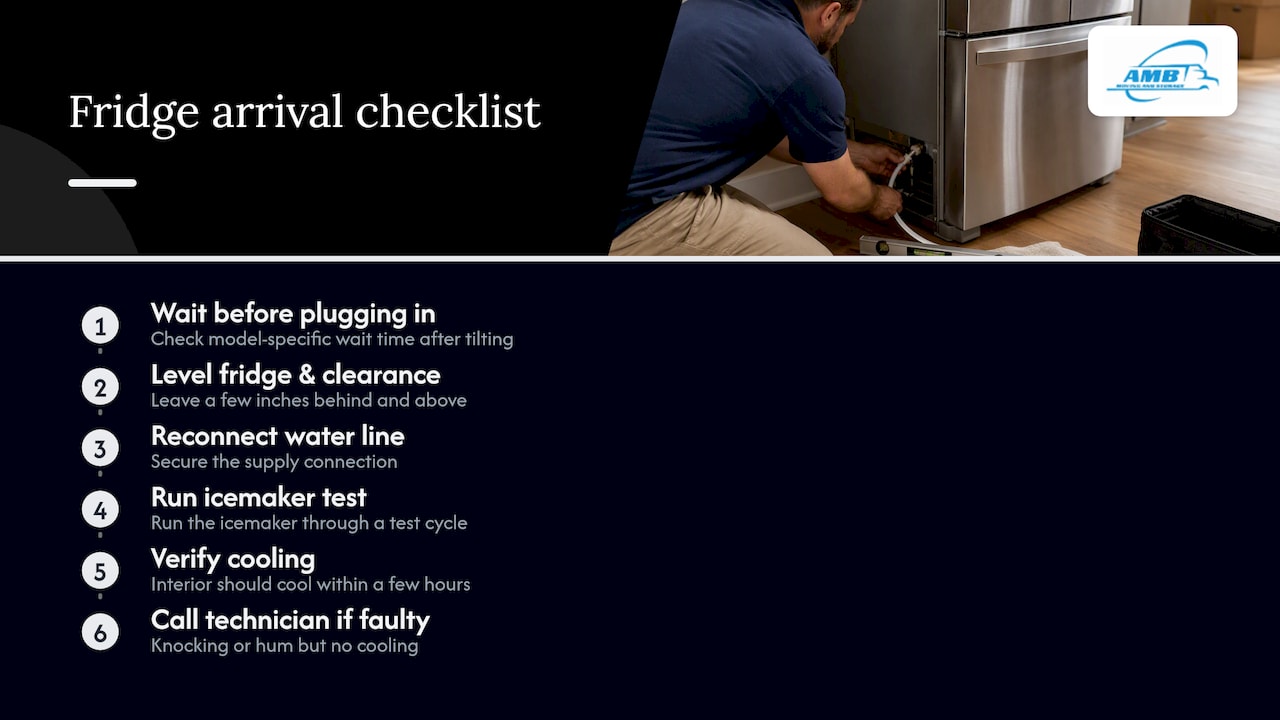
Once the fridge is in place, check the manual for the required wait time before plugging it in, since this varies by model and how long the unit was tilted. Level the fridge on its feet and leave a few inches of clearance behind and above it for airflow. Reconnect the water line, run the icemaker through a test cycle, and check that the interior is cooling properly within a few hours. If the compressor hums but the unit never cools, or you hear a knocking sound, that’s a sign to call a technician rather than keep running it.
Moving day tactics that prevent damage
Before the truck backs up, walk the path from the fridge to the door and measure doorways, hallways, and any elevators to confirm clearance. If the fridge is wider than a doorway, removing the doors ahead of time can save you from a wall repair.
- Lay hardboard or thick cardboard along the moving path to protect floors from scuffs and gouges.
- Use an appliance dolly with straps positioned at the fridge’s sides rather than front or back, which keeps pressure off the door seals, a technique The Home Depot recommends for avoiding hardware damage.
- Pad the straps where they touch painted surfaces to prevent scratches.
- For heavy or built-in units, or any move crossing state lines, hiring a crew with the right equipment beats risking an injury or a damaged appliance.
Pro Tip: Never try to walk a fridge down stairs solo. Even with a dolly, this is a two-person job at minimum.
How professional movers handle refrigerators on long hauls
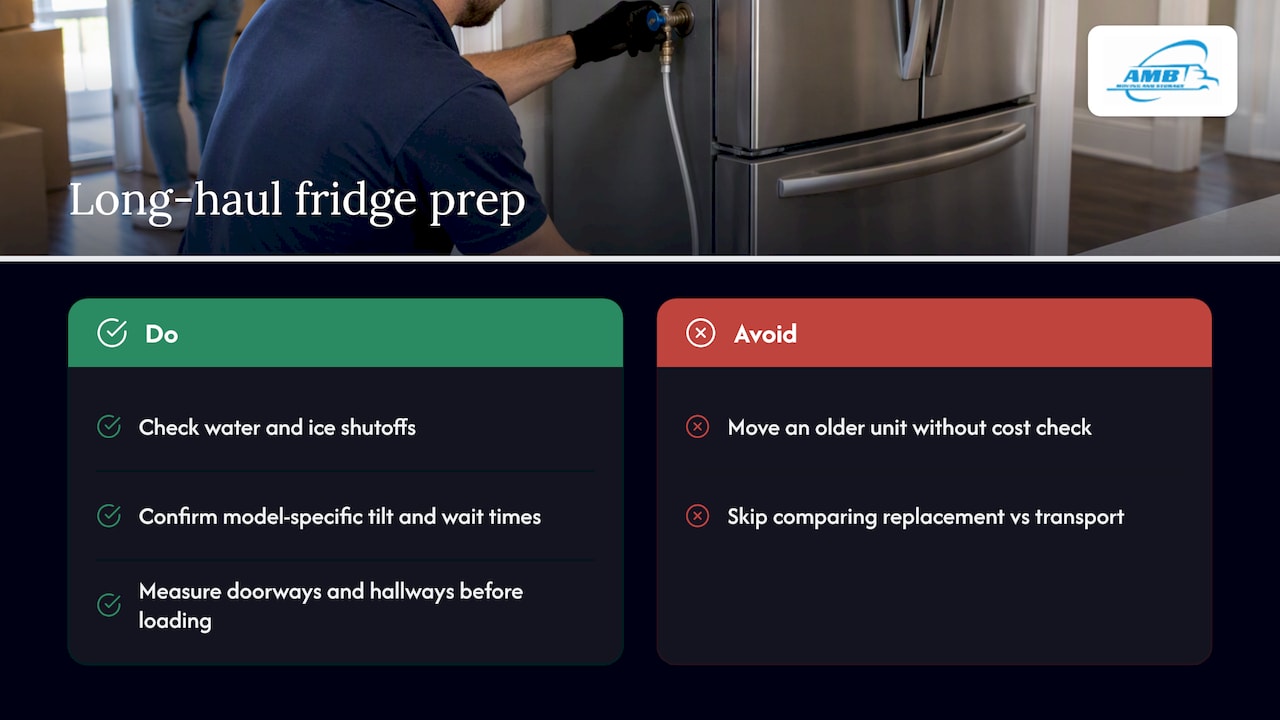
On interstate jobs, professional moving crews check water and ice line shutoffs, confirm model-specific tilt and wait-time restrictions, and measure doorways and hallways before the truck ever loads. That prep work is why crews rarely run into surprises on move day. For an older unit nearing the end of its lifespan, it’s often worth weighing the cost of moving it against replacing it at the destination rather than paying to transport something that may not last much longer. Our long distance moving page outlines how this fits into a full-service relocation.
Why upright transport is the default for professionals
Compressor oil and refrigerant settle when a fridge sits on its side, and running the unit before that oil redistributes can burn out the compressor. Pros build in wait time because replacing a compressor costs far more than a little patience. Follow your model’s manual, not general internet advice.
— AMB
When it makes sense to bring in AMB for your fridge move
Interstate hauls, built-in units, and anything over a few hundred pounds are exactly the situations where a professional crew earns its keep, since one wrong strap placement can mean a cracked door or a busted compressor.
AMB Moving & Storage offers professional packing services for fragile components and specialty item handling for oversized or built-in appliances, alongside full nationwide moving coverage for long distance movers and cross country movers alike. If you’re weighing moving cost estimates for an upcoming interstate move, request a quote and we’ll walk you through what your fridge move actually requires.
Sources
- Refrigerator – Moving Instructions – GE Kitchen Appliances
- Proper Moving Care – Quad Door – Product Help | Whirlpool
- How to get rid of funky refrigerator smells | Consumer Reports
FAQ
How long should a refrigerator be off before moving it?
Most manufacturers recommend unplugging the fridge at least 24 hours before the move to allow full defrosting and interior drying. This also gives you time to clean the interior and let it air out before packing.
Is it okay to lay a fridge down when transporting it?
Manufacturers generally advise keeping refrigerators upright, but when laying one down is unavoidable, GE’s guidance says to place it on its side, never its back, and tilt no more than 45 degrees when tipping briefly. After transport, let it stand upright for as long as it was tilted before plugging it back in.
What are common fridge moving mistakes?
The most frequent mistakes are skipping the defrost period, forgetting to shut off the icemaker’s water line, and plugging the unit in right after transport without waiting. Leaving shelves and bins unsecured inside the fridge also leads to cracked glass and dented interiors during transit.
Do you have to let a fridge sit before moving it?
Yes, most manufacturers recommend defrosting for at least 24 hours before the move and, if the unit was tilted or laid down during transport, letting it stand upright before powering it on again. Wait times after transport range from 15 minutes to 24 hours depending on the model, so checking the manual matters.
How do you clean a fridge before moving it?
Wipe the interior with a solution of one cup of baking soda per gallon of water, which Consumer Reports recommends for cutting odors without harsh residue. Wash removable shelves and bins separately in warm soapy water, then let everything air-dry fully before repacking.