


TL;DR:
- Moving costs vary widely based on distance, home size, and chosen service level, from DIY options to full-service moves. Booking early, decluttering, and requesting binding estimates can help control expenses, with regional and seasonality factors also influencing prices. Ambmovingservices offers tailored, insured interstate moving quotes based on thorough inventory assessments.
Expect to pay a wide range from a relatively low cost for a small local DIY move up to a high cost for a large cross-country full-service move. Three things drive that spread: how far you’re going, how much stuff you’re moving, and how much of the work you hand off to professionals. Get those three variables right, and you can build a budget that holds.
TL;DR:
- Local moves (full-service): costs vary depending on home size.
- Long-distance moves (2–3 BR): prices can vary widely depending on distance.
- Cross-country 3BR full-service moves average $8,950 nationally, with typical routes ranging from $6,200 (Midwest origins) up to $11,200 (California or New York origins, MoveSmart dataset Jan 2025–Jan 2026).
- The single budgeting rule: get three binding or not-to-exceed estimates before you commit to anything
Table of Contents
- What does each service model actually cost you?
- How much does moving cost by home size?
- What actually drives your moving cost up or down?
- How do movers calculate your bill?
- What fees and insurance options should you expect?
- How does storage affect your total moving budget?
- When should you book, and how does timing affect price?
- How to get quotes you can actually compare
- Real interstate scenarios: how AMB estimates costs
- Key Takeaways
- What estimators see that most guides miss
- Get a tailored interstate moving estimate from Ambmovingservices
- Useful sources and further reading
What does each service model actually cost you?
The service model you choose is the second-largest cost lever after distance. A 3BR full-service move can cost significantly more than renting a truck yourself, once you factor in time and insurance differences.
Full-service movers
A crew packs, loads, transports, and unloads everything. For a studio or 1BR local move, expect a moderate range of costs. A 3BR long-distance move can run substantially higher depending on specifics. You pay for convenience and professional liability.
- Pros: Fastest, least physical effort, insured cargo
- Cons: Highest cost, scheduling dependency
DIY truck rental
You rent the truck, load it, drive it, and unload it. A local studio move can cost as little as a few hundred dollars in truck fees. A 3BR cross-country rental involves higher base costs before fuel, tolls, and lodging.
- Pros: Lowest base cost, full schedule control
- Cons: Physical labor, fuel costs, no cargo insurance by default
Portable containers (PODS/U-Pack style)
A container is dropped at your door, you load it, and the company transports it. This model sits between DIY and full-service on both cost and convenience — particularly useful for long-distance moves where flexible delivery timing matters. Typical pricing for a 2–3BR move falls in a moderate range, reflecting container size and transport.
- Pros: Flexible pickup/delivery timing, no driving required
- Cons: You still load and unload; container size limits apply
Labor-only movers
You rent the truck; a crew handles loading and unloading only. Labor-only mover costs for a couple of hours of local service generally fall within an affordable range. Good middle ground if you’re comfortable driving but not lifting.
- Pros: Reduces physical strain without full-service price
- Cons: You manage the truck, fuel, and driving
How much does moving cost by home size?
The table below uses full-service pricing as the baseline, with mid-season booking and standard access (no stairs surcharges, ground-floor pickup and delivery). Self-packed moves typically run 15–20% less.
| Home Size | Est. Weight | Local (under 50 mi) | Regional (50–500 mi) | Long-Distance (500+ mi) |
|---|---|---|---|---|
| Studio / 1BR | 1,500–3,000 lbs | — | $1,000–$1,500 | $2,000–$4,000 |
| 2BR | 3,000–5,000 lbs | $800–$1,500 | $2,000–$4,000 | $3,500–$6,000 |
| 3BR | 5,000 lbs | $1,200–$1,500 | $3,500–$6,000 | $8,950 (national average), regional routes range $6,200–$11,200 |
| 4BR+ | 8,000 lbs | $1,800–$3,500 | $5,000–$8,500 | $7,500–$11,000 |
Key assumptions:
- Full-service packing adds a variable additional cost depending on volume.
- Mid-season booking (September–April); peak summer rates run 20–35% higher
- Standard ground-floor access; stair and long-carry fees apply separately
Two scenarios to anchor your thinking:
A 2BR local move (under 50 miles, self-packed, two movers) typically falls within a moderate cost range. A 3BR cross-country full-service move averages $8,950 nationally, with regional route pricing from $6,200 (Midwest origins) to $11,200 (CA/NY origins, MoveSmart dataset Jan 2025–Jan 2026).

What actually drives your moving cost up or down?
Distance and home size are fixed. Everything else is a lever you can pull.
Distance and weight are the two non-negotiables on interstate moves. Interstate movers price by weight, typically $0.50–$0.90 per pound, plus a mileage component. Reducing shipment weight by hundreds of pounds can save a noticeable amount on a long-distance move.
Time of year moves the needle more than most people expect. Moves in early-year months generally cost less than moves in peak summer months. If your timeline is flexible, booking between January and March is the single easiest way to cut costs without changing anything else about your move.
Access constraints add fees that catch people off guard:
- Fees for stairs, long carries, shuttle service, and specialty items vary and can add to your moving bill.
Urban parking restrictions are the most common trigger for shuttle fees. Sending access photos and measurements to your mover in advance prevents surprise charges at delivery.
Packing services add $300–$1,500 depending on volume. If you pack yourself, you save money but assume liability for anything that breaks inside a box you packed.
Pro Tip: Declutter before your pre-move survey. Every 500 pounds you remove from your shipment saves $150–$250 on an interstate move. Selling or donating furniture you were going to replace anyway is the fastest way to shrink your bill.
How do movers calculate your bill?
Local and interstate moves are priced on completely different models. Knowing which one applies to your move tells you what to watch on the final invoice.
Local moves: hourly pricing
Local movers charge an hourly rate per mover; total labor costs depend on crew size and hours worked. Most companies have a 2–3 hour minimum.
Crew size matters. A two-person crew is standard for a 1–2BR move; a 3BR or larger typically needs three movers. Adding a third person increases the hourly rate but usually shortens the job enough to offset the cost.
Interstate moves: weight plus mileage
Interstate carriers price the transportation line item on a per-pound or hundredweight (cwt) model, then add a mileage rate and fuel surcharge. The final weight is determined at a certified scale, and customers have the right to observe the weigh-in. If the delivery weight comes in higher than the estimate, a reweigh can protect you from an inflated bill.
Estimate types: what each one means for your wallet
- Binding estimate: The price is locked. You pay exactly what’s quoted, even if the shipment weighs more.
- Nonbinding estimate: The final bill adjusts to actual weight. You can owe more than quoted.
- Binding not-to-exceed: The price can only go down, never up. If actual weight is less than estimated, you pay the lower amount. This is the estimate type to request for any interstate move.
What fees and insurance options should you expect?
Released-value protection is the default coverage every federally regulated interstate mover must offer at no charge, providing limited compensation per item weight. That gap is why full-value protection exists.
Full-value protection requires the mover to repair, replace, or pay current market value for any lost or damaged item. Cost varies by carrier but typically runs $100–$500 depending on declared value and deductible. For a move with high-value furniture, electronics, or art, it’s worth the premium.
Common extra fees and typical ranges:
- Various additional fees can apply for stairs, long-carry, shuttle, appliance servicing, specialty items, and packing materials.
Pro Tip: Full-value protection makes sense for shipments that include higher-value items compared to the limited coverage of released-value protection. Run that math before you decline the upgrade.
A note on reweighs: if the delivery weight is significantly higher than the estimate, request a reweigh before you sign anything. You have the right to be present at the scale, and carriers regulated by the FMCSA are required to honor that request.
How does storage affect your total moving budget?
Storage needs come up more often than people plan for: a closing delay, a lease gap, or staging a home for sale can all push you into storage-in-transit (SIT) or standalone self-storage.
Storage-in-transit keeps your belongings in the mover’s warehouse between pickup and delivery. Typical costs run $50–$150 per month for the space, plus $200–$600 total for the first month when you include pickup and delivery fees.
Self-storage runs $75–$200/month for a 10×10 unit, depending on location and climate control. Urban markets (New York, San Francisco, Chicago) skew toward the high end.
Sample add-on costs:
- Storage add-on costs vary depending on duration and type of service.
Scenarios that commonly trigger storage: a new home closing pushed back two weeks, a rental lease ending before the new one starts, or a cross-country move where the destination isn’t ready. Budget for at least one month of storage as a contingency on any interstate move with a tight timeline. AMB’s storage solutions cover both short-term and long-term needs as part of a coordinated move package.
When should you book, and how does timing affect price?
Timing is the most underused cost lever for interstate moves. Moving in peak summer months tends to cost more than moves in winter months.
Seasonal pricing at a glance:
- Cheapest months: January and February
- Most expensive: June, July, August (peak demand, limited truck availability)
- Mid-range: September–November, March–April
- Avoid: Memorial Day weekend, Labor Day weekend, and the last weekend of any month
Booking lead times:
- Local moves: 2–4 weeks ahead is usually sufficient
- Interstate moves: book 6–8 weeks out minimum; 10–12 weeks for summer moves
- Peak season (May–August): the earlier you book, the more leverage you have on price
Pro Tip: Mid-week (Tuesday–Thursday) and mid-month moves consistently yield savings of $100–$700 depending on move size and carrier. If your employer or lease allows any flexibility on the exact date, Tuesday is almost always cheaper than Saturday.
How to get quotes you can actually compare
Getting three estimates is the baseline. Getting three comparable estimates is what actually protects your budget.
Checklist: what to have ready before you call a mover
- Home size and number of rooms
- Full inventory of large items (furniture, appliances, specialty items)
- Access details: stairs, elevator, parking restrictions, distance from truck to door
- Photos of access points (building entrance, parking area, hallways)
- Preferred move dates and any flexibility window
- Destination access details (same checklist for the new place)
- Special items requiring crating or extra handling
- Desired valuation coverage (released-value vs. full-value)
- Whether you need packing services or storage
Questions to ask every mover:
- Is this a binding, nonbinding, or binding not-to-exceed estimate?
- What’s included in the base rate, and what triggers additional fees?
- Who physically handles my shipment — your own crews or a broker/third party?
- What is your reweigh policy if the actual weight differs from the estimate?
- Are fuel surcharges included, or added at delivery?
Request in-home or virtual surveys, not phone estimates. A mover who quotes you without seeing your inventory is guessing. For a tailored estimate on your long-distance move, Ambmovingservices offers binding and not-to-exceed options with a full virtual or in-home survey process. Request a quote to get a number built around your actual inventory and route.
Real interstate scenarios: how AMB estimates costs
These scenarios reflect the kinds of moves Ambmovingservices handles regularly as a nationwide moving company. Ranges reflect full-service pricing with standard access and mid-season booking.
Scenario 1: New York → Los Angeles, 3BR full-service
- Estimated shipment weight: 6,500–7,500 lbs
- Distance: approximately 2,790 miles
- Services: full packing, loading, transport, unloading
- Sample range: $6,500–$8,500 (route-level data shows a 3BR NY→LA average of $6,750)
- Key variables: origin building access (elevator vs. stairs), packing volume, delivery timeline
Scenario 2: Chicago → Austin, 2BR mid-distance
- Estimated shipment weight: 4,000–5,500 lbs
- Distance: approximately 1,100 miles
- Services: self-packed, loading and transport only
- Sample range: $3,200–$5,000
- Key variables: shipment weight, fuel surcharge, delivery window flexibility
Scenario 3: Regional 1BR move (under 300 miles)
- Estimated shipment weight: 2,000–3,000 lbs
- Services: full-service with partial packing
- Sample range: $1,500–$3,000
- Key variables: access at both ends, packing scope
How AMB builds an estimate: The process starts with a visual inventory survey (virtual or in-home), followed by weight and volume estimation based on room-by-room assessment. Route demand data and access details at both origin and destination are factored in. Customers choose between binding and not-to-exceed options before signing. Ambmovingservices is licensed, insured, and operates under FMCSA regulations for all interstate moves. For relocation expense examples tied to specific routes, the AMB site breaks down line items in detail.
Key Takeaways
A moving costs breakdown comes down to three variables: distance, shipment weight, and service level. Control what you can, get binding estimates, and book early.
| Point | Details |
|---|---|
| Local vs. long-distance ranges | Local full-service moves cost range lower than cross-country 3BR full-service moves, which average $8,950 nationally (MoveSmart 2025–2026 dataset) with regional routes spanning $6,200–$11,200. |
| Biggest cost lever you control | Decluttering before your survey saves $150–$250 per 500 lbs on interstate moves. |
| Estimate type to insist on | Always request a binding not-to-exceed estimate for interstate moves to cap your final bill. |
| Best time to book | January–February moves average 20% less than July; book interstate moves 6–8 weeks out minimum. |
| Ambmovingservices | Licensed, insured nationwide interstate mover offering binding estimates and full-service packing, storage, and specialty moves. |
What estimators see that most guides miss
The number that surprises people most isn’t the base rate. It’s the gap between what they thought they owned and what actually goes on the truck. Families routinely underestimate their shipment weight by 1,000–2,000 pounds because they forget the garage, the attic, and the items in closets they haven’t opened in two years. That gap translates directly into a higher bill on an interstate move priced per pound.
The most practical thing you can do before any survey is walk every room with a notepad and count large items. Then walk the garage. Then the basement. Movers who do virtual surveys are good at catching what you miss, but only if you show them. Ambmovingservices’s estimating process is built around a thorough room-by-room review precisely because that’s where the surprises hide. For interstate moves specifically, the combination of an accurate weight estimate and a binding not-to-exceed agreement is what keeps the final bill from drifting past your budget.
Get a tailored interstate moving estimate from Ambmovingservices
Planning a long-distance or interstate move means dealing with real variables: actual shipment weight, route-specific demand, access at both ends, and the right valuation coverage. Generic online calculators give you a ballpark. A proper estimate gives you a number you can actually budget around.
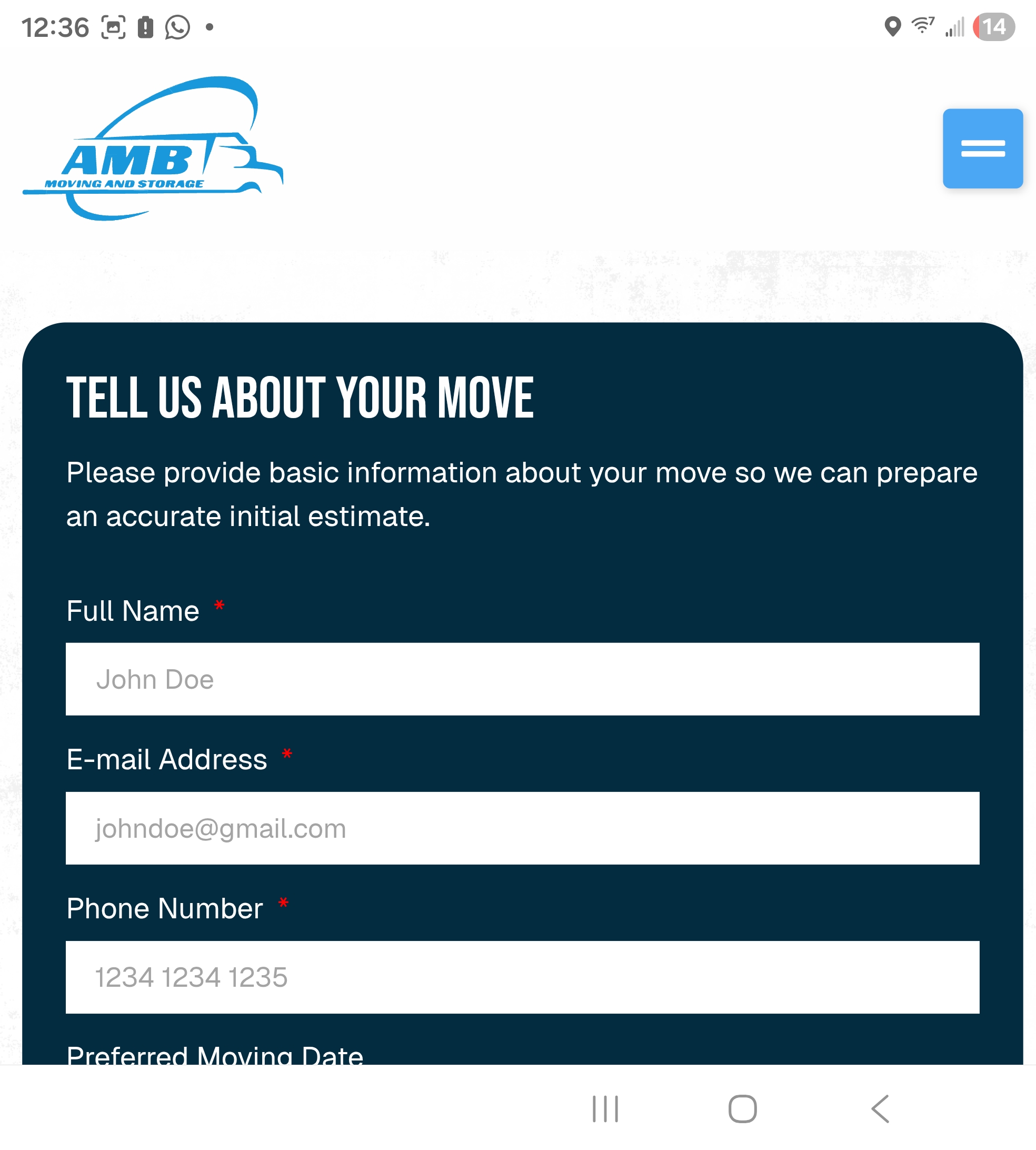
Ambmovingservices handles long-distance and interstate moves across all 48 contiguous states, with full-service packing, secure short- and long-term storage, and specialty item handling included as options on every move. Every estimate is built from a real inventory survey, not a square-footage guess. The company is licensed and insured under FMCSA regulations, and customers choose between binding and not-to-exceed pricing before anything is signed.
Request your tailored moving estimate and get a number built around your actual route, inventory, and timeline.
Useful sources and further reading
- How Much Does It Cost to Move? (2026 Cost Guide) — MovingExperts
- The Complete 2026 Moving Cost Database — MoveSmart Blog
- Complete Moving Cost Guide — MoveSmart
- How Much It Costs to Move — Opendoor
- Interstate Moving Cost Calculator — InterstateMoveNow
- FMCSA — Federal Motor Carrier Safety Administration (licensing, consumer rights, reweigh rules)
- A Guide to Moving Costs — Move.org
- AMB Moving Cost Guide
- AMB Relocation Expense Examples
- AMB Cost-Saving Strategies for Long-Distance Moves
For a customized estimate based on your specific route and inventory, request a quote from Ambmovingservices rather than relying on national averages alone.