


The moment your orders drop, verify every detail on the document for accuracy, then call your installation’s transportation office to schedule counseling or start your Defense Personal Property System (DPS) shipment. Decide early whether a Personally Procured Move (PPM), a government-arranged Household Goods (HHG) move, or a partial mix fits your household and timeline best. For interstate and cross-country legs of the move, a nationwide moving company can handle the heavy logistics while you manage the military-specific paperwork.
TL;DR:
- Most first-time movers should prioritize in-person counseling and decision-making on move type before handling packing, inventory, or storage to avoid delays.
- Confirm your shipment scheduling, estimated weight, and pickup dates in DPS early, and understand that pickup dates are negotiable, not guaranteed.
- For government-backed moves, keep certified weight tickets, receipts, and detailed inventory records to ensure smooth reimbursement and claims processes.
- Interstate or cross-country moves require licensed, insured carriers that meet federal standards to ensure compliance and protect household goods during long-distance transport.
- Choosing between a Personally Procured Move, Household Goods move, or partial PPM significantly influences your timeline, costs, and stress level, so make that decision early with proper guidance.
Table of Contents
- Your PCS Move Timeline: What To Do And When
- PPM vs. HHG vs. Partial PPM: Which Move Type Fits You?
- How Do You Schedule A Shipment In DPS?
- What Should Happen On Moving Day?
- What Entitlements And Reimbursements Should You Expect?
- How Do You File A Claim For Lost Or Damaged Goods?
- When Should You Use Storage Instead Of Immediate Delivery?
- What AMB Has Learned Moving Military Families Across State Lines
- Why Most PCS Advice Gets The Priorities Backwards
- Get An Interstate PCS Quote Built Around Your Orders
- Official Resources Worth Bookmarking
- Sources
Your PCS Move Timeline: What To Do And When
A PCS move guide is only useful if it tells you exactly what to do on which day. Military relocations run on a tighter clock than civilian moves because orders, funding, and DPS scheduling windows are all tied together. Miss one step and the whole timeline can slip by weeks.
As soon as you have orders
Read your orders twice for accuracy: report date, duty station, dependent status, and weight allowance code. Errors here cause funding problems later. Then work through these tasks:
- Call your installation’s local transportation office and ask whether in-person counseling is required for your situation.
- Reach out to your sponsor at the new duty station for housing and school-district information.
- Start a rough household inventory so you know roughly how much you own before anyone estimates your weight allowance.
- If you have kids, contact the School Liaison Officer and, if applicable, the Exceptional Family Member Program (EFMP) office at both the old and new installations.
6 to 8 weeks out
This is decision season. You need to lock in your move type, get a weight estimate, and open a shipment in DPS, the government’s official portal for scheduling and tracking military shipments.
- Request counseling if you haven’t already, especially if this is your first PCS, you’re retiring, or you’re separating.
- Compare PPM, HHG, and partial PPM against your household size and target dates.
- Enter your estimated weight and preferred pickup dates in DPS.
- Start collecting quotes if any portion of the move will be a professional interstate move; our interstate moving resources cover what that process looks like end to end.
2 to 4 weeks before pickup
- Confirm your pack and pickup dates fall inside the 7-day spread window your Transportation Service Provider (TSP) or civilian mover assigned.
- Finish your household inventory room by room, noting high-value items separately.
- Set aside documents, medications, and valuables that will travel with you, not on the truck.
- Schedule utility disconnection at your current home and connection at the next one.
Moving day
Be present for the entire pack-out. Walk the crew through each room, confirm the inventory sheet matches what’s loaded, and photograph anything with existing damage before it goes on the truck.

After arrival
Verify delivery against your inventory before signing off, note any damage immediately, and start your claims clock if something arrived broken. Update your address with finance, medical, and your kids’ new schools within the first week. For anyone shipping goods across several states, our long distance moving guide breaks down what delivery reconciliation should look like.
PPM vs. HHG vs. Partial PPM: Which Move Type Fits You?
A PPM, formerly called a DITY move, means you move your own household goods and get reimbursed. An HHG move means the government contracts a mover to pack, load, and deliver everything for you. A partial PPM splits the difference: professionals handle your bulk furniture while you personally transport valuables, pets, or anything you don’t want on a truck for weeks.
The financial mechanics matter more than most first-time movers realize. PPM reimbursement is calculated against the Government Constructed Cost (GCC), which is what the government would have paid a contractor to move the same weight the same distance. If your actual costs come in under that GCC, you keep the difference as an incentive payment. Run your costs high, and you simply get reimbursed for what you spent, up to the GCC ceiling.
Partial PPM works well for a specific kind of household: families with heavy furniture that’s a headache to load themselves, but also a car full of items they’d rather not trust to a shipment schedule. Weight gets split between the two shipments, and each portion is documented and reimbursed separately.
Before you commit to either lane, run through this quick decision checklist:
- Household size and weight: larger households often benefit from full HHG since packing labor adds up fast in a PPM.
- Distance: longer interstate moves shift the math toward professional handling, both for time saved and liability avoided.
- Timeline flexibility: PPMs give you more control over pickup and delivery dates; HHG moves run on your TSP’s schedule.
- Expected costs vs. GCC: if you can genuinely move for less than the GCC, a PPM can put real money back in your pocket.
Pro Tip: Get a written GCC estimate from your transportation office before deciding on a PPM. Guessing at the number and finding out later you underestimated your own costs is the single most common PPM regret.
How Do You Schedule A Shipment In DPS?
DPS handles scheduling and tracking for every government-arranged and PPM shipment. The process itself is straightforward, but the timing rules trip up a lot of first-time movers.
Here’s the sequence:
- Upload your orders to DPS as soon as they’re available; the system won’t let you build a shipment without them.
- Create your shipment record and enter your estimated household goods weight along with your destination ZIP code.
- Select your preferred pickup date range and submit the request for TSP assignment.
- Watch for TSP contact confirming pickup within the 7-day spread window, the standard scheduling rule that gives movers a seven-day span to complete pickup.
Not everyone can jump straight into DPS. First-time movers, retirees, and separating service members are typically required to complete in-person counseling at the local transportation office before a shipment can be created. Skipping this step is one of the most common causes of avoidable delays, because counselors catch weight allowance mismatches and documentation gaps before they become scheduling problems.
The biggest scheduling mistake is treating your requested pickup date as guaranteed. It’s a starting point for negotiation with your assigned mover, not a locked appointment. Confirm the actual pickup date in writing once your TSP reaches out, and don’t finalize travel plans around a date that hasn’t been formally confirmed.
What Should Happen On Moving Day?
Your inventory list is the single most important document you’ll produce during a PCS. It needs to match what the crew actually loads, room by room, item by item, because it’s the record you’ll rely on if anything goes missing or gets damaged.
Build it before the crew arrives. Walk through your home, list major items and boxes by category, and note the condition of anything valuable or already scratched or dented. When the movers show up, walk the house with the lead packer, point out fragile or high-value items, and don’t sign the final inventory sheet until you’ve compared it against your own list.
A few practical moving-day habits make delivery reconciliation far easier:
- Photograph furniture and electronics before loading, especially anything with existing wear.
- Keep a folder with your orders, weight tickets, and inventory copies on your person, not in a box.
- Set aside a clearly labeled “do not load” pile for essentials you’ll need before delivery.
- If you’re running a hybrid shipment, tag PPM items separately from HHG items so nothing gets loaded onto the wrong truck.
Pets and kids need a plan of their own. Arrange for pets to stay with a neighbor, in a kennel, or in a quiet room, since an open front door and strange men carrying furniture is stressful for animals and toddlers alike. If you’re driving a Privately Owned Vehicle (POV) to the next duty station, load it the night before so it isn’t blocking the moving truck’s access.
Pro Tip: Documenting condition with photos and confirming your inventory sheet at pack-out materially improves how fast and how favorably a claim gets settled if something breaks in transit.
What Entitlements And Reimbursements Should You Expect?
Three payments do most of the financial heavy lifting on a PCS: Dislocation Allowance (DLA), Monetary Allowance in Lieu of Transportation (MALT), and PPM reimbursement if you moved yourself.
DLA is a flat-rate, tax-free payment set by rank and dependent status, meant to offset the incidental costs of setting up a new household, things like utility deposits and the odd items you always forget until you’re standing in an empty kitchen. MALT reimburses per-mile travel costs for the drive between duty stations, calculated against the official distance between installations.
Documentation determines whether you get paid on time. PPM reimbursement requires certified weight tickets, both full and empty, from a certified scale near your origin and destination. Locating those scales is something your transportation office can point you to directly.
Here’s what to keep in your PCS folder from day one:
- Certified weight tickets for every leg of a PPM shipment.
- Fuel, lodging, and toll receipts if you’re claiming travel expenses.
- A running expense log with dates, amounts, and purpose for each cost.
- Copies of your orders and any amendments, since finance will ask for them more than once.
Budget for out-of-pocket costs that entitlements don’t fully cover: pet deposits at a new rental, temporary lodging beyond what Temporary Lodging Expense (TLE) allows, and the gap between when you pay for a PPM and when reimbursement actually lands, which can run several weeks depending on your service branch’s processing volume.
How Do You File A Claim For Lost Or Damaged Goods?
Loss and damage claims for government-arranged shipments run through DPS, and the process rewards speed and documentation over anything else.
- Report damage or missing items in DPS as soon as you notice them during delivery, ideally before the crew leaves.
- Photograph every damaged item and keep the original packaging or box it arrived in.
- Cross-reference the item against your inventory sheet to confirm it was actually part of the shipment.
- Submit your claim through DPS within the required window, and keep copies of receipts for anything you’re claiming replacement value on.
- Follow up with your TSP or transportation office if you haven’t heard back within a few weeks.
Government coverage has real limits, and that’s where PPMs create a gap most families don’t think about until it’s too late. If you moved yourself, standard homeowner or renter insurance often excludes items in transit, so check your policy language before assuming you’re covered, or buy supplemental transit insurance for high-value items. Formal claims for government-arranged moves fall under the Personnel Claims Act framework, which is worth understanding before you sign anything at delivery.
When Should You Use Storage Instead Of Immediate Delivery?
Non-temporary storage (NTS) gets authorized when your report date, housing situation, or overseas assignment means your household goods can’t go straight to your new address. It counts against your weight allowance the same as a direct shipment, so factor that in when you’re estimating totals.
Short-term gap storage solves a different problem: you’ve arrived, but base housing or your rental isn’t ready yet. A few practical moves make either scenario easier:
- Choose storage facilities near your installation with climate control if you’re shipping electronics, wood furniture, or musical instruments.
- Maintain your own inventory copy of items placed in storage, separate from those delivered immediately.
- Confirm insurance coverage for stored goods specifically, since some policies treat storage differently than transit.
- Coordinate your retrieval date with DPS timelines so storage doesn’t quietly roll into month after month of fees.
Plan your Temporary Lodging Expense (TLE) days around the realistic storage and delivery timeline your transportation office gives you, not the optimistic one you’re hoping for.
What AMB Has Learned Moving Military Families Across State Lines
Licensed, insured, and federally compliant carriers are essential for interstate and cross-country relocations, which matters most when a household is juggling DPS timelines on top of an actual move. Working within federal compliance standards isn’t optional in this industry, and it’s the baseline every service member should confirm before hiring anyone for the long-distance leg of a PCS.
When a military family calls for a quote, the moving company asks for orders, household size, target dates, and any special items, pianos, gun safes, motorcycles, before building an estimate. That information lets us build a schedule that works around DPS pickup windows and TSP assignments instead of against them.
Service members juggling DPS deadlines and personal moving logistics do better when their commercial mover asks the right questions up front, rather than treating a military move like any other relocation.
Our military relocation guide goes deeper into how AMB structures quotes and timelines specifically for PCS households.
Why Most PCS Advice Gets The Priorities Backwards
Most PCS guides bury the decision that actually matters, PPM versus HHG versus partial PPM, under a wall of generic packing tips. That’s backwards. The move-type decision determines your timeline, your paperwork, your financial upside, and your stress level for the entire relocation. Get that right first, and the rest of the checklist mostly takes care of itself.
The overrated piece of conventional advice is “start packing early.” Fine advice, but useless without a plan for where the boxes are going. What’s underrated is the counseling appointment itself. Families skip it or delay it because it feels like a formality, then discover weeks later that a weight allowance mismatch or a documentation gap has stalled their entire shipment.
If you take one thing from this PCS move guide, prioritize the transportation office conversation and the PPM versus HHG decision before you touch a single box. Everything else, inventory, packing, claims, storage, works better once that foundation is set.
— AMB
Get An Interstate PCS Quote Built Around Your Orders
Long-distance and cross-country moves for military families benefit from movers with proper licensing, insurance, and federal compliance standards, whether it’s a full HHG-style move or the professional leg of a partial PPM.
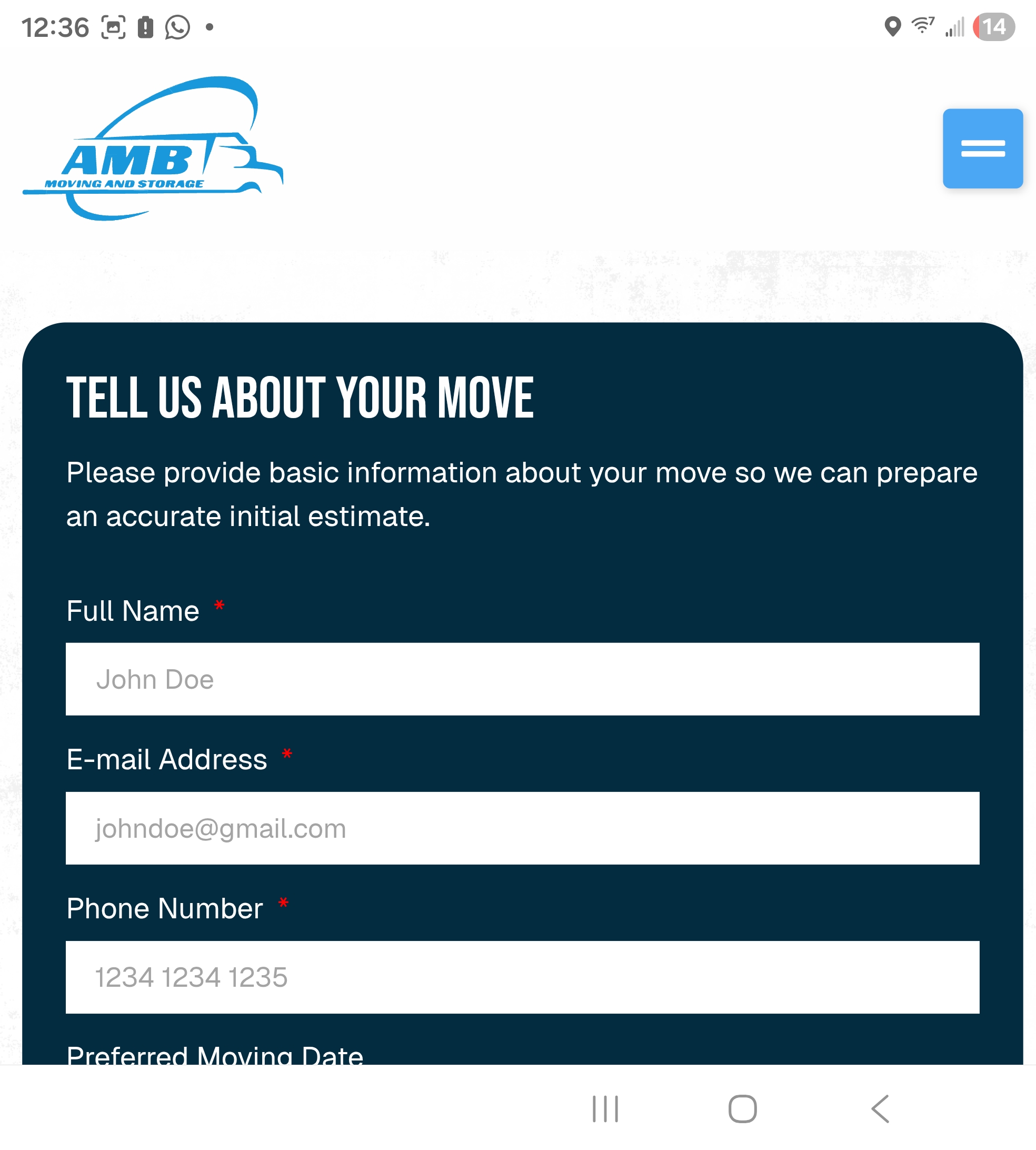
Have your orders, household size, target pickup dates, and a list of special items ready when you request an estimate, that’s what lets us build an accurate quote instead of a rough guess. Our long distance moving team also coordinates around DPS pickup windows, so your interstate leg doesn’t collide with your TSP-assigned dates. If your PCS includes a storage gap, our storage services can bridge the time between pickup and delivery at your new duty station.
Ready to see what your move actually costs? Request a quote and get a real number, not a placeholder, before your pack-out date locks in.
Official Resources Worth Bookmarking
- Military OneSource: DPS links, counseling requirements, entitlements, and printable checklists.
- Military pay allowances site: current DLA rates and entitlement rules by rank.
- MyNavyExchange PCS guide: downloadable checklists and NTS explanations.
Contact your transportation office for scheduling, weight allowances, and counseling. Contact finance for pay, DLA, and reimbursement timeline questions.
Sources
- PCS: The Basics About Permanent Change of Station | Military OneSource
- Military PCS Move Guide (DPS and weight allowance notes) | AHRN blog
- Dislocation allowance (DLA) — Military Pay