
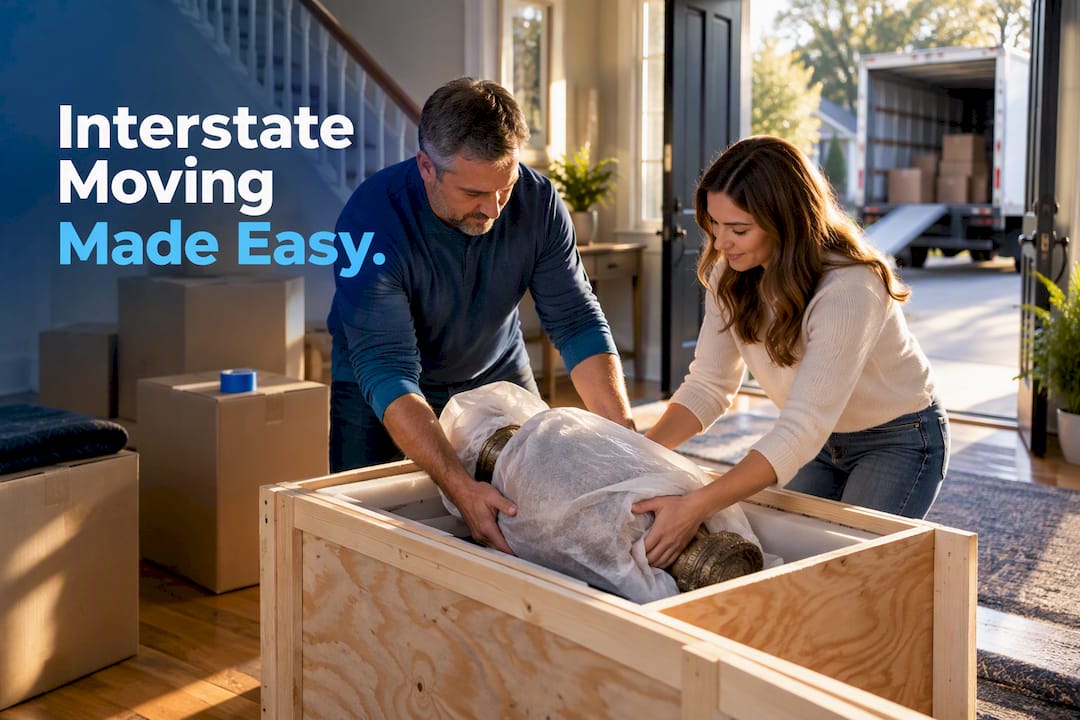

The safest way to handle packing antiques for a move is to combine four things: a full photo inventory, the Smithsonian’s three-layer packing method, custom crating for anything of significant value or awkward shape, and insurance that actually covers what the piece is worth. Start today with two moves: photograph every fragile or valuable item, then pull small valuables aside for personal transport or dedicated, padded packaging.
TL;DR:
- Proper documentation, including photos and detailed inventories, is essential to verify antique conditions and value before and after the move.
- The Smithsonian’s three-layer packing method, combined with custom crating for valuable or awkward items, significantly reduces the risk of damage during transit.
- Professional packing and crating, especially for high-value or fragile antiques, cuts damage rates and ensures safe arrival, often justified by the added cost.
- Insurance options vary, with third-party all-risk coverage offering better compensation for valuable antiques than standard carrier liability.
- Proper unloading procedures, careful unpacking, and prompt documentation of any new damage are crucial for effective claims and restoration.
Table of Contents
- Quick Packing Checklist for Antiques You Can Start Today
- How Do You Document Antiques Before a Move?
- The Three-Layer Method: How Museums Pack Fragile Antiques
- How Do You Pack Specific Antiques Like Jewelry, Porcelain, and Furniture?
- When Do Antiques Need Custom Crating or Professional Packing?
- Loading and Transport: Protecting Antiques in Transit
- What Should You Do When Antiques Arrive?
- Why Professional Packing Matters More Than People Think
- Get Expert Packing Help for Your Antiques and Heirlooms
- Sources
- FAQ
Quick Packing Checklist for Antiques You Can Start Today
Before you touch a single box, spend an hour building a system. It saves you from the two most common regrets movers hear: “I forgot what condition it was in before the move” and “I didn’t think it was worth crating.”
- Walk through your home and create a written inventory of every antique, collectible, and heirloom.
- Photograph each item from multiple angles, noting existing chips, cracks, or repairs.
- Tag items by risk level: fragile, high-value, or structurally unstable.
- Source materials now: archival tissue, bubble wrap, packing foam, moving blankets, corner protectors, and new sturdy boxes.
- Request custom crate quotes for anything irreplaceable, oddly shaped, or worth more than your mover’s standard liability coverage.
- Sort items into three lanes: carry personally, double-box for the truck, or crate professionally.
Getting this triage right up front saves hours of second-guessing later, especially once boxes start piling up in the garage.
How Do You Document Antiques Before a Move?
Documentation is what separates a smooth insurance claim from a frustrating dispute. Photograph each antique from several angles in good light, and note any existing damage, repairs, or wear directly in your written inventory. This condition record becomes your baseline if anything shifts during transit.
A professional appraisal matters more than most people assume. An appraisal from a qualified member of an organization like the American Society of Appraisers establishes a documented value that carries weight with insurers and, if needed, in a legal claim. Skip this step and you’re relying on guesswork if something breaks.
Interstate movers in the U.S. are required to offer two liability options: Released Value and Full Value Protection. Released Value is free but pays out based on weight, often around 60 cents per pound, which can leave you with a fraction of what a Victorian side table or a porcelain vase is actually worth. Full Value Protection reimburses based on declared value or repair cost, but even that has limits for extraordinary-value items.
- Build a household inventory before moving day, not after.
- Confirm which interstate moving insurance option your mover offers by default.
- For anything appraised above your mover’s standard coverage, buy third-party all-risk insurance. Carriers’ declared value formulas frequently undercompensate antiques, and a separate policy shifts the burden of proof away from you if a claim goes sideways.
The Three-Layer Method: How Museums Pack Fragile Antiques
Museum conservators don’t wing it, and neither should you. The Smithsonian Museum Conservation Institute recommends a three-layer system that scales from a pocket watch to a full armoire: a contact layer, a shock-absorption layer, and an outer protective shell.
The contact layer touches the item directly. Use acid-free archival tissue, the kind sold by conservation suppliers like Archival Methods, on porous surfaces such as unfinished wood, gilding, or painted finishes. Stretch wrap works for sealed, non-porous surfaces, but never let it touch a delicate finish directly.
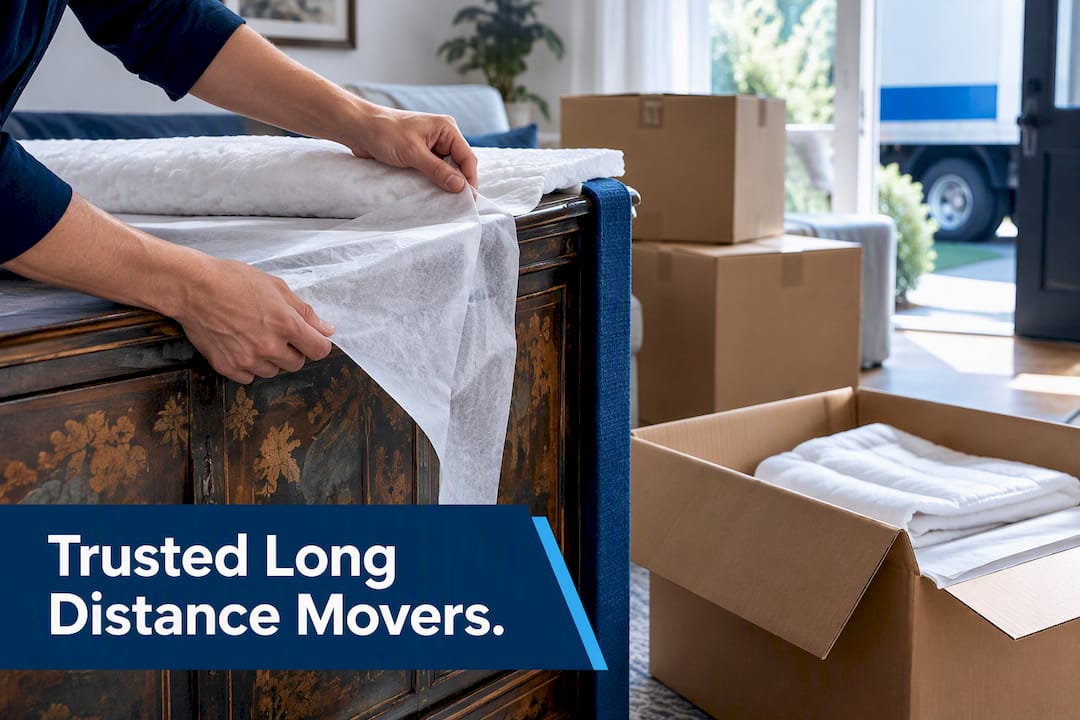
The shock-absorption layer cushions against impact. Foam sheeting, bubble wrap (always bubbles facing inward, toward the item, never outward against the box), and moving blankets from standard suppliers like Home Depot’s furniture wrap line all belong here.
The outer shell is your box or crate. Use new, undamaged double-wall boxes for smaller items and a wooden crate for anything fragile or high-value.
- Never tape directly to a wood, metal, or painted finish. Tape pulls off varnish and paint on removal.
- Never use newsprint against a finish. Ink transfers and the acid degrades surfaces over time.
- Add silica gel packets inside sealed boxes for humidity-sensitive wood or metal pieces.
Pro Tip: Test your padding by gently shaking a packed box. If you hear or feel movement, add another layer before you seal it. A silent box is a safe box.
How Do You Pack Specific Antiques Like Jewelry, Porcelain, and Furniture?
Every antique category has its own failure points. Here’s the practical breakdown:
- Small valuables (jewelry, coins, miniatures). Inventory each piece individually, then either carry them with you in a locked case or double-box them: an inner padded box nested inside a larger, cushioned outer box.
- Glass and porcelain. Wrap each piece individually in archival tissue, then bubble wrap. Use foam cavities or suspension packing so the item never touches the box wall directly. Double-boxing significantly reduces breakage for glass and porcelain compared to single-box shipping.
- Framed art and mirrors. Add archival backing board, corner protectors on all four edges, and glassine over the face. Anything valuable or oversized should go in a custom crate rather than a standard art box.
- Clocks. Remove and separately bag the pendulum and any loose weights, immobilize the movement mechanism with padding, and photograph the movement’s serial numbers for provenance before you pack the parts into labeled containers.
- Furniture. Disassemble legs, shelves, and doors where it’s safe to do so. Wrap joints and edges separately, apply corner guards, then cover the whole piece in moving blankets secured with stretch wrap, never tape on the wood itself.
When Do Antiques Need Custom Crating or Professional Packing?
Not everything needs a wooden crate, but some things absolutely do. Consider custom crating when an item is appraised above your mover’s Full Value Protection ceiling, when it has an irregular shape that won’t sit flat in a standard box, or when it’s structurally fragile enough that a conservation risk exists during handling.
A proper custom crate typically includes foam inserts cut to the item’s exact dimensions, IPPC-compliant plywood construction for interstate and international shipments, clearly labeled lifting points, and a written condition report attached before sealing.
- Foam-lined crates reduce internal movement far more effectively than a generic cardboard box.
- Custom crates with foam inserts substantially lower reported damage rates for high-value items compared to standard packaging.
- Professional packers bring conservation-grade materials most households don’t have on hand, from acid-free tissue to properly rated crating lumber.
Custom crating and white-glove handling, applied correctly, are considered industry best practice for high-value pieces because they address the two biggest damage risks: internal shifting and rough handling during loading.
For long-distance moves specifically, hiring licensed and insured professionals for this step isn’t overkill. It’s the difference between an heirloom arriving intact and a claim form.
Loading and Transport: Protecting Antiques in Transit
How your antiques get loaded matters almost as much as how they’re packed. Heavy, sturdy items should go in first and low, braced against the truck’s walls. Fragile, high-value boxes and crates go in last, so they come off first and spend the least time buried under other cargo.
Vehicle features matter more than most people expect for a cross-country trip. Air-ride suspension smooths out road vibration that standard trucks transmit straight into your boxes. Climate control matters even more: wood antiques can crack or warp when humidity swings widely, so look for a carrier that monitors and controls temperature and humidity ranges during long hauls.
- Label every crate and box with “Fragile,” “This Side Up,” and handling instructions in plain language.
- Confirm in writing whether your declared value matches your actual insurance coverage, not just the mover’s default liability rate.
- Keep a copy of your inventory and photos accessible, not packed away in a box on the truck.
Following proper loading and unloading procedures cuts down on the shifting and re-handling that causes most in-transit damage.
What Should You Do When Antiques Arrive?
Unpack fragile and high-value items first, and do it methodically against your pre-move photos and inventory. Compare each piece to its documented condition before you set it down or move it into place.
If you spot new damage, stop and photograph it immediately, in the same lighting and angles as your original documentation. Most carriers and insurers require this kind of photographic evidence and set specific filing windows, often just a matter of days, so contact your mover or insurer right away rather than waiting. For anything structurally damaged, call your appraiser or a restorer before attempting any repair yourself.
Why Professional Packing Matters More Than People Think
The most common mistake we see isn’t laziness. It’s confidence. Someone wraps a china cabinet in a moving blanket, skips the corner protection, and assumes tape and hope will hold. It usually doesn’t, especially over a thousand miles of highway.
The gap between adequate packing and antique-grade packing is rarely visible until something breaks. That gap is exactly where professional crating and trained crews earn their cost.
— AMB
Get Expert Packing Help for Your Antiques and Heirlooms
Professional moving companies provide more than DIY efforts: crews trained in conservation-grade packing methods, not just generic bubble wrap and hope. For antiques, that difference shows up in fewer claims and pieces that arrive the way they left.
Ambmovingservices offers Professional Packing Services priced per cubic foot, along with specialty handling for pianos, safes, and other awkward high-value pieces starting from $200. Whether you’re planning a long-distance move, an interstate relocation, or a nationwide move across several states, our crews handle inventory, three-layer packing, and custom crating as part of the same coordinated job. As a licensed and insured nationwide moving company, we build moving cost estimates around your actual inventory, not a generic weight formula.
Request a free moving quote today and tell us which pieces need extra care. We’ll walk you through packing options, crating needs, and coverage before your move date is locked in.
Sources
- Smithsonian Museum Conservation Institute — Moving furniture and antiques
- Move
- Shipping antiques safely — ParcelPath
- Special coverage: shipping fine art and antiques — FreightAmigo
FAQ
What’s Hot in Antiques Right Now?
Demand has shifted toward mid-century furniture, art glass, and smaller decorative pieces that fit modern homes, while oversized formal furniture has softened in resale value. This matters for packing decisions because trend value affects what’s worth crating versus what’s worth donating before a move.
What Should You Do With Antiques You Don’t Want to Move?
Get a quick appraisal or estimate first, since some pieces are worth more than expected. From there, consignment shops, specialty auction houses, or donation to a historical society are usually better options than curbside disposal, and donations may qualify for a tax deduction.
What Is the Safest Way to Ship High-Value Items?
The safest approach combines the Smithsonian’s three-layer packing method, custom crating for anything above standard carrier coverage, and third-party all-risk insurance rather than relying on a carrier’s default liability. Photographing the packing process itself also strengthens any future claim.
What Is the Most Profitable Way to Sell Antiques?
Specialized auction houses and dealer networks typically bring higher prices than general resale platforms because they reach collectors actively searching for that category. A current appraisal is worth getting first, since pricing without one often leaves real value on the table.
How Much Does Professional Antique Packing Cost?
Ambmovingservices prices professional packing between $1 and $2 per cubic foot, with specialty item handling for pieces like pianos or safes starting from $200. Exact costs depend on the volume, materials required, and whether custom crating is needed, so a quote reflects your actual inventory.