


You can move with a baby, and most families do it without a single trip to the emergency room. The key is prioritizing your baby’s routine and safety over box count: pack a essentials bag covering about two days, call your pediatrician before you call the movers, and line up someone whose only job on move day is watching the baby.
Do these three things first:
- Schedule a pediatrician visit to request records and get the green light, especially for a newborn.
- Pack a moving-day essentials bag with diapers, formula or breastfeeding supplies, and a comfort item, ready 48 hours out.
- Arrange dedicated childcare for peak loading and unloading hours, whether that’s a relative, a sitter, or a friend.
If your baby is under six to eight weeks old, most pediatricians prefer you wait until after that early postpartum window when possible, since it lines up with your own recovery and the baby’s first checkups. When the move date can’t move, the plan below adjusts around it.
Key Takeaways
Moving with a baby succeeds when parents sequence the move around pediatrician continuity, a stocked essentials bag, and a dedicated supervisor for move day, not around box count.
| Point | Details |
|---|---|
| Start medical continuity early | Book the pediatrician appointment several weeks before your move and request full records before the move. |
| Pack the nursery last, unpack it first | Set up the crib and monitor immediately on arrival to preserve familiar sleep cues. |
| Keep a 24 to 48 hour bag with you | Diapers, formula, meds, and the comfort item should never ride in the moving truck. |
| Assign a dedicated baby supervisor | Arrange off-site childcare or a designated adult for the loudest hours of move day. |
| Use professional movers strategically | Ambmovingservices offers prioritized nursery unloading, specialty crating, and short-term storage for long-distance moves with infants. |
Table of Contents
- Building Your Moving-With-Baby Timeline
- What to Pack First (and What Stays With You)
- Should You Drive or Fly With Your Baby?
- Running Move Day Without Losing Your Mind
- Getting Settled Fast in the New Place
- Where Professional Movers Actually Earn Their Cost
- Keeping Your Baby Emotionally Steady Through the Chaos
- Getting Siblings on Board Without Adding More Stress
- Your Essential Supplies Checklist for the Move
- What the Conventional Advice Gets Wrong
- Let Ambmovingservices Handle the Heavy Lifting
- Sources
Building Your Moving-With-Baby Timeline
Long-distance moves need a longer runway than local ones. Book your moving company six to eight weeks out if you’re crossing state lines. A local move gives you more flexibility, but three to four weeks of structured packing still beats a frantic final weekend.
Here’s the order that keeps a baby-focused move from turning into chaos:
- Book the pediatrician appointment several weeks before your move. Ask for a full copy of records and immunization history, and get a referral if your new city is far enough that HealthyChildren.org’s pediatrician referral service is worth using to line up a new provider before you land.
- Decide full-service movers vs. DIY. A newborn changes this math fast. Ask any moving company how they handle crib hardware and fragile nursery pieces before you sign anything.
- Get at least two quotes and confirm what’s included: packing materials, disassembly, and delivery windows.
- Handle the paperwork. Transfer prescriptions to a pharmacy near your new address, notify daycare, and update insurance and utility accounts.
Grandparents and other family supports aren’t just nice to have during a move. The American Psychological Association has found that these relationships genuinely benefit caregiver wellbeing during high-stress stretches like this one, so don’t be shy about asking.
What to Pack First (and What Stays With You)
Pack the nursery last, unpack it first. That single rule solves most of the packing headaches parents run into. Everything in the baby’s room stays functional until the truck is nearly full, which means the crib, changing table, and bins of clothes go on last and come off first at the other end.
Build an “Open First, Nursery” box separately from everything else. It should hold crib sheets, the baby monitor, a sleep sack, and two or three familiar toys, nothing more. This box rides with you, not in the moving truck.
Then there’s the bag you actually need for the move itself, the one covering the 24 to 48 hours when nothing is unpacked yet:
- Diapers and wipes, more than you think you’ll need
- Formula or breastfeeding supplies, plus bottles and a manual pump if you use one
- Two to three changes of clothes
- Any medications and a thermometer
- One comfort item, the same one, every night
Keep the car seat, stroller, medications, and that comfort item with you at all times during the move. Furniture and boxed toys can travel with the movers. Label every nursery box clearly, and put crib screws and hardware in one labeled bag taped directly to the crib rail so it isn’t lost in a pile of boxes.
Pro Tip: Take a photo of the crib fully assembled before you disassemble it. It saves 20 minutes of guessing at the other end when you’re exhausted and the baby is fussy.
Should You Drive or Fly With Your Baby?
Driving gives you control over stops, feedings, and naps. Flying gets you there faster but adds more handling, more strangers, and more exposure. Neither is wrong. The right call depends on distance, your baby’s temperament, and how much your back can take.

If you’re driving, plan blocks around nap and feeding windows rather than fighting them. Book hotels that have cribs available or bring a portable one, and pick places with laundry access if the trip runs more than a couple of days.
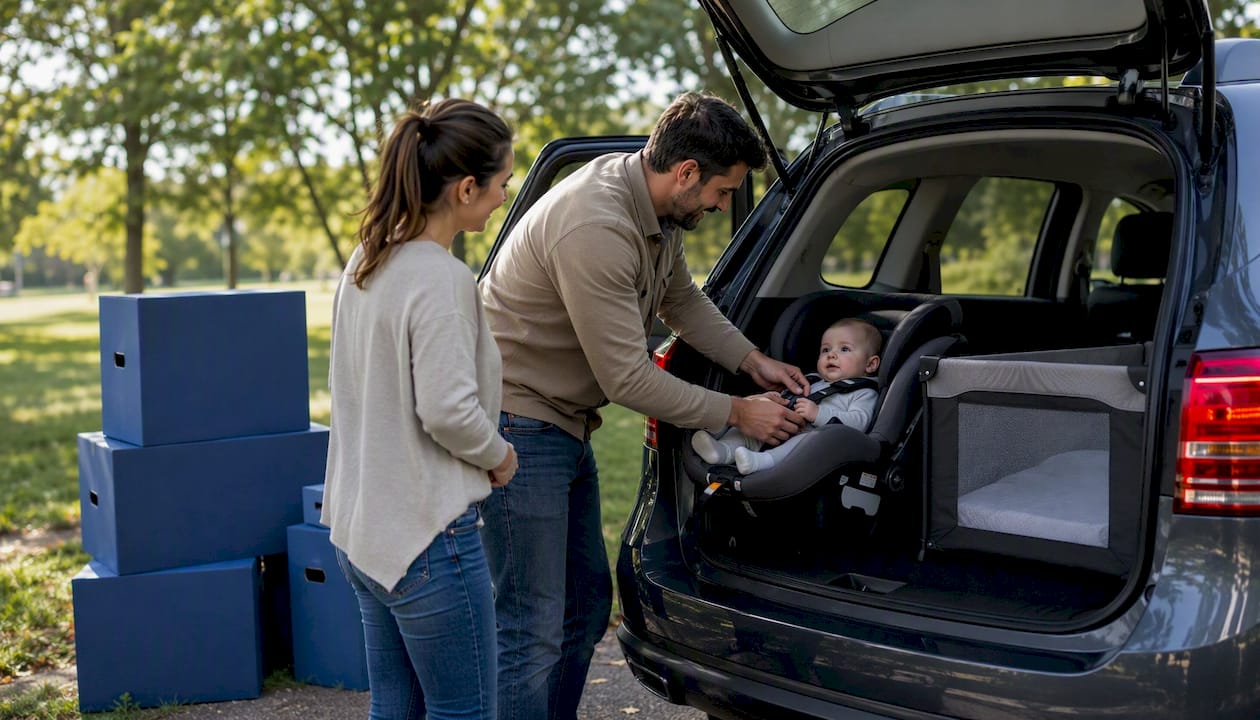
Flying with an infant means learning a few rules ahead of time. Airlines generally allow lap infants under two with specific documentation, and bassinet seats are limited and need advance requests. The TSA allows breast milk, formula, and juice in reasonable quantities through security even above standard liquid limits, and TSA Cares can help if you need extra assistance at the checkpoint. HealthyChildren.org’s guidance on flying with a baby recommends feeding during takeoff and landing to help with ear pressure, which works for both bottle and breastfeeding parents.
Whichever mode you choose, get the car seat professionally checked for fit before travel day. A surprising number of car seats are installed incorrectly, and a five-minute check at a fire station or certified inspection site removes that risk entirely.
Running Move Day Without Losing Your Mind
Move day is loud, chaotic, and full of strangers carrying furniture through your house. That’s a lot for an infant, and it’s a lot for you too if you’re also trying to supervise.
- Designate one person whose only job is the baby. Not the person also answering mover questions and signing paperwork. Parent forums are full of the same advice: arrange childcare, even for a few hours, and keep the baby out of the busiest rooms.
- Set up a child-safe zone, like a playpen in a room the movers finish early, stocked with diapers, a bottle, and a couple of toys.
- Load nursery items last so they come off first. Tell the crew directly which boxes are fragile and which need to go on the truck last.
- Give movers a short written list covering crib hardware location, fragile nursery pieces, and your preferred delivery window.
Pro Tip: Write “Baby, Load Last” in bold marker on the nursery boxes. Movers see dozens of boxes an hour; a visual flag beats a verbal reminder every time.
Getting Settled Fast in the New Place
Unpack the nursery first, full stop. Set up the crib, plug in the monitor, and recreate the same bedtime cues, dim lights, same sound, same sleep sack, before you touch the kitchen boxes. Parenting-moving guides consistently point to this order as the fastest way to a stable sleep environment in a new house.
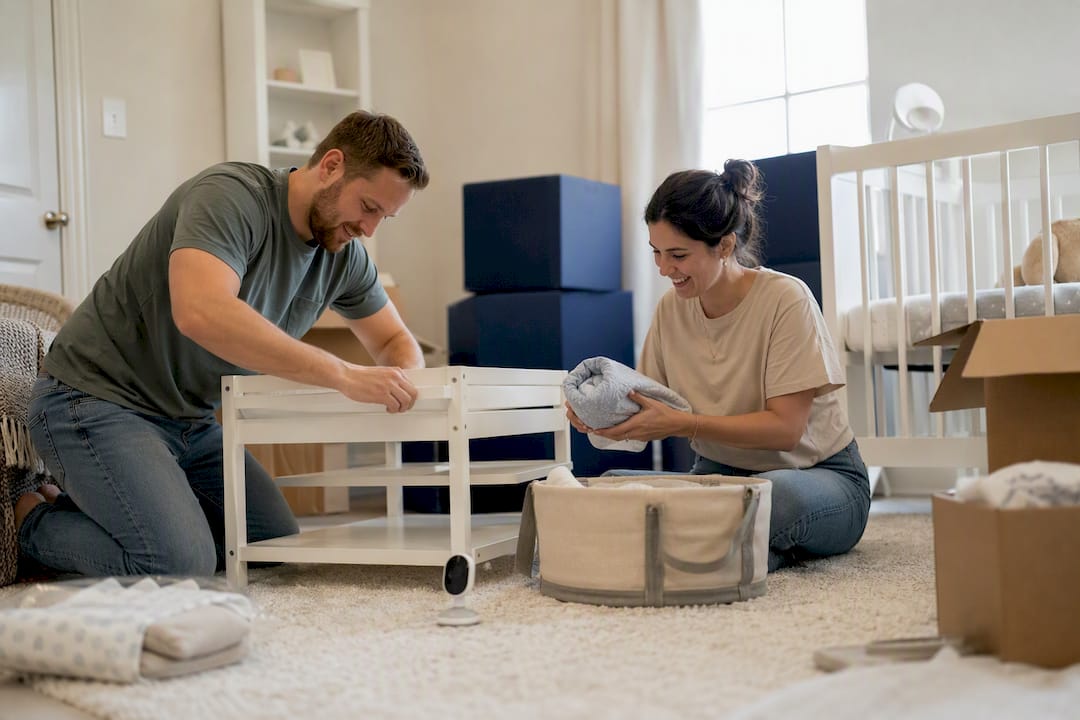
Before the baby starts exploring, do a fast safety sweep: outlet covers, secured cords, and anything small enough to choke on picked up off the floor. Full baby-proofing can wait a week; these basics can’t.
Give it two nights of consistent cues before judging how your baby is adjusting. The What to Expect Project notes that predictable routines help infants settle after disruption and usually shorten any sleep or feeding regression to just a few days.
| First 48 Hours | Priority Action |
|---|---|
| Hour 1 | Assemble crib, plug in monitor |
| Hour 1 to 4 | Quick outlet and cord safety sweep |
| Night 1 to 2 | Same bedtime cues, same comfort item |
| Day 2 to 3 | Confirm new pediatrician, transfer records |
Where Professional Movers Actually Earn Their Cost
Full-service packing makes the most sense for postpartum recovery, long single-parent households, or any long-distance move where you simply don’t have the hours to spare. Professional packing can save families a genuine amount of time, freeing the primary caregiver to protect sleep routines instead of taping boxes at midnight.
Before booking, ask movers directly:
- How do you pack and transport cribs and fragile nursery furniture?
- What’s covered under your insurance and valuation policy?
- Can you guarantee a delivery window instead of an open-ended range?
- Can nursery boxes be prioritized for first unloading?
A moving crew that offers prioritized nursery unloading, specialty crating for heirloom furniture, and short-term storage between homes can shave real hours off the time it takes a baby to have a working, familiar sleep space again.
Ambmovingservices builds these options into long-distance and interstate moving plans specifically because families with infants can’t afford a week of living out of boxes.
Keeping Your Baby Emotionally Steady Through the Chaos
Babies don’t understand why their room is suddenly empty, but they absolutely notice. Infants read tone of voice and facial expression more than they read the words, so your own stress level during the move matters more than any packing hack.
Keep feeding times and nap windows as close to normal as the day allows, even if that means pausing loading for twenty minutes so a bottle happens on schedule. A missed nap here and there won’t cause lasting harm, but a string of disrupted days tends to show up as extra fussiness or clinginess.
Physical closeness helps more than most parents expect during a move. Babywearing during the chaotic hours, holding the baby during a lull, or simply narrating what’s happening in a calm voice (“we’re putting your bed on the truck, it’ll be at the new house soon”) gives an infant something steady to latch onto even when they can’t understand the words.
If your baby is old enough to notice a missing crib or a bare room, keep one or two familiar objects visible at all times, a blanket, a specific stuffed animal, even a picture book you read every night. The Carnegie Library’s curated infant book lists are a good source for titles that hold up through repeat readings, since a familiar story read in a familiar voice can anchor a bedtime routine even in an unfamiliar room.
Getting Siblings on Board Without Adding More Stress
An older sibling picks up on tension just as fast as a baby does, but they can also become a genuine asset if you involve them early. Kids who feel like they have a job during the move tend to act out less than kids who feel shuffled aside while everyone focuses on the baby.
Give siblings age-appropriate ownership. A four-year-old can pack their own stuffed animals into a box they decorate themselves. A seven-year-old can be the one who checks off items on a simple list, which doubles as a way to make them feel useful instead of forgotten during a stretch where the baby understandably gets a lot of attention.
Talk about the move in concrete terms well before the truck shows up: where their new room will be, what stays the same (their bed, their favorite toys), and what to expect on the day itself. Vague reassurance doesn’t land with kids the way specifics do.
On move day itself, consider whether siblings are better off at a friend’s house during the loudest hours or actively helping with small, supervised tasks. Both are valid depending on the kid’s temperament. What matters is that they aren’t left to wander a house full of strangers and heavy furniture with no clear role and no one checking in on them.
Your Essential Supplies Checklist for the Move
Keep a running supply of these items accessible at all times, not packed away, from the day the move starts until you’re fully settled:
- Diapers and wipes, enough for several days beyond what you’d normally use
- Formula, breast milk, or nursing supplies, plus backup bottles
- Baby food or snacks if your baby has started solids
- A few favorite toys, not the whole toy bin, just enough for distraction
- Medications and a thermometer, kept in the same bag every time
- Extra clothes and burp cloths, moves are messy
- The comfort item, whatever it is, never packed in the truck
Keep this bag in your car, not the moving truck, from the first day of packing through the last day of unpacking. It’s the one bag that should never leave your sight.
What the Conventional Advice Gets Wrong
Most moving-with-a-baby guides treat the packing list as the whole problem. It isn’t. The packing list is the easy part. The part that actually determines how smooth your move goes is sequencing: what happens first, who’s watching the baby when the truck backs in, and how fast the nursery gets rebuilt on the other end.
Where we’d push back on standard advice: don’t try to do this alone to save money, especially with a newborn or during postpartum recovery. Families consistently underestimate how many hours full-service packing actually buys back, and those hours matter more than the dollars saved when you’re also managing feedings and diaper changes on no sleep.
Prioritize in this order: pediatrician continuity first, a functioning sleep environment second, and box count dead last. Cardboard doesn’t care how organized it looks in a garage. Your baby’s routine is the only metric that actually predicts how the first week in a new house goes.
— AMB
Let Ambmovingservices Handle the Heavy Lifting
Ambmovingservices exists for exactly the scenario this article covers: families who need their move handled by people who understand that a crib isn’t just furniture and a delivery window isn’t just a suggestion. Unlike a DIY truck rental where you’re the one figuring out crib disassembly and fragile-item padding at 11 PM, our crews specialize in long-distance moving with prioritized nursery unloading, specialty crating for heirloom pieces, and secure short-term storage if your new place isn’t quite ready.

That last point matters more than it sounds like it should. A gap between move out and move in is common on cross-country moves, and having a storage option that doesn’t force you to unload a truck twice is one less thing to manage with a baby on your hip. We’re licensed, insured, and built specifically around the logistics of nationwide and state-to-state relocations, not local hops.
If you’re planning a move with an infant in the next few months, get a personalized quote now while you still have weeks to plan around your baby’s routine instead of scrambling the week before.
Sources
- TSA | Traveling with children
- Healthychildren
- Carnegie Library | Best books for babies
- Bright Horizons | Tips for moving with a baby