


A consolidated moving service fits best if you’re moving a smaller household, one to two bedrooms or less, and you have flexibility on your delivery date. You’ll typically pay less than a dedicated truck because you’re sharing space with other shipments, but expect a delivery window of about 5 to 14 business days instead of a fixed date. Quotes for both consolidated and dedicated options can be provided side by side for comparison before deciding.
TL;DR:
- Consolidated moves are best suited for small households or partial shipments with flexible delivery timelines, saving money through shared trucking costs.
- Expect delivery windows of five to 14 business days, depending on route complexity and the number of stops involved in the multi-city route.
- Proper packing, labeling, and detailed inventory documentation are critical to prevent damage and misdelivery during multi-stop shared shipments.
- Confirm the mover’s routing plan, delivery window, and fee policies in writing to avoid surprises, especially if you have high-value or irreplaceable items.
- For rigid schedules or full four-bedroom households, dedicated moving services are more reliable despite higher costs.
Table of Contents
- What Is a Consolidated Moving Service, and How Does It Differ From a Dedicated Move?
- Who Should Choose a Consolidated Moving Service?
- How Does a Consolidated Move Actually Save You Money?
- What Delivery Timing Should You Expect?
- How Do You Prepare Belongings for a Shared Load?
- What Should You Ask a Mover Before Booking Consolidated Service?
- Consolidated Moving vs. Group Moves and Economy Options
- What Do Customers Actually Experience With Consolidated Moves?
- AMB’s Take on Consolidated vs. Dedicated Service
- Get a Free Quote for Your Consolidated or Dedicated Move
- Sources
What Is a Consolidated Moving Service, and How Does It Differ From a Dedicated Move?
A consolidated move combines multiple customers’ shipments into a single truck or container. You pay for the cubic footage or weight your belongings occupy, not the whole vehicle. A dedicated move, by contrast, puts one truck on the road for one household, picked up and dropped off with no detours for anyone else’s furniture.
The mechanics behind a consolidated shipment involve more coordination than a straight point-to-point haul:
- Multi-pickup routing: the carrier plans a route that collects several households’ goods along the way, sometimes across a few days.
- Labeling and inventory: movers offering consolidated service tag and log each shipment so nothing gets mixed up between customers.
- Load planning: the crew builds the truck like a puzzle, stacking and bracing loads from different households without letting anything shift in transit.
The trade-off is straightforward. Dedicated moves give you tighter delivery predictability and fewer hands touching your boxes. Consolidated moves trade some of that control for a lower price, since fixed trip costs get split across more customers.
Who Should Choose a Consolidated Moving Service?
Consolidation makes the most sense for a specific type of mover, not everyone. If your situation matches one of these profiles, shared freight is worth a serious look:
- Students and single movers relocating for a semester or a new job, usually with a studio’s worth of belongings and no hard deadline.
- Studio to two-bedroom households whose inventory doesn’t fill a truck on its own, making a dedicated trip financially wasteful.
- Partial shipments, like sending a few boxes or a spare bedroom’s furniture ahead of the main move.
- Flexible-schedule relocations, where arriving within a two-week window works fine because there’s no lease start date or new job pinning you to a specific day.
Consolidation is the wrong call when your timeline is rigid. If you have a firm move-in date, a lease that starts the day after you arrive, or a job that expects you at a desk on Monday, a delivery window that could stretch two weeks is a real risk. The same goes for households with high-value fragile collections, art, antiques, or a wine cellar, where every extra handoff adds risk. And if you’re moving a full four-bedroom house, you’ll likely fill a truck anyway, so the savings from sharing space shrink or disappear entirely.
Picture three scenarios: a grad student shipping a one-bedroom apartment from Chicago to Denver on a two-week window saves real money. A family with a hard closing date on a new home in Austin should book dedicated service to avoid missing it. A retiree sending a single antique dresser ahead of a larger move might save on that one item but should confirm the mover offers a dedicated option for anything irreplaceable.
How Does a Consolidated Move Actually Save You Money?
Every long-haul truck has fixed costs that don’t change whether it’s full or half empty: fuel, driver wages, tolls, and maintenance. On a dedicated move, one customer absorbs all of it. On a consolidated move, that same cost gets divided among everyone whose belongings are on the truck.
The math behind the savings: Verified Movers illustrates this with a route costing roughly $2,000 in operating expenses over 1,000 kilometers. A single customer moving alone covers that entire figure. Split across three or four households sharing the truck, each pays only a fraction, scaled to how much space their goods occupy.
The fuller the truck gets, the lower everyone’s share drops, which is why booking early helps carriers match routes efficiently and pass more savings back to customers. But watch for add-ons that erode the discount: terminal handling fees if your shipment sits at a warehouse between legs, extra labor charges for difficult access points, temporary storage fees if your delivery window overlaps with a lease gap, and insurance upgrades beyond the carrier’s baseline liability. Ask for these line items in writing before you sign anything.
What Delivery Timing Should You Expect?
Consolidated shipments run on windows, not appointments. Interstate consolidated routes commonly quote 5 to 14 business days depending on distance and how many stops the carrier needs to make to fill the truck efficiently. That range tightens on shorter, high-traffic corridors and stretches on cross-country or less common routes.
Multiple stops are the reason for the spread. A truck heading from the Midwest to the West Coast might pick up two more households in Kansas City and Denver before it ever reaches you, and each stop adds variability to the final delivery date. That’s a fair trade for the discount, but it only works if you plan around it instead of against it.
A few practical habits make the window easier to live with:
- Ask for the earliest and latest possible delivery dates in writing, not just a target date.
- Build in a buffer, book a short-term Airbnb or stay with family for a week past your requested window if your schedule allows it.
- Request status updates at each major transfer point, not just a call the day before arrival.
- Confirm who to contact if the truck is delayed by weather, mechanical issues, or another customer’s pickup running long.
Pro Tip: Ask your mover for the actual route plan, not just the delivery window. Knowing whether your shipment is stop one or stop four on a multi-city route tells you a lot about how much slack to build into your own moving day.
How Do You Prepare Belongings for a Shared Load?
Shared trucks mean more handling, more transfers, and more opportunities for something to get scuffed or misplaced if you don’t prepare properly. Solid packing practices for long-distance moves matter even more here than on a dedicated haul.
Start with the packing basics: wrap furniture corners and glass surfaces, crate anything fragile rather than box it, secure mattresses in plastic covers, and disassemble bed frames and large furniture ahead of pickup day so the crew isn’t improvising with tools on the spot.
Labeling is where consolidated shipments live or die. Insist on:
- Room-level labels on every box (kitchen, bedroom, garage), not generic numbers.
- A sequential inventory list matching numbered tags to specific items.
- Scan-able inventory tags with a written chain-of-custody record, which meaningfully cuts down on claims and misdelivery across multi-stop loads.
On insurance, most carriers include a baseline liability that pays out based on weight, not actual value, which can leave you badly underpaid for a damaged flat-screen TV or a broken heirloom. Reputable movers recommend upgrading to full-value protection for anything that would hurt to lose. For genuinely high-value items, a separate third-party policy is worth pricing out. Our guide on protecting belongings during a move breaks down the coverage tiers in more detail.
What Should You Ask a Mover Before Booking Consolidated Service?
Not every mover advertising “consolidated” or “shared truck” service runs it the same way, so the questions you ask upfront matter as much as the quote itself.
Confirm these five things before you sign anything:
- Does the carrier hold active FMCSA interstate operating authority, and can they provide the registration number?
- Will you receive a written, itemized inventory before pickup, not a verbal estimate?
- What’s the published delivery window for your specific route, and what’s the latest realistic date?
- How does their claims process work if something arrives damaged or missing?
- What packing standards do they require for a shipment to qualify for consolidated handling?
Get the answers in writing, along with detail on routing (how many stops before yours), transfer points (does your shipment change trucks or warehouses mid-route), and every fee tied to storage or handling delays.
Red flags that should send you looking elsewhere: no willingness to name a delivery window in writing, cash-only deposits, no physical business address, or pressure to sign before you’ve seen an itemized estimate. Specialty items like pianos or fine art sometimes need dedicated handling even within a consolidated framework, so confirm during quoting rather than discovering it on moving day.
Consolidated Moving vs. Group Moves and Economy Options
Consolidated service isn’t the only way to cut interstate moving costs, and it helps to know how it stacks up against the alternatives.
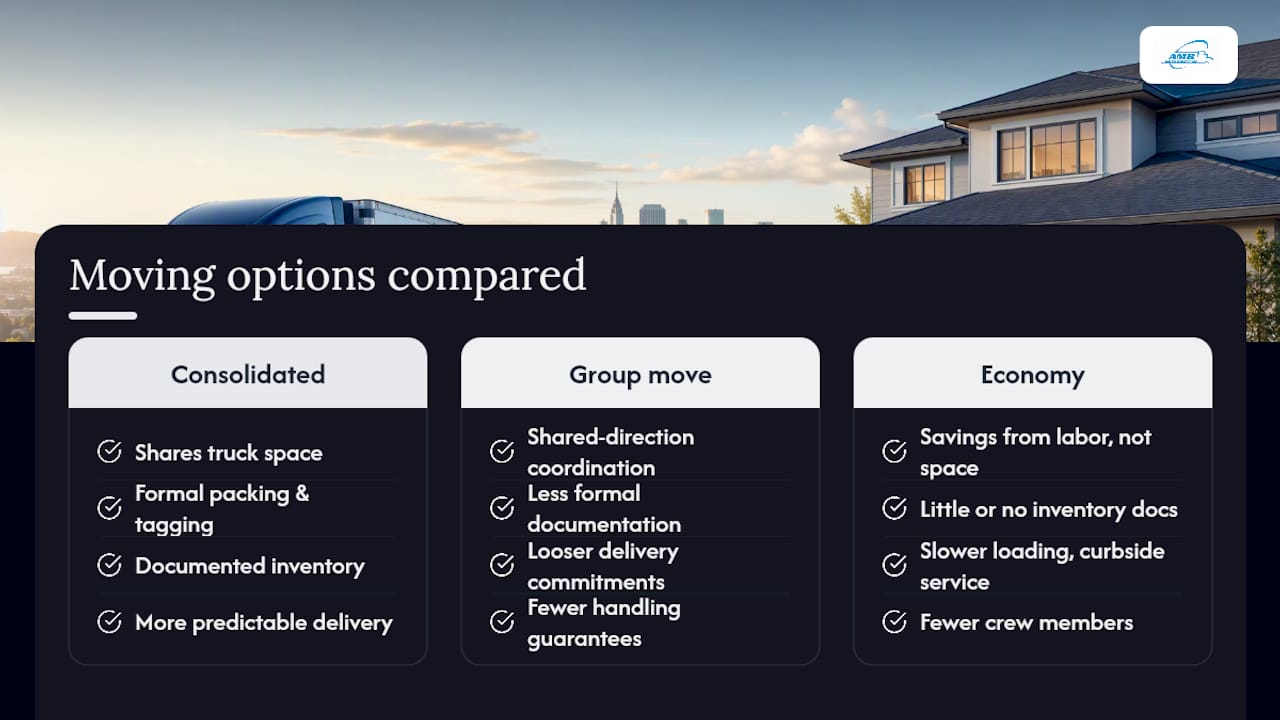
Group moves, sometimes marketed by regional carriers, coordinate several households moving the same general direction around the same time, similar in spirit to consolidation but often with less formal inventory tracking and looser delivery commitments. You might save money, but you’ll generally get less documentation and fewer guarantees about handling standards.
Economy or “budget” moving options typically mean fewer crew members, slower loading, and sometimes curbside-only service rather than full-service packing and placement. The savings come from labor, not from shared trucking space, so the trade-off is your own time and physical effort rather than a delivery window.
Consolidated service sits in a middle ground: it keeps professional packing, tagging, and inventory practices in place while sharing the truck to cut costs, which generally makes it a more predictable choice than an informal group move and less labor-intensive than a pure economy option. If your priority is minimizing cost above all else and you can supply your own labor, economy service might win. If you want professional handling with a documented process at a lower price than dedicated service, consolidation is the better fit.
What Do Customers Actually Experience With Consolidated Moves?
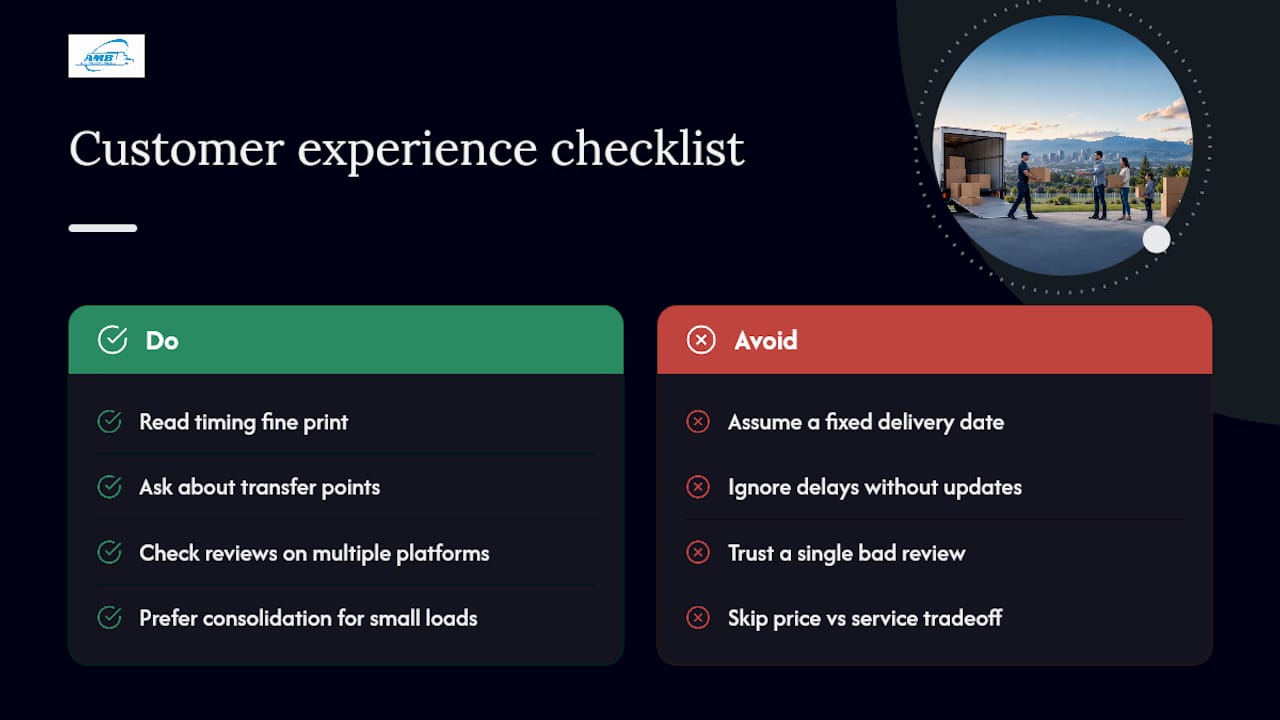
The most common complaint isn’t damage or loss. It’s the delivery window itself catching people off guard when they expected something closer to a fixed date. Reading the fine print on timing before booking prevents most of that frustration.
The second recurring issue is communication gaps during multi-stop routes. When a shipment sits at a transfer point for a few extra days, customers who don’t get proactive updates start to worry, even when the delay is normal for the route. Movers who call out major transfer points in advance and send status updates tend to get better reviews than those who go quiet between pickup and delivery.
Before booking with any mover, check recent reviews and ratings across more than one platform. A pattern of complaints about missed windows or unresponsive customer service is worth taking seriously; a handful of one-off complaints on an otherwise solid record is normal for any moving company handling thousands of shipments a year.
The upside customers report most often is the price difference. For smaller loads, the savings versus a dedicated truck are real and often the deciding factor, especially for students, young professionals, and anyone moving without a family in tow. Consolidated moves also carry a lighter environmental footprint since shared trucks reduce the number of half-empty vehicles making the same cross-country trip.
AMB’s Take on Consolidated vs. Dedicated Service
Our team runs both consolidated and dedicated interstate service, and the decision usually comes down to your timeline before it comes down to price. AMB Moving & Storage Inc. operates nationwide, with licensed and insured transport, professional packing, and short and long-term storage available for shipments that need to wait between legs of a route.
We recommend consolidation when a customer has a smaller load and genuine flexibility on delivery. We push toward dedicated service the moment a closing date, lease start, or job start date is fixed. Every quote from AMB comes with a written inventory, a stated delivery window, and and a clear claims process, because the biggest source of customer frustration in this industry isn’t cost. It’s not knowing what to expect.
— AMB
Get a Free Quote for Your Consolidated or Dedicated Move
Once you know which option fits your timeline, the fastest way forward is getting real numbers instead of guessing. A direct, nationwide alternative to piecing together your own move with a rental truck and borrowed labor is available. Packing, routing, and paperwork are handled, with quotes provided for both consolidated and dedicated shipments to show the actual dollar difference before committing.
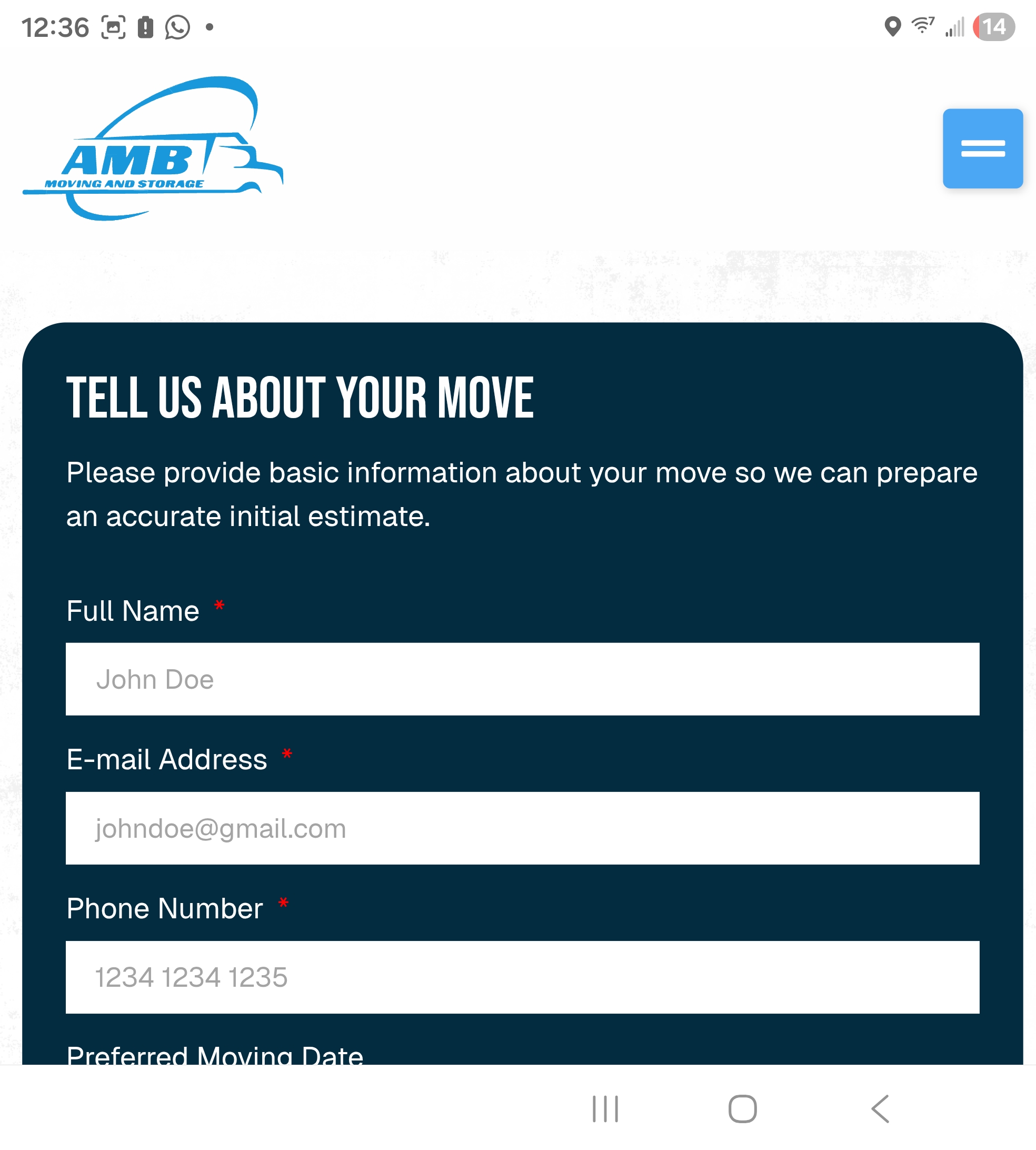
To get an accurate estimate, have these details ready: your origin and destination ZIP codes, an approximate cubic footage or room-by-room inventory, and your target move dates or acceptable delivery window. That’s enough for our team to build a real comparison, not a ballpark guess.
Request your free moving quote today, or browse our long distance moving services to see what’s included in every interstate move we handle, from packing through final delivery.
Sources
This guide draws on cost and mechanics explanations from Verified Movers and operational detail from First Rate Movers. Delivery-window data referenced from Centennial Moving reflects the Canadian market; U.S. readers should treat it as a directional guide, not a binding standard. For AMB-specific capabilities, see our services overview and long distance moving page.
- The Difference Between Dedicated vs Consolidated Move | Verified Movers
- What’s a Consolidated Move? – First Rate Movers