


TL;DR:
- Customer service is the foundation of a smooth moving experience, encompassing communication, professionalism, and transparency.
- Asking about dedicated move managers, real-time updates, and clear pricing helps customers identify companies with reliable support.
How customer service shapes your entire moving experience
Customer service in moving is not a courtesy add-on. It is the structure that holds the entire relocation together, from the first quote request to the final box placed in your new home. The role of customer service in moving covers every touchpoint: proactive communication, honest pricing, professional crews, and fast resolution when something goes wrong.
What separates a smooth move from a stressful one is rarely the truck or the packing materials. It is almost always the quality of support you receive along the way.
Core elements of moving customer service include:
- Real-time updates on pickup and delivery windows
- Transparent, itemized quotes with no hidden fees
- A dedicated point of contact who knows your shipment
- Prompt responses to questions before, during, and after the move
- Professional crew conduct and careful handling of belongings
- Clear timelines and honest communication about delays
For long-distance moving in particular, these elements are not optional. When your belongings are in transit across multiple states, the quality of support you receive during that window defines your entire experience.
What customers actually expect from their moving company
Most people planning a move say they want a low price. What actually drives their satisfaction is something different: trust, accuracy, and consistent communication. Customers who rated their mover five out of five cited “everything went as promised” and “good communication throughout” far ahead of price as the top drivers of satisfaction.
That gap between what people say they want and what actually makes them happy is where most moving companies lose business.
The top expectations customers bring to a move:
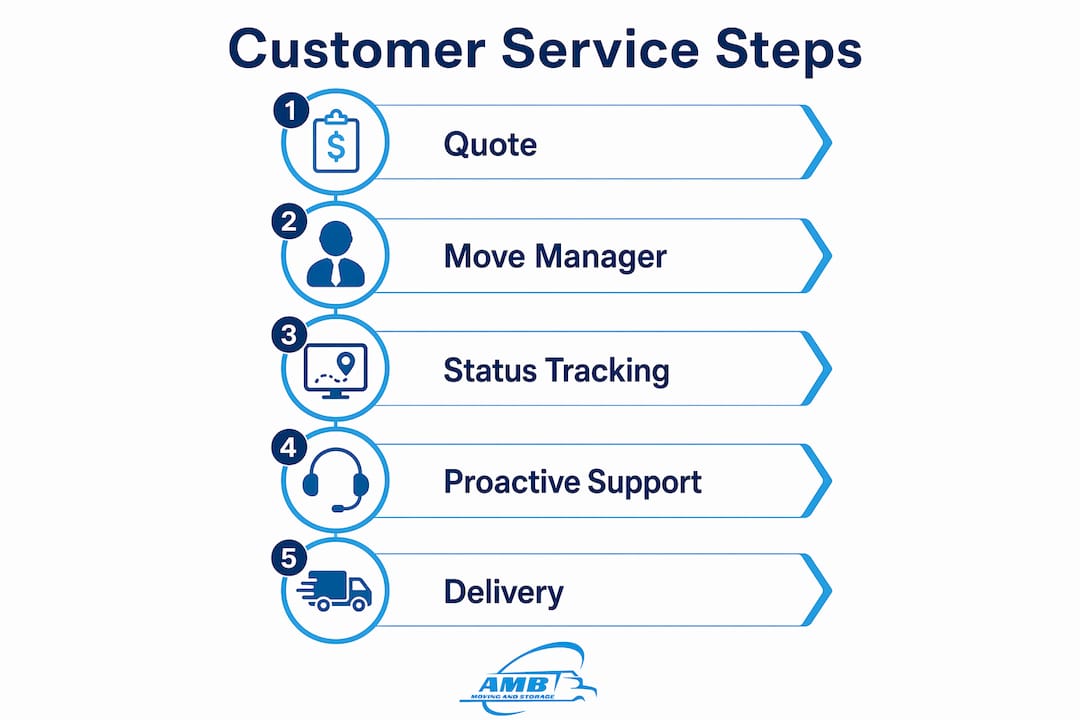
- A detailed, accurate quote delivered within hours, not days
- Clear timelines for packing, transit, and delivery
- Proactive updates at every key milestone
- Empathetic, professional staff who treat the move as a life event, not a transaction
- Fast, honest responses when something goes wrong
Moving is consistently ranked among life’s most stressful events. The uncertainty of not knowing where your belongings are, or whether the crew will show up on time, creates anxiety that good customer support directly reduces. Customers who received proactive communication were far more likely to leave a five-star review than those who received only adequate updates. Meeting the bare minimum is not enough.
Best practices moving companies follow for exceptional service
The moving companies earning the strongest reputations in 2026 share a consistent set of practices. They are not necessarily the largest or the cheapest. They are the ones that treat the customer’s experience as the product, not just the physical act of moving furniture.
Proven practices that set top movers apart:
- Respond to quote requests within hours, not the next business day
- Assign a dedicated move manager to each relocation
- Send automated confirmations, pre-move reminders, and day-of ETA texts
- Train crews in communication and customer interaction, not just lifting technique
- Use client portals for document access and move status tracking
- Follow up within an hour of job completion with a satisfaction check
- Respond to every online review, positive and negative
Pro Tip: For interstate and long-distance moves, a dedicated move manager is the single most effective customer service tool available. Dedicated move managers eliminate the support gap that opens after booking, giving customers one knowledgeable contact who can answer questions in real time rather than routing them through a general queue.
Client portals that let customers track their move status and access documents reduce anxiety and cut down on inbound “where are you?” calls. The companies using them consistently report higher satisfaction scores, not because they move furniture better, but because they communicate better.

After-hours inquiries are common in the moving industry. Automated acknowledgment systems that respond to messages outside business hours capture leads that would otherwise go to a competitor who answered first.
Why transparency, professionalism, and reliability build trust
Customers pay a premium for moving companies that demonstrate trustworthiness through professional communication, transparent processes, and strong online reputations. This is not a soft preference. It is a measurable buying behavior that directly affects which company gets the job.
Transparency means providing a detailed quote with no hidden fees, explaining exactly what is and is not included, and communicating honestly when timelines shift. A customer who gets a $2,000 estimate and a $3,200 bill is not a return customer. They are a one-star review.
The qualities customers prioritize most:
- Transparency: Clear pricing, honest timelines, and no surprise charges
- Professionalism: Uniformed crews, clean equipment, and respectful conduct in the home
- Reliability: Arriving within the promised window and following through on every commitment
- Accountability: Taking responsibility quickly when something goes wrong and resolving it
Professionalism shows up in small details that customers notice immediately: whether the crew wears shoe covers, how they handle a fragile box, whether they introduce themselves at the door. These moments shape the customer’s perception of the entire company. A crew that wraps a table leg before walking it through a doorway signals care. A crew that slides a dresser across hardwood signals the opposite.
Exceptional customer service also increases customer lifetime value and reduces the cost of acquiring new business. Referrals from satisfied customers cost effectively nothing, and a customer who moves at 30 may use the same company again at 35, 40, and beyond.
Expert insights on managing interstate and long-distance moves
The moving industry has shifted. Customer experience now begins online, with a potential customer’s first interaction typically being a Google Business Profile, a star rating, and a handful of reviews. That first impression happens before you ever answer the phone, which means every past interaction influences the next booking decision.
For interstate movers handling complex, multi-state relocations, the stakes are higher. The gap between pickup and delivery can span days, and that window is where customer anxiety peaks and support quality is tested most directly.

What the support gap costs customers
The dominant model in moving brokerage is transactional: a customer books, receives a carrier assignment, and from that point is largely on their own. If questions arise during transit, calls often go to general service queues staffed by representatives with no specific knowledge of that move. This is not an edge case. It is the default operating posture of a large segment of the industry.
Assigning a dedicated move manager with full knowledge of a shipment reduces stress and delays by enabling faster, more informed support. That single structural change transforms the customer’s experience during the most anxious phase of the move.
How technology raises the service floor
Modern tools have made professional-grade customer experience accessible to moving companies of every size. A nationwide moving company can now offer branded client portals, automated status updates, digital signatures, and real-time communication at a fraction of what these systems cost five years ago.
Ambmovingservices operates as a licensed and insured nationwide mover, compliant with FMCSA regulations, with dedicated support built into every relocation. That structure means customers have a real contact with real knowledge of their move, not a general queue.
Common questions customers ask during complex moves
How do I know where my belongings are during a long-distance move?
Top-tier movers provide real-time updates via text, email, or a client portal. Ask your mover at booking whether they offer status tracking and what their update schedule looks like during transit.
What happens if my delivery is delayed?
A company with dedicated move management contacts you proactively before you have to call them. They escalate directly to the carrier with move-specific context, rather than placing you on hold while they look up your file.
How do I verify a moving company is legitimate?
Check for FMCSA licensing and insurance, read recent reviews on Google and Trustpilot, and ask whether they assign a dedicated contact for your move. You can explore relocation logistics in detail to understand what a well-managed move looks like end to end.
How to choose a moving company with excellent customer service
The right moving company is not always the one with the lowest quote. It is the one that communicates clearly from the first contact, assigns someone accountable to your move, and has a track record of following through.
When evaluating movers, look for these signals:
- Response time to your initial quote request (hours, not days)
- Clarity and detail of the estimate, with no vague line items
- Whether they assign a dedicated move manager or route you to a general queue
- FMCSA licensing and insurance verification
- Recent reviews that specifically mention communication and crew professionalism
- A clear process for handling complaints or delays
Pro Tip: Ask every mover you consider: “Who is my point of contact after booking, and how do I reach them during transit?” The answer tells you immediately whether you are dealing with a company that has built real support infrastructure or one that treats booking as the end of their obligation.
The customer service impact on relocation extends well beyond moving day. Companies that invest in proactive support generate more referrals, earn stronger reviews, and build the kind of reputation that attracts customers through search rather than requiring constant paid advertising.
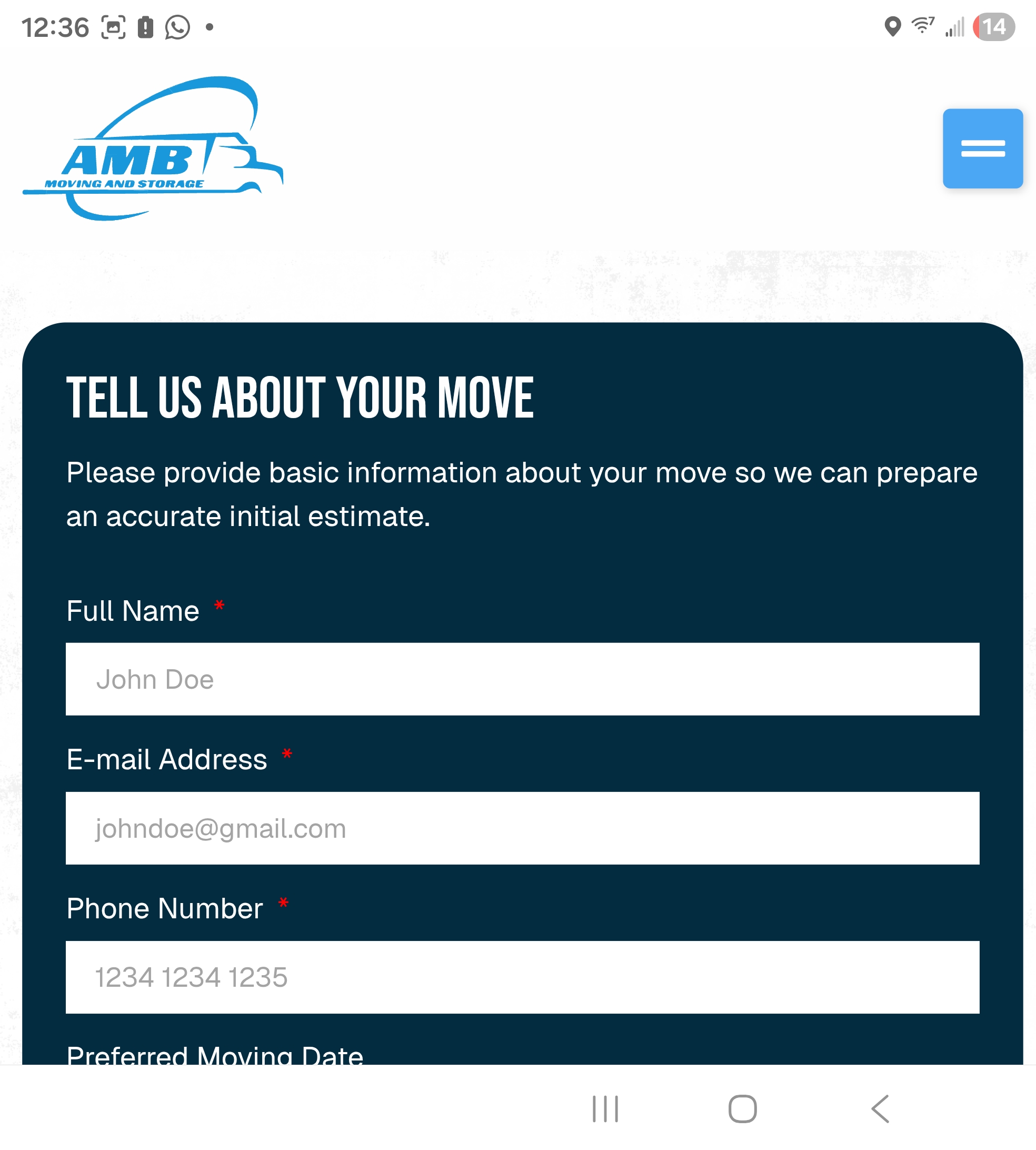
Ready to move with a company that stays with you from quote to delivery? Get a free quote from Ambmovingservices and experience what dedicated support on a long-distance move actually feels like.
Key Takeaways
Customer service in moving determines satisfaction more reliably than price, with communication, transparency, and dedicated support being the factors that drive five-star reviews and repeat business.
| Point | Details |
|---|---|
| Communication drives reviews | Customers who receive proactive updates are far more likely to leave five-star reviews than those who get only minimal contact. |
| Dedicated move managers matter | A single knowledgeable contact reduces anxiety and resolves issues faster than a general support queue, especially on interstate moves. |
| Transparency builds trust | Clear, itemized quotes with no hidden fees are a foundational trust signal that influences both booking decisions and post-move satisfaction. |
| Professionalism is visible | Crew conduct, punctuality, and careful handling shape customer perception more than any marketing material. |
| Service quality affects long-term value | Exceptional customer support increases referrals and customer lifetime value, lowering the cost of acquiring new business over time. |
Frequently asked questions
What is the role of customer service in moving?
Customer service in moving covers every interaction from the first quote to post-move follow-up, including communication, crew professionalism, complaint resolution, and proactive updates during transit.
How does communication affect moving satisfaction?
Customers who receive proactive updates are far more likely to leave five-star reviews than those who get only minimal contact.
What should I look for in a moving company’s customer service?
Look for fast quote response times, a dedicated move manager, FMCSA licensing, transparent pricing, and recent reviews that specifically mention communication and reliability.
How do moving companies handle delays or problems?
The best companies contact you before you call them, provide move-specific context to resolve issues quickly, and follow up after delivery to confirm satisfaction.
Why does customer service affect moving company selection?
Online reviews now drive most booking decisions. A company’s customer service record, visible through ratings and review content, often matters more than price when customers are choosing between movers.