

The core professional materials that reliably protect items in transit are double-wall corrugated boxes, bubble sheeting, polyethylene foam, kraft paper, stretch wrap, and shipping-rated tape, plus acid-free covers for art. The guiding principle is simple: match container strength, cushioning, and closure to the item and how it will travel. Hazardous items and batteries always need carrier confirmation before you pack them at all.
TL;DR:
- Use double-wall corrugated boxes for heavy or long-distance shipments, while single-wall boxes suffice for general household goods.
- Protect electronics with anti-static bags and original manufacturer packaging, and use dividers for fragile glassware and dishes.
- Employ the double-box method for high-value or fragile items, adding at least three inches of cushioning inside the inner box.
- Confirm carrier acceptance before packing hazardous items such as batteries, aerosols, or flammable substances, and consider professional crating for specialty items.
- Reuse sturdy boxes for soft goods and low-risk items, but buy new materials like tape and anti-static foam to ensure optimal protection.
Table of Contents
- Core professional packing materials and when to use each
- Matching materials to what you’re actually packing
- Professional packing techniques and best practices
- Hazardous, regulated, and specialty items to pack differently
- Sizing, weight, cost tradeoffs, and sustainability
- Where to buy packing materials without cutting corners
- Industry standards and certifications behind packing materials
- Storage and shelf life of packing materials
- Innovations and recent trends in packing materials
- When professional packers make sense for your move
- Get a packing quote built around your move
- Sources
- FAQ
Core professional packing materials and when to use each
Every professional packing job rests on the same three-part system: a container strong enough to resist crushing, cushioning that absorbs shock, and a closure that keeps everything sealed for the length of the trip. USPS packaging guidance frames it the same way, recommending fiberboard boxes sized to leave room for cushioning and interior separators, sealed with reinforced tape.
Corrugated boxes come in single-wall and double-wall grades. Single-wall works for books, kitchenware, and general household goods, while double-wall is worth the extra cost for heavy or awkward items making a long-distance trip. Bubble sheeting wraps fragile pieces individually, though it can leave temporary impressions on polished or painted surfaces, so a layer of paper underneath helps. Polyethylene foam, including Ethafoam and Volara, can be cut to custom shapes that cradle irregular objects far better than loose fill. Kraft paper works two ways: crumpled for void fill, or flat as interleaving between plates and framed items. Stretch wrap and pallet film secure furniture and multi-box loads for commercial shipments. Reinforced tape, generally 2 to 3 inches wide, should run in an H-pattern across every seam.
- Corrugated boxes: single-wall for general goods, double-wall for heavy or long-haul items.
- Bubble sheeting: ideal for individual fragile pieces, but pair with paper to avoid surface impressions.
- Polyethylene foam: custom-cut cushioning for irregular or high-value objects.
- Kraft paper: crumpled for void fill, flat for interleaving.
- Stretch wrap: secures furniture and stacked loads for transport.
- Reinforced tape: seals seams and resists tearing under handling stress.
- Tyvek and glassine: barrier layers for artwork and conservation-sensitive surfaces.
Matching materials to what you’re actually packing
Different items fail in different ways, so the material choice has to follow the object, not the other way around. UPS packaging guidelines recommend anti-static cushioning and, where possible, original manufacturer boxes for electronics, since generic foam can carry a static charge that damages circuit boards.
- Electronics: use anti-static bags, original boxes when available, and foam blocks that prevent internal shifting.
- Glass and dishware: dish-pack boxes with cardboard dividers, cushioned by cell bubble sheeting between each piece.
- Artwork: acid-free tissue and Tyvek barriers protect surfaces, with custom crates reserved for high-value pieces.
- Furniture: quilted blanket pads and foam edge protectors guard corners, with strapping to keep pieces from shifting on a truck or pallet.
- Soft goods and textiles: sealed boxes with attention to moisture, since fabric can mildew if packed damp for a multi-day haul.
- Appliances and batteries: remove batteries when possible and confirm carrier rules before packing anything with a built-in power cell.
Professional packing techniques and best practices
Materials only work when the technique matches the risk. Cushioning absorbs shock around an item already sitting snugly in its box, while void fill stops that item from shifting inside a larger container, and the two jobs are not interchangeable.
- For fragile or high-value pieces, use the double-box method: place the wrapped item in an inner box, surround it with at least 3 inches of cushioning, then set that inner box inside a larger outer box, a technique detailed in UPS’s packaging guidelines.
- For small, sturdy items, a single well-cushioned box is enough.
- Seal every seam with an H-tape pattern and reinforce the bottom corners, since corners take the brunt of drops and shifting.
- Keep individual box weight manageable so a fragile box does not get stacked under something heavier.
- On pallets, keep the load within the pallet’s edges and wrap with stretch film in overlapping bands from base to top.
- Before sealing, shake the box gently: if you hear movement, add more void fill and mark the box with orientation arrows.
Pro Tip: Label fragile boxes on at least two sides, not just the top, so handlers see the warning no matter how the box is turned or stacked.
Hazardous, regulated, and specialty items to pack differently
Some items cannot travel in a standard moving box at all. The FAA’s hazardous materials packaging guidance notes that regulated air shipments often require UN-spec packaging, and shippers must confirm carrier acceptance before packing batteries, aerosols, or similar items. The same caution applies on the ground: many household movers will not transport paints, fuels, propane tanks, or loose lithium batteries.
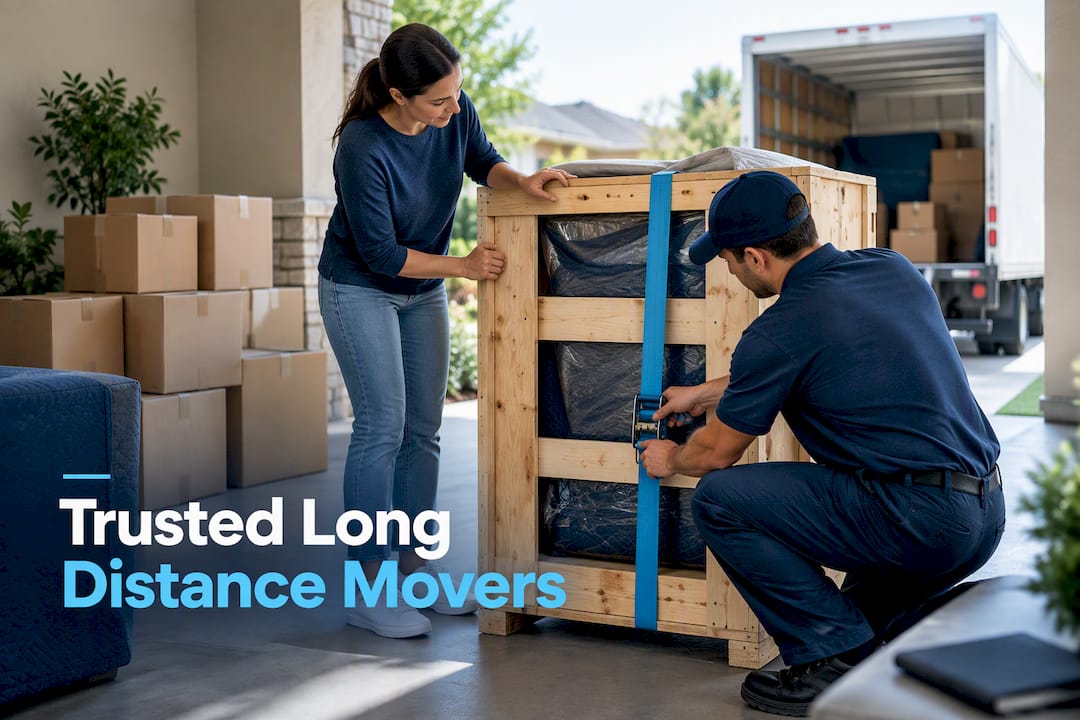
Check with your mover before packing anything flammable, pressurized, or battery-powered. For pianos, safes, and other specialty items, professional crating and handling is usually the safer route, and AMB’s specialty item handling covers pieces like these that standard boxes were never built for.
Sizing, weight, cost tradeoffs, and sustainability
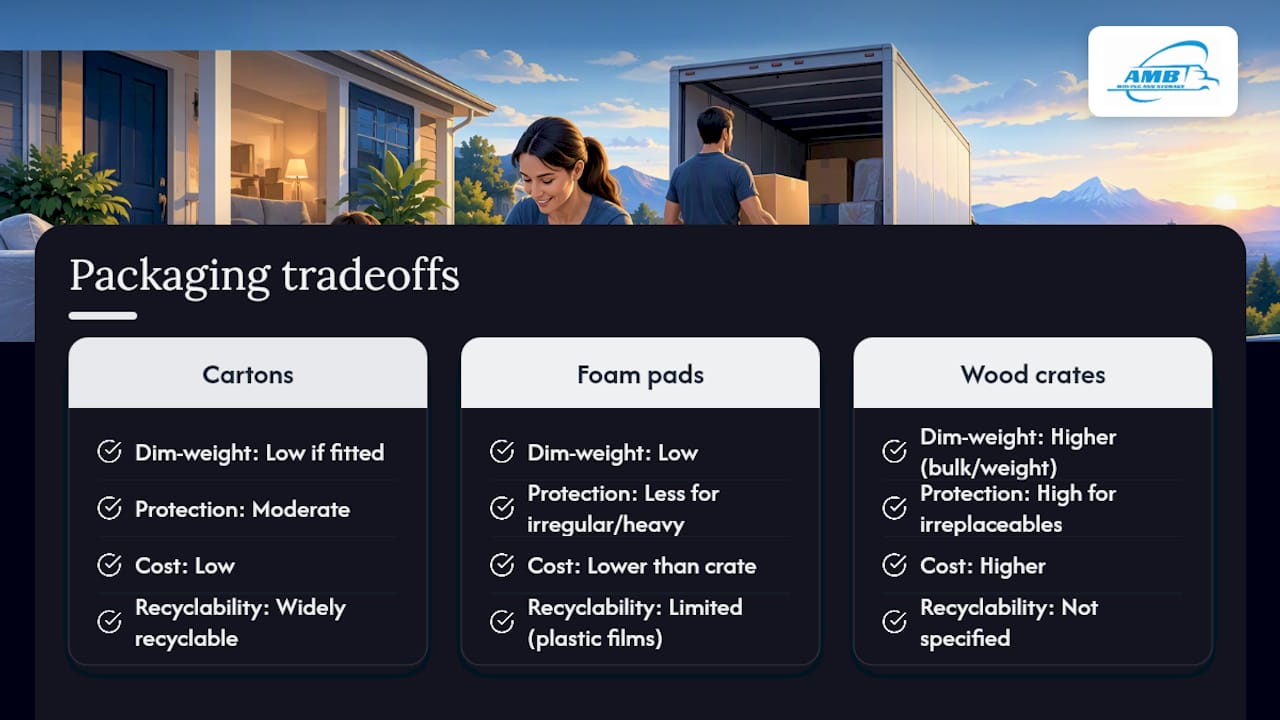
Box size affects more than fit. Oversized outer packaging drives up dimensional-weight charges, a cost factor, GSA’s shipping guidance flags this as a reason to design the box around the item and its cushioning rather than around whatever size happens to be on hand.
Lighter cushioning like foam sheets costs less than a custom crate but offers less protection for irregular or heavy pieces, so the tradeoff comes down to the item’s value and fragility. Corrugated cardboard is widely recyclable, and EPA data on paper and paperboard shows it has one of the higher recovery rates among packaging materials, while some plastic films are accepted by fewer local recycling programs. A custom wooden crate earns its cost for irreplaceable furniture, artwork, or equipment making a cross-country move, where the risk of damage outweighs the extra expense.
Where to buy packing materials without cutting corners
Bulk or engineered foam is best sourced from industrial packaging distributors, especially for commercial moves needing consistent quality across many boxes. Big-box retailers and online marketplaces work well for smaller quantities of boxes, tape, and bubble sheeting.
Free sources exist too: grocery stores, liquor stores, and online community groups often give away used boxes. Reused boxes are fine for books or soft goods, but they lose strength with each use and should be skipped for anything heavy or fragile.
- Buy new: tape, anti-static foam, and acid-free tissue, since these degrade or lose effectiveness with reuse.
- Reuse when appropriate: sturdy boxes for books, linens, or other low-risk items on a budget.
Industry standards and certifications behind packing materials
Professional packaging is not just a matter of taste. The International Safe Transit Association runs ISTA testing procedures that simulate drops, vibration, and compression to verify a package design will survive real shipping conditions, and many corrugated box manufacturers design to these test standards before a box ever reaches a warehouse.
ASTM International publishes parallel standards covering everything from corrugated board strength ratings to cushioning material performance under repeated impact. When a supplier lists a box as tested to a specific ISTA procedure or ASTM specification, that is a signal the material has been checked against real transit stress rather than just assumed to be strong enough.
For regulated shipments, the FAA’s hazmat packaging guidance points to UN-spec packaging requirements for items like batteries and aerosols, a separate certification track from ISTA or ASTM that applies specifically to hazardous materials moving by air. None of these certifications are required for a typical household move, but they matter for commercial shippers, and they explain why some “heavy duty” boxes at a hardware store perform very differently from a box built to a tested specification. If you are packing high-value inventory for a business relocation, ask your supplier whether their boxes carry an ISTA or ASTM rating rather than assuming double-wall cardboard is automatically strong enough.
Storage and shelf life of packing materials
Packing materials degrade even before they touch a moving truck. Corrugated cardboard loses rigidity when stored in humid basements or garages, and a box that felt sturdy on the shelf can soften and fail once stacked under weight for a long-distance haul. Tape adhesive also has a shelf life: older rolls can dry out and lose their grip, which is a bad surprise to discover mid-move.
Foam sheets and bubble sheeting hold up better over time but can become brittle if stored somewhere with wide temperature swings, like an attic or an uninsulated garage. Kraft paper is fairly stable in dry conditions but will absorb moisture and weaken if stored near damp walls or concrete floors.
If you are buying materials weeks or months ahead of a move, store boxes flat and off the ground, keep tape in its original packaging until use, and check foam and bubble sheeting for stiffness or cracking before relying on them for anything fragile. Materials bought right before packing day, rather than pulled from long-term storage, tend to perform closer to their rated strength.
Innovations and recent trends in packing materials
Biodegradable and plant-based packing materials have moved from niche to mainstream in recent years, with mushroom-based foam alternatives and molded pulp inserts replacing some polystyrene foam in commercial packaging. These materials break down faster than traditional foam and compost in many municipal programs, though they generally offer less cushioning density than engineered polyethylene foam for heavy or high-impact items.
Recycled-content corrugated board has also improved, with manufacturers producing double-wall boxes from a higher percentage of post-consumer material without sacrificing the compression strength that heavier household goods need. On the tracking side, some commercial shippers now use smart labels with embedded sensors that log shock, tilt, or temperature during transit, giving businesses proof of how a shipment was actually handled rather than relying on visual inspection alone.
For most household moves, these innovations matter less than getting the fundamentals right: strong boxes, adequate cushioning, and a secure seal. But for businesses shipping sensitive inventory across state lines, sustainable materials and shipment tracking are increasingly part of the standard toolkit rather than an add-on.
When professional packers make sense for your move
High-value furniture, artwork, large electronics collections, or a full household making an interstate move are the scenarios where hiring professional packers pays off. Professional moving companies select materials by item type and document what was packed in the written estimate, which matters because the FMCSA advises getting a written estimate that lists packing charges and valuation options before an interstate move begins.
Before booking, confirm your mover’s FMCSA registration, review valuation coverage, and ask what packing-related fees might apply. AMB’s packing services and interstate moving pages outline what is included, and our checklist for interstate moves covers the documentation to gather beforehand.
— AMB
Get a packing quote built around your move
Skip the guesswork on materials and let a trained crew handle it. AMB’s Professional Packing Services are priced per cubic foot and include the right combination of boxes, cushioning, and sealing for your specific items, backed by valuation options you choose upfront.
- Materials matched to item type, from double-wall boxes to custom foam.
- Crews trained to pack, label, and load for interstate transport.
- Valuation options documented in your written estimate.
Ready to see what your move costs? Request a quote and get a plan built around what you’re actually shipping.
Sources
- How to Pack a Box or Pallet for Shipping | UPS – United States
- Postal Service packaging guidance | USPS
- Select a mover | FMCSA
- How to package hazardous materials | FAA
FAQ
Where is the cheapest place to buy packing materials?
Big-box retailers and online marketplaces offer competitive prices on boxes and tape in small to medium quantities, while industrial packaging distributors are cheaper per unit for bulk orders. Free sources like grocery stores and community groups can cut costs further for low-risk items such as books or linens.
What are the best packing materials for shipping?
The most reliable combination is a sturdy corrugated box, appropriate cushioning such as bubble sheeting or foam, and reinforced tape, a system UPS’s packaging guidelines recommend for protecting items in transit. The right choice depends on the item: electronics need anti-static foam, while fragile glass needs dividers and cell bubble wrap.
Where can I get free packing materials?
Grocery stores, liquor stores, and online community groups frequently give away used boxes at no cost. These work well for books, linens, and other sturdy, low-value items, but they lose strength with each reuse and should be avoided for heavy or fragile goods.
How do I pack hazardous items or batteries for a move?
Hazardous items like batteries, aerosols, and fuels often require special packaging and carrier approval, and the FAA’s hazmat guidance notes that UN-spec packaging is frequently required for air shipment. Always confirm with your mover before packing anything flammable, pressurized, or battery-powered, since many household movers will not transport these items at all.
Is bubble wrap or packing paper better for moving?
Bubble sheeting offers more cushioning for individual fragile items but can leave temporary impressions on polished or painted surfaces. Kraft paper works better as void fill or as an interleaving layer between flat items like plates, and combining both often gives the most reliable protection.