
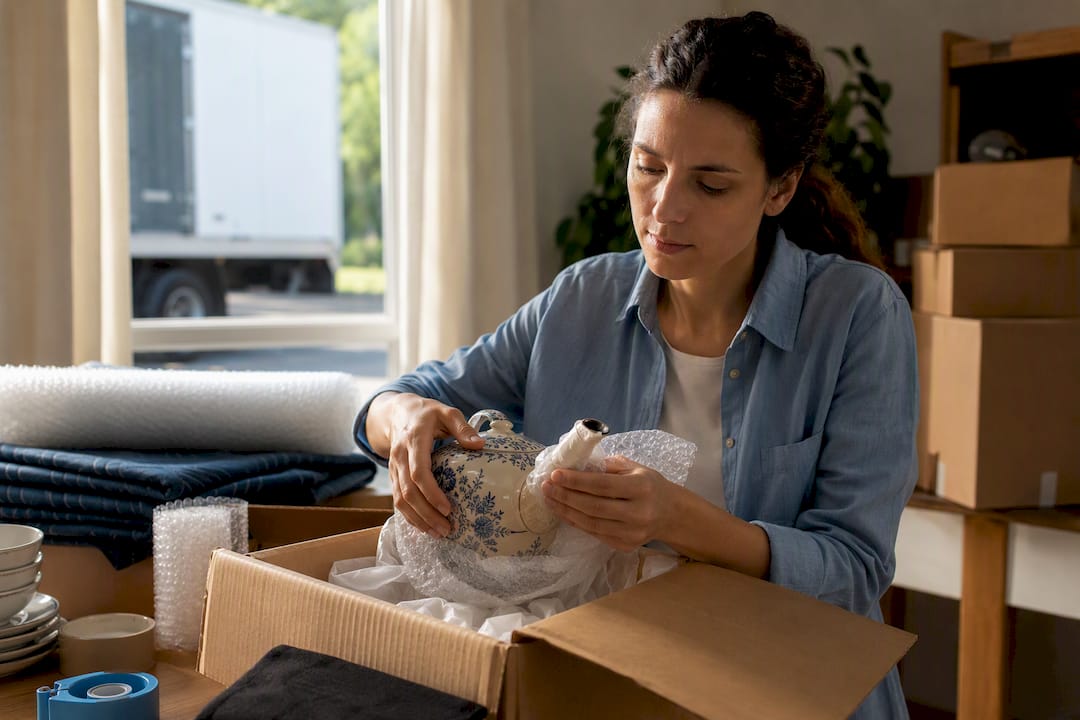

Wrap each piece individually, pack plates on their edges inside a dish pack box, fill every gap with ample cushioning, typically a few inches thick, and label the box “Fragile” with “This Side Up” facing out. That combination, borrowed from museum-grade handling standards, is what actually stops dishware from cracking in transit. You’ll need dish pack boxes, packing paper, and tape at minimum, and you should know upfront that movers legally can’t transport certain hazardous household items alongside your kitchen boxes.
TL;DR:
- Use reinforced dish pack boxes filled with ample cushioning and pack plates vertically on their edges to resist vertical pressure during transit.
- Wrap each dish individually with acid-free packing paper and bubble wrap, especially for delicate, patterned, or glazed pieces.
- Drop or tip the box during the move increases risk, so always handle fragile boxes upright and surround them with sturdy packing materials.
- Avoid packing hazardous household items like flammable liquids, aerosols, and paint, as federal regulations prohibit their transportation on moving trucks.
- For long-distance moves, professional packing services include double-boxing, full inventory documentation, and specialized materials to minimize breakage risk over extended transit distances.
Table of Contents
- Supplies and Choosing the Right Boxes for Packing Dishes
- How Do You Pack Plates, Bowls, and Serving Dishes?
- What’s the Best Way to Pack Glasses and Fine China?
- How Should You Load and Handle Fragile Boxes During the Move?
- What Won’t Movers Transport, and What Should You Do Instead?
- Professional Packing Standards Applied to Long-Distance Moves
- How Do You Pack Oddly Shaped or Sentimental Dishes?
- What’s the Best Way to Consolidate Partial Sets or Odd Pieces?
- Do You Need Extra Reinforcement Materials for Fragile Boxes?
- How Do You Unpack Fragile Dishes Without Damaging Them?
- When Should You Hire Professional Packers Instead of DIY?
- How Ambmovingservices Handles Packing for Long-Distance Moves
- Sources
- FAQ
Supplies and Choosing the Right Boxes for Packing Dishes
Before you pack a single plate, get the right materials on hand. Cheap or mismatched supplies are the number one reason dishware arrives cracked, not rough handling.
Here’s what actually works for packing kitchen items:
- Dish pack boxes: double-walled, smaller footprint than standard boxes, built specifically to resist crushing.
- Unbuffered, acid-free packing paper: safer than newspaper, which can smear ink and turn acidic against glaze over time.
- Bubble wrap: for stemware, cut crystal, and anything with a delicate glaze or gold trim.
- Packing tape and a tape gun: for speed and a tighter seal than hand-tearing.
- Cardboard dividers or foam sleeves: to separate stacked plates and keep glasses from touching.
- Permanent markers: for labeling contents, orientation, and room destination.
Dish pack boxes cost more than a standard moving box, but the reinforced walls and smaller size reduce flex and shifting, which is where most breakage happens. For anything irreplaceable, double-boxing (packing the wrapped item into an inner box, then placing that box inside a larger one with cushioning on all sides) adds real shock absorption, a technique lifted straight from museum packing standards.
Keep any box of dishware under 45 pounds, especially for a long-distance move where boxes get stacked, shifted, and handled multiple times before they reach your new address. A box that’s too heavy is more likely to get dropped, and dishes packed too tightly with no give are more likely to crack under pressure rather than absorb it.
How Do You Pack Plates, Bowls, and Serving Dishes?
Packing plates for relocation comes down to sequence. Skip a step and you’ll find out the hard way when you unpack.
- Clear a flat workstation and group dishes by size and shape, plates with plates, bowls with bowls, so you’re not hunting for matching pieces mid pack.
- Cushion the bottom of the box with 2 to 4 inches of crumpled paper, more for thin porcelain or antique pieces.
- Wrap each item individually, starting with a layer of packing paper and adding bubble wrap for anything with raised patterns, trim, or a glossy glaze.
- Pack plates vertically, on their edge, like records in a crate, never flat and stacked. Plates are structurally stronger on their edges and resist the vertical vibration and pressure that cracks flat-stacked china.
- Fill every void with crumpled paper or foam so nothing can shift when the box tilts.
- Run the shake test: lift the box and give it a gentle shake. If you hear or feel movement, open it back up and add more cushioning. USPS packaging guidance recommends this exact check for any box holding fragile contents.
- Seal the box with at least two strips of tape across the top seam, then label it clearly: contents, “Fragile,” and “This Side Up.”
- Jot a quick inventory on the box or in a notebook, item names and rough counts, so unpacking and any damage claims go faster later.
Pro Tip: Pack your heaviest serving pieces low and centered in the box, then build lighter items around and above them. A box with weight concentrated at the bottom is far less likely to tip or crush its own contents during loading.
What’s the Best Way to Pack Glasses and Fine China?
Stemware and china need a different approach than plates. The weak point isn’t the body of the glass, it’s the stem and the rim.
- Wrap stems separately from the bowl of the glass, using a rolled piece of paper tucked inside the stem’s curve or a dedicated stem guard for extra support.
- Stand glasses upright in dish pack boxes with built-in dividers whenever possible, rather than laying them on their side.
- If you must pack a glass inverted, cushion the rim heavily first since it bears all the weight upside down.
- Layer acid-free tissue under bubble wrap on fine china and anything with gold or platinum trim. Bubble wrap pressed directly against a delicate glaze can leave a texture imprint after weeks in a warm truck.
- Nest bowls only when the sizes graduate cleanly, with a paper layer between each one, and never nest more than three or four together.
- Limit each compartment to a handful of stems and never mix a heavy tumbler with a delicate wine glass in the same slot; the weight difference alone can crack the lighter piece.
Pro Tip: If you’re short on stem guards, cut the toe off a clean sock and slide it over the glass’s stem and base. It’s a free substitute that works surprisingly well for a short-notice pack.
How Should You Load and Handle Fragile Boxes During the Move?
Packing the box correctly is half the job. What happens between your kitchen counter and the truck decides the rest.
- Always set fragile boxes on flat, stable surfaces, never balanced on an uneven stack or a dolly’s edge.
- Keep them upright at all times. A box marked “This Side Up” that gets tipped on its side during loading defeats the purpose of vertical plate packing.
- Surround fragile boxes with furniture or firm, sturdy boxes to stop them from sliding around during transit, and never stack anything heavy on top.
- Ask that fragile boxes be loaded centered in the truck, away from the rear doors and away from the axles, where road vibration hits hardest.
- Tell your moving crew directly which boxes are fragile before loading starts, and confirm how they handle inventory, valuation coverage, and any special handling fees upfront.
A five-minute conversation with the crew lead before loading begins does more to protect your dishware than any amount of extra tape.
What Won’t Movers Transport, and What Should You Do Instead?
Interstate moving companies operate under federal rules that flatly prohibit certain items on the truck, and this isn’t a policy choice, it’s law. Federal hazardous materials regulations bar licensed carriers from transporting:
- Flammable liquids (gasoline, propane tanks, lighter fluid)
- Aerosol cans (cleaning sprays, spray paint)
- Paint and paint thinner
- Bleach and other corrosive cleaners
- Certain lithium batteries and loose battery packs
None of these belong anywhere near your kitchen boxes anyway, but check your cabinets under the sink before packing day. Your options are simple: dispose of these items properly through local hazardous waste programs, transport them yourself in your own vehicle if legal in your state, or check whether a specialized hazmat carrier can ship them separately. Always confirm your mover’s registration and policy in writing rather than assuming, a step the FTC’s consumer guidance specifically recommends before move day.
Professional Packing Standards Applied to Long-Distance Moves
Long-distance and interstate moves put dishware through more handling cycles than a local move, loading, transit, transfer, unloading, so the margin for error is smaller. It requires a structured packing process suited for long-distance moves where handling is more frequent and careful packing is crucial.
- Set up a dedicated, padded packing zone away from foot traffic, with supplies staged by category before wrapping starts.
- Double-box high-value china, crystal, and inherited sets as standard practice, not an upsell.
- Build a written inventory of fragile items before loading, tied to the valuation option the customer selects.
- Confirm weight limits per box and flag anything approaching 45 pounds for repacking.
- Walk customers through interstate carrier verification so they know exactly who is handling their belongings.
This structured approach is what separates a box that survives 2,000 miles from one that doesn’t.
How Do You Pack Oddly Shaped or Sentimental Dishes?
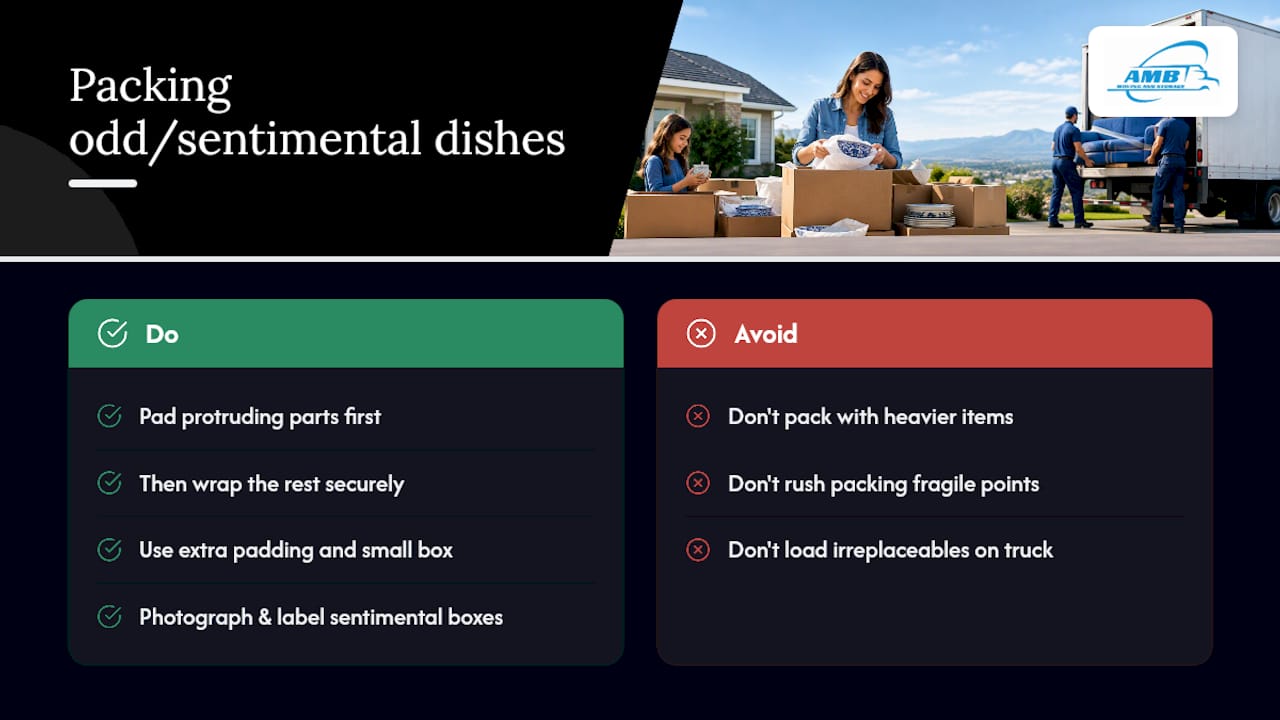
Irregular pieces, gravy boats, teapots with spouts, serving platters, oversized casserole dishes, don’t fit the standard “wrap and stand on edge” method, and that’s exactly why they get damaged most often in a rushed pack. The spout on a teapot, the handle on a gravy boat, or the thin rim of a large platter is a stress point that needs its own cushioning, separate from the body of the piece.
Start by wrapping the protruding part first, spout, handle, or lip, with a dedicated pad of crumpled paper before wrapping the rest of the item. This keeps the weak point from taking direct pressure when the box is jostled. For anything with sentimental value, a piece from a grandparent, a wedding gift, a set you can’t replace, treat it like a museum object rather than a kitchen tool: extra tissue, extra bubble wrap, and its own small box rather than sharing space with heavier items.
Photograph sentimental pieces before you wrap them. If a claim ever needs to be filed, a clear photo taken beforehand makes the process faster and removes any ambiguity about the item’s condition. Label these boxes distinctly, some households simply write “Sentimental, Handle Personally” so movers and family members alike know to treat that box differently from the rest of the kitchen load. If a piece is genuinely irreplaceable and worth more than a typical dish, consider carrying it in your own vehicle rather than putting it on the truck at all.
What’s the Best Way to Consolidate Partial Sets or Odd Pieces?
Every kitchen has them: three unmatched mugs, a single surviving bowl from a set that broke years ago, two extra saucers with no matching cups. Packing these piecemeal wastes box space and creates confusion when you’re unpacking in a new kitchen.
Group odd pieces by material and fragility rather than by set. A NPS-based technique used for mixed museum collections applies directly here: keep ceramics together, glass together, and metal serving pieces in their own group, since dissimilar densities banging against each other during transit is a common cause of chips. Within those groups, consolidate partial sets into a single labeled box rather than splitting them across multiple boxes, “Kitchen, Assorted Mugs & Odd Bowls” is a more useful label than three vague boxes marked simply “Kitchen.”
If you’re downsizing during the move, this is also the moment to decide what’s actually worth transporting. A single chipped bowl or a mug with no matching set rarely earns its weight in a cross-country move. Donating or discarding these pieces before pack day means fewer boxes, lower moving cost estimates, and less to unpack in a kitchen you’re still organizing.
Do You Need Extra Reinforcement Materials for Fragile Boxes?
Standard packing paper and bubble wrap handle most dishware fine, but certain materials add a meaningful layer of protection for high-value or long-distance shipments.
Corner protectors, small foam or cardboard pieces that slip over the corners of a box, reduce the risk of crushed edges when boxes get stacked tightly in a moving truck. Cardboard dividers, either purchased as dish pack inserts or improvised from cut cardboard, keep individual plates and glasses from touching each other directly, which matters more than most people realize since glass-on-glass or china-on-china contact is a leading cause of chips even when everything is technically wrapped.
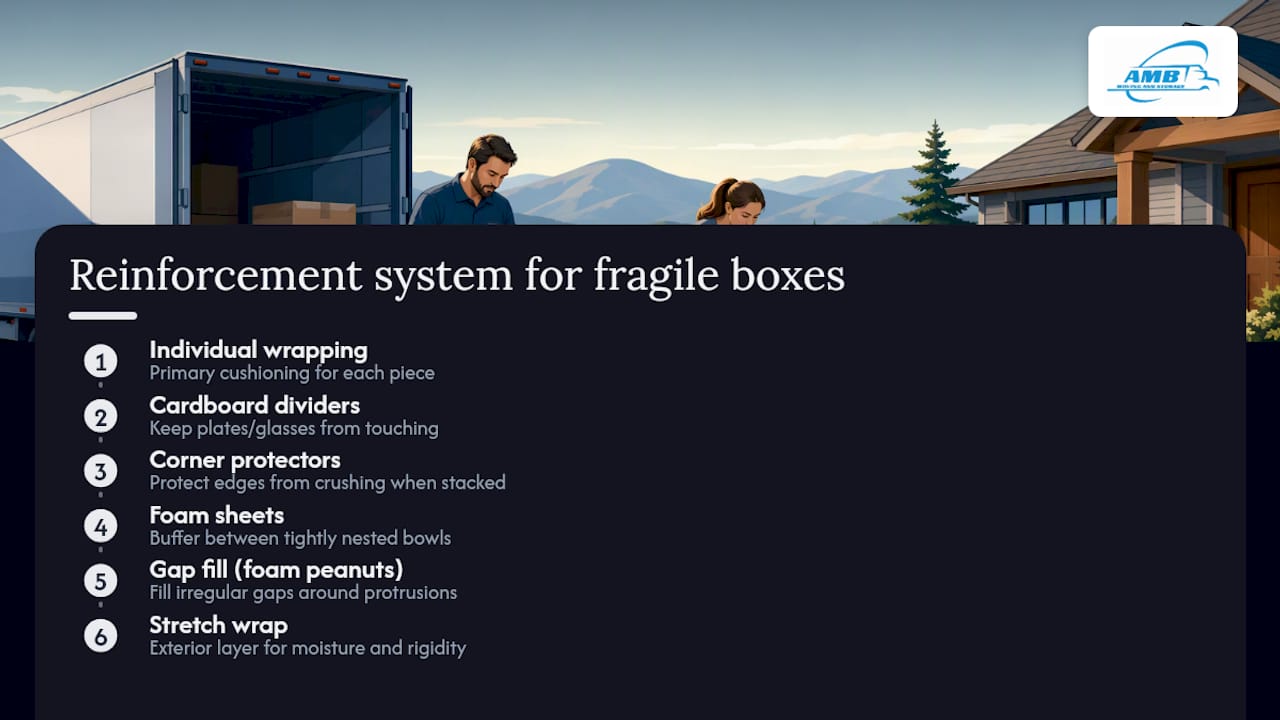
Packing foam sheets work well as an extra buffer layer between tightly nested bowls, and foam peanuts can fill irregular gaps that crumpled paper doesn’t handle well, particularly around spouts, handles, and other protruding shapes. For anything heading across the country, a layer of stretch wrap around a fully packed and taped box adds another line of defense against moisture and adds structural rigidity to a box that might sit compressed under other cargo for days.
None of these materials replace the fundamentals of individual wrapping and proper cushioning. They’re additions, not substitutes, best reserved for your highest-value pieces or for moves where the box will travel the farthest and change hands the most times.
How Do You Unpack Fragile Dishes Without Damaging Them?
The moment a fragile box arrives is not the moment to rush. Damage during unpacking happens almost as often as damage during transit, usually because someone tips a box upside down to dump the contents onto a counter.
Set the box down right side up on a flat surface first and confirm the “This Side Up” label was actually respected during transport. Open the top seam fully before removing anything, and unpack from the top down rather than digging from the side. Unwrap each item over a padded surface, a folded towel on the counter works well, so that if something slips from your hands, it lands on cushioning rather than tile or granite.
Check each piece against your inventory notes as you unwrap it, this is the fastest way to catch any damage while it’s still fresh enough to document and file a claim if needed. Don’t crumple up the packing paper and toss it immediately; keep it nearby until you’ve confirmed every item made it intact, since a missing piece is sometimes still tucked in a paper wad at the bottom of the box. Once you’re done, break down boxes flat rather than leaving them stacked around the kitchen, and store any reusable dividers or dish pack boxes for your next move if you plan to relocate again down the road.
When Should You Hire Professional Packers Instead of DIY?
The decision usually comes down to distance, collection value, and time. A short local move with everyday dishware is a reasonable DIY project. An interstate move with inherited china, tight timelines, or physical limitations tips the scale toward professional packing, especially since professionally packed inventories often come with clearer valuation coverage if a claim ever becomes necessary.
How Ambmovingservices Handles Packing for Long-Distance Moves
If you’d rather not spend a weekend wrapping every plate in your cabinet, Ambmovingservices offers full professional packing services built specifically around the demands of interstate and cross country movers, priced at $1 to $2 per cubic foot.
That per-cubic-foot pricing covers museum-grade techniques including individual wrapping, double-boxing for high-value china, cushioned dish pack boxes, and full inventory documentation, applied by experienced packing crews. For households juggling a full house of belongings, not just the kitchen, combining professional packing with long-distance moving or interstate moving services means one team handles the entire chain of custody instead of handing boxes off between multiple providers. If you’re also relocating an office or need a nationwide moving company for a broader household move, the same packing standards apply across every service line.
Getting an accurate quote is straightforward: have a rough count of fragile boxes, a sense of your move distance, and any high-value items (china sets, crystal, antiques) ready to mention. Request a quote and Ambmovingservices will walk through packing needs, valuation options, and a realistic cost estimate based on your specific move.
Sources
- How to comply with federal hazardous materials regulations — FMCSA
- NPS Museum Handbook — Handling, Packing, and Shipping (Chapter 6)
- Preparing packages — USPS Postal Explorer
- Avoid scams when you hire a moving company — FTC consumer alert
FAQ
What’s the Best Way to Pack Dishes for Moving?
Wrap each piece individually in packing paper, add bubble wrap for delicate surfaces, and pack plates vertically on their edges inside a reinforced dish pack box. Fill every gap with cushioning and run the shake test before sealing, if you feel movement, add more padding.
Is It Better to Pack Dishes Vertically or Horizontally?
Vertically, on their edge, is the stronger method. Plates are structurally more resistant to cracking when weight and vibration hit them edge on rather than flat, which is why flat stacking is one of the most common causes of transit damage.
What Should You Never Pack in Moving Boxes?
Federal regulations bar interstate movers from transporting flammable liquids, aerosols, propane tanks, paint, bleach, and certain batteries. These need separate disposal or personal transport rather than a spot in your moving boxes.
How Long Before a Move Should You Start Packing Dishes?
Start packing dishes and other fragile items several weeks before an interstate move, since careful wrapping takes far longer than most people expect. Checking a move timeline checklist early helps you avoid a last-minute scramble that leads to rushed, sloppier packing.
Does Ambmovingservices Offer Professional Dish Packing?
Yes, Ambmovingservices provides professional packing services priced at $1 to $2 per cubic foot, including double-boxing for high-value china and full inventory documentation for long-distance and interstate moves.