


If you’re moving with pets across state lines, start planning well in advance before the truck arrives, and put the vet exam, ID updates, and carrier training at the top of the list. The safest transport mode depends on your pet’s breed, age, and health, not just distance. Requirements shift by destination state, so verify entry rules before you finalize travel dates.
TL;DR:
- Verify destination state entry requirements and schedule veterinary exams early to avoid missed vaccination windows or border denials.
- Secure and acclimate your pet’s crate before travel and prepare a travel kit with food, medications, and recent color photos in case of emergencies.
- Choose the safest transport mode based on your pet’s breed, health, and trip length, with driving preferred under 12 to 15 hours if properly secured.
- Confine your pet to a quiet, secure room on moving day, and keep emergency vet contacts and records accessible during the entire process.
- Coordinate with professional movers to ensure pet needs and paperwork timelines align with logistics, rather than relying solely on crate training or packing tips.
Table of Contents
- How Do You Prepare a Pet for Moving Long Distance?
- What Paperwork Do You Need to Move a Pet to Another State?
- Car, Plane, Train, or Professional Transport: Which Is Safest?
- What Should You Do With Pets on Moving Day?
- How Long Does It Take Pets to Adjust to a New Home?
- Which Pets Need Extra Planning Before a Move?
- How Movers Handle Pet Logistics During a Move
- Our Take: Why Paperwork Timing Beats Packing Tips
- Get a Pet-Ready Moving Quote from AMB
- Sources
How Do You Prepare a Pet for Moving Long Distance?
Getting a pet ready for an interstate move is really about sequencing. Do the medical and legal steps early, then layer in the behavioral prep closer to moving day.
Start with the veterinarian. The American Veterinary Medical Association recommends scheduling an exam well before you move so your vet can confirm your pet is fit to travel, bring vaccinations current, and hand you copies of medical records. Ask for a written prescription history too. Some states require proof of rabies vaccination within a specific window, and you don’t want to discover that gap at a highway checkpoint.
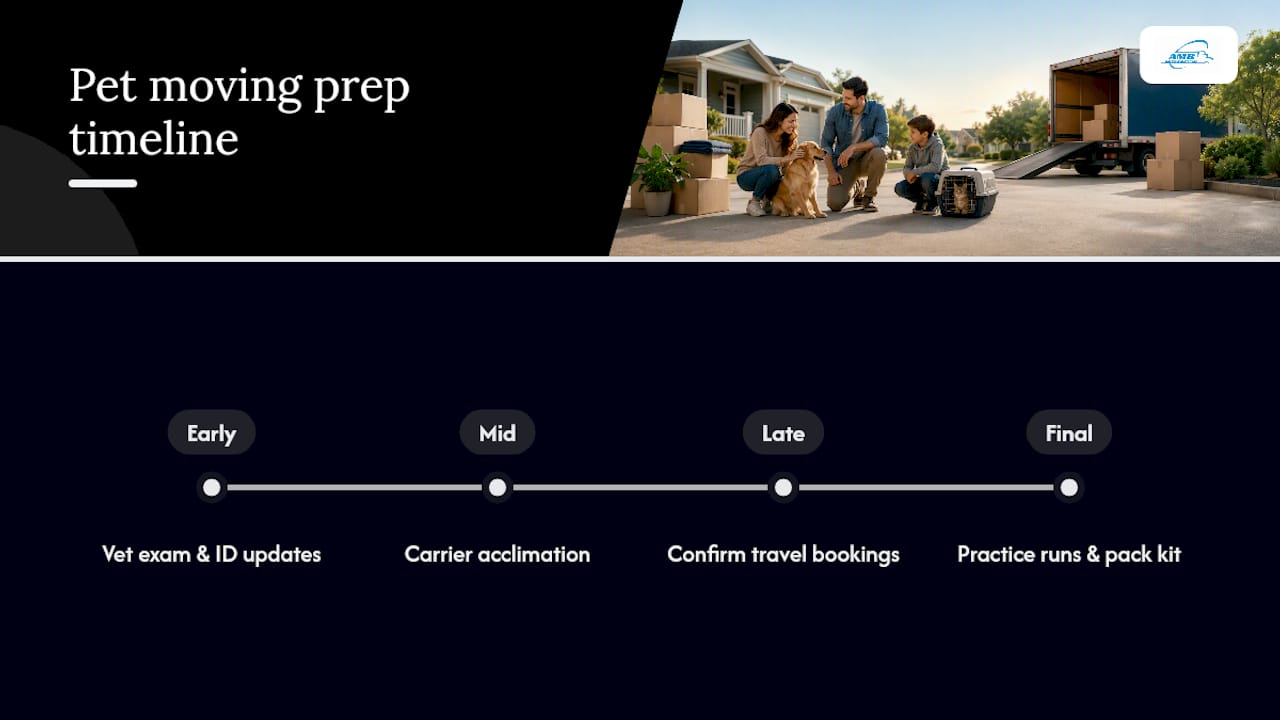
Plan steps progressively ahead of the move date, starting with vet appointments and ID updates, followed by carrier acclimation, confirming travel requirements and bookings, and finishing with practice runs and final preparations shortly before moving day.
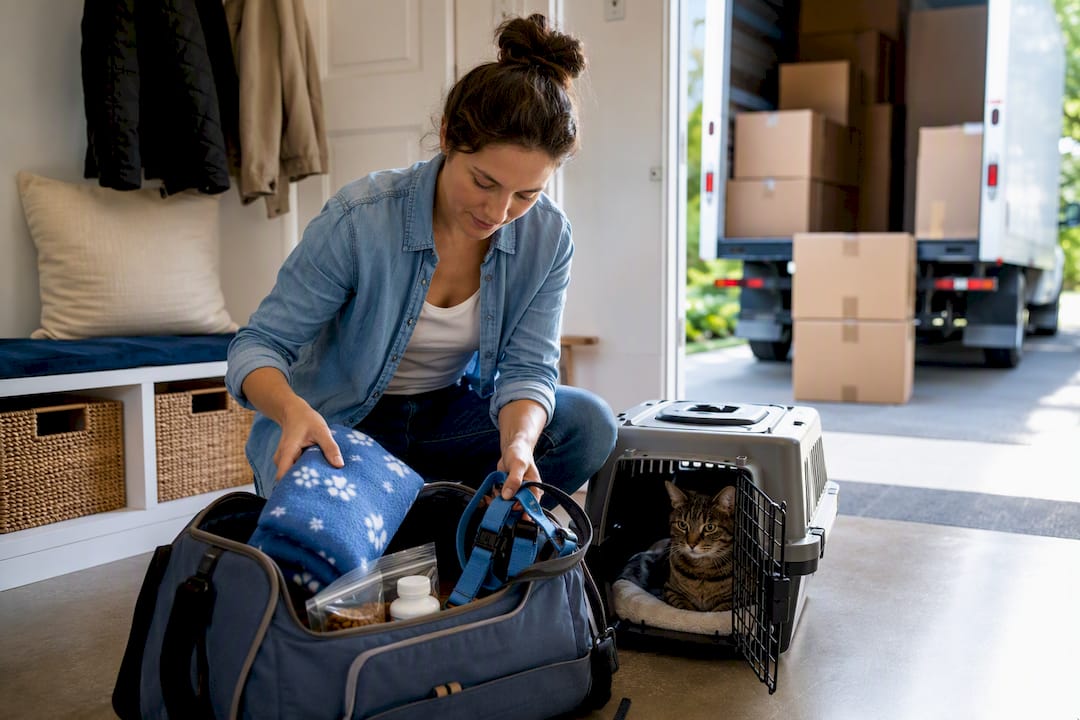
Your pet travel kit should include food for at least a week, any medications with dosing instructions, printed and digital copies of vaccination records, a leash and harness, a basic first-aid kit, and one item that smells like home, a blanket or worn t-shirt works fine.
Pro Tip: Take a clear, recent photo of your pet from multiple angles before you leave. If they bolt at a rest stop or hotel, a good photo speeds up a lost-pet flyer and helps shelters make a match fast.
What Paperwork Do You Need to Move a Pet to Another State?
There’s no single national rulebook for moving a dog or cat across state lines. Interstate pet-movement requirements are set by each destination state, not by the federal government. The USDA’s Animal and Plant Health Inspection Service handles international pet travel and interstate commercial shipments, but it does not regulate a family driving their own dog from Ohio to Arizona. That means the receiving state’s animal health office decides whether you need a Certificate of Veterinary Inspection, specific vaccines, or nothing at all.
Even neighboring states can require different paperwork. A move from Texas to Oklahoma might need one thing; the same move to New Mexico might need another. Contact the destination state’s animal health official directly rather than relying on general internet advice, since requirements change and vary by species.
If your relocation involves bringing a dog into the U.S. from another country, or returning with one, the rules tighten considerably. The CDC enforces specific entry requirements for dogs, including added documentation for dogs coming from countries with a high risk of rabies. Export certificates for international moves often require a USDA-accredited veterinarian and submission through the VEHCS system, and endorsement can take several business days, so build in buffer time rather than scheduling the vet visit the week before you fly.
Before booking anything, work through this short list:
- Call the destination state’s animal health department for current entry rules.
- Confirm your airline’s pet policy, required forms, and acclimation certificate deadlines.
- Schedule your USDA-accredited vet appointment early enough to allow for endorsement delays.
Car, Plane, Train, or Professional Transport: Which Is Safest?
Distance and temperament decide this more than personal preference. Driving gives you the most control, but only if you do it right.
For car travel, secure the crate so it can’t slide or tip, and use a crash-tested harness if your pet rides loose. Stop every two to three hours for water, a bathroom break, and a stretch. Veterinarians consistently warn against leaving pets unattended in parked cars, since interior temperatures climb fast even with windows cracked, and heat stroke can set in within minutes during summer months.
Air travel splits into cabin and cargo, and airline policies vary widely on both. Acclimating pets to their kennel well before the flight matters more than most owners realize, and booking flights during cooler parts of the day avoids tarmac heat exposure. Sedatives are generally discouraged for air travel because they can affect breathing and balance at altitude; talk to your vet about non-sedating alternatives if anxiety is a concern.
- Car: Best for most moves under 12 to 15 hours; gives you full control over stops and temperature.
- Plane: Fastest for long distances, but cargo hold rules and breed restrictions apply.
- Train/bus: Amtrak and most bus lines allow only small pets in approved carriers, and restrictions are strict.
- Professional pet transport or boarding: Worth considering for anxious pets, elderly animals, or moves where owners are flying separately.
Pro Tip: If your move spans more than one driving day, book pet-friendly hotels in advance rather than hoping for a same-night vacancy. Many chains cap pet stays at two per room and charge nonrefundable fees.
What Should You Do With Pets on Moving Day?
Moving day is chaos on the best of days, and an open door is all it takes for a stressed pet to disappear. Confine pets to one secure, quiet room, ideally one movers aren’t using, and tape a sign on the door so nobody opens it by accident. Boarding your pet or asking a trusted neighbor to hold them for the day removes the risk entirely.
- Feed your pet a light meal several hours before travel, not right before getting in the car, to reduce motion sickness.
- Pack meds, records, and the travel kit in a bag that rides with you, never in the moving truck.
- Confirm with your moving company who handles what. Professional movers generally do not transport animals; their role is logistics, timing, and protecting your belongings, not pet care.
- Secure crates in the vehicle before loading anything else, and keep emergency vet contacts for both your old and new city on hand.
- If the trip runs multiple days, research emergency vet clinics along your route in advance.
How Long Does It Take Pets to Adjust to a New Home?
Cats typically need longer than dogs to settle, often two to four weeks compared to a dog’s several days to two weeks, though every animal is different. Start with one safe room stocked with familiar bedding, food, water, and a litter box or potty pad. Let your pet choose when to explore the rest of the house rather than forcing introductions.
Rub a towel on your pet and place it near doors and furniture to spread their scent through the new space; it’s a small trick that speeds up the sense of ownership over territory. Keep feeding and exercise times identical to your old routine for the first two weeks. Check every window screen and door latch before letting pets roam freely, since new homes often have unfamiliar exits pets test immediately.
- Watch for red flags: prolonged appetite loss, hiding beyond a few days, aggression, or repeated house-soiling.
- In multi-pet households, reintroduce pets to each other gradually, even if they lived together before.
- Contact your vet or a certified animal behaviorist if anxiety symptoms don’t ease within three to four weeks.
Pro Tip: Bring one unwashed item from the old home, an unwashed bed or toy carries scent cues that genuinely calm anxious pets faster than anything new you buy.
Which Pets Need Extra Planning Before a Move?
Some animals need a different plan entirely, not just a longer checklist.
Brachycephalic breeds, bulldogs, pugs, boxers, and similar flat-faced dogs, face real respiratory risk during air travel. The AVMA recommends owners consult their veterinarian and consider ground transport instead of flying these breeds, particularly in hot months when airlines may restrict or refuse carriage for the breed’s own safety.
Senior pets and those on regular medication need extra buffer. Carry more medication than you think you’ll need since matching prescriptions immediately at your destination isn’t guaranteed, and ask your vet directly whether your pet’s health can tolerate the travel mode you’ve chosen.
- Multiple pets traveling together need individual paperwork, separate carriers, and staggered feeding to avoid cross-contamination of meds or food.
- Exotic pets, reptiles, birds, and small mammals face species-specific import and export restrictions that vary sharply by state and country; contact wildlife or agriculture authorities well before booking travel.
How Movers Handle Pet Logistics During a Move
Professional movers coordinate timing and protect your belongings, but they don’t transport animals themselves. Before booking, ask any moving company how they schedule around pet needs, whether they offer storage for supplies during a gap between homes, and how they expect pet-related items to be packed separately from household goods.
- Confirm loading day timing so you can arrange pet boarding or a quiet room in advance.
- Ask whether crates, leashes, and pet records should travel with you or can be boxed with household goods.
- Clarify who’s responsible for the pet handoff at both ends of the move, since movers focus on furniture and belongings, not animal care.
Our Take: Why Paperwork Timing Beats Packing Tips
Most pet-moving advice online focuses on carrier comfort and calming treats. Useful, but it skips the thing that actually derails long-distance moves: paperwork timing. A missed vaccination window or an endorsement that didn’t clear in time can strand a pet at an airport or trigger a denied entry at a state line, and no amount of crate training fixes that.
The conventional wisdom treats vet visits as a one-time errand. In reality, for interstate and international moves, the exam date, the endorsement window, and the airline’s acclimation certificate deadline all have to line up on a calendar, not a checklist. That’s a scheduling problem as much as a pet-care one.
If you take one thing from this guide, make it this: call your destination state’s animal health office before you book a single flight or truck. Everything else, the crate training, the travel kit, the settling plan, matters, but it can’t fix a pet that got turned back at the border because nobody checked in advance.
— AMB
Get a Pet-Ready Moving Quote from AMB
Coordinating a pet’s vet schedule around a moving truck’s arrival is exactly the kind of logistics problem AMB handles every day for interstate and cross country movers. As a licensed, insured nationwide moving company, AMB builds move timelines that leave room for vet appointments, document endorsements, and pet handoffs, instead of forcing your pet’s paperwork to catch up to a fixed truck date.

AMB’s long distance moving services cover full-service packing and interstate relocation logistics, and short- or long-term storage options mean pet supplies, crates, and extra medication don’t have to travel in the same load as your furniture. Whether you’re relocating a household with one anxious cat or a family with three dogs and a bird, AMB’s nationwide moving team can walk through your specific timeline before you book anything. Get a free moving cost estimate and tell the team about your pet’s travel needs when you request your quote, so your move date and your vet’s calendar actually match up.
Sources
- Take a Pet From One U.S. State or Territory to Another (Interstate)
- Traveling with your dog or cat | American Veterinary Medical Association
- Bringing an animal into the U.S. | CDC
- AVMA veterinarians offer tips for smooth travel with pets this season