
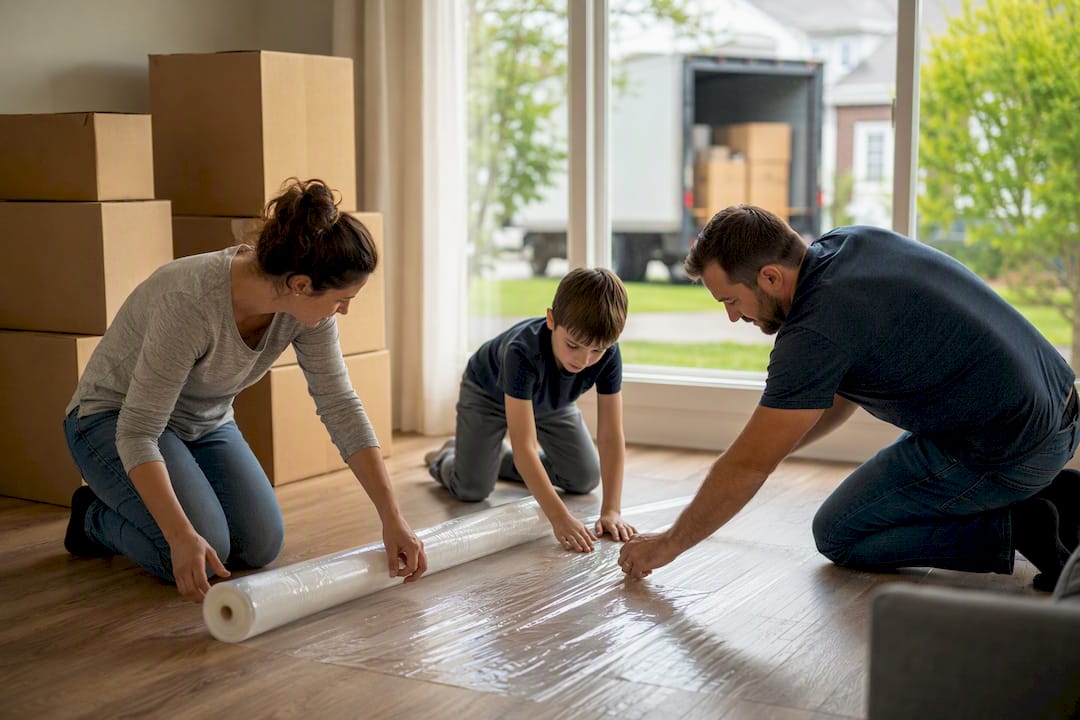

Use the right covering for each floor type, and get it down before movers touch a single box. For hardwood, tile, and vinyl, that means padded self-adhesive rolls or heavy-duty nonwoven covering like ram board style protection. For carpet, self-adhesive carpet film over the main walkways does the job without leaving residue behind.
Three things matter most before the truck backs up:
- Clear every route from the front door to the loading area.
- Sweep floors first. Grit under a dolly wheel scratches faster than the dolly itself.
- Lay one continuous runner from entry to truck instead of patchy scraps.
Pro Tip: A single unprotected gap in your runner is where damage happens. Movers track debris across it and you’ve lost the whole point of protecting the rest of the path.
Key Takeaways
Matching the right protective covering to each floor type and maintaining continuous, monitored coverage from entry to truck is what actually prevents moving-day floor damage.
| Point | Details |
|---|---|
| Match material to floor type | Use carpet film on carpet and padded self-adhesive rolls or ram-board style covering on hardwood, tile, and vinyl. |
| Sweep before you cover | Grit under a runner or dolly wheel causes more scratches than the moving itself. |
| Keep coverage continuous | Gaps in protected routes let debris track onto bare floors and undo the whole setup. |
| Lift instead of drag | Lifting avoids contact scratches entirely, while sliders still risk catching debris underneath. |
| Assign a monitor and document damage | One person should watch coverings all day, and photos before and after protect you if repairs or claims come up. |
| Consider professional handling | Ambmovingservices trains crews to run this exact protection protocol on every long-distance and interstate move. |
Table of Contents
- What Materials to Buy or Rent for Floor Protection During a Move
- AMB’s Floor-Protection Checklist for Homeowners to Request
- Step-by-Step Checklist for Moving-Day Floor Protection
- How to Handle Stairs, Narrow Hallways, and Bad Weather
- Removing Protection and Checking for Damage After the Move
- What Homeowners Consistently Get Wrong About Floor Protection
- Why Hire AMB for Floor-Protected Long-Distance Moving
- Sources
What Materials to Buy or Rent for Floor Protection During a Move
Different floors need different armor, and using the wrong product wastes money or, worse, damages the surface you’re trying to save.
For carpets, carpet protection film is the standard choice. It’s adhesive, non-residue, and works on cut-pile and looped-pile carpets alike. Buy rolls sized to your hallways and high-traffic rooms rather than guessing and running short mid-move.
For hardwood, tile, and vinyl, padded floor protector rolls are the better call. TapeManBlue’s temporary floor protector uses a 160 GSM cushioned material with a tacky backing that’s safe on hardwood, engineered hardwood, tile, stone, laminate, vinyl, and stairs, and it comes off clean. PIG’s self-adhesive covering is another solid option for hard surfaces. It’s a shock-absorbent, liquidproof nonwoven material that can stay down up to 8 weeks depending on conditions, which matters if your move stretches over several days.
A few sizing basics: 24-inch runners work for narrow hallways, while 36 to 39-inch widths cover wider traffic areas like living rooms and staircases better. For appliance moves or anything on furniture sliders carrying serious weight, cardboard or ¾-inch plywood laid under the runner adds a stable base.
Round out your kit with carpenter’s tape for securing edges (skip rubberized or resinous tapes, they can pull finish off wood), a utility knife for trimming rolls to fit, gloves, and shoe covers for anyone walking the protected route repeatedly.
If budget is the deciding factor, Pratt Retail Specialties moving floor guard rolls sold at Home Depot cover a lot of ground affordably and are easy to tape down without special tools.
AMB’s Floor-Protection Checklist for Homeowners to Request
Professional crews don’t improvise floor protection. Ambmovingservices trains movers to follow a set sequence on every job, and homeowners hiring any moving company should ask for the same thing.
- Walk the route before anything moves. Identify the path from each room to the truck, measure for runners, and pre-cut protection for stairs and door thresholds.
- Sweep every route to remove grit and place waterproof mats at entry points.
- Lay continuous protective rolls, no gaps, and secure every edge so nothing shifts underfoot.
- Protect stair treads with padded runners or stair film, and pad elevator cabs if the building has one.
- Confirm the crew is wearing shoe covers and lifting furniture rather than dragging it whenever possible.
Movers who lift instead of drag avoid contact scratches entirely. Furniture sliders reduce friction, but they still catch debris if the floor underneath wasn’t swept first, according to guidance on protecting hardwood floors during a move.
One crew member should be assigned to monitor coverings throughout the day, not just check them once at the start. Before signing off, ask for the movers’ insurance details and take your own photos of protected routes before and after the move. That documentation matters if a dispute over damage ever comes up.
Step-by-Step Checklist for Moving-Day Floor Protection
Protection that goes down correctly in the morning can still fail by afternoon if nobody maintains it. Work through this order on moving day:
- Clear the path completely and sweep every floor the crew will walk, removing grit before anything else happens.
- Set a waterproof entry barrier and doormats at the front door and any other entrance being used.
- Lay continuous protection from the door all the way to the truck. No breaks, no shortcuts around furniture.
- Protect stairs and thresholds separately since these see the heaviest foot traffic and the most concentrated wear.
- Use dollies only on covered surfaces, and lift heavier or awkward items by hand when a dolly isn’t practical.
- Keep one person monitoring the coverings all day so displaced runners get repositioned immediately, not after someone’s already tracked dirt across bare flooring.
For securing edges, painter’s tape or a low-residue tape rated for the surface is the safer bet. Long-term adhesive on finished hardwood can pull up the finish when removed, especially if it sits for more than a day or two in direct sun.
Pro Tip: Assign one person the sole job of watching the floor coverings, not helping carry boxes. It sounds like a waste of a body, but that person catches the shifted runner before a heavy dolly rolls off the edge onto bare wood.
Before the crew leaves, walk the route together and agree on when coverings come up. Same-day removal is usually best. Leaving protective film down for days invites dust and moisture to build up underneath it.
How to Handle Stairs, Narrow Hallways, and Bad Weather
Stairs, tight hallways, and rain are where most floor damage actually happens, not the open living room floor.
Stairs need padded stair runners or carpet film if the stairs are carpeted, and edges should be secured without tape that could pull at the finish underneath. Always put two people on large items going down or up a staircase; one person controlling a heavy dresser on stairs is how both the item and the floor get damaged.
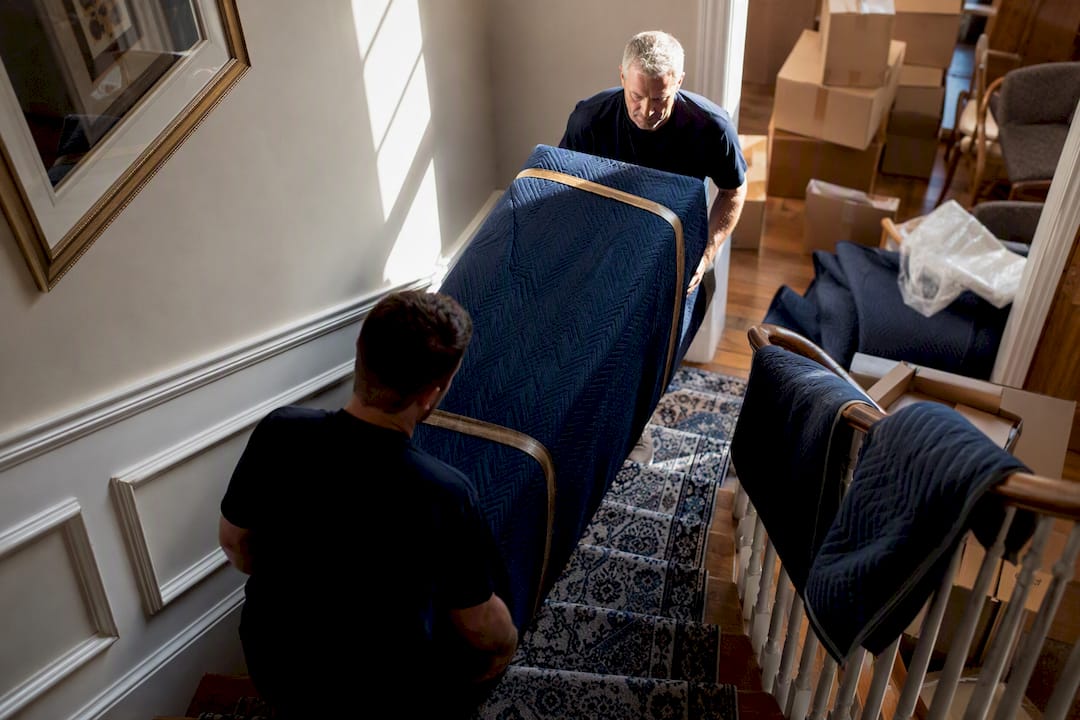
Narrow hallways and doorways call for advance measuring. If a couch won’t clear a doorway, disassemble it beforehand rather than forcing it through and gouging the frame. Pad corners and door frames with moving blankets or folded cardboard wherever furniture has to pivot tightly.
Bad weather adds moisture risk on top of everything else. Waterproof mats belong at every entrance, and keeping a stack of towels nearby for wet shoes matters more than people expect. Seasonal humidity swings alone can cause hardwood to warp over time, so managing moisture at entry points during a move is worth the extra effort. Only use plastic sheeting under floor protection if it won’t trap moisture against the wood, and dry any water intrusion immediately rather than letting it sit overnight.
Removing Protection and Checking for Damage After the Move
Take coverings up in the reverse order you put them down, and do it carefully. Yanking film or padded rolls off quickly can lift finish along with them.
- Remove protection gently, working backward from where you finished the install.
- Check for adhesive residue, especially at edges where tape held things down longer.
- Follow the manufacturer’s removal instructions for carpet film specifically, since pulling at the wrong angle can leave fibers disturbed.
- Photograph any scuffs, dents, or discoloration you find before you forget where they were.
- Schedule cleaning or a repair call if anything looks off, rather than waiting to see if it resolves itself.
Manufacturers note that most disposable runners and films can sit for weeks without issue, but longer leave-down periods raise the odds of trapped moisture or residue buildup, so check sooner rather than later. If scratches go deep enough to need refinishing, get a flooring professional to look at it before attempting a DIY fix. Your photos double as documentation if you’re filing an insurance claim or negotiating a security deposit return.
What Homeowners Consistently Get Wrong About Floor Protection
Most homeowners treat floor protection as an afterthought, something to slap down the morning of the move if there’s time. That’s backward. The prep work, sweeping, measuring hallways, deciding which product goes where, matters more than the protection material itself. A premium padded roll laid over gritty, unswept flooring still lets debris scratch the surface underneath it.
The other mistake is patchy coverage. People protect the living room and skip the hallway because “it’s just a quick walk.” That’s exactly where damage happens, because dollies and boot traffic concentrate in narrow spaces. Continuous coverage from door to truck isn’t overkill. It’s the difference between a clean move and a floor refinishing bill.
If there’s one thing worth prioritizing above the rest, it’s assigning someone to actually watch the coverings all day. Materials matter, but unmonitored protection fails quietly, one shifted runner at a time, until someone notices scuff marks that weren’t there this morning.
— AMB
Why Hire AMB for Floor-Protected Long-Distance Moving
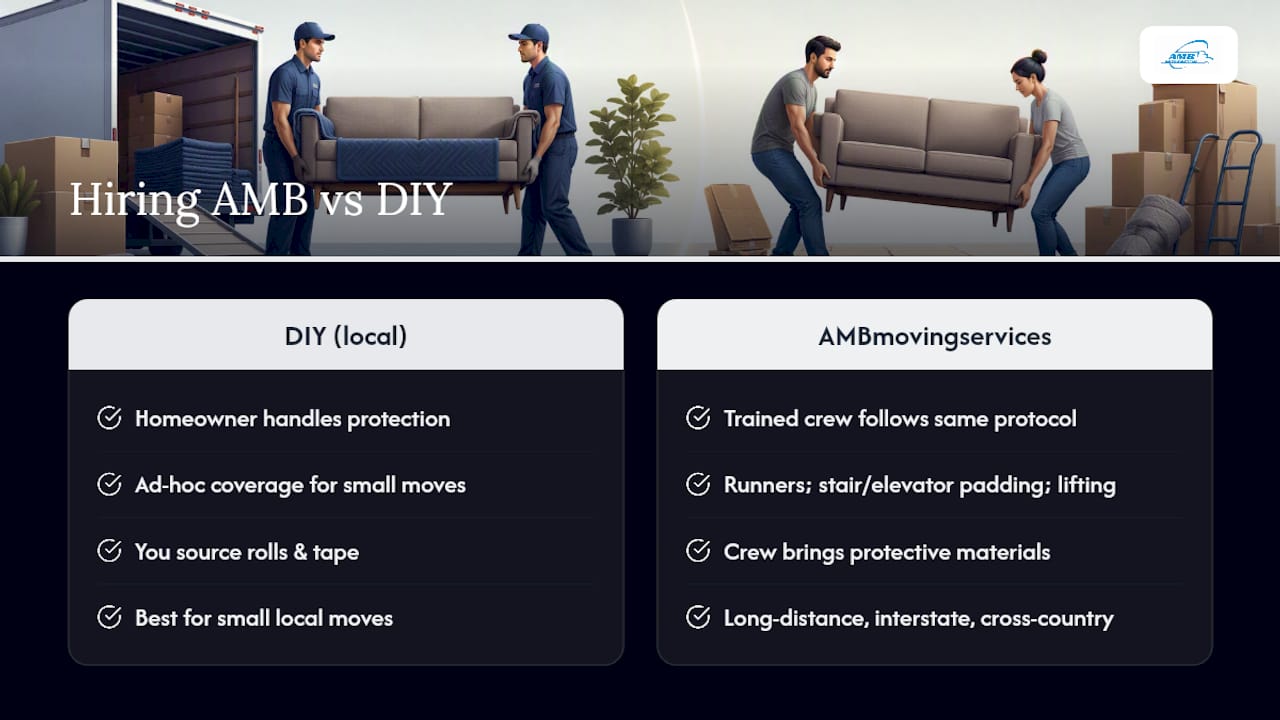
Handling floor protection yourself works for a small local move, but on long-distance and interstate jobs, more rooms, more hours, more crew traffic, the margin for error grows fast. Ambmovingservices trains every crew to run the same protection protocol covered above: continuous protective runners, padded stair coverage, elevator cab padding for apartment and condo moves, and lifting technique over dragging as standard practice, not an upsell.
Every long-distance move includes trained crews who bring their own protective materials rather than expecting homeowners to source rolls and tape last minute. That coverage extends to interstate moves and cross-country relocations where multiple stops and long transit windows raise the stakes on getting protection right the first time. As a licensed and insured nationwide moving company, Ambmovingservices documents protected routes and stands behind the handling of your home the same way it stands behind your belongings during transit.
If you’re planning a move and want a real number instead of a rough guess, get a moving cost estimate built around your specific floors, stairs, and access points.
Sources
- Surface Shields 24 in. x 50 ft. Carpet Protection Self-Adhesive Film (product page)
- PIG Floor Protection Self-Adhesive Covering (product page)